
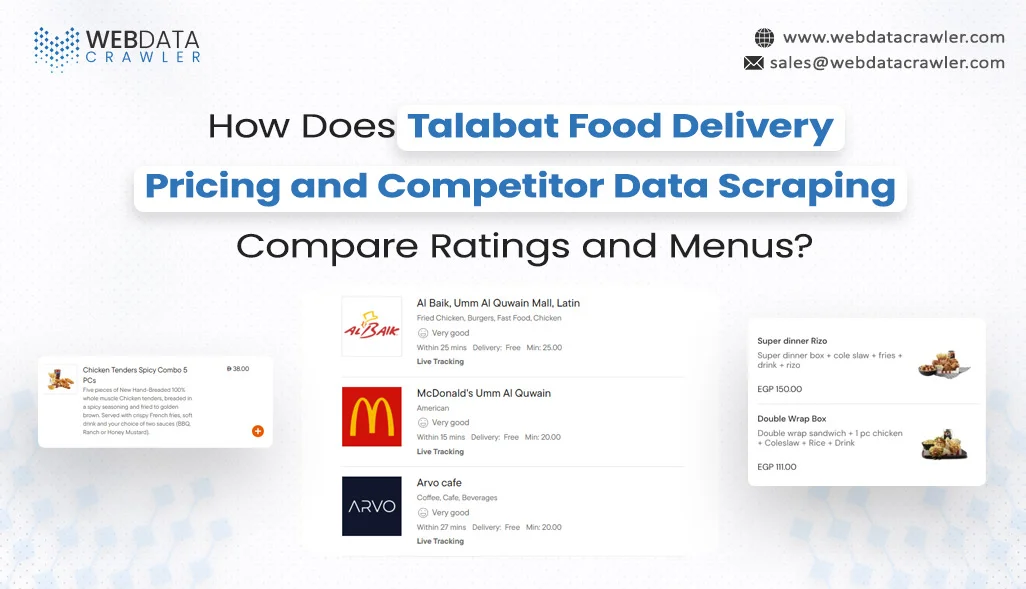
How Does Talabat Food Delivery Pricing and Competitor Data Scraping Compare Ratings and Menus?
Oct 07
Introduction
Food delivery platforms generate valuable information through menus, prices, ratings, reviews, delivery fees, and restaurant availability. Talabat Food Delivery Pricing and Competitor Data Scraping helps businesses organize these changing signals and compare restaurant performance across locations, categories, and competing platforms for practical market analysis.
Restaurants and food businesses can use Scrape Talabat Restaurant Data to examine menu structures, item prices, customer ratings, review patterns, and promotional activity. These datasets make it easier to identify pricing differences, popular cuisines, frequently reviewed restaurants, and changing customer preferences across targeted markets.
With structured information, businesses can evaluate competitors without depending on manual checks. Menu changes, rating movements, and pricing variations can be tracked consistently to support operational planning, competitive research, and customer-focused decisions. This approach also helps analysts understand how restaurant offerings shift as demand and market conditions change.
Comparing Talabat Menus Through Detailed Competitor Pricing Signals
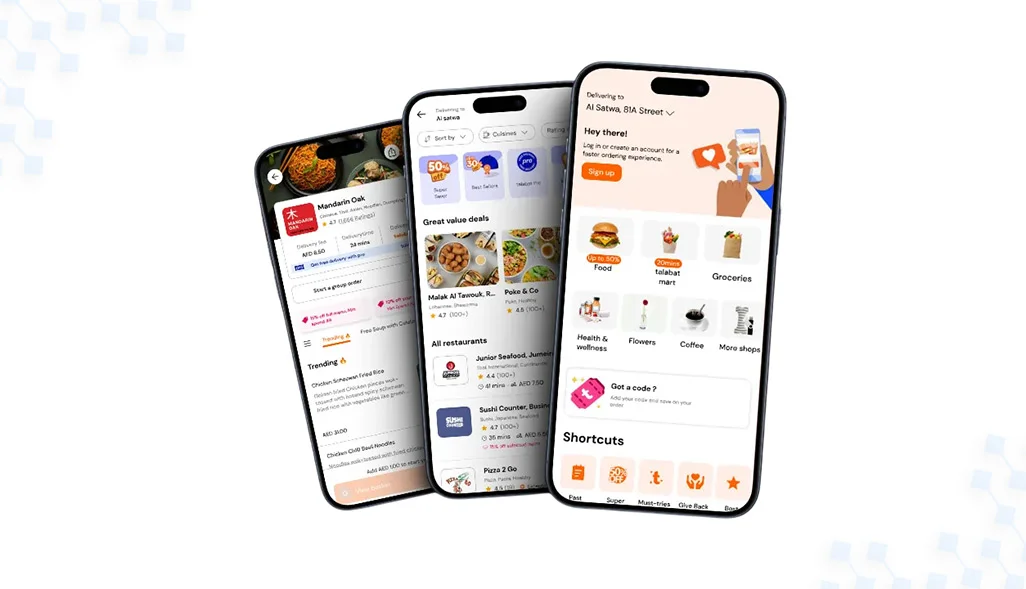
Restaurant menus can differ significantly according to cuisine, portion size, ingredients, location, and promotional activity. Comparing these elements gives businesses a clearer understanding of how competing restaurants position similar products. Menu-level information also helps analysts identify repeated pricing patterns, premium products, frequently available items, and categories where competitors maintain noticeably different price points.
For structured price research, Talabat Menu API Data Scraping for Price Analysis can organize menu names, categories, prices, item descriptions, discounts, and availability into comparable records. This makes it easier to evaluate similar dishes across restaurants without depending on scattered manual observations. Businesses can subsequently identify products positioned above or below prevailing market levels.
Historical records can therefore provide a stronger foundation for understanding how competitors adjust their menu positioning over time. A Talabat Food Data Crawler can further support recurring collection by gathering restaurant and menu information at defined intervals. Regular collection is particularly useful when restaurants frequently update prices, introduce seasonal products, remove unavailable items, or modify promotional offers.
| Comparison Area | Example Observation | Business Use |
|---|---|---|
| Menu items | 5,000+ | Assortment comparison |
| Price differences | 8–15% | Competitive benchmarking |
| Promotional products | 12% | Offer evaluation |
| Unavailable items | 4% | Availability monitoring |
Businesses can use the collected information to identify pricing gaps and menu opportunities more efficiently. Useful applications include:
- Comparing similar products across competing restaurants.
- Tracking changes in item-level pricing over time.
- Identifying frequently promoted menu categories.
- Monitoring product availability across locations.
- Evaluating premium and budget menu positioning.
This structured approach transforms individual menu observations into broader competitive insights that support pricing reviews, assortment planning, and restaurant market research.
Connecting Restaurant Ratings With Changing Menu Prices
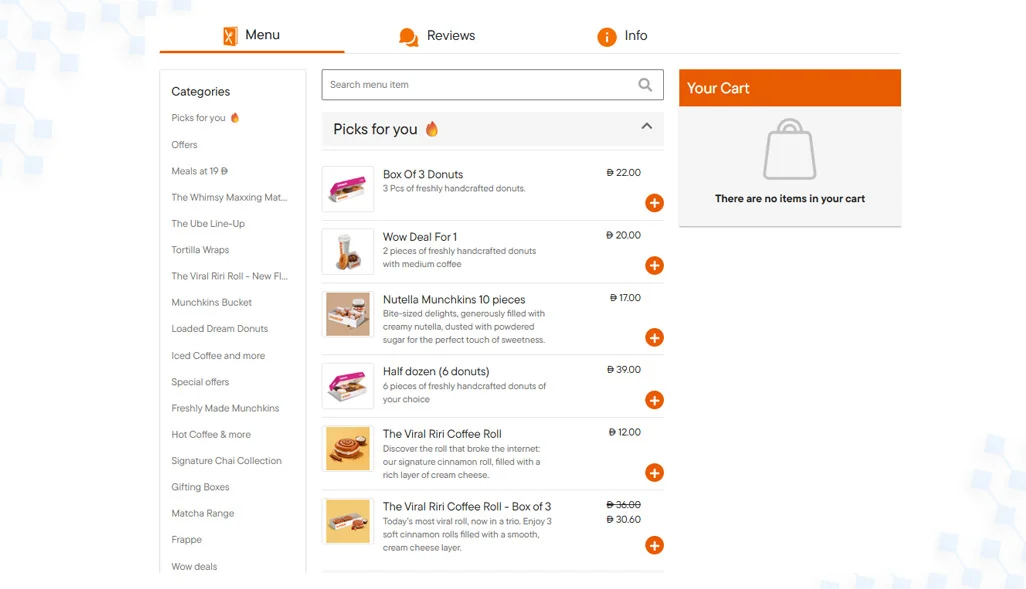
Restaurant ratings and customer reviews provide important context when businesses compare menu prices and competitor performance. A restaurant with higher ratings may maintain premium pricing because of stronger customer perception, while another restaurant may rely on discounts to attract attention. Comparing these signals helps businesses understand pricing alongside customer response.
Using Talabat Restaurant Market Trends Using Scraped Data, analysts can examine relationships between restaurant ratings, review volumes, menu prices, cuisine categories, promotional activity, and product availability. Instead of viewing ratings independently, businesses can connect customer feedback with pricing changes and identify whether specific restaurant segments demonstrate stronger engagement or changing market demand.
A structured collection workflow supported by the Talabat Food Data API can help organize recurring restaurant information into analytical systems. This can include restaurant profiles, rating values, review counts, menu details, pricing information, and other relevant attributes. Consistent records make it easier to compare changes between monitoring periods and identify meaningful performance movements.
| Data Indicator | Sample Observation | Analytical Purpose |
|---|---|---|
| Restaurants monitored | 750 | Competitor coverage |
| Average rating | 4.2/5 | Customer perception |
| Review growth | 11% | Engagement tracking |
| Price movement | 6% | Pricing evaluation |
Businesses can apply these insights through several practical activities:
- Comparing ratings between similarly priced restaurants.
- Identifying restaurants receiving increasing review activity.
- Evaluating premium pricing alongside customer perception.
- Monitoring rating changes after price adjustments.
- Segmenting restaurants according to performance indicators.
Combining these signals gives analysts a broader view of competitive positioning. It also helps businesses distinguish between pricing changes supported by stronger customer response and those that may require further evaluation.
Organizing Historical Restaurant Data For Competitive Analysis

Reliable historical information is essential when businesses want to compare restaurant performance over multiple periods. Menus, prices, ratings, reviews, and availability can change frequently, meaning one-time observations may not accurately represent market conditions. Maintaining structured records makes recurring comparisons more meaningful and easier to interpret.
This can be particularly valuable for businesses conducting competitive benchmarking across multiple locations. Web Scraping Talabat Data for Food Delivery Trends can help organize changing restaurant information into consistent records covering menus, prices, ratings, reviews, availability, and restaurant profiles. Historical datasets allow analysts to identify recurring movements rather than relying only on current listings.
Maintaining standardized fields also makes it easier to compare restaurants with different menu sizes, cuisine categories, and pricing structures. A Talabat Restaurant Dataset can bring different restaurant attributes together within a structured analytical resource. Businesses can use these records for dashboards, reporting, benchmarking, trend evaluation, and market research.
| Dataset Component | Example Records | Analytical Purpose |
|---|---|---|
| Restaurant profiles | 1,200 | Competitor benchmarking |
| Menu products | 15,000 | Assortment comparison |
| Rating records | 1,200 | Reputation analysis |
| Customer reviews | 30,000+ | Feedback evaluation |
| Price records | 15,000 | Pricing analysis |
Structured restaurant information can support several analytical activities:
- Building historical restaurant performance records.
- Comparing menu assortment across competitors.
- Tracking changes in restaurant pricing patterns.
- Evaluating rating and review movements.
- Supporting recurring market research reports.
With consistent historical records, businesses can move beyond isolated competitor checks and develop a clearer understanding of changing restaurant strategies. This creates a stronger foundation for market intelligence, pricing analysis, assortment decisions, and long-term competitive monitoring.
How Web Data Crawler Can Help You?
A structured crawling system can simplify recurring restaurant data collection and organize information into formats suitable for competitive research. Talabat Food Delivery Pricing and Competitor Data Scraping can help businesses monitor restaurant menus, pricing movements, ratings, reviews, and availability through repeatable collection workflows.
A reliable crawler can support businesses by:
- Collecting restaurant information from selected locations consistently.
- Recording menu items, categories, prices, and availability.
- Tracking rating and review changes across monitoring periods.
- Comparing competitor offerings across cuisine categories.
- Organizing collected information into structured datasets.
- Supporting dashboards, reports, and recurring market analysis.
These capabilities reduce repetitive manual research and make large volumes of restaurant information easier to evaluate. Businesses can also apply Talabat Restaurant Price Monitoring Using Scraped Data to identify price movements, compare competitor positioning, and evaluate changing menu strategies.
Structured records can then support pricing teams, restaurant operators, analysts, and market researchers with timely information for more informed decisions.
Conclusion
Restaurant pricing, menus, ratings, and reviews can provide valuable signals when collected and compared systematically. Talabat Food Delivery Pricing and Competitor Data Scraping brings these different data points together, helping businesses evaluate competitors, monitor changes, and understand restaurant positioning across targeted markets.
For broader analytics, Talabat Restaurant Dataset for Food Delivery Analytics can support historical comparisons and reporting across multiple restaurant attributes. Businesses can use structured information to improve competitive research, menu analysis, pricing decisions, and market monitoring. Contact Web Data Crawler today to build a tailored food delivery data solution for your business.