
Why Does Zomato vs Swiggy Pricing Data Scraping for Comparison Matter for Loyalty Program Analysis?
Sep 30
Introduction
Food delivery loyalty programs influence how customers evaluate recurring orders, delivery charges, discounts, and membership benefits. Comparing these factors across competing platforms requires consistent pricing information collected across restaurants, locations, cuisines, order values, and membership conditions. This creates a stronger foundation for understanding customer value and loyalty-related pricing patterns.
Zomato vs Swiggy Pricing Data Scraping for Comparison helps analysts examine differences between regular prices, promotional offers, platform fees, delivery charges, and member-specific benefits. With Web Scraping Zomato Food Delivery Data, teams can organize restaurant-level pricing and offer information into comparable datasets. This makes recurring price observations easier to structure, filter, and analyze across multiple customer scenarios.
Loyalty analysis also requires more than comparing headline discounts. Analysts can examine minimum order thresholds, free-delivery conditions, offer frequency, restaurant participation, and effective order costs. Such comparisons help identify how pricing structures influence perceived membership value and repeat-order economics without relying solely on individual promotional examples.
Strategic Pricing Signals Shaping Loyalty Value Across Delivery Orders
Food delivery pricing can change according to restaurant selection, location, order value, delivery distance, promotional conditions, and customer eligibility. A structured comparison therefore needs observations collected under similar scenarios rather than isolated prices. This approach allows analysts to distinguish ordinary price variations from changes connected with discounts, delivery benefits, and loyalty membership conditions.
When evaluating delivery economics, Swiggy Food Delivery Analytics Data can help organize recurring observations around menu prices, delivery charges, discounts, service fees, and order-level conditions. These fields provide a consistent foundation for comparing customer spending patterns. Analysts can segment the information by location, cuisine, restaurant category, order value, and membership status.
| Comparison Metric | Illustrative Observation |
|---|---|
| Restaurant price variance | 4–12% |
| Delivery-fee variation | 15–35% |
| Promotional discount range | 10–30% |
| Member benefit difference | 5–20% |
| Repeat-order scenarios tested | 500+ |
Delivery-related information can also reveal differences that are difficult to identify from advertised discounts alone. Web Scraping Swiggy Delivery Data can contribute recurring observations covering delivery charges, estimated delivery conditions, order thresholds, and promotional adjustments. Historical records make it easier to compare these elements across similar ordering scenarios.
Useful analysis areas include:
- Restaurant-level price comparisons
- Delivery fee monitoring
- Promotional offer tracking
- Membership benefit assessment
- Location-based pricing analysis
- Recurring order cost measurement
These observations can support loyalty analysis by showing how customer costs change across different ordering situations. Rather than focusing on a single promotional event, businesses can examine repeated scenarios and identify recurring pricing patterns. The illustrative figures above demonstrate a possible reporting structure and should be treated as analytical examples rather than verified market statistics.
Hidden Offer Patterns Influencing Restaurant-Level Membership Value Assessment
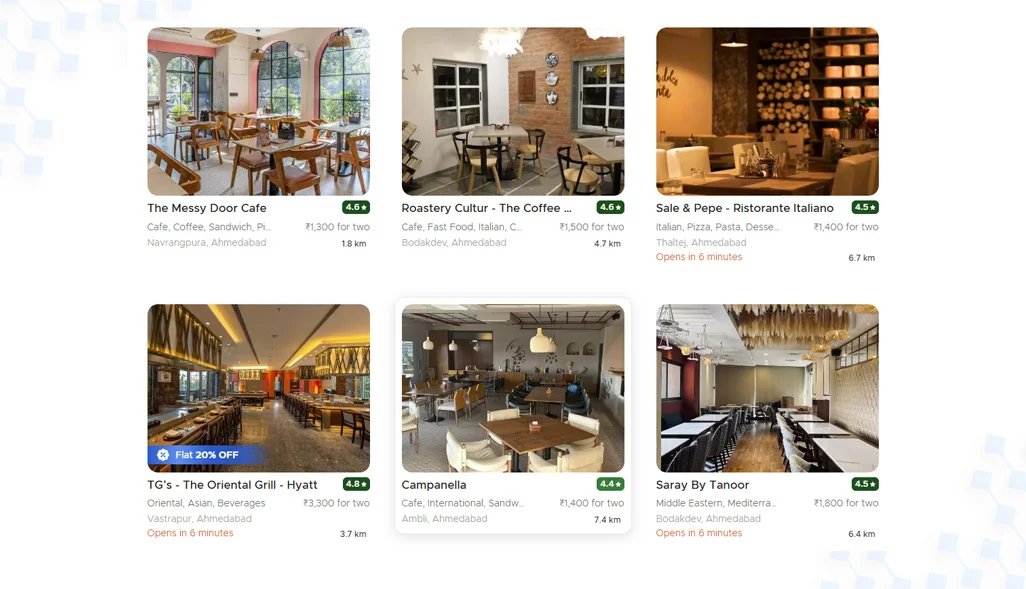
Restaurant-level offers can substantially influence how customers perceive the practical value of a loyalty program. Discounts may differ according to cuisine, location, restaurant participation, minimum order requirements, and promotional periods. A structured dataset makes these differences easier to classify and compare across equivalent restaurant groups without depending on manually collected examples.
For restaurant coverage analysis, Zomato Restaurant Dataset information can organize fields such as restaurant names, cuisine categories, listed prices, ratings, promotional attributes, and delivery conditions. These fields allow analysts to separate restaurant-specific promotions from broader membership benefits. Such separation is useful when assessing whether perceived savings come from loyalty benefits or ordinary restaurant promotions.
| Loyalty Analysis Area | Example Data Points |
|---|---|
| Restaurant coverage | 1,000+ listings |
| Cuisine categories | 25+ |
| Offer types | 6 |
| Discount observations | 8,000+ |
| Location groups | 20 |
Consistent restaurant-level information also supports Zomato Food Delivery Data Scraping across multiple locations and categories. Analysts can compare discount structures, minimum order thresholds, participating restaurants, and pricing conditions while maintaining standardized fields. Repeated collection further helps identify how frequently offers change and whether particular restaurant categories show different promotional behavior.
Important analysis areas include:
- Restaurant participation monitoring
- Cuisine-level offer comparison
- Discount classification
- Minimum order analysis
- Location-based restaurant evaluation
- Membership promotion tracking
This structured approach helps businesses evaluate customer-facing benefits using comparable information rather than isolated promotional examples. The illustrative figures provide a framework for presenting restaurants and offer coverage. Actual values can vary according to location, collection frequency, restaurant availability, platform conditions, and the specific period selected for analysis.
Recurring Order Insights Revealing Shifts in Customer Loyalty Economics

Recurring order behavior provides a broader view of loyalty economics because individual discounts do not always represent long-term customer value. Customers may place different numbers of orders each month, choose different restaurants, or respond differently to delivery benefits. Measuring these patterns requires consistent observations across comparable order scenarios and membership conditions.
A structured Swiggy Restaurant Dataset can organize restaurant prices, cuisines, promotional attributes, delivery conditions, ratings, and availability indicators. Analysts can then model different order combinations and examine how total spending changes across recurring scenarios. This makes it easier to evaluate customer economics according to order frequency, restaurant choice, location, and promotional availability.
| Recurring Order Metric | Illustrative Benchmark |
|---|---|
| Monthly orders modeled | 12 |
| Restaurants compared | 750 |
| Pricing observations | 9,000+ |
| Delivery scenarios | 4 |
| Membership scenarios | 3 |
Repeated collection becomes particularly useful when Swiggy Delivery Data Scraping is incorporated into the workflow because delivery charges and conditions may change between observations. Historical records can help analysts compare recurring order costs while accounting for delivery fees, promotional adjustments, and membership-related conditions. This creates a more complete view of customer spending.
Useful recurring-order measurements include:
- Monthly order cost modeling
- Delivery savings assessment
- Membership scenario comparison
- Restaurant selection analysis
- Promotional frequency tracking
- Customer spending segmentation
These measurements can help businesses understand whether loyalty benefits remain meaningful across different customer behaviors. The illustrative benchmarks demonstrate how a recurring-order model could be presented, while actual outcomes would depend on the selected restaurants, locations, collection period, order values, promotional availability, and membership conditions being analyzed.
How Web Data Crawler Can Help You?
For loyalty program analysis, Zomato vs Swiggy Pricing Data Scraping for Comparison can provide a repeatable framework for collecting pricing and promotional variables across comparable restaurant and delivery scenarios. We can structure information into consistent fields, helping teams evaluate changes without manually assembling separate observations.
The workflow can help organize information according to business-specific requirements and analytical categories. This structure makes recurring pricing observations easier to review when restaurant offers, delivery charges, or membership conditions change.
Key capabilities include:
- Automated collection across selected restaurant categories and locations
- Consistent extraction of pricing and promotional attributes
- Scheduled data collection for recurring market observations
- Structured datasets prepared for analytical workflows
- Flexible filtering by restaurant, cuisine, location, and offer type
- Organized delivery through preferred data formats
The resulting information can support broader loyalty evaluations by combining restaurant-level observations with membership conditions and order economics. Zomato Gold vs Swiggy One Data Comparison can then be incorporated into the analytical workflow to examine recurring benefits, customer spending scenarios, promotional conditions, and differences in membership-related value.
Conclusion
Loyalty program analysis requires consistent information covering prices, fees, offers, restaurant participation, and membership conditions. Zomato vs Swiggy Pricing Data Scraping for Comparison provides a structured framework for examining these variables across recurring order scenarios, helping businesses organize customer-facing pricing information and evaluate changes over time.
Combining structured collection with Zomato Food Delivery Data Scraping can support historical comparisons, promotional monitoring, restaurant-level analysis, and recurring loyalty research. Contact Web Data Crawler to build structured food delivery datasets for your pricing and loyalty program analysis needs.