


What Woolworths vs Coles Competitor Price Data Scraping Reveals About Grocery Pricing Differences?
Oct 15
Introduction
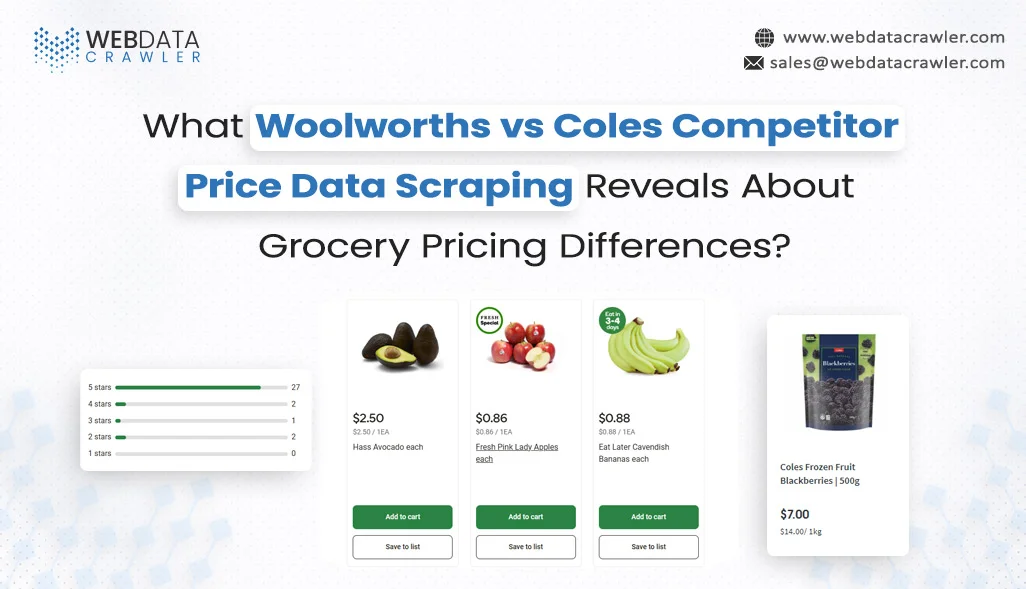
Australia's supermarket industry is highly competitive, with Woolworths and Coles attracting shoppers through product variety, promotional offers, and pricing strategies. Comparing grocery prices helps retailers, suppliers, and market researchers understand how everyday essentials differ across competing stores. Reliable pricing information also supports informed decisions about product positioning, promotional planning, and competitive benchmarking.
Businesses can also assess how pricing changes influence purchasing preferences, product demand, and market positioning. Woolworths vs Coles Competitor Price Data Scraping enables businesses to collect publicly available product prices, discounts, product descriptions, package sizes, and promotional details from both supermarket platforms. Analyzing these records helps identify price differences across comparable products and categories.
Retailers can combine supermarket intelligence with location-based information to understand regional shopping opportunities. For instance, businesses can Scrape Coles Express Locations Data in Australia to examine publicly listed store locations alongside broader retail research. When product information is collected consistently, companies can develop structured datasets for grocery comparisons, pricing analysis, and more informed commercial decisions.
Identifying Key Factors Behind Australian Supermarket Price Differences
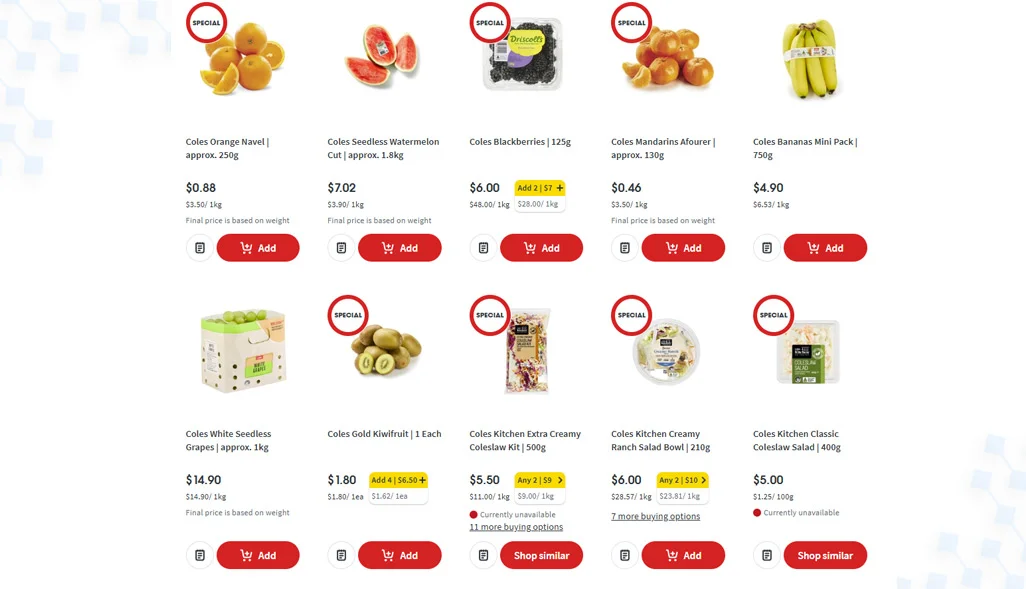
Woolworths and Coles compete across fresh produce, packaged groceries, dairy products, beverages, and household essentials. Comparing identical brands, equivalent package sizes, and similar product specifications helps businesses distinguish genuine price differences from variations caused by product attributes. A Coles Grocery Data Crawler can support the collection of publicly accessible product information, helping analysts organize large inventories into comparable records.
Businesses can then identify categories where one supermarket offers lower prices and examine whether discounts, private-label alternatives, or product positioning contribute to those differences. A reliable comparison framework should consider more than the displayed selling price. Package weight, product quantity, brand positioning, and product variations can significantly influence the final comparison.
Accurate product matching and unit-price calculations help analysts compare similar grocery items with different quantities or ingredients. Using Extract Grocery Discounts From Woolworths enables teams to assess retailer value, avoid mismatched listings, and generate reliable pricing reports for market research.
Structured data collection supports several important grocery benchmarking activities:
- Compare regular prices across equivalent products and categories.
- Evaluate private-label alternatives against national brands.
- Examine differences in package sizes and unit pricing.
- Identify product categories with noticeable price variations.
- Review publicly listed promotional offers and product availability.
Businesses conducting Australian Supermarket Price Web Scraping can organize these observations into structured datasets for further evaluation. Historical records can also help analysts determine whether price differences remain consistent or change over time. By combining comparable product information with regular observations, businesses can establish stronger benchmarks for pricing reviews, assortment planning, and competitor analysis without relying exclusively on manual store checks.
| Comparison factor | Information examined | Business application |
|---|---|---|
| Standard pricing | Regular listed product prices | Establishes baseline comparisons |
| Product quantity | Weight, volume, or unit count | Enables accurate unit-price calculations |
| Brand positioning | National brands and private labels | Evaluates product value differences |
| Promotional activity | Advertised discounts and offers | Supports promotional benchmarking |
| Product availability | Publicly displayed stock information | Adds context to price comparisons |
Evaluating Promotional Activity and Grocery Price Movements
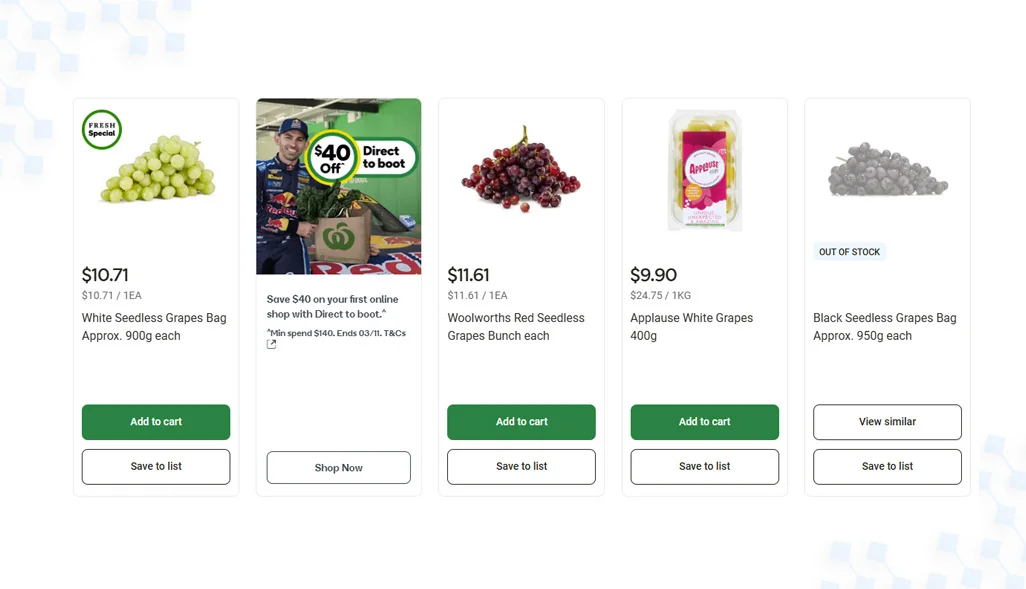
Supermarket pricing changes according to promotional calendars, seasonal demand, supplier arrangements, and competitive conditions. Businesses that monitor these movements can evaluate how discounts influence the relative positioning of comparable products. Web Scraping Coles vs Woolworths Prices helps organize publicly available price observations into structured datasets, making it easier to compare standard prices with promotional offers.
Repeated observations can reveal whether a discount is temporary or part of a recurring promotional pattern. This information supports retail planning, product assortment decisions, and competitive benchmarking while reducing dependence on isolated price checks. Promotional analysis becomes more useful when businesses record the date, product identifier, regular price, advertised discount, and applicable offer conditions.
These details help analysts distinguish genuine price reductions from changes caused by package variations or limited-time promotions. For instance, an advertised saving may apply only to loyalty members or purchases involving multiple units. Capturing these conditions provides important context and helps teams avoid misleading comparisons when evaluating the prices available to different customer groups.
Businesses can evaluate promotional performance through several practical methods:
- Compare regular prices with advertised promotional prices.
- Calculate discount percentages using consistent reference prices.
- Monitor how frequently selected products receive promotions.
- Track price increases and reductions across observation periods.
- Group comparable products to identify category-level patterns.
These findings can support promotional planning, competitor reviews, and pricing discussions while helping analysts prioritize products that warrant additional monitoring. A Coles Grocery Pricing Web Data Scraper can help collect publicly available listing information for structured analysis, subject to website access conditions and applicable requirements.
| Pricing indicator | Analysis approach | Potential insight |
|---|---|---|
| Discount percentage | Compare reference and promotional prices | Measures advertised savings |
| Unit price | Normalize costs by quantity | Identifies relative product value |
| Promotion frequency | Review repeated offers | Reveals recurring discount patterns |
| Price movement | Compare observations across dates | Identifies increases and reductions |
| Category pricing | Group comparable products | Highlights competitive differences |
Applying Grocery Market Intelligence to Better Retail Decisions
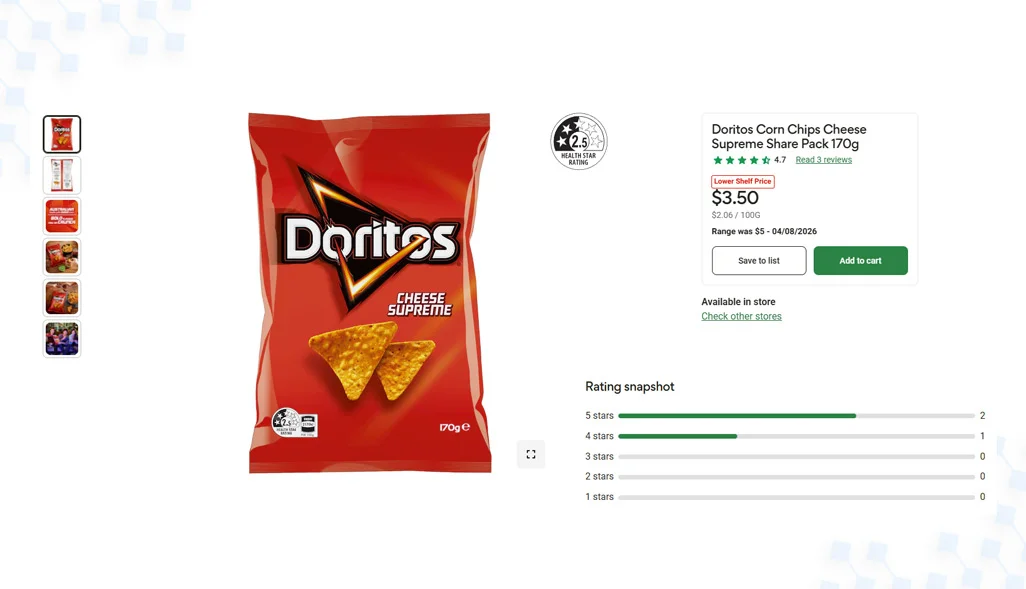
Structured grocery pricing information becomes more valuable when businesses connect product comparisons with wider commercial objectives. Analyzing multiple categories can reveal where competitors emphasize affordability, which products receive frequent promotions, and where pricing adjustments may deserve further investigation. Grocery Data Scraping Services can help businesses organize product listings, prices, package sizes, and promotional details into consistent datasets for recurring analysis.
These datasets can support pricing reviews, supplier discussions, assortment planning, and market research while reducing the need for repetitive manual comparisons. Businesses can also use historical records to understand how grocery pricing changes across different periods. Comparing observations from several weeks or months may reveal recurring promotional schedules, seasonal variations, or differences between product categories.
When data is categorized consistently, analysts can identify products requiring closer attention and prepare reports that explain changes in competitive positioning. This process supports more informed discussions among pricing, merchandising, procurement, and marketing teams without treating individual price observations as definitive evidence of long-term market behavior.
Practical applications of structured grocery intelligence include:
- Benchmark comparable products across competing supermarket ranges.
- Identify potential assortment gaps and alternative product opportunities.
- Evaluate promotional frequency and advertised discount patterns.
- Support supplier discussions with documented pricing comparisons.
- Prepare recurring reports for pricing and merchandising teams.
Businesses can use these workflows to organize collected records, compare current observations with historical data, and distribute structured results to relevant teams. A Grocery Competitor Price Monitoring API can support automated data workflows and recurring analysis when suitable endpoints, integrations, and access permissions are available.
| Business application | Data analyzed | Practical outcome |
|---|---|---|
| Price benchmarking | Comparable product prices | Establishes competitive reference points |
| Assortment planning | Product ranges and categories | Identifies potential assortment gaps |
| Promotion evaluation | Discounts and offer frequency | Supports campaign assessment |
| Supplier negotiations | Differences across comparable products | Informs commercial discussions |
| Market research | Historical and category-level observations | Improves competitive understanding |
How Web Data Crawler Can Help You?
Accurate supermarket comparisons require consistent collection methods, standardized product records, and reliable updates. Through Woolworths vs Coles Competitor Price Data Scraping, organizations can develop comparable datasets that help teams examine listed prices, promotional offers, product specifications, and category-level differences.
The platform can help businesses organize publicly accessible information into formats suitable for analysis, reporting, and internal workflows. These capabilities support research teams, retailers, suppliers, and pricing analysts looking to reduce repetitive manual data collection and establish consistent monitoring processes.
Key ways we can support grocery pricing research include:
- Collect product prices and relevant listing details from supermarket websites.
- Compare equivalent products using consistent identifiers and package measurements.
- Track advertised discounts and promotional price changes across observation periods.
- Organize collected information into structured, analysis-ready datasets.
- Support category-level benchmarking and competitive pricing reports.
- Facilitate recurring data collection according to business requirements and permitted access.
Businesses can use Extract Grocery Discounts From Woolworths as a focused data collection objective when examining publicly available promotional information and applicable offer conditions. We can help transform scattered product information into structured intelligence that supports retail research, competitive comparisons, and informed business decisions.
Conclusion
Understanding grocery price differences requires more than checking individual product listings. Businesses need comparable product records, accurate unit-price calculations, and repeated observations to evaluate promotions and identify meaningful pricing patterns. Woolworths vs Coles Competitor Price Data Scraping helps organize these comparisons, enabling retailers, suppliers, and analysts to assess competitive positioning and make evidence-based decisions.
By incorporating Grocery Competitor Price Monitoring API capabilities where appropriate, businesses can support recurring data analysis and integrate structured results into existing workflows, subject to source availability and access conditions. Contact Web Data Crawler today to discuss customized grocery price data collection and competitor monitoring solutions for your business.