
How Can Web Scraping Solutions for Multi-Ecommerce Platform Increase Retail Revenue by 65% Worldwide?
May 29
Introduction
Modern retail ecosystems are evolving rapidly, and data has become the core driver of profitability and decision-making. Businesses operating across Amazon, Flipkart, Walmart, and other marketplaces require precise insights to remain competitive. One of the most effective approaches for achieving this is Web Scraping Solutions for Multi-Ecommerce Platform, which enables structured and real-time access to large-scale retail intelligence.
With increasing competition and dynamic pricing models, companies are relying heavily on Web Scraping Ecommerce Data to monitor product availability, pricing changes, and customer behavior patterns across multiple platforms simultaneously. This approach eliminates manual tracking and ensures faster decision-making with higher accuracy. Retailers adopting data-driven strategies are experiencing significant improvements in revenue performance and operational efficiency.
This foundation sets the stage for scalable digital transformation in the retail sector. In today's hyper-competitive environment, data consistency and speed are critical. Businesses that implement automated scraping technologies gain a measurable advantage in forecasting demand, understanding competitor behavior, and optimizing product listings. This makes multi-platform data integration not just a technical requirement but a strategic necessity for global retail growth.
Challenges in Unified Retail Data Management Systems
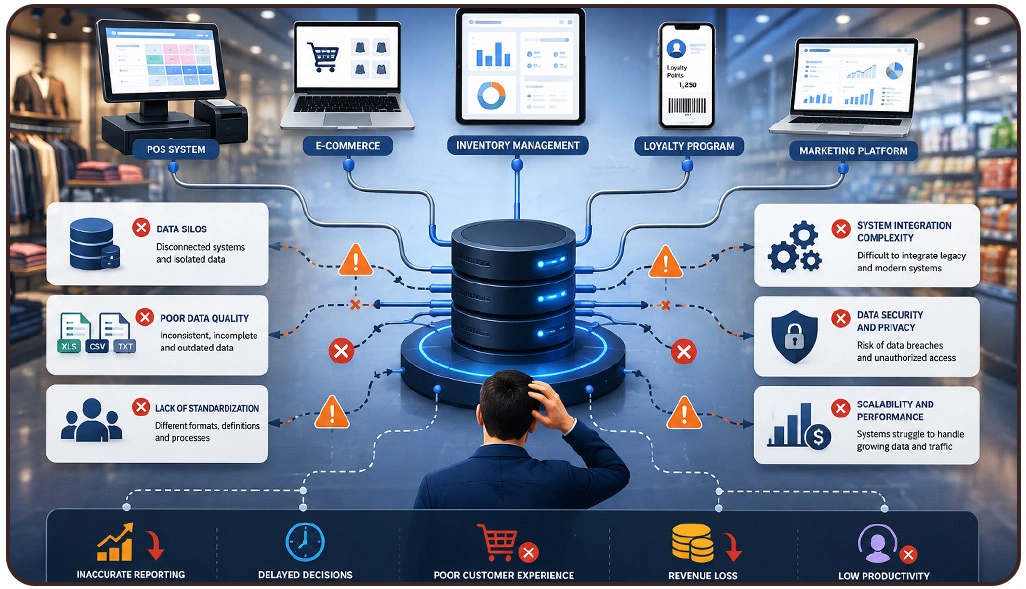
Global ecommerce operations often face challenges related to inconsistent data formats, delayed updates, and fragmented product information. These issues can significantly impact profitability and decision-making accuracy. Organizations addressing these concerns are increasingly implementing End-To-End Retail Data Extraction Using Web Scraping to unify scattered data sources into a centralized system.
One major issue is the inability to maintain synchronized product catalogs across platforms. Businesses struggle with mismatched listings, missing attributes, and outdated pricing structures. To solve this, many organizations process E-Commerce Datasets efficiently, ensuring structured and reliable information flow across all retail channels.
Retailers also face challenges in maintaining consistency across multiple marketplaces where product variations are frequent. This directly affects customer trust and conversion rates. By improving data accuracy, businesses can strengthen operational efficiency and reduce manual workload.
| Common Retail Data Challenges | Challenge Area | Business Impact | Resolution Strategy |
|---|---|---|---|
| Data inconsistency | Data inconsistency | Poor decision-making | Centralized data processing |
| SKU mismatches | SKU mismatches | Inventory errors | Structured data mapping |
| Delayed updates | Delayed updates | Revenue loss | Real-time synchronization |
| Fragmented systems | Fragmented systems | Operational inefficiency | Unified integration |
Additionally, companies must manage high volumes of dynamic retail data across regions. To further enhance system reliability, businesses often implement Retail Inventory and Pricing Data Extraction, which ensures accurate tracking of stock levels and pricing variations across multiple platforms. This improves forecasting accuracy and strengthens competitive positioning in global markets.
Enhancing Market Responsiveness Through Automated Data Systems

In today's fast-paced ecommerce environment, businesses must respond quickly to competitor actions and shifting customer demands. To achieve this, organizations rely on Enterprise Ecommerce Data Extraction Services that automate large-scale data collection and improve operational efficiency across multiple marketplaces.
A major challenge faced by retailers is ensuring real-time synchronization of product listings across platforms. Differences in pricing, availability, and product descriptions can create inconsistencies that impact customer experience. To address this, businesses integrate a Web Scraping API that enables automated and standardized data retrieval across various ecommerce channels.
Another significant advantage of automated systems is scalability. Businesses can expand their data operations without increasing manual workload or infrastructure complexity. This allows seamless handling of large product catalogs across multiple global marketplaces.
| Automation Impact on Retail Performance | Operational Area | Efficiency Gain | Business Outcome |
|---|---|---|---|
| Product updates | Product updates | High accuracy | Reduced listing errors |
| Competitor analysis | Competitor analysis | Faster insights | Better positioning |
| Inventory tracking | Inventory tracking | Real-time sync | Improved availability |
| Market intelligence | Market intelligence | Enhanced clarity | Strategic planning |
Automation also reduces dependency on manual monitoring teams, ensuring faster and more accurate data processing. With improved workflows, organizations can make data-driven decisions in real time and respond effectively to market changes. The integration of structured automation ensures that businesses maintain accuracy while scaling their ecommerce operations efficiently across diverse platforms.
Optimizing Competitive Pricing Strategies With Intelligent Monitoring Tools
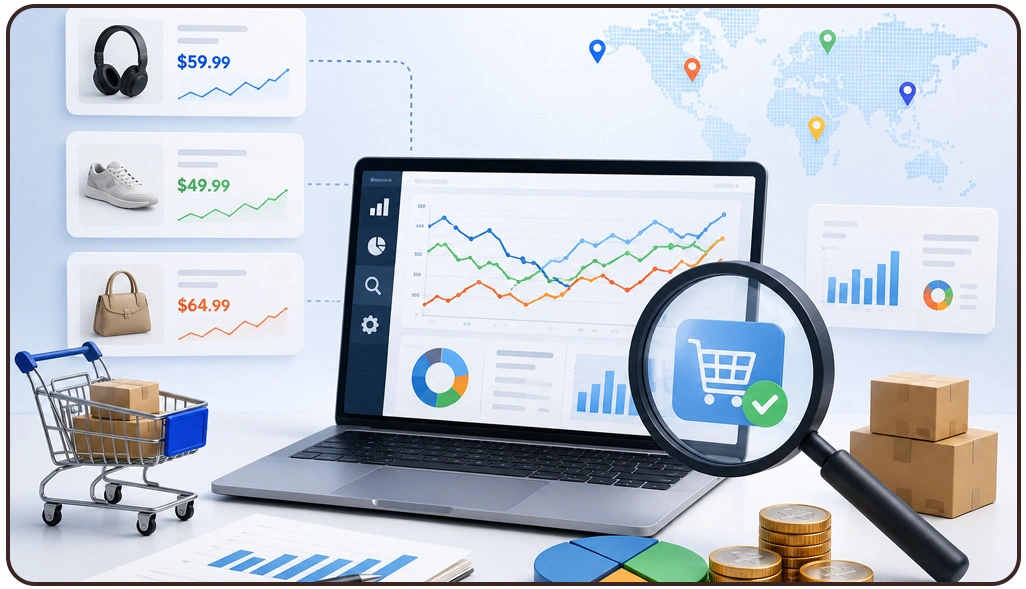
Pricing dynamics in ecommerce platforms change rapidly, making it essential for businesses to adopt real-time monitoring systems. Companies are increasingly utilizing Automated Ecommerce Platform Catalog Monitoring System to track product listings, pricing fluctuations, and competitor movements across global marketplaces.
A significant challenge in modern retail is maintaining consistent pricing strategies across multiple platforms. Without proper synchronization, businesses risk revenue loss and reduced customer trust. To overcome this, organizations analyze Pricing Intelligence to develop data-driven pricing strategies that adapt to market conditions effectively.
Another critical issue is predicting market fluctuations and adjusting pricing strategies proactively. Businesses that rely on historical and real-time data can anticipate changes more effectively and improve overall profitability. Organizations that implement automated monitoring systems gain better visibility into competitor behavior and market trends.
| Pricing Optimization Framework | Pricing Factor | Market Influence | Strategic Advantage |
|---|---|---|---|
| Competitor pricing | Competitor pricing | High impact | Dynamic adjustments |
| Demand trends | Demand trends | Moderate impact | Forecast accuracy |
| Inventory levels | Inventory levels | High impact | Revenue stability |
| Seasonal shifts | Seasonal shifts | Medium impact | Strategic planning |
This enables faster decision-making and improved conversion rates across ecommerce platforms. Additionally, structured pricing frameworks help align merchandising strategies with business goals, ensuring consistency across all sales channels. This improves customer satisfaction and strengthens brand positioning in competitive markets.
How Web Data Crawler Can Help You?
In today's competitive retail ecosystem, we play a crucial role in simplifying large-scale data collection and transformation processes. Businesses aiming to scale across multiple marketplaces often depend on Web Scraping Solutions for Multi-Ecommerce Platform to extract structured insights and convert raw data into actionable intelligence.
Core Benefits:
- Collects structured product information across multiple marketplaces
- Enhances real-time monitoring of competitor listings
- Supports automated price and stock updates
- Improves data consistency across channels
- Reduces operational workload for analytics teams
- Enables faster market response strategies
With advanced automation capabilities, organizations can streamline their retail intelligence workflows and improve forecasting accuracy. Integration with Scalable Retail and E-Commerce Scraping APIs further enhances system performance by ensuring smooth and scalable data processing across global platforms.
Conclusion
The growing complexity of digital commerce demands smarter and faster data-driven solutions. Businesses implementing Web Scraping Solutions for Multi-Ecommerce Platform can significantly improve operational efficiency and revenue outcomes by aligning data intelligence with strategic decision-making.
Organizations that adopt Enterprise Ecommerce Data Extraction Services benefit from improved accuracy, reduced manual workload, and enhanced visibility across global marketplaces. Start building a smarter retail ecosystem with Web Data Crawler today by integrating intelligent data extraction solutions into your business strategy.