
Shopee Data Scraping Services: The Complete Guide to Shopee Product Data Extraction
June 26 2026
Introduction
Shopee has grown into one of the largest e-commerce marketplaces across Southeast Asia, Taiwan, and Latin America, hosting millions of sellers and an ever-expanding catalog of products across nearly every category imaginable. With that scale comes an enormous volume of pricing, inventory, and consumer behavior data data that brands, sellers, and market analysts are increasingly turning to Shopee data scraping services to capture and analyze.
In this guide, we'll explore how Shopee ecommerce data scraping works, what kinds of insights it unlocks, and why structured Shopee product data has become a competitive necessity for sellers and businesses operating in this fast-moving marketplace.
For businesses seeking scalable automation, a Shopee E-Commerce Data API provides structured access to product listings, pricing updates, seller information, and sales trends, enabling seamless integration of marketplace intelligence into analytics dashboards and decision-making systems.
Why Shopee Data Has Become So Valuable
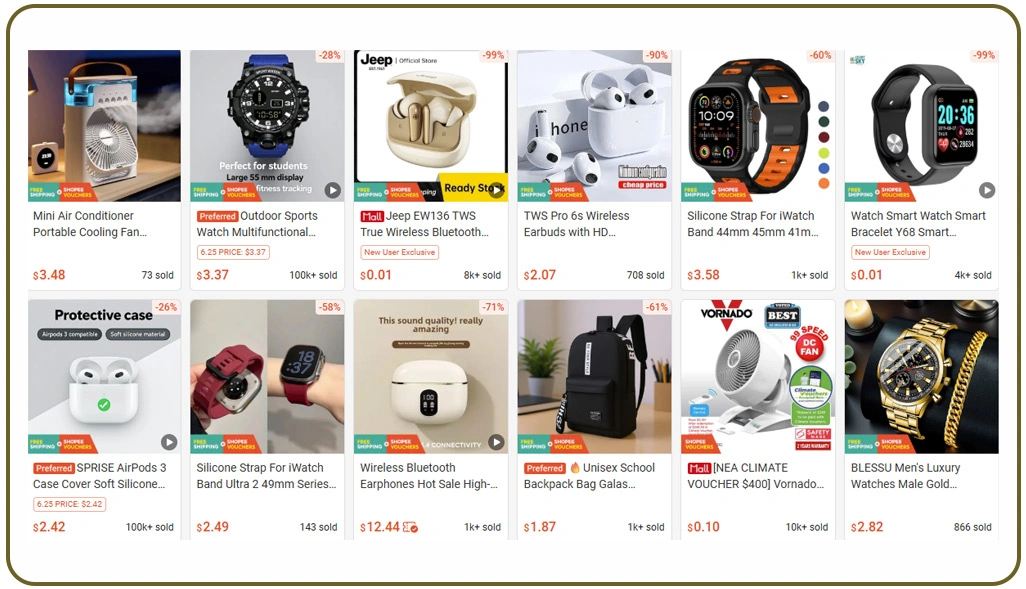
Unlike traditional retail, Shopee's marketplace model means thousands of independent sellers are competing for visibility on the same product categories, often selling near-identical or overlapping items. Prices shift constantly due to flash sales, seller promotions, voucher stacking, and platform-wide campaign events like 9.9 or 11.11 sales. Product rankings, review counts, and stock levels also change continuously as demand fluctuates.
For any business trying to operate competitively on or alongside Shopee, manually tracking this information is simply not scalable. This is exactly why Shopee web scraping services have become essential they convert this fast-moving, fragmented marketplace data into structured datasets that can be monitored, analyzed, and acted upon systematically.
What Is Shopee Data Scraping?
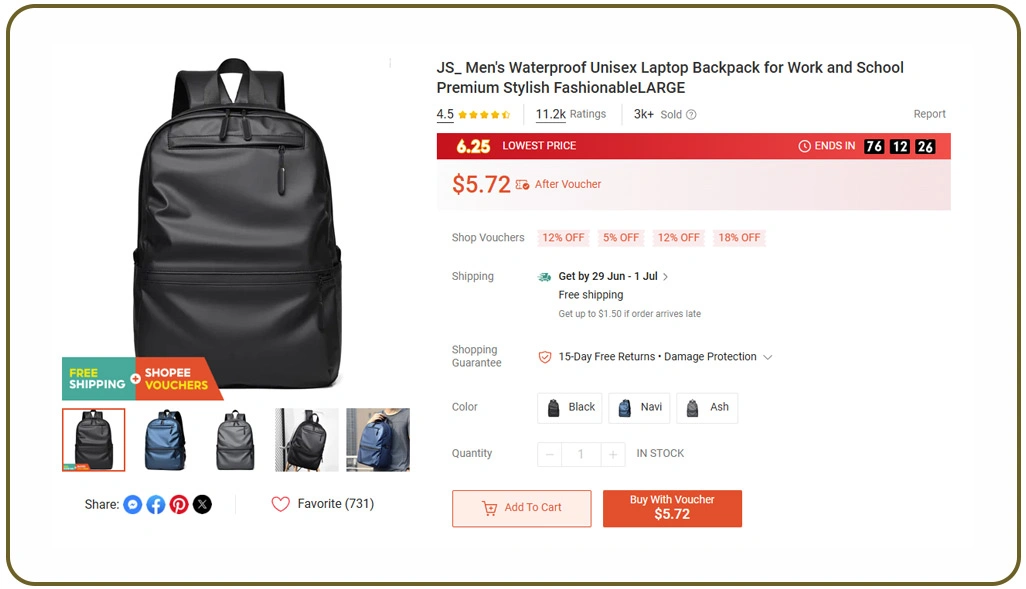
Shopee data scraping is the automated process of extracting structured information from Shopee's product listings, seller pages, and category pages. Rather than browsing the marketplace manually, an automated crawler systematically visits relevant pages and pulls out specific data fields into a clean, structured format such as JSON or CSV.
Commonly extracted data points include:
- Product titles, descriptions, and category tags
- Current prices, original prices, and discount percentages
- Stock availability and quantity sold indicators
- Seller names, ratings, and shop location
- Product images and variation details (size, color, etc.)
- Customer reviews, ratings, and review counts
- Voucher and promotional campaign details
- Shipping fees and estimated delivery times
Because Shopee listings update frequently prices change during flash sales, stock depletes quickly on popular items, and new products are added daily most scraping projects are built as recurring jobs rather than one-time extractions, ensuring the resulting dataset stays current.
Shopee Ecommerce Data Scraping: Understanding the Marketplace at Scale
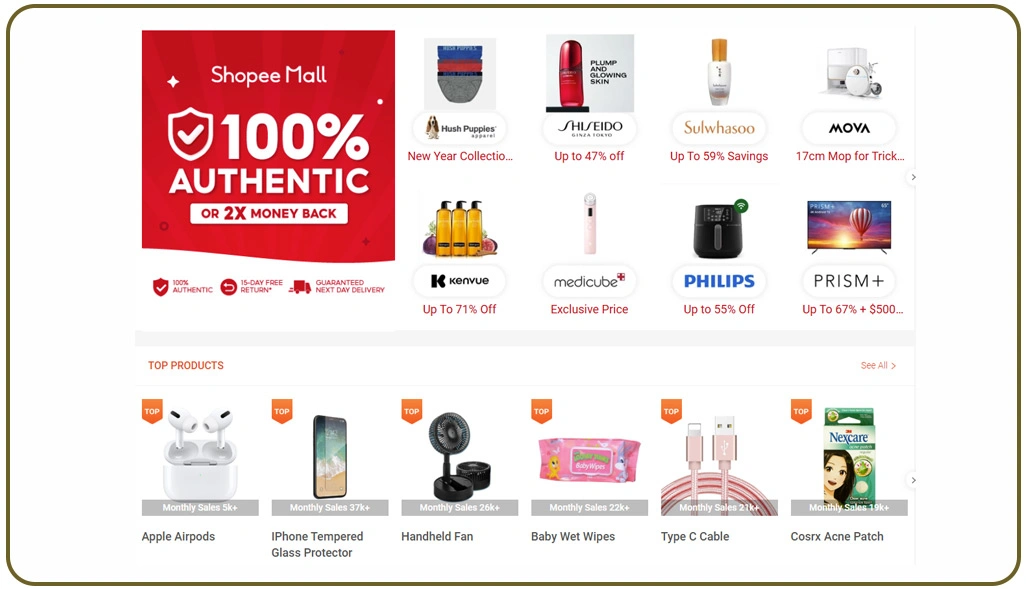
Shopee ecommerce data scraping typically goes beyond single product pages to capture marketplace-wide trends. This broader approach is especially useful for:
- Brand managers monitoring how their products are priced and positioned across multiple third-party sellers
- Competitive analysts tracking category-level pricing trends across thousands of SKUs
- Market researchers studying consumer demand patterns by analyzing bestseller rankings and review velocity
- Investors using marketplace activity as an alternative data signal for e-commerce sector performance
At this scale, scraping isn't just about grabbing individual product details it's about systematically crawling entire categories, search result pages, and seller storefronts to build a comprehensive picture of the marketplace landscape.
Shopee Web Scraping Services: What They Typically Include
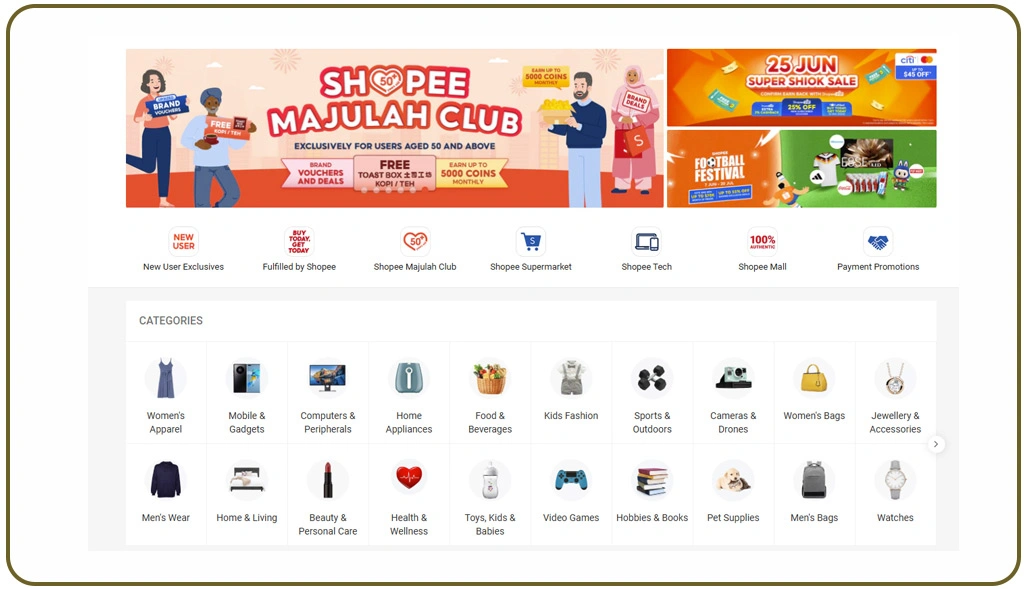
A professional Shopee web scraping services provider generally offers more than simple data extraction they provide a managed pipeline that handles the full lifecycle of data collection. This typically includes:
- Custom crawler development tailored to specific categories, sellers, or search queries
- Anti-bot and CAPTCHA handling to maintain consistent access despite Shopee's protective measures
- Proxy rotation and rate limiting to avoid IP bans during large-scale crawls
- Scheduled and on-demand extraction to keep datasets fresh without manual intervention
- Data cleaning and structuring to ensure exported data is consistent, deduplicated, and ready for analysis
- Delivery in flexible formats such as CSV, JSON, or direct database integration via API
Because Shopee's platform varies slightly across regional domains (Shopee Indonesia, Shopee Philippines, Shopee Brazil, etc.), reliable scraping services also account for region-specific page structures, currencies, and language formatting when building extraction logic.
How to Scrape Shopee Product Data: A Technical Overview
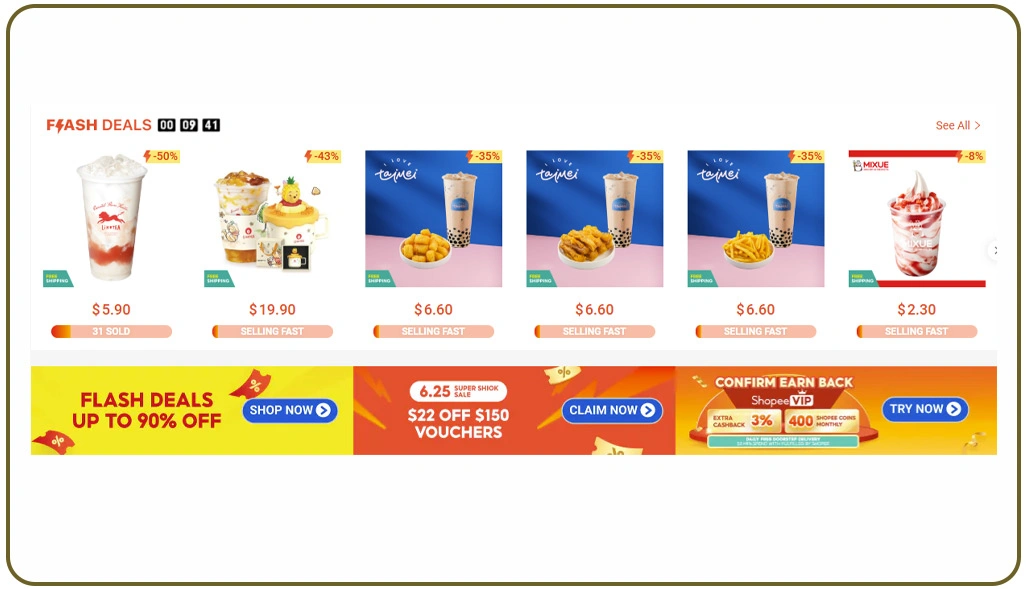
For teams building extraction capabilities in-house, understanding the basic technical approach to scrape Shopee product data is helpful, even if the implementation details vary based on tools and scale.
1. Identify Target Pages or Endpoints
This could mean specific product URLs, category listing pages, search result pages for given keywords, or seller storefront pages depending on the scope of data needed.
2. Handle Dynamic Content Rendering
Like most modern marketplaces, Shopee loads much of its content dynamically through background API calls rather than static HTML. This often requires either headless browser automation (to render JavaScript-heavy pages) or direct interaction with underlying data endpoints where feasible.
3. Extract and Structure Data Fields
Once a page or response is retrieved, specific data fields price, title, stock count, ratings, etc. need to be parsed out and mapped into a consistent schema across all products.
4. Implement Pagination and Crawling Logic
For category or search-based scraping, crawlers need logic to navigate through multiple pages of results, ensuring complete coverage without missing or duplicating listings.
5. Schedule Recurring Extraction
Given how frequently prices and stock levels change, most production scraping systems run on a recurring schedule anywhere from hourly to weekly, depending on how time-sensitive the use case is.
6. Store and Validate Data
Extracted data should be validated for completeness and consistency before being loaded into a database or analytics pipeline, catching issues like missing fields or malformed pricing values early.
Shopee Product Data Extraction: Key Use Cases
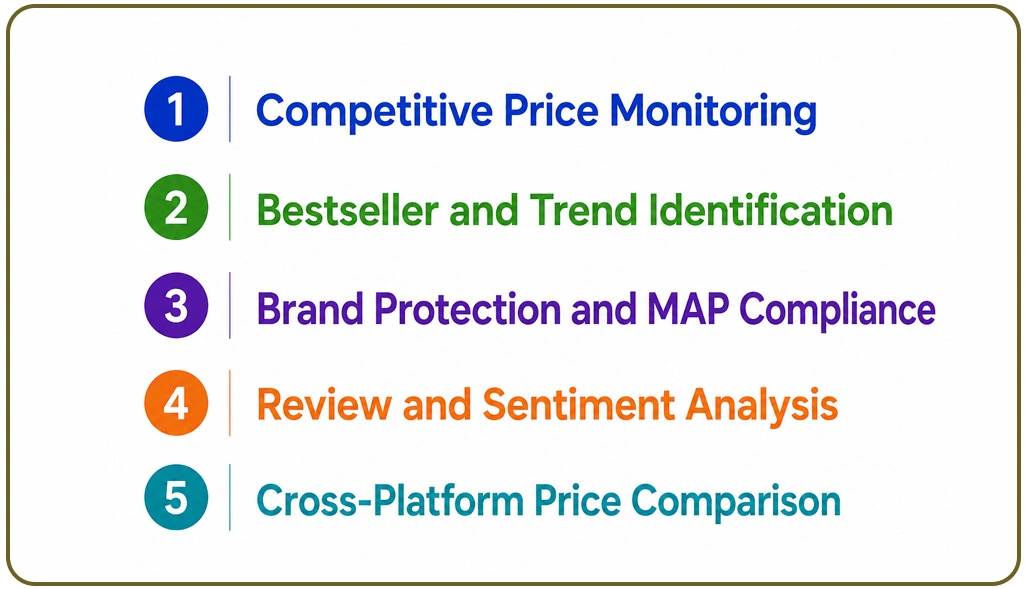
1. Competitive Price Monitoring
Sellers and brands use Shopee product data extraction to track how competitors are pricing similar products, enabling rapid pricing adjustments to stay competitive during high-traffic sales events.
2. Bestseller and Trend Identification
By tracking "items sold" counts and ranking positions over time, businesses can identify which products are gaining traction within a category valuable intelligence for sourcing, inventory planning, or new product development.
3. Brand Protection and MAP Compliance
Brands selling through authorized resellers can monitor Shopee listings to detect unauthorized sellers, counterfeit listings, or pricing that violates minimum advertised price agreements.
4. Review and Sentiment Analysis
Aggregating customer reviews across competing products provides insight into common complaints, desired features, or quality issues useful for product development and customer experience improvements.
5. Cross-Platform Price Comparison
Some businesses combine Shopee data with data from other marketplaces to build comparison tools or ensure consistent pricing strategies across multiple sales channels.
All of these use cases ultimately rely on a well-structured Shopee Product and Pricing Dataset, which consolidates product listings, historical price changes, availability data, and sales performance metrics into a unified format for deeper analytics and strategic decision-making.
Web Scraping Shopee Product Data: Common Challenges
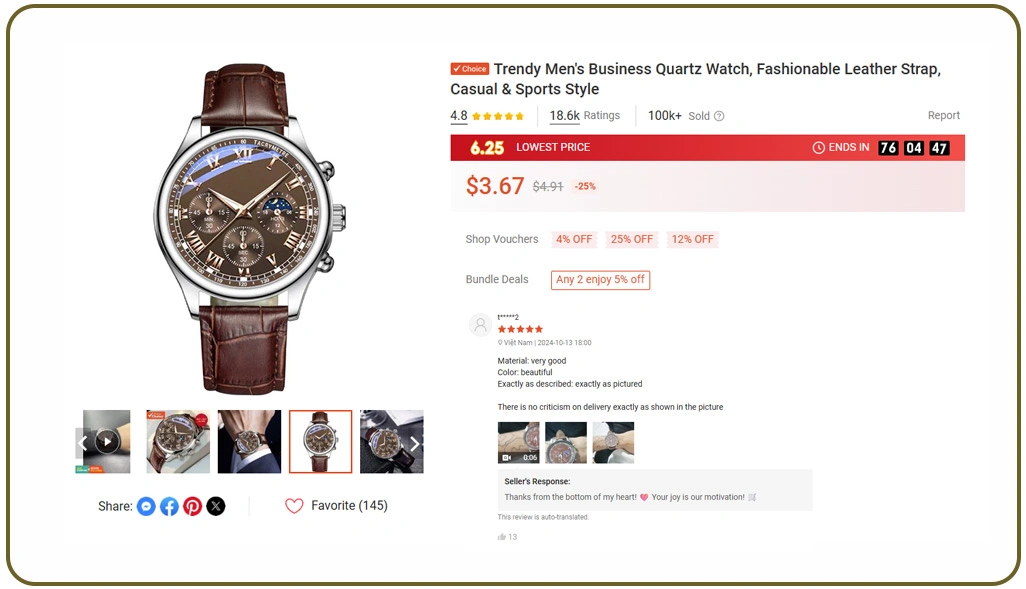
Extracting data from a large, high-traffic marketplace like Shopee comes with real technical challenges:
- Dynamic, JavaScript-rendered pages that require more sophisticated crawling techniques than simple HTML parsing
- Anti-scraping protections, including CAPTCHAs, rate limiting, and behavioral bot detection
- Regional platform variations across different country-specific Shopee domains
- High data volume, with millions of active listings across countless categories
- Frequent layout and structure changes that can break scrapers without proactive monitoring and maintenance
- Flash sale timing sensitivity, where prices and stock can change within minutes during major sales events
These challenges are precisely why many businesses choose to work with experienced Shopee data scraping services providers rather than building and maintaining scraping infrastructure internally. A dedicated provider can absorb the ongoing engineering effort required to keep pace with platform changes while delivering consistently clean, reliable data.
Best Practices for Reliable Shopee Data Collection
- Design schema-first define a consistent data structure across all products before building extraction logic, making downstream analysis far easier
- Use rotating proxies and request throttling to minimize the risk of IP bans during large-scale crawls
- Prioritize extraction frequency based on use case flash sale monitoring may require near-real-time polling, while general catalog tracking can run on a daily or weekly cadence
- Build in resilience to layout changes through modular parsing logic that can be updated quickly when Shopee modifies its page structure
- Validate data continuously to catch pricing anomalies, missing fields, or duplicate entries before they affect analysis
- To simplify these complexities, many teams rely on a Scraping API that standardizes data collection workflows, handles proxy rotation and throttling automatically, and delivers structured Shopee data with built-in resilience against site changes and extraction errors.
The Strategic Value of Structured Shopee Data
The real value of web scraping Shopee product data lies in what businesses build with it. Structured pricing and stock data can feed dynamic repricing algorithms, demand forecasting models, and competitive dashboards. Review and ranking data can inform product development and marketing positioning. Even seller and shop-level data can reveal market concentration trends within specific categories.
As Shopee continues to expand its footprint across emerging e-commerce markets, the businesses that systematically monitor and interpret this marketplace data rather than relying on occasional manual checks will be far better positioned to adapt pricing strategies, identify trends early, and protect brand integrity across the platform.
Conclusion
From Shopee ecommerce data scraping projects focused on marketplace-wide trend analysis to targeted Shopee product data extraction for competitive price monitoring, structured Shopee data has become an essential resource for sellers, brands, and analysts operating in Southeast Asia's e-commerce landscape. The technical complexity of dynamic rendering, regional platform variations, and anti-bot protections, however, means most organizations benefit significantly from partnering with an experienced scraping provider rather than building this infrastructure from scratch.
At Web Data Crawler, we build custom, scalable scraping solutions for e-commerce marketplaces like Shopee covering everything from product and pricing extraction to seller monitoring and trend analysis. If you're ready to turn Shopee's marketplace data into a structured, decision-ready asset for your business, our team can design an extraction pipeline tailored to your exact needs.