
How Do Web Scraping Services for Ecommerce Price Monitoring Support Smarter Ecommerce Growth?
July 7 2026
Introduction
Ecommerce businesses operate in a market where product prices, promotional offers, stock levels, seller activity, and customer preferences can change several times a day. A price that appears competitive in the morning may become less attractive by evening when competitors introduce discounts, bundle offers, or limited-time deals.
Manual tracking makes it difficult for teams to review these changes across multiple marketplaces, categories, and regions. It also creates delays that can affect conversion rates, margins, and customer confidence. Web Scraping Ecommerce Data helps businesses collect structured information from product pages, marketplaces, retailer websites, and competitor catalogs.
When data is collected consistently, businesses can identify price gaps, detect sudden competitor changes, and evaluate the effectiveness of their own campaigns. Web Scraping Services for Ecommerce Price Monitoring provide a practical foundation for tracking these signals at scale. By converting public ecommerce information into usable datasets, businesses can improve pricing accuracy, support better assortment decisions, and create more responsive growth strategies.
Build Stronger Pricing Decisions Through Market Visibility
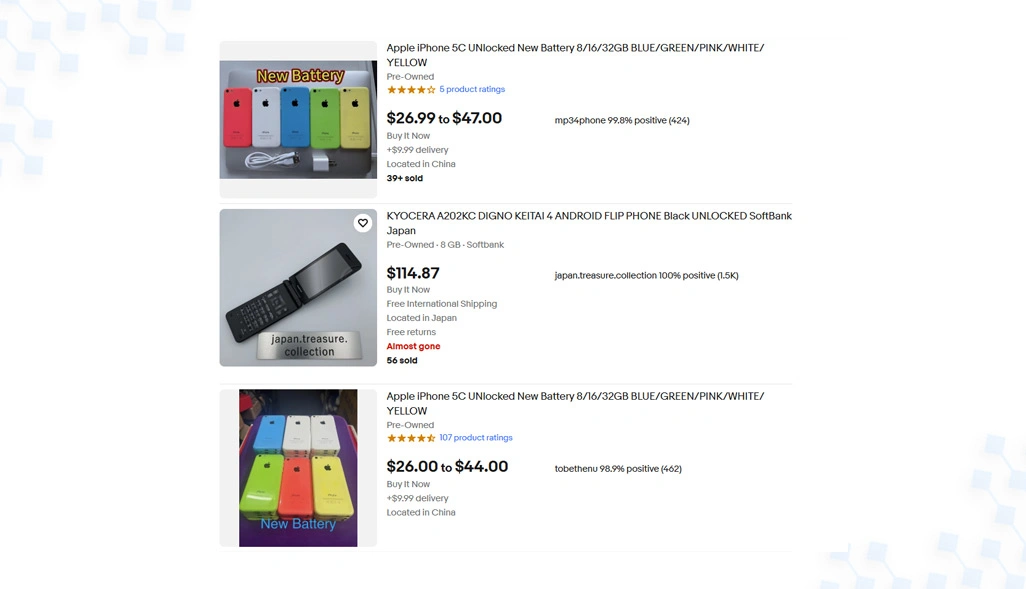
Ecommerce businesses need consistent visibility into competitor pricing, promotional activity, seller behavior, and availability changes to make informed commercial decisions. When teams depend on manual checks, they may miss sudden discounts, limited-time offers, or pricing adjustments that influence customer purchasing behavior.
A structured data process helps businesses compare current prices with market averages while reviewing shipping charges, discount percentages, seller ratings, and product availability. E-Commerce Datasets provide organized information that helps pricing teams understand whether a product is positioned competitively across different platforms.
Rather than reacting to every market change, teams can define pricing thresholds based on demand, product performance, and category competition. Data Extraction Using Software for Ecommerce supports this process by reducing manual effort and creating dependable records for analysis.
| Pricing Challenge | Data Signal to Monitor | Business Impact |
|---|---|---|
| Sudden competitor discounts | Selling price and offer percentage | Supports timely pricing actions |
| Margin pressure | Product cost and market price | Protects profitability |
| Channel price differences | Platform-wise product pricing | Improves marketplace planning |
| Unusual market movement | Historical price records | Identifies recurring changes |
| Promotion overlap | Coupons and bundle offers | Reduces campaign conflicts |
Businesses can also segment products based on sales velocity, customer demand, seasonal relevance, and revenue contribution. This makes it easier to decide where competitive pricing is necessary and where margins can be maintained. For example, fast-moving products may require more frequent monitoring, while premium or niche items may need a value-based pricing approach.
Strengthen Product Planning With Competitor Intelligence
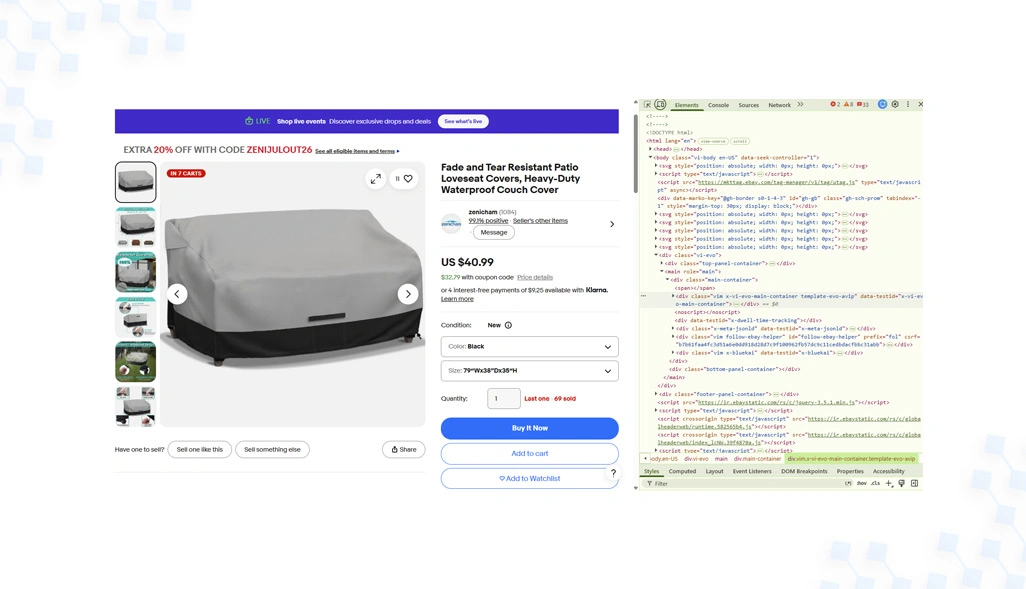
Product performance depends on more than price. Ecommerce customers compare product descriptions, specifications, images, ratings, reviews, delivery options, and seller credibility before completing a purchase. If competing listings provide clearer information, stronger offers, or better availability, customers may choose another seller even when prices are similar.
Businesses need reliable competitor intelligence to improve their product presentation and assortment decisions. Ecommerce Data Scraping Using Web Scraping APIs helps businesses identify assortment gaps and emerging product opportunities. For instance, a retailer can analyze whether competitors offer additional variants, bundles, accessories, or product combinations that attract customer attention.
A structured monitoring workflow helps teams review product-level details across multiple ecommerce platforms. Scraping API solutions can collect product titles, attributes, pricing, ratings, reviews, seller details, and stock status in a consistent format.
| Product Intelligence Area | Information Collected | Practical Use |
|---|---|---|
| Product title comparison | Naming structure and product terms | Improves listing relevance |
| Attribute tracking | Size, color, material, and specifications | Enhances product completeness |
| Review monitoring | Ratings and review volume | Identifies customer concerns |
| Availability checks | In-stock and out-of-stock status | Supports inventory planning |
| Seller analysis | Seller name and fulfillment details | Evaluates marketplace competition |
Businesses can also review recurring customer feedback to understand product strengths and weaknesses. Negative reviews may highlight delivery issues, quality concerns, missing features, or unclear descriptions. This allows teams to improve listings and customer experience before these issues affect sales performance.
Improve Operational Speed With Automated Data Workflows
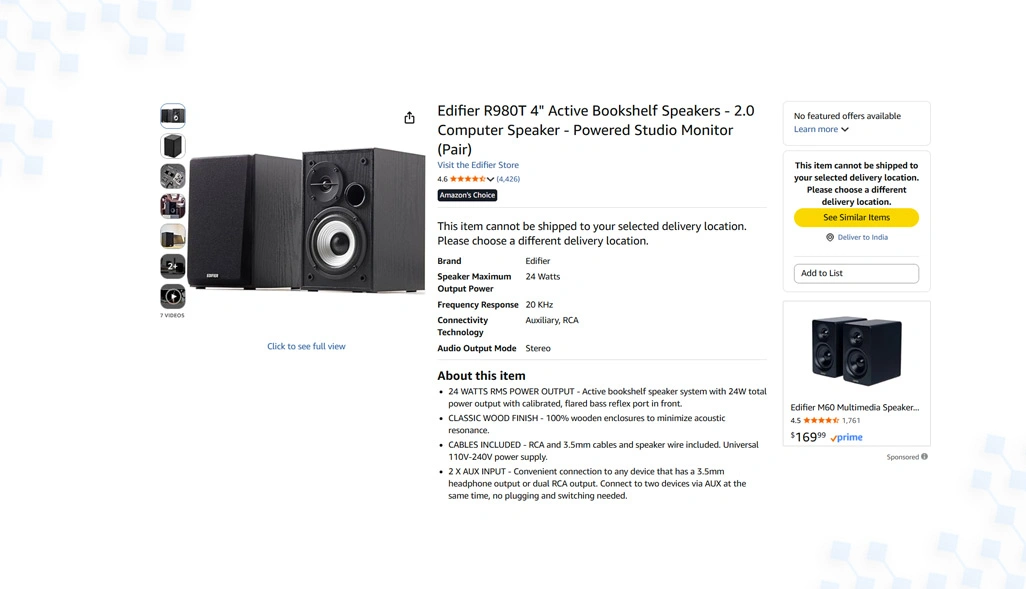
Ecommerce teams often manage large catalogs across several marketplaces, making manual data collection difficult to maintain. Product prices, discounts, availability, and seller details can change frequently, especially during seasonal sales and promotional events.
Automated data collection helps businesses receive structured updates based on their preferred frequency. Web Scraping API solutions can support hourly, daily, or weekly collection schedules depending on product categories and market requirements. This allows businesses to maintain updated records without relying on spreadsheets, screenshots, or repetitive manual checks.
E-Commerce Data Collection Using Web Scraping API can support customized delivery formats, including CSV files, databases, cloud storage, and dashboard integrations. This flexibility allows businesses to connect market intelligence with existing reporting systems and internal tools.
| Automation Requirement | Data Workflow | Operational Benefit |
|---|---|---|
| Frequent price checks | Scheduled data collection | Reduces response delays |
| Competitor alerts | Change-based notifications | Highlights urgent updates |
| Catalog monitoring | Product-level refresh cycles | Maintains listing accuracy |
| Dashboard integration | Database or file delivery | Simplifies reporting |
| Historical tracking | Stored market records | Supports future planning |
Businesses can set alerts for major pricing changes, stockouts, new product listings, unusual discount activity, or rating fluctuations. Historical data also supports long-term planning by showing seasonal pricing cycles, recurring competitor promotions, and product demand shifts.
How Web Data Crawler Can Help You?
Growing ecommerce operations require reliable information that is timely, organized, and relevant to commercial decisions. Through Web Scraping Services for Ecommerce Price Monitoring, businesses can track changing prices, promotional activity, product availability, and seller-level information without relying on time-consuming manual research.
We customize data collection workflows based on product categories, target websites, update frequency, output formats, and reporting requirements.
- Monitor competitor prices across multiple ecommerce platforms.
- Track discounts, offers, bundles, and promotional changes.
- Collect product details, specifications, ratings, and reviews.
- Identify stock availability and out-of-stock product patterns.
- Receive structured data through files, APIs, databases, or dashboards.
- Build historical records for pricing and market trend analysis.
Our team helps businesses transform publicly available ecommerce information into actionable datasets that support operational efficiency and stronger planning. E-Commerce Datasets via Scraper API can be delivered in formats that integrate with internal analytics systems, reporting tools, or custom applications.
Conclusion
Competitive ecommerce growth requires businesses to respond quickly to changing prices, promotions, availability, and product trends. Web Scraping Services for Ecommerce Price Monitoring make it easier to collect accurate market signals, compare competitor activity, and improve pricing decisions with structured data.
Businesses can also Extract Ecommerce for Product & Pricing Insights to strengthen catalog planning, promotional analysis, and customer-focused strategies. Contact Web Data Crawler today to build a customized ecommerce data solution that supports smarter decisions and sustainable growth.