
How Web Scraping Furniture Product Data for Competitive Analysis Enhances Competitor Benchmarking?
May 21
Introduction
The furniture retail market continues to evolve as online platforms reshape how customers compare styles, pricing, and product availability before making purchasing decisions. By implementing Web Scraping Furniture Product Data for Competitive Analysis, companies can monitor product assortments, pricing fluctuations, discount campaigns, stock availability, and category expansion across multiple eCommerce platforms.
This process helps retailers improve pricing accuracy, optimize inventory planning, and identify emerging consumer trends with greater precision. Modern furniture brands increasingly depend on automated data collection technologies to extract large-scale product insights from digital marketplaces. Using a reliable Web Scraping API, businesses can collect structured information related to product dimensions, material specifications, customer reviews, ratings, and promotional activities in real time.
Additionally, retailers can identify regional buying behavior, seasonal demand variations, and product positioning strategies that directly influence customer engagement. As digital commerce continues expanding, businesses adopting data-driven monitoring systems are better prepared to improve operational efficiency, pricing consistency, and long-term market positioning within the growing furniture industry.
Understanding Shifting Consumer Interests Across Furniture Platforms
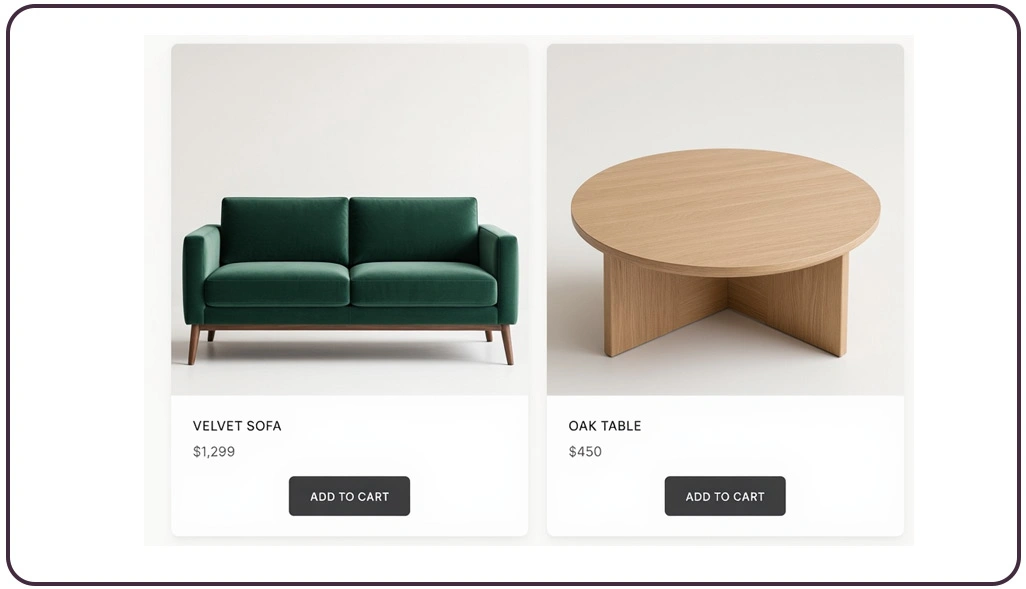
Furniture retailers continuously face challenges in understanding changing customer preferences across digital marketplaces where pricing, design trends, and inventory availability evolve rapidly. Automated data extraction systems help retailers collect structured information from multiple online sources while improving operational visibility and customer engagement analysis.
Recent industry studies indicate that nearly 72% of online furniture buyers compare products across multiple websites before completing purchases. Approximately 64% of shoppers also review ratings and product feedback before selecting furniture products online. The use of Sentiment Analysis further helps businesses evaluate customer feedback patterns and identify frequently preferred product attributes influencing purchasing decisions.
Advanced technologies such as AI Driven Furniture Market Analysis Using Scraped Data allow companies to monitor category-level demand fluctuations, evaluate product positioning strategies, and identify high-performing assortment segments. These systems improve decision-making by providing detailed visibility into regional demand trends, customer engagement metrics, and promotional campaign performance.
| Market Intelligence Area | Operational Benefit |
|---|---|
| Customer feedback monitoring | Improves product planning |
| Category trend analysis | Supports assortment optimization |
| Inventory visibility tracking | Enhances stock management |
| Promotion comparison analysis | Improves campaign performance |
| Marketplace product monitoring | Strengthens retail visibility |
Structured retail intelligence systems help furniture brands improve operational efficiency, customer satisfaction, and product positioning across rapidly expanding online marketplaces.
Building Stronger Retail Strategies Through Market Comparison
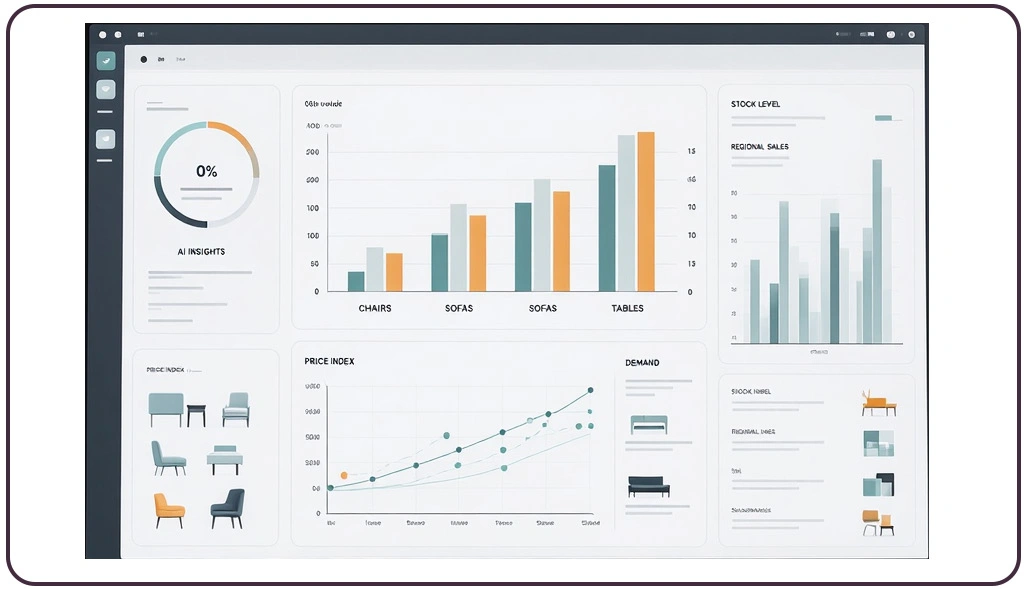
Digital furniture retailers operate in highly competitive marketplaces where pricing structures, promotional campaigns, and product assortments frequently change across regions and platforms. Businesses relying on manual tracking methods often struggle to maintain pricing consistency and monitor competitor activity efficiently. These systems support faster decision-making while reducing inaccuracies caused by delayed market monitoring processes.
Research shows that businesses implementing automated retail monitoring technologies achieve nearly 30% higher pricing responsiveness and improved inventory coordination across online channels. Integrating Competitive Benchmarking into digital monitoring strategies enables companies to compare operational performance against leading competitors while identifying gaps in pricing or assortment positioning.
The adoption of Furniture Pricing Intelligence Solutions for Retailers allows businesses to evaluate competitor discounts, pricing structures, and category-level promotional strategies in real time. Retailers can also monitor stock fluctuations, bundled offers, and regional product availability trends that influence customer purchasing behavior. Automated comparison systems provide greater visibility into how competing brands adjust pricing during seasonal sales periods and peak shopping events.
| Retail Comparison Factor | Strategic Advantage |
|---|---|
| Price fluctuation tracking | Improves pricing accuracy |
| Promotion analysis | Enhances campaign planning |
| Regional assortment evaluation | Supports market expansion |
| Competitor stock visibility | Strengthens inventory control |
| Customer engagement monitoring | Improves conversion performance |
Additionally, Furniture Demand Forecasting Using Scraped Retail Data supports procurement optimization and future demand planning by helping businesses identify seasonal buying trends, product popularity changes, and emerging consumer preferences within the competitive furniture marketplace.
Strengthening Inventory Visibility Across Online Retail Channels
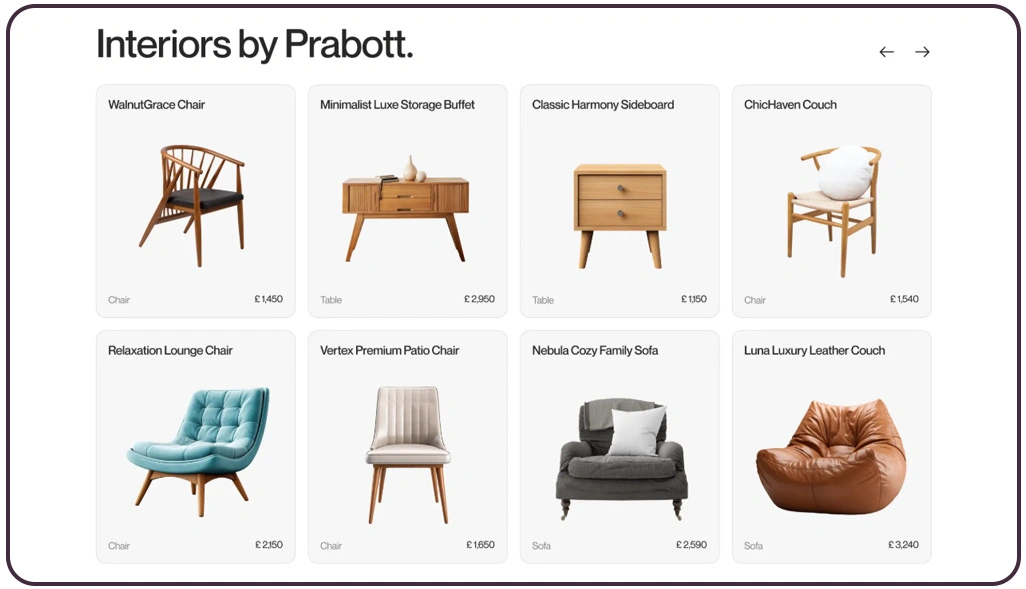
Inventory management remains one of the most critical operational challenges for furniture retailers operating across multiple digital marketplaces. Product availability, pricing updates, and promotional schedules frequently change throughout online platforms, making manual monitoring highly inefficient for large-scale retail operations. Structured data collection technologies help companies maintain greater visibility into competitor activities and improve customer satisfaction through more accurate inventory management.
Industry reports suggest that approximately 47% of online shoppers abandon purchases when inventory information appears outdated or inaccurate. Businesses increasingly depend on automated extraction systems powered by a scalable Web Crawler to simplify continuous marketplace monitoring activities. Automated intelligence systems also support quicker responses to sudden market changes, allowing businesses to adapt inventory strategies during seasonal demand fluctuations and promotional campaigns.
The implementation of Scrape Real Time Furniture Pricing and Inventory Tracking technologies enables businesses to monitor stock movements, category expansion, and discount schedules with greater accuracy. Retailers can evaluate which product categories experience higher engagement levels while identifying competitor inventory trends affecting market positioning.
| Inventory Monitoring Function | Business Impact |
|---|---|
| Stock availability tracking | Reduces inventory shortages |
| Pricing update monitoring | Improves pricing consistency |
| Product launch analysis | Supports category planning |
| Promotion visibility tracking | Enhances campaign management |
| Marketplace assortment review | Improves retail responsiveness |
Furthermore, Online Furniture Catalog Monitoring for Brand Comparison helps retailers evaluate competitor assortments, identify changing product trends, and improve digital merchandising strategies across evolving furniture marketplaces.
How Web Data Crawler Can Help You?
Modern furniture businesses require accurate and scalable market intelligence systems to manage pricing, inventory, and competitor analysis effectively. By implementing Web Scraping Furniture Product Data for Competitive Analysis, companies can collect structured insights from multiple online furniture marketplaces while improving operational efficiency and strategic decision-making.
Key advantages of automated market intelligence solutions include:
- Monitoring competitor pricing changes across multiple marketplaces
- Tracking inventory fluctuations and product availability updates
- Identifying high-performing product categories and assortments
- Analyzing customer engagement and purchase behavior trends
- Evaluating promotional strategies and seasonal discount activity
- Improving procurement planning through real-time retail insights
Businesses can also strengthen long-term retail planning with AI Driven Furniture Market Analysis Using Scraped Data, enabling more accurate trend forecasting, category optimization, and product positioning strategies across rapidly evolving furniture marketplaces.
Conclusion
Furniture retailers operating in fast-changing digital marketplaces require accurate and scalable intelligence systems to improve pricing strategies, assortment planning, and customer engagement. By adopting Web Scraping Furniture Product Data for Competitive Analysis, businesses can monitor competitor activities more effectively while improving inventory visibility and operational responsiveness across multiple online channels.
Retailers also benefit from stronger forecasting capabilities through Furniture Demand Forecasting Using Scraped Retail Data, allowing businesses to anticipate market shifts, optimize procurement decisions, and improve long-term profitability. Connect with Web Data Crawler today to build customized furniture market monitoring solutions designed for scalable retail growth and smarter competitive analysis.