


How Walmart Product Data API for Ecommerce Applications Simplifies Price, Stock and Seller Tracking?
Oct 06
Introduction
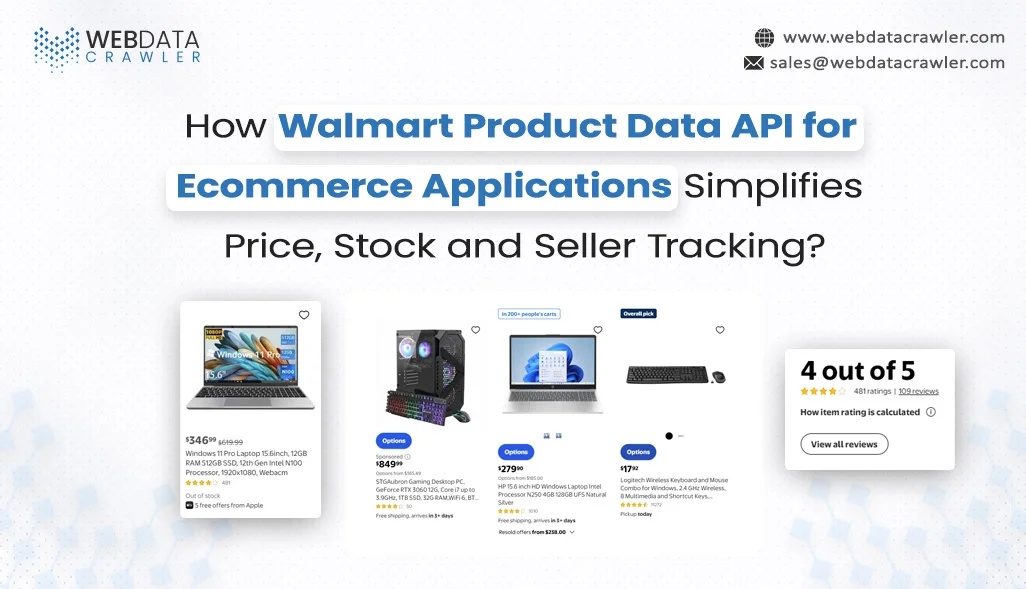
Modern ecommerce teams need accurate product information to evaluate prices, inventory levels, sellers, and marketplace movements. A structured Walmart Product Data API for Ecommerce Applications can organize these signals into usable datasets, helping retailers and analysts compare product changes without depending on repetitive manual collection processes.
Price and stock conditions can change multiple times throughout a selling cycle. Using a Walmart E-Commerce Data Crawler, businesses can collect product attributes, availability indicators, seller information, and pricing details at scheduled intervals. This creates a consistent data layer for dashboards, competitive analysis, assortment planning, and marketplace research.
With organized data, teams can identify pricing gaps, monitor stock fluctuations, and evaluate seller activity across product categories. Automated collection also reduces spreadsheet-based work and supports faster analysis. The resulting information can be connected with internal systems, reporting tools, and analytical workflows to support more informed ecommerce decisions.
Streamlining Walmart Product Availability Through Automated Tracking
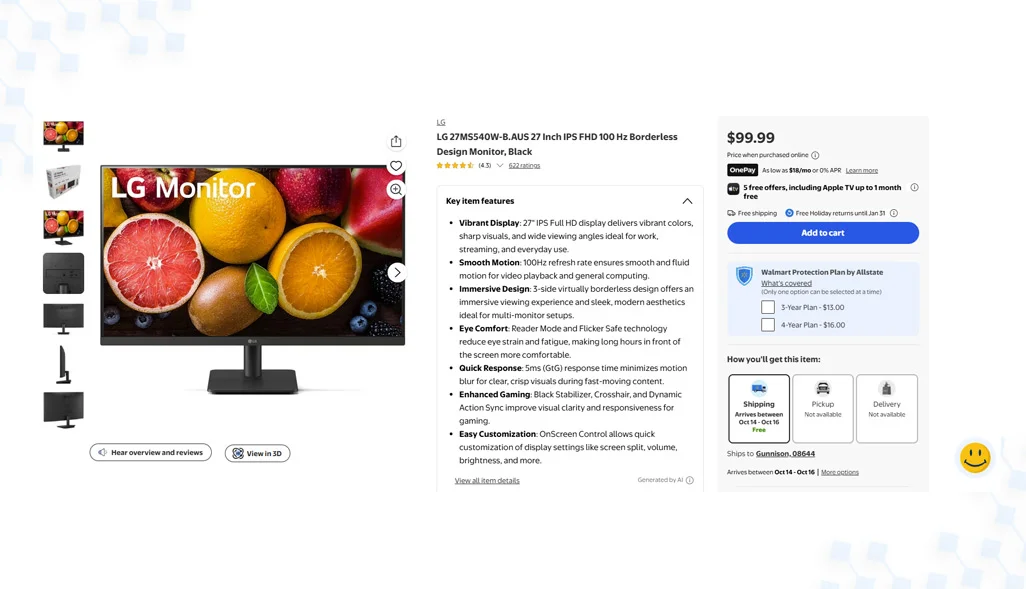
Product availability is an important ecommerce signal because stock conditions can influence purchasing opportunities, product visibility, and customer satisfaction. Retailers monitoring thousands of SKUs require consistent information instead of occasional manual checks. Through Scrape Walmart Product Availability Data API, teams can collect availability indicators at scheduled intervals and compare changes across products, categories, and time periods.
Automated availability tracking becomes particularly useful for businesses managing large product catalogs. For example, monitoring 5,000 SKUs four times daily could generate approximately 20,000 observations within a single day. These records can reveal frequently unavailable products, recurring stock fluctuations, and category-level supply patterns.
Integration also makes collected information easier to use across internal workflows. The Walmart E-Commerce Data API can help transfer structured marketplace information into databases, dashboards, reporting environments, or analytical systems. Teams can establish recurring collection schedules and organize information according to SKU, category, brand, seller, or availability status, creating a consistent foundation for ongoing ecommerce analysis.
Key applications include:
- Monitoring product availability at regular intervals
- Identifying recurring stock-out patterns
- Comparing availability across product categories
- Supporting inventory and assortment planning
| Tracking Area | Example Coverage | Business Application |
|---|---|---|
| SKU availability | 5,000 products | Inventory monitoring |
| Daily observations | 20,000 records | Trend analysis |
| Category coverage | 50 categories | Supply comparison |
Overall, structured availability information helps ecommerce teams replace fragmented checks with repeatable monitoring. Historical observations can also support trend identification, operational reporting, and product-level analysis, giving businesses a clearer understanding of changing stock conditions.
Strengthening Seller Insights Through Marketplace Data
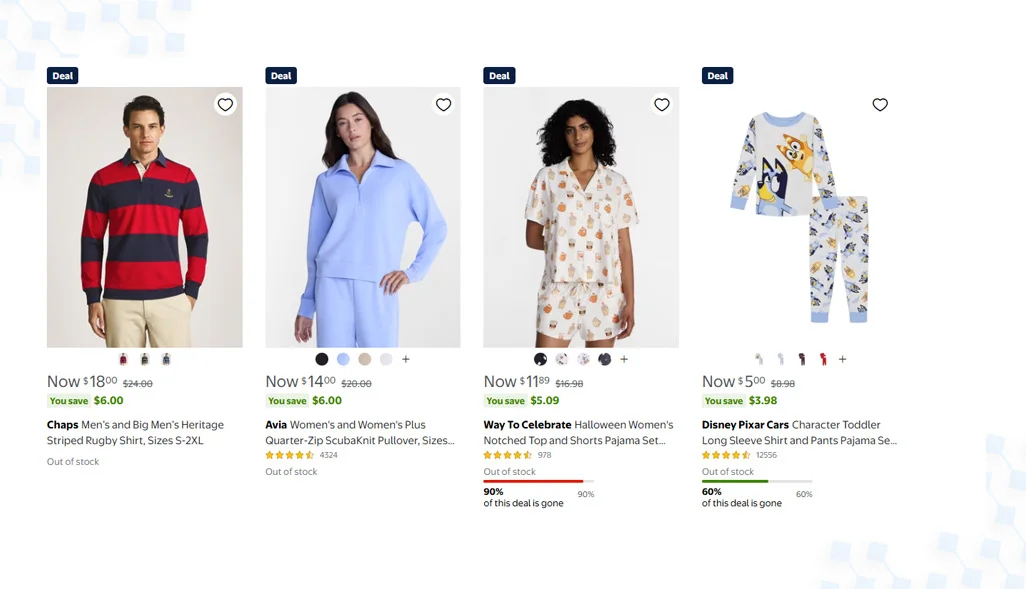
Seller activity provides valuable marketplace context because multiple merchants may compete for visibility, customers, and product demand. Tracking seller information across relevant listings allows ecommerce teams to understand marketplace participation and offer diversity. Walmart Seller Data Scraping for Marketplace Analysis can organize seller names, associated products, offers, and related signals, creating a structured view for comparing marketplace activity across categories.
Large-scale seller monitoring can generate substantial records during regular collection cycles. For example, tracking 1,000 product listings with three sellers associated with each listing could produce approximately 3,000 seller observations. Comparing these records over time can help businesses identify recurring sellers, changing marketplace participation, and differences in product-level competition.
Consolidating these observations into Walmart Ecommerce Datasets can make marketplace research more manageable for analysts and business teams. Structured records can include product identifiers, seller information, offer details, category attributes, and collection timestamps. Historical datasets also allow teams to compare seller participation over different periods and identify patterns that may not be visible through isolated marketplace checks.
Important seller-analysis applications include:
- Comparing seller participation across product categories
- Tracking changes in marketplace competition
- Identifying frequently appearing sellers
- Organizing seller-level historical observations
| Seller Metric | Example Volume | Analytical Purpose |
|---|---|---|
| Product listings | 1,000 | Assortment comparison |
| Seller observations | 3,000 | Seller activity |
| Collection cycles | 4 daily | Historical tracking |
A structured seller-monitoring process therefore gives ecommerce teams a clearer understanding of marketplace composition. By combining recurring collection with organized historical records, businesses can evaluate seller activity alongside product and category information, supporting more detailed marketplace research and strategic decision-making.
Improving Walmart Price Comparison With Listing Intelligence
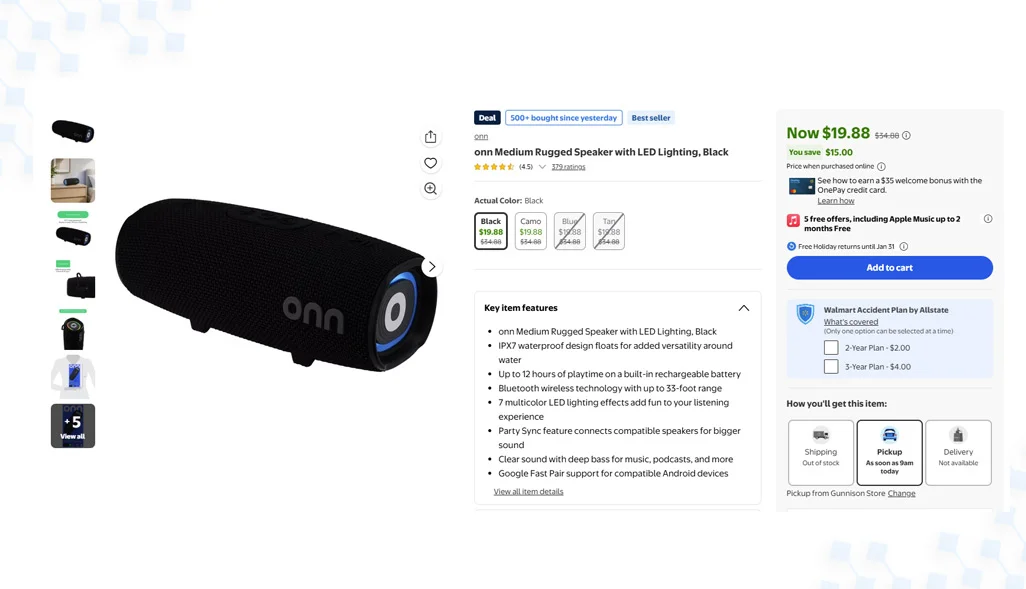
Price intelligence becomes more meaningful when product pricing is analyzed alongside availability, listings, and marketplace conditions. Businesses tracking thousands of products need consistent observations to identify price differences and changing market positions. Web Scraping Walmart Product Price and Stock Data can collect pricing and availability information at defined intervals, allowing teams to compare product conditions across categories and identify meaningful changes.
A structured Walmart Pricing Dataset can support historical price analysis by preserving observations collected over multiple monitoring cycles. For instance, a dataset containing 10,000 SKU observations can help analysts evaluate price ranges, category averages, product-level movements, and changes across collection periods.
Competitive analysis can become more actionable when price observations are reviewed systematically. Walmart Competitor Price Monitoring can help businesses compare similar products, identify pricing gaps, and evaluate how marketplace prices shift over time. Product-level information can also be expanded beyond price and stock indicators. Through Walmart Product Listing Scraping, businesses can organize product titles, brands, categories, specifications, and other listing attributes.
Useful applications include:
- Comparing product prices across categories
- Monitoring recurring pricing movements
- Evaluating stock and price relationships
- Organizing product attributes for analysis
| Data Point | Example Records | Analytical Value |
|---|---|---|
| Product prices | 10,000 | Price comparison |
| Stock observations | 10,000 | Availability analysis |
| Listing attributes | 10,000 | Catalog research |
Combining pricing, availability, and listing information creates a stronger analytical foundation for ecommerce teams. Meanwhile, Web Scraping Walmart Product Data can provide broader product-level records that help connect listing information with pricing and availability observations for deeper analysis.
How Web Data Crawler Can Help You?
Ecommerce teams often manage thousands of products across changing categories, making manual tracking time-consuming and difficult to scale. A structured Walmart Product Data API for Ecommerce Applications can centralize product information and make recurring collection easier for analytical workflows. It can also support consistent data formatting across multiple monitoring cycles.
Key capabilities can include:
- Automated collection across selected product categories
- Scheduled monitoring for changing product information
- Structured output suitable for analytical systems
- Scalable processing across large product inventories
- Flexible data organization for reporting requirements
- Integration support for dashboards and business workflows
With these capabilities, businesses can reduce repetitive data-handling tasks while maintaining a consistent flow of marketplace information. The collected records can support pricing analysis, assortment evaluation, inventory research, seller comparison, and category-level reporting.
This flexibility allows ecommerce teams to create workflows that align with internal reporting structures and analytical objectives. It also supports easier integration with databases, dashboards, business intelligence platforms, and other data environments.
Conclusion
A reliable product data workflow can simplify the way ecommerce teams evaluate prices, availability, listings, and marketplace sellers. By incorporating Walmart Product Data API for Ecommerce Applications into analytical processes, businesses can organize large volumes of marketplace information and turn recurring product observations into structured insights for ecommerce research and operational planning.
Consistent monitoring also supports broader competitive research and decision-making. Walmart Product Listing Scraping can complement product-level analysis by keeping listing attributes organized for comparison and reporting. Connect with Web Data Crawler today to build a scalable Walmart product data solution tailored to your ecommerce analytics needs.