


How Can Walmart Grocery Delivery Data Scraping for Insights Track Product Availability at Scale?
Sep 01, 2026
Introduction
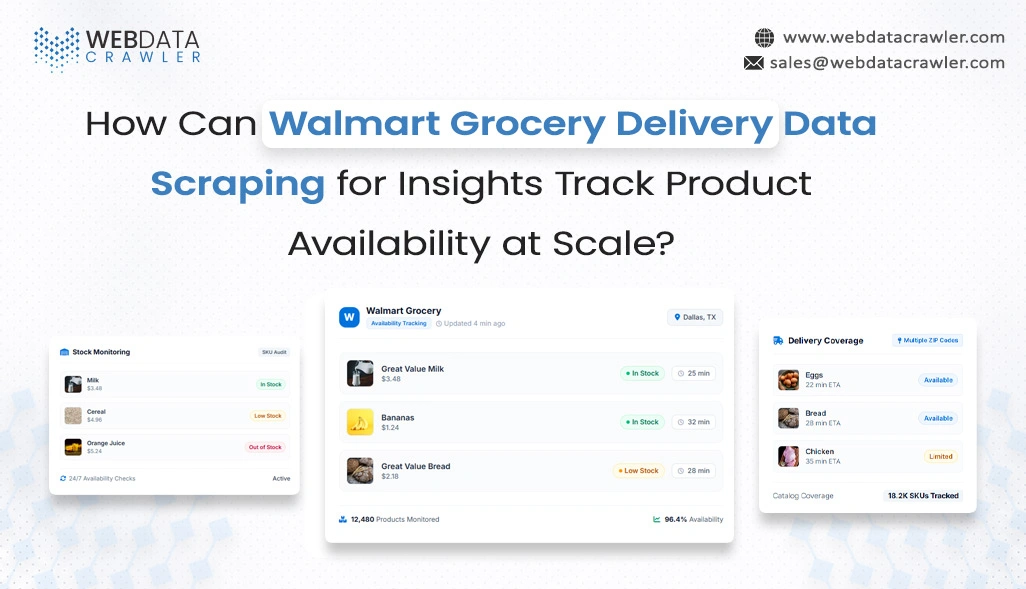
Retailers need accurate product availability information to understand customer demand, identify stock gaps, and improve assortment decisions. Walmart Grocery Delivery Data Scraping for Insights enables businesses to collect structured product information across large grocery catalogs, supporting systematic monitoring of inventory-related changes and market conditions.
Through Web Scraping Walmart Product Data, organizations can capture product names, categories, prices, brands, package sizes, ratings, and availability indicators. Automated collection reduces the limitations of manual monitoring while helping analysts compare thousands of listings across locations and time periods.
Scalable collection also supports faster retail intelligence by turning frequently changing marketplace information into structured datasets. Businesses can analyze availability trends, identify recurring stockouts, compare pricing movements, and evaluate assortment coverage to support merchandising, demand planning, competitive research, and operational decisions.
Tracking Product Availability Across Extensive Grocery Catalogs Efficiently
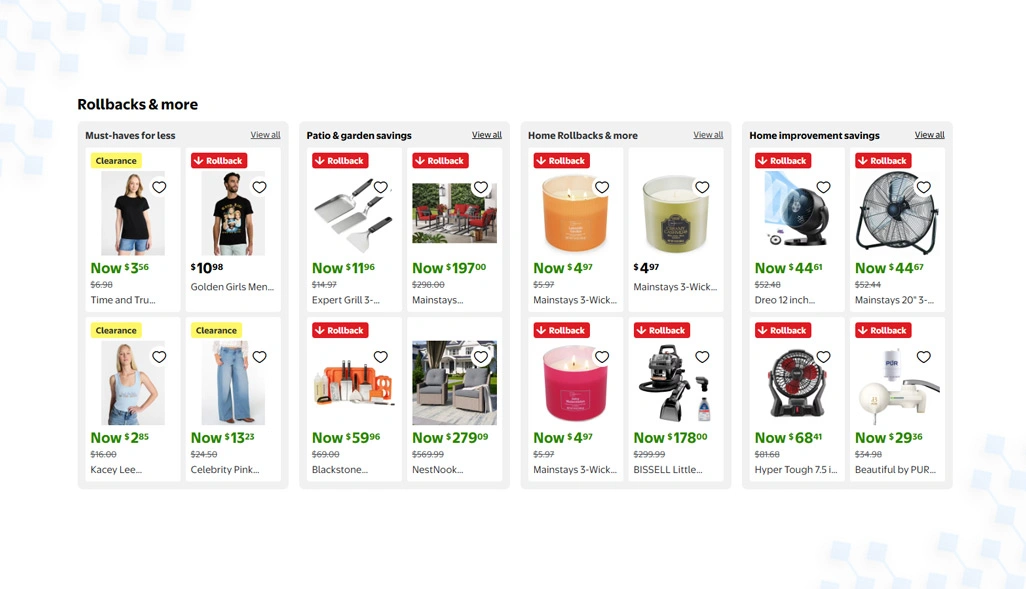
Product availability can change frequently because of demand fluctuations, local inventory conditions, fulfillment capacity, seasonal purchasing, and regional buying patterns. Businesses monitoring extensive grocery catalogs need structured information that can be collected repeatedly without relying on manual checks. Walmart Product Availability Data Scraping helps capture availability indicators across products and locations, creating consistent records for comparison and analysis.
Historical records can reveal how frequently particular products become unavailable, which categories experience repeated stock gaps, and where regional differences appear. Walmart Ecommerce Datasets can organize these observations alongside product names, brands, categories, package sizes, and other attributes. This structured approach makes it easier to compare current conditions with earlier collection cycles and identify recurring patterns.
| Monitoring Area | Business Use |
|---|---|
| Product status | Stock monitoring |
| Category coverage | Assortment evaluation |
| Regional records | Location comparison |
| Historical observations | Trend analysis |
A scalable workflow can process large numbers of listings while maintaining consistent fields across collection periods. This supports detailed comparisons between products, categories, and locations without requiring analysts to repeatedly visit individual pages. It also creates a stronger foundation for identifying catalog gaps and evaluating whether availability changes are isolated incidents or recurring operational patterns.
- Monitor availability across extensive catalogs
- Compare product conditions between locations
- Identify recurring stockout patterns
- Maintain historical availability observations
For retailers, continuous availability monitoring can support better assortment planning and demand-oriented decisions. When collected information is standardized and refreshed according to business requirements, teams can identify changes sooner and investigate the potential reasons behind them. This makes product-level monitoring more useful for strategic retail analysis and ongoing marketplace intelligence.
Connecting Pricing And Inventory Signals For Actionable Insights
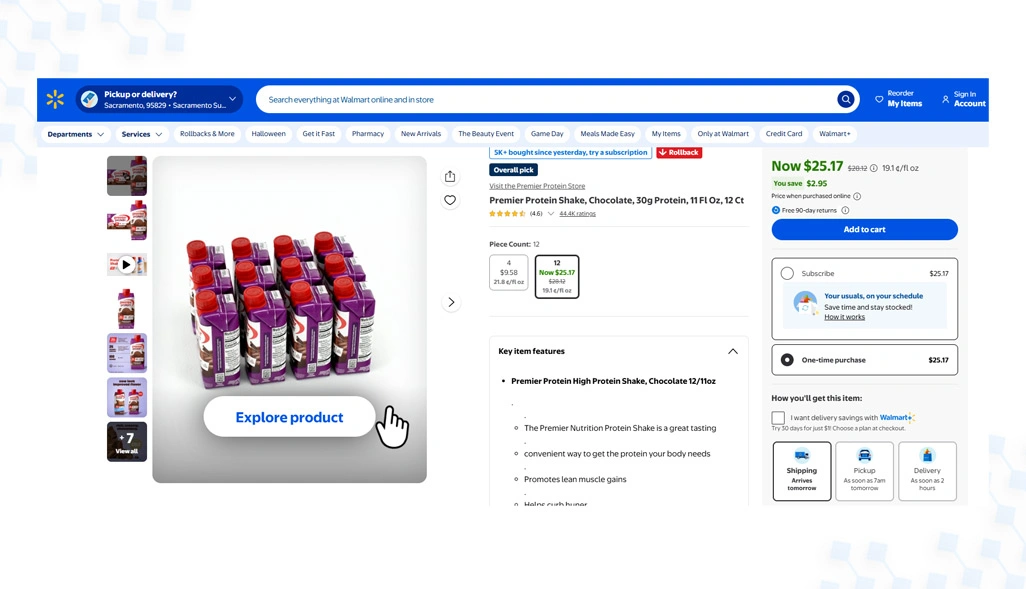
Product availability becomes more valuable when it is evaluated alongside pricing, promotions, categories, package sizes, and other commercial attributes. Businesses can compare changing prices with inventory conditions to identify patterns that may influence customer purchasing behavior. Walmart Product Data Scraping Using API can support structured collection workflows where frequently changing product information needs to be transferred into analytical systems.
An integrated data environment can bring product observations into dashboards, databases, and reporting applications. A Walmart E-Commerce Data API can help connect collected information with internal analytical workflows, allowing teams to organize records for pricing comparisons, assortment evaluation, and market research. Consistent data structures also simplify processing when information is refreshed regularly.
| Data Element | Analytical Purpose |
|---|---|
| Product price | Price comparison |
| Promotional status | Campaign assessment |
| Stock condition | Availability analysis |
| Product category | Assortment evaluation |
Analyzing multiple signals together can help businesses identify whether price movements coincide with availability changes or whether particular categories experience stronger fluctuations. Automated collection also reduces repetitive manual work and provides standardized records that can be compared across different collection periods. These comparisons can contribute to pricing strategy, merchandising research, and demand assessment.
- Combine commercial and inventory indicators
- Compare pricing changes over time
- Evaluate category-level movements
- Prepare structured records for analysis
Regular monitoring can also support faster reporting when product conditions change frequently. Analysts can examine historical observations, identify unusual movements, and create recurring reports for relevant teams. This approach turns individual product observations into broader commercial insights that can inform planning, competitive evaluation, and retail performance assessments.
Scaling Automated Monitoring Across Regional Retail Operations Consistently
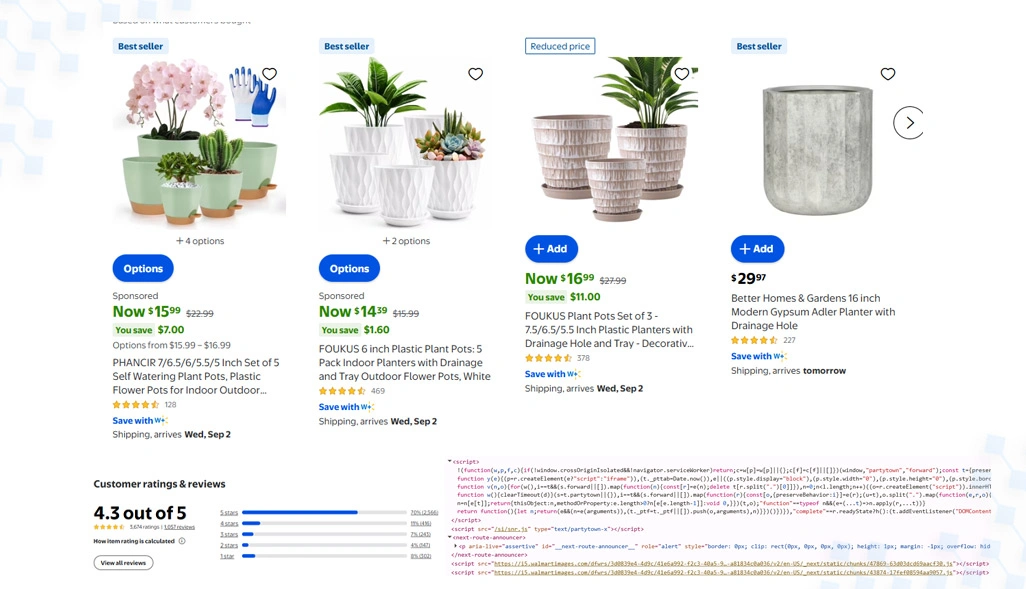
Large grocery catalogs require an automated approach because product information can change frequently across categories, locations, and collection periods. Businesses need workflows that can process substantial volumes while maintaining reliable structures and consistent fields. Walmart Grocery Web Scraping for Real Time Analysis can support recurring monitoring of changing product conditions and provide timely information for analytical workflows.
A scalable crawler can schedule collection activities according to business requirements and organize incoming records for further processing. A Walmart E-Commerce Data Crawler can support repeated catalog monitoring across selected product groups and geographic areas. Validation procedures can also help identify incomplete records, duplicate entries, or inconsistent product attributes before the information reaches downstream systems.
| Operational Area | Expected Benefit |
|---|---|
| Scheduled collection | Regular monitoring |
| Regional coverage | Geographic comparison |
| Data validation | Improved consistency |
| Historical storage | Trend evaluation |
Automation can reduce the workload associated with checking extensive catalogs manually while allowing businesses to maintain recurring observations. Historical records can reveal regional availability differences, frequently changing products, and category-level movements. These insights can contribute to assortment planning, competitive research, pricing evaluation, and operational reporting.
- Schedule recurring data collection
- Monitor multiple geographic markets
- Validate incoming product records
- Maintain historical observations
Detailed product-level information can become more valuable when businesses evaluate changes over extended periods. Walmart SKU Data Extraction for Better Strategy can support analysis of individual products, catalog movements, and assortment changes. With appropriate scheduling and validation, automated monitoring can provide dependable inputs for strategic planning and ongoing retail intelligence activities.
How Web Data Crawler Can Help You?
Businesses managing extensive grocery catalogs need a dependable approach for collecting and organizing frequently changing information. Walmart Grocery Delivery Data Scraping for Insights can support this requirement by creating structured workflows for product, pricing, availability, and category information. We can help businesses define collection requirements according to product coverage, locations, fields, frequency, and delivery preferences.
Key ways the solution can support retail intelligence include:
- Automating recurring product information collection
- Structuring raw information into analysis-ready datasets
- Supporting large-scale catalog monitoring requirements
- Maintaining consistent fields across collection cycles
- Helping identify availability and pricing changes
- Delivering organized data for business analytics
Businesses can request datasets based on product categories, geographic coverage, required attributes, and update frequency. Historical records can also support trend analysis and comparison activities. With Walmart SKU Data Extraction for Better Strategy, teams can transform detailed product-level observations into practical inputs for assortment planning, competitive research, pricing analysis, and demand-oriented decision-making.
Conclusion
Reliable availability information can help retailers understand assortment gaps, recurring stockouts, regional differences, and changing marketplace conditions. Walmart Grocery Delivery Data Scraping for Insights provides a structured approach for turning frequently changing grocery information into usable records for analysis, planning, and strategic decision-making.
When product, pricing, and inventory signals are evaluated together, businesses can create more informed retail strategies and improve the speed of their analytical workflows. Walmart Product Availability Data Scraping can support continuous monitoring across extensive catalogs and locations. Contact Web Data Crawler today to request customized Walmart grocery data and build a scalable retail intelligence solution.