


Why Is US Grocery Price Comparison Across Walmart, Wegmans, and Aldi Changing Retail Price Analysis?
Nov 03
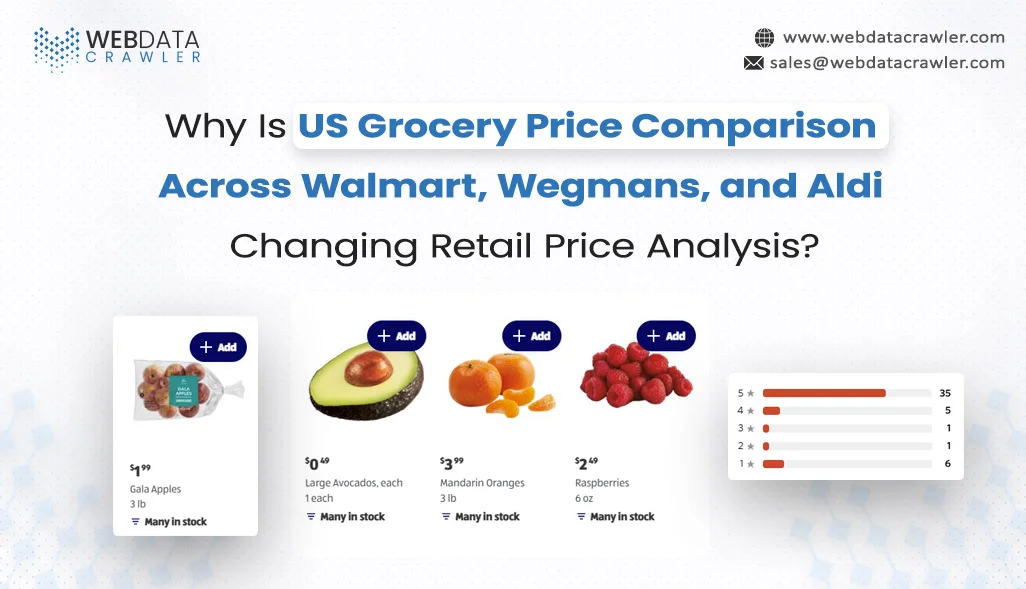
Introduction
The American grocery ecosystem is experiencing unprecedented structural shifts as inflationary pressures force consumers to re-evaluate brand loyalty. Understanding these dynamic shifts requires scalable market monitoring powered by professional Grocery Data Scraping Services. Modern shoppers no longer rely on single-store runs, choosing instead to split their weekly purchases across hypermarkets, regional favorites, and discount chains.
At the center of this evolving landscape are retail giants Walmart, Wegmans, and Aldi, each representing distinct pricing architectures and customer demographics. Analyzing basket variations across these three market leaders reveals how aggressive pricing strategy, private-label density, and regional positioning impact consumer spending habits.
As competitive intelligence becomes paramount, conducting a thorough US Grocery Price Comparison Across Walmart, Wegmans, and Aldi offers deep structural insights into modern retail pricing trends. By examining real-time product costs, industry analysts and businesses can uncover strategic avenues for driving margins and delivering high-value consumer savings.
Analyzing How National Hypermarket Supply Chains Maintain Low Prices
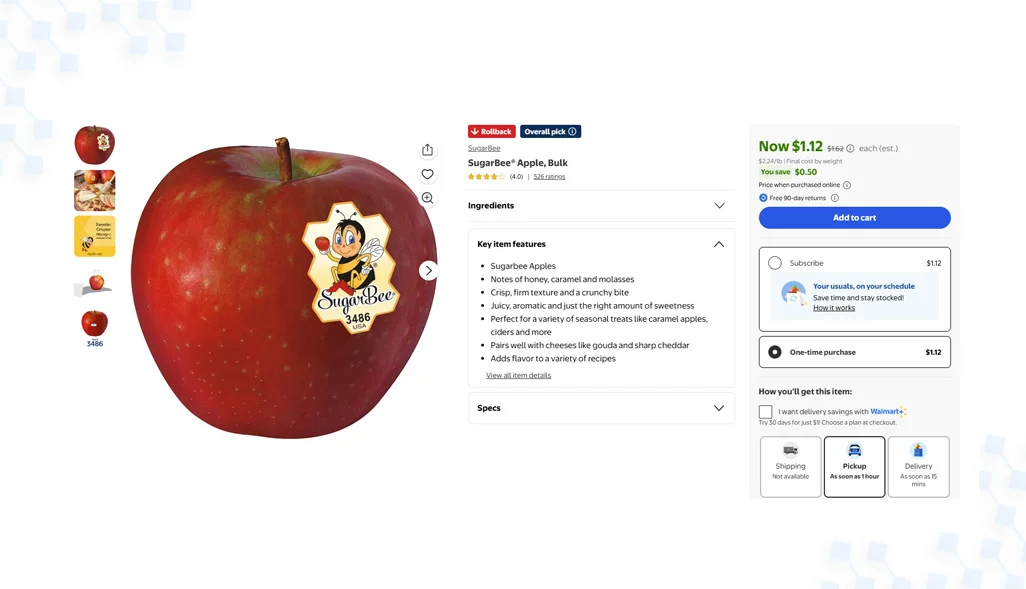
Walmart continues to leverage its vast logistics network and unmatched distribution infrastructure to enforce competitive price leadership across all product tiers nationwide. By systematically accessing digital product catalogs using the Walmart E-Commerce Data API, pricing analysts track thousands of fast-moving consumer goods across diverse regional hubs. High inventory turnover enables continuous margin management while keeping baseline shelf rates exceptionally low.
The brand relies heavily on high-volume vendor contracts to cushion price spikes, securing exclusive discounts on high-demand packaged goods and household staples. Integrating continuous market monitoring using custom tools like a Scrape Walmart Grocery Prices pipeline reveals how geographic pricing variations are tuned based on regional competition and demographic density.
Modern analytics platforms process extensive hypermarket catalog datasets to evaluate how price adjustments propagate through digital channels versus physical storefronts. Tracking these systemic updates provides enterprise pricing teams with clear benchmarks to anticipate competitive adjustments quickly.
- Real-time monitoring of national brand shelf pricing across multiple metropolitan sectors.
- Dynamic adjustments to match regional competitor discounts and high-turnover categories.
- Automated extraction of promotional catalog updates, temporary discounts, and digital coupons.
- Comparative mapping of private-label items against leading national brand equivalents.
| Product Category | Regional Store Average ($) | National Hypermarket Average ($) | Target Discount Threshold (%) |
|---|---|---|---|
| Whole Milk (1 Gal) | $3.49 | $3.18 | -8.88% |
| Eggs (Grade A, 1 Dozen) | $2.89 | $2.45 | -15.22% |
| White Bread (20 oz) | $2.19 | $1.78 | -18.72% |
| Chicken Breast (1 lb) | $4.49 | $3.98 | -11.35% |
Furthermore, Walmart strategically positions its private label offerings to compete directly against premium national brands, establishing clear multi-tier pricing structures. This layered strategy protects consumer basket size while maintaining high gross merchandise volume across competitive markets nationwide.
Benchmarking Regional Supermarkets Against High Efficiency Hard Discount Model Retailers
Comparing regional supermarkets with low-overhead discount chains illustrates two contrasting retail philosophies operating simultaneously in the modern marketplace. Upscale regional merchants emphasize broad product selection, expansive fresh produce departments, and high-touch customer services. Conversely, hard-discount chains cut operational overhead by streamlining store footprints and relying almost exclusively on curated store brands.
Fulfillment dynamics introduce additional complexity, as online order processing and third-party delivery services alter consumer cost structures across regions. Enterprise analysts utilizing comprehensive Walmart Grocery Delivery Data Scraping protocols can measure how service fees, delivery markups, and tip structures change final consumer checkout costs.
Understanding these divergent operational models allows competitive intelligence software to categorize price differences accurately across store types. Combining fulfillment fees with baseline store pricing provides brands with complete visibility into true consumer basket expenditures.
- Strategic contrast between ultra-lean store inventories and massive multi-category product lines.
- Evaluation of fulfillment fee surcharges across direct delivery and curbside pickup platforms.
- Detailed catalog analysis covering organic selections, specialized dietary lines, and artisanal goods.
- Granular measurement of geographic price variance across urban and suburban retail outlets.
| Retail Metric Focus | Hard Discount Model | Regional Premium Model |
|---|---|---|
| Store Brand Portfolio Share | ~90% | ~40% |
| Average Store Catalog SKU Volume | ~1,500 – 2,000 | ~50,000+ |
| Standard Basket Price Index | 82.5 | 118.2 |
| Digital Delivery Fulfillment Options | Third-Party Aggregators | Direct / Hybrid Services |
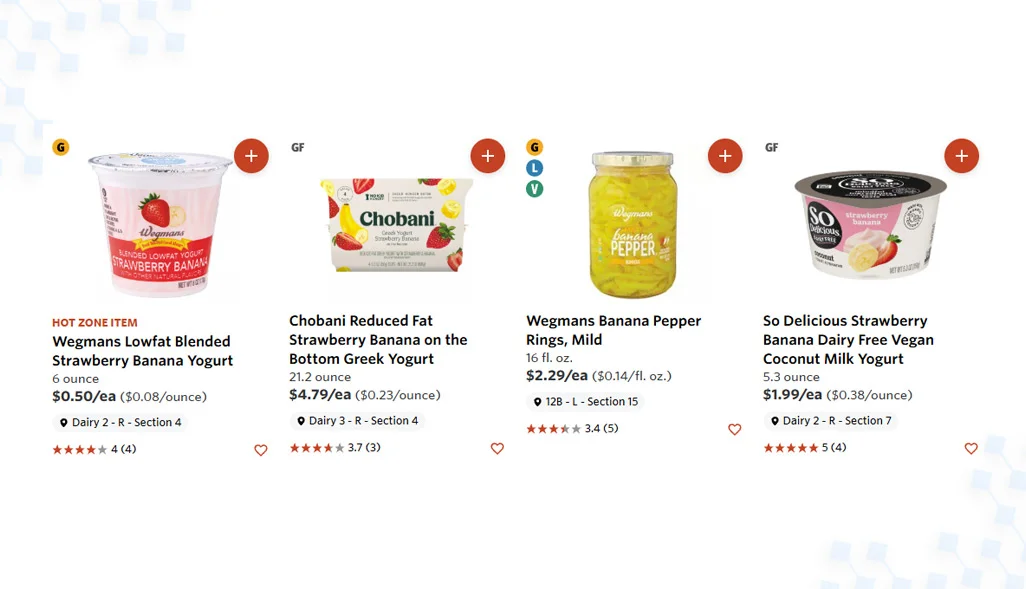
To accurately evaluate premium market positioning against low-cost alternatives, market research teams must systematically Extract Wegmans Grocery Product Data for accurate category comparisons. Tracking specialty items, organic produce, and regional deli pricing helps identify where premium chains build gross profit margins.
Evaluating Total Household Basket Variations To Identify Strategic Market Savings
Evaluating standard household grocery baskets across major retail models provides essential clarity on consumer spending patterns and retail margin distributions. While discount chains consistently offer lower baseline expenditures for essential kitchen staples, broad hypermarkets provide an unmatched variety of national brands. Regional specialty chains capture premium spending by offering high-end service counters and specialty product lines.
Accessing comprehensive commercial intelligence platforms and utilizing specialized Popular Grocery Data Scraping services grants brands immediate access to clean market feeds. Modern data teams routinely Extract Grocery Price Comparison Data to identify margin opportunities, benchmark regional competitors, and refine revenue optimization models.
Systematic aggregation of retail data allows pricing strategists to isolate seasonal inflationary trends from store-level price adjustments. Transforming vast raw catalog feeds into structured commercial insights powers smarter pricing strategies for modern retail enterprises.
- Cross-retailer cost benchmarking across uniform 20-item essential consumer staple baskets.
- Quantitative tracking of private-label price adjustments against national brand benchmarks.
- Identification of seasonal price fluctuations across fresh produce, dairy, and meat categories.
- Structured data delivery tailored for revenue management platforms and predictive analytics tools.
| Retailer Profile | Standard Basket Total ($) | Baseline Savings Index (%) | Core Market Positioning |
|---|---|---|---|
| Hard Discount Chain | $44.50 | -28.4% | Budget Staples / Lean Operations |
| Hypermarket Leader | $51.20 | -17.6% | High Volume / Broad Brand Selection |
| Regional Premium Chain | $62.15 | Base Benchmark | Curated Experience / Specialty Goods |
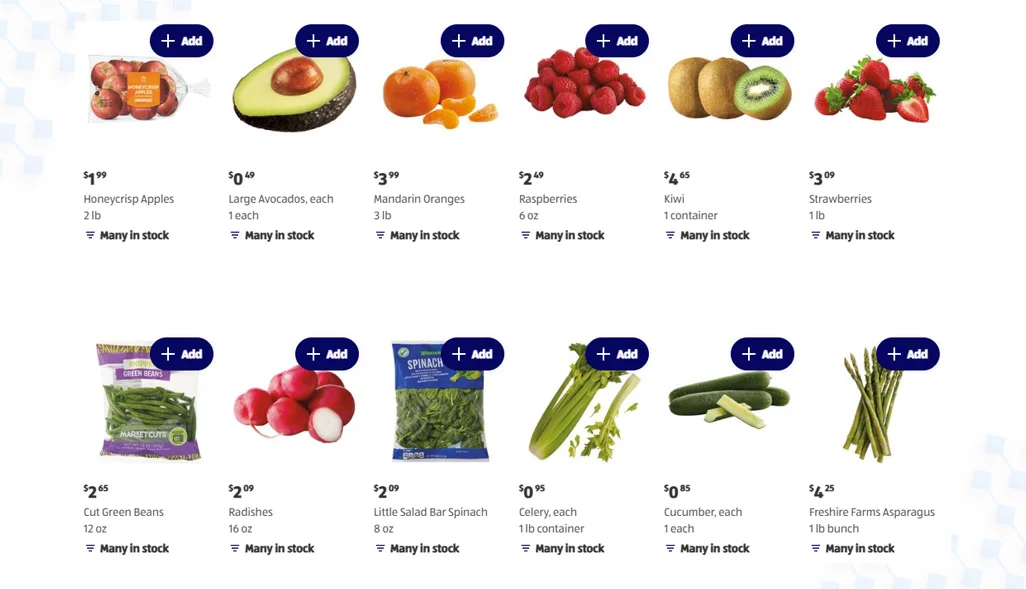
Deploying a targeted Aldi Grocery Product Data Scraper enables automated tracking of fast-moving private-label items across regional store networks seamlessly. Monitoring rapid price adjustments in low-overhead discount catalogs gives rival retailers crucial foresight when adjusting their own private-label pricing tiers.
How Web Data Crawler Can Help You?
Modern retail analytics requires automated, accurate, and scalable data collection pipelines to navigate rapidly changing market conditions. Executing a comprehensive US Grocery Price Comparison Across Walmart, Wegmans, and Aldi demands precise scraping architectures capable of handling dynamic store locations, fluctuating catalog inventories, and varying regional price points seamlessly.
We deliver end-to-end extraction services customized for high-frequency retail data acquisition.
- Custom web scrapers tailored for multi-region retail price tracking.
- Automated data clean-up, normalization, and currency mapping.
- High-frequency scheduled extractions for real-time market updates.
- Seamless API delivery supporting JSON, CSV, and database feeds.
- Anti-bot bypass features ensure reliable continuous catalog monitoring.
- Full compliance with digital data collection standards and protocols.
Through enterprise pipelines powered by our proprietary US Grocery Price Scraping API, enterprises receive structured datasets ready for instant integration into competitive intelligence platforms, price optimization software, and predictive forecasting tools.
Conclusion
Navigating today's volatile retail market demands continuous visibility into competitive basket pricing across leading supermarket chains. Executing a comprehensive US Grocery Price Comparison Across Walmart, Wegmans, and Aldi empowers brands and intelligence teams to identify price leadership trends, optimize store-level pricing structures, and capitalize on margin opportunities across diverse geographic regions.
Investing in structured data solutions ensures your enterprise stays equipped with actionable market insights needed for swift decision-making. Utilizing robust technology like a US Grocery Price Scraping API provides the raw data required to transform complex market dynamics into concrete commercial growth. Partner with Web Data Crawler today to scale your retail data capabilities!