
What Makes UPC-Based Data Matching for Grocery Price Monitoring 42% More Reliable for Price Tracking?
April 23
Introduction
In today's hyper-competitive grocery landscape, price accuracy and consistency are critical for both retailers and analytics providers. This is where UPC-Based Data Matching for Grocery Price Monitoring becomes a game-changer. By using Universal Product Codes (UPCs), companies can align identical products across different retailers with unmatched precision, significantly improving data reliability.
Traditional product matching methods rely heavily on text-based comparisons, which can lead to errors due to variations in product descriptions, abbreviations, and regional naming differences. In contrast, UPC-based systems eliminate ambiguity by assigning a unique identifier to every product. This ensures that price comparisons are accurate and actionable.
With the growing importance of Web Scraping Grocery Data, organizations can now collect vast amounts of pricing and inventory information in real time. However, without a standardized matching mechanism, this data can become inconsistent and unreliable. UPC-based methodologies not only enhance accuracy but also improve the speed and efficiency of competitive price tracking, making them indispensable for modern retail intelligence.
Resolving Cross-Platform Product Identification and Matching Challenges Efficiently
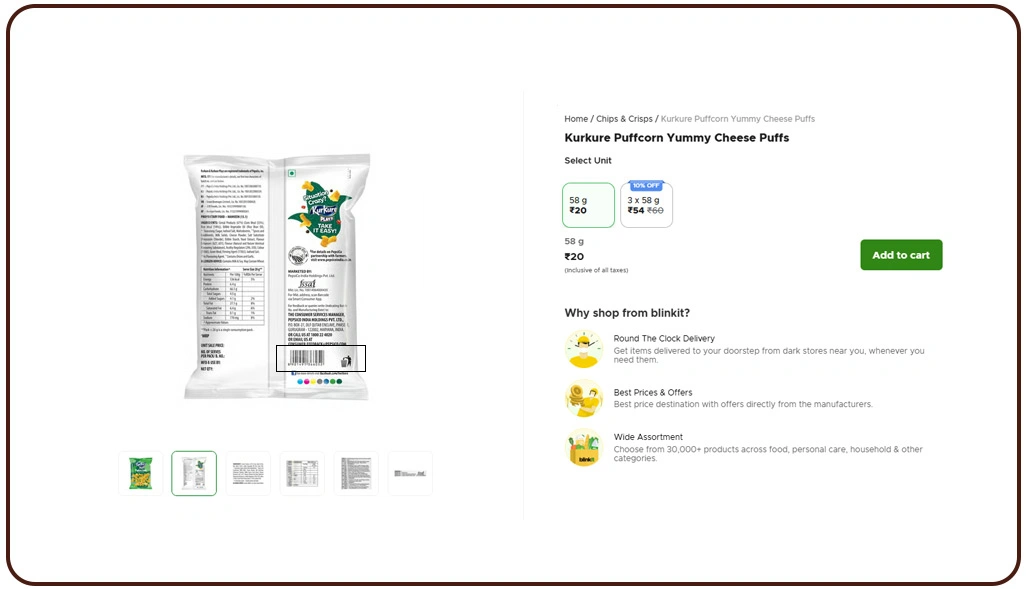
Accurate product identification across multiple grocery platforms is often hindered by inconsistent naming conventions, duplicate listings, and fragmented catalog structures. Businesses relying on traditional text-based matching frequently encounter mismatches that distort pricing insights and reduce trust in analytics outputs.
To address these challenges, businesses are increasingly adopting Multi-Retailer Grocery Price Tracking Using Web Scraping Tools, which allows them to monitor pricing variations across platforms with improved clarity. Additionally, integrating Scrape Grocery Supermarket Prices and Inventory Using API enables continuous data collection, ensuring that inventory levels and pricing remain updated without manual intervention.
Another critical component is Retailers Product Catalog Matching Data Extraction, which ensures that similar products from different retailers are accurately aligned within a unified dataset. This eliminates duplication issues and enhances the precision of comparative analysis. By combining these methods, organizations can significantly reduce mismatches and improve the overall quality of their pricing intelligence systems.
| Challenge | Traditional Approach | Improved Approach |
|---|---|---|
| Product Name Variations | High Error Rate | Minimal Errors |
| Duplicate Listings | Frequent | Controlled |
| Cross-Platform Alignment | Inconsistent | Structured |
| Data Reliability | Moderate | High |
This refined approach ensures that businesses can rely on consistent and structured data, ultimately supporting more accurate pricing strategies and competitive decision-making in a rapidly evolving grocery market.
Building Structured Data Consistency for Accurate Product Comparison Insights

Maintaining consistent data across multiple grocery platforms is a persistent challenge due to variations in product attributes such as size, packaging, and branding. Without a standardized framework, these inconsistencies lead to unreliable comparisons and delayed insights, impacting strategic decisions.
A practical solution lies in implementing Scrape and Normalize Grocery Product Data Across Retailers, which standardizes product attributes and ensures uniformity across datasets. This process enables businesses to compare products on a like-for-like basis, eliminating discrepancies caused by inconsistent formatting.
The inclusion of Quick Commerce Datasets further enhances this approach by providing real-time visibility into rapidly changing inventory and pricing trends. These datasets are particularly valuable for tracking high-demand products where price fluctuations occur frequently. Additionally, Barcode-Based Product Data Scraping ensures that each product is uniquely identified, reducing ambiguity and improving matching accuracy.
| Data Issue | Without Standardization | With Structured Approach |
|---|---|---|
| Product Attribute Variations | High | Low |
| Data Duplication | Frequent | Minimal |
| Comparison Accuracy | Limited | Enhanced |
| Processing Efficiency | Slow | Optimized |
By focusing on structured data consistency, businesses can streamline their analytics workflows and generate insights more efficiently. This not only improves operational performance but also enables faster responses to market dynamics, ensuring better alignment with consumer demand and competitive pricing strategies.
Strengthening Real-Time Pricing Insights Through Advanced Data Integration Methods
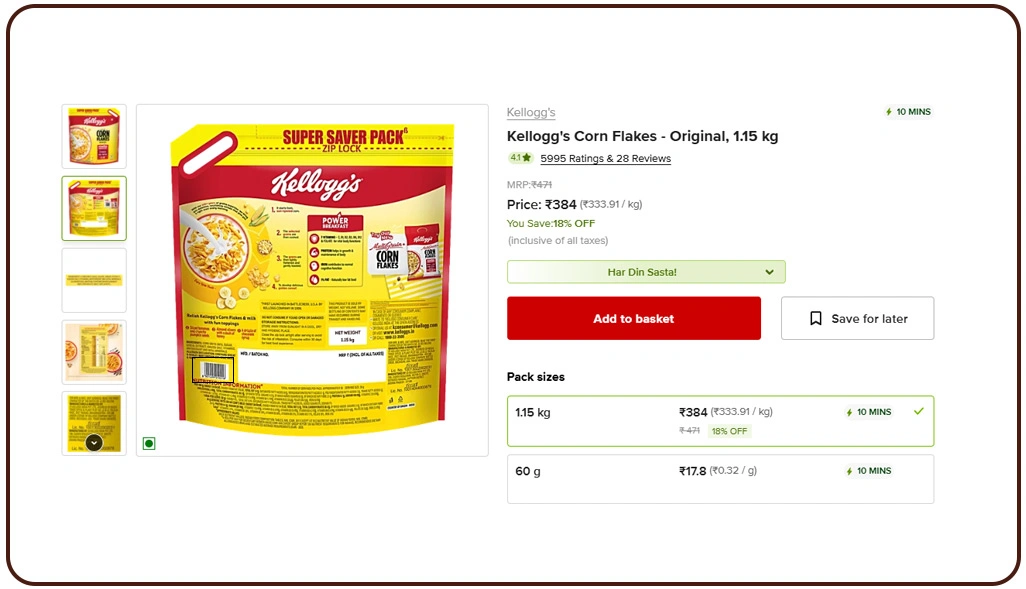
In a dynamic grocery environment, timely and accurate pricing insights are essential for maintaining competitiveness. Delays in data processing or inaccuracies in product matching can lead to missed opportunities and ineffective pricing strategies. Therefore, integrating advanced data extraction and processing techniques is crucial for achieving real-time visibility.
One of the most effective approaches is Real-Time Grocery Price Comparison Using UPC Data Scraping, which allows businesses to monitor competitor pricing instantly and respond to changes without delay. This method ensures that pricing decisions are always based on the latest available data.
The use of Scraping API plays a significant role in enabling seamless data extraction from multiple sources, ensuring that information flows continuously into analytics systems. This reduces latency and improves the speed of insight generation. Furthermore, combining these capabilities with structured data alignment techniques ensures that extracted data remains accurate and actionable.
| Performance Metric | Conventional Method | Advanced Integration |
|---|---|---|
| Data Update Frequency | Periodic | Real-Time |
| Insight Generation Speed | Moderate | Accelerated |
| Pricing Accuracy | Average | High |
| Decision Responsiveness | Limited | Improved |
By strengthening real-time data integration, businesses can enhance their pricing intelligence capabilities and make faster, more informed decisions. This ultimately leads to improved competitiveness, better customer satisfaction, and increased profitability in the grocery retail sector.
How Web Data Crawler Can Help You?
Modern grocery analytics requires more than just data collection—it demands precision, scalability, and actionable insights. By integrating UPC-Based Data Matching for Grocery Price Monitoring, we ensure that your pricing intelligence is accurate, consistent, and ready for decision-making across multiple retail platforms.
Our solutions are designed to simplify complex data workflows and deliver high-quality insights:
- Advanced data collection across multiple grocery platforms.
- Automated product identification and alignment.
- Scalable infrastructure for large datasets.
- Real-time updates for pricing and inventory.
- Seamless integration with analytics tools.
- Customizable solutions tailored to business needs.
In addition to these capabilities, our platform supports Multi-Retailer Grocery Price Tracking Using Web Scraping Tools, enabling businesses to monitor competitors efficiently and respond to market changes with confidence.
Conclusion
Accurate product matching is the backbone of effective grocery price intelligence. By adopting UPC-Based Data Matching for Grocery Price Monitoring, businesses can significantly reduce errors, improve data consistency, and accelerate decision-making processes.
At the same time, integrating Real-Time Grocery Price Comparison Using UPC Data Scraping allows companies to stay aligned with market dynamics and maintain a competitive edge. Ready to transform your grocery pricing strategy? Connect with Web Data Crawler today and take your data intelligence to the next level.