
How to Track Product Availability and Inventory Changes via Crawler to Reduce 42% Stockout Risks?
May 15
Introduction
Stockouts create silent revenue loss for online retailers. Research across digital commerce operations shows that nearly 42% of abandoned purchases happen when a desired item appears unavailable or delayed. Brands operating across marketplaces, D2C stores, and third-party channels often struggle to monitor live inventory because product quantities change every minute. Manual tracking misses updates, while delayed reports create forecasting gaps.
Retailers now rely on automated crawlers to monitor availability signals, stock counts, seller listings, and replenishment patterns. This gives teams a clearer picture of demand changes before sales are affected. Track Product Availability and Inventory Changes via Crawler allows businesses to monitor item-level availability across regions, sellers, and marketplaces in one workflow. It supports faster replenishment decisions, helps avoid stockout cycles, and improves warehouse planning.
Inventory visibility also influences customer trust. If a product shows out of stock repeatedly, buyers often move to competing sellers. This creates long-term retention issues. Many retailers combine inventory crawling with Pricing Intelligence to align stock visibility with demand-based pricing changes. This creates stronger supply planning, especially during seasonal spikes, flash sales, and marketplace campaigns.
Detecting Inventory Gaps Across Multiple Selling Platforms
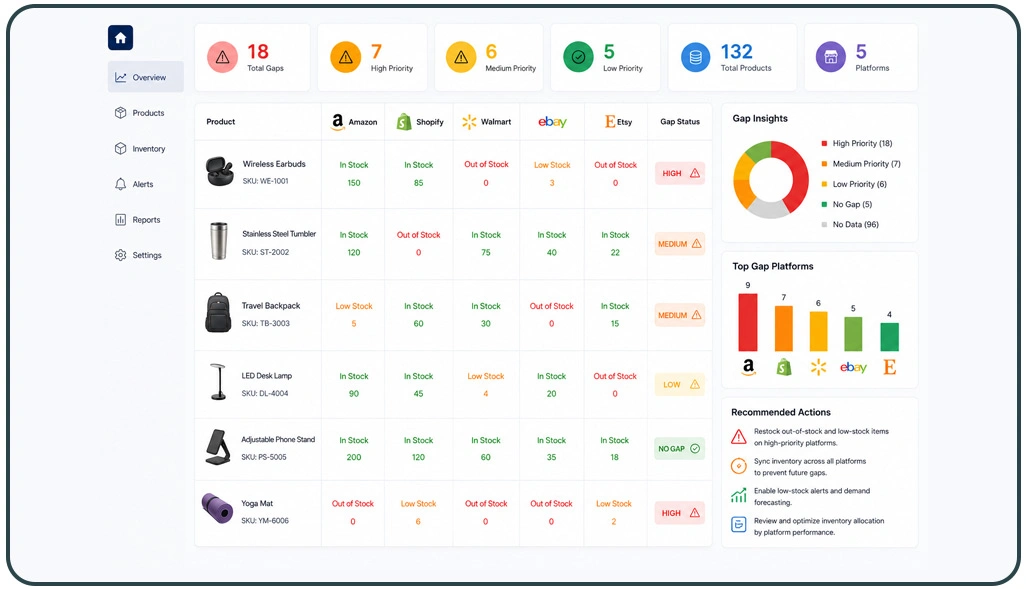
Inventory mismatches across marketplaces create costly stock issues because product quantities change at different speeds on different sales channels. A SKU may appear available on one platform while showing unavailable elsewhere. This creates overselling, cancellations, customer complaints, and revenue leakage that businesses often detect too late. Cross-platform monitoring has become critical because marketplace dashboards frequently update slower than live product pages.
Retail brands increasingly rely on page-level crawlers to capture inventory status from product pages, seller panels, and category listings. These crawlers identify hidden stock changes before internal systems reflect them. According to industry estimates, automated tracking can reduce stock discrepancy issues by nearly 31% and improve replenishment efficiency by over 20%.
Businesses use Scrape Inventory Tracking APIs for Retail Businesses to validate internal stock feeds against visible product listings. This process identifies backend inaccuracies and hidden listing changes. Integrating Scraping API improves large-scale monitoring across multiple channels and thousands of products. It ensures that inventory updates are collected continuously rather than relying on delayed manual checks.
| Monitoring Source | Business Outcome |
|---|---|
| Product pages | Detects stock visibility changes |
| Seller panels | Tracks seller inventory shifts |
| Delivery status | Identifies supply delays |
| Category pages | Reveals hidden delisting |
Many retailers combine stock visibility tracking with Pricing Intelligence to understand how price changes affect inventory depletion. When inventory signals are collected continuously, operations teams can respond before stockouts affect revenue. This creates stronger procurement decisions, reduces marketplace disruptions, and improves overall stock synchronization across regions and sales channels.
Strengthening Restock Planning With Live Signals
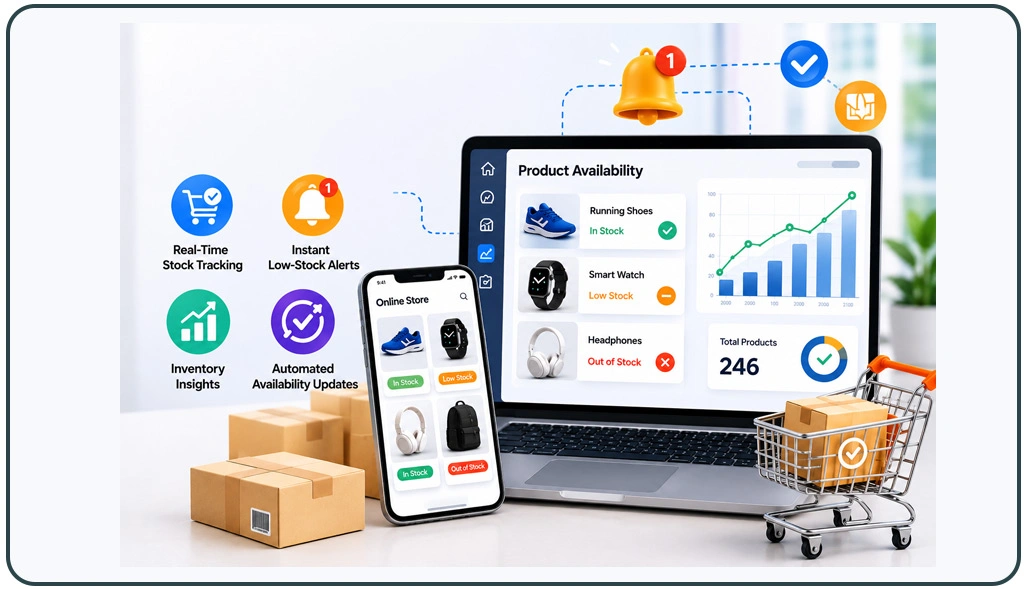
Restocking decisions often fail when businesses rely on static sales reports instead of current marketplace signals. Product demand can change within hours, especially during seasonal events or promotional campaigns. Historical reports often miss these shifts, causing delayed procurement and increased lost sales. Live monitoring solves this by capturing product changes directly from digital storefronts.
Retailers analyze product page updates, seller returns, and replenishment cycles to understand when inventory is likely to return. These patterns improve restocking decisions and reduce forecasting errors. Studies show brands using automated monitoring can reduce delayed replenishment by nearly 36%, while improving supply continuity across regional warehouses.
Businesses often apply Product Availability Monitoring for Online Stores to detect stock changes from search pages, mobile storefronts, and marketplace categories. These updates reveal when inventory disappears or reappears, creating stronger replenishment timing. Teams also use Real-Time Product Restock Alert System via Scraper to receive immediate notifications when high-demand products become available again.
| Live Signal | Operational Use |
|---|---|
| Restock timing | Procurement planning |
| Seller reappearance | Supply validation |
| Delivery change | Stock urgency |
| Search visibility | Listing consistency |
Continuous monitoring improves decision-making because it captures active inventory behavior. By analyzing buyer feedback, Review Scraping Services helps identify repeated complaints linked to unavailable products, delayed shipments, or recurring shortages.
Forecasting Supply Risks Before Inventory Drops

Inventory shortages rarely happen without warning. Products often show early signs such as fewer sellers, disappearing variants, and delayed delivery dates. Businesses that monitor these patterns early can reduce stock risks and improve supply planning. Predictive analysis helps detect depletion before products completely disappear.
Automated crawlers collect regional availability, seller count changes, and listing removals across product catalogs. These patterns help identify future shortages and recurring stock disruptions. Companies using predictive inventory monitoring reduce stockout exposure by approximately 28%, improving sales continuity and customer retention.
Advanced systems apply Scrape Ai-Based Inventory Tracking and Stock Monitoring to evaluate depletion patterns using machine learning. These models classify inventory changes across marketplaces and detect anomalies that manual systems often miss. Historical crawl logs also support Inventory Forecasting Analytics via Scraping, helping businesses identify recurring shortages during promotions, holiday sales, and peak shopping cycles.
| Predictive Input | Forecast Benefit |
|---|---|
| Seller count | Detects supply decline |
| Variant availability | Identifies demand shifts |
| Delivery delay | Measures stock pressure |
| Listing removal | Predicts shortages |
Predictive inventory tracking transforms reactive supply management into proactive planning. Market comparison adds more value. Brands often combine predictive tracking with Competitor Price Monitoring to understand whether pricing changes are causing rapid demand spikes. This reveals how competitor promotions impact stock movement and helps explain sudden inventory depletion.
How Web Data Crawler Can Help You?
Online inventory decisions become stronger when businesses move from delayed reports to live monitoring. By using structured crawler systems, teams can detect changes faster and reduce operational blind spots. Many retailers use Track Product Availability and Inventory Changes via Crawler to build reliable stock visibility across product catalogs and marketplaces.
- Monitor stock changes across marketplaces in near real time
- Detect disappearing products before customer complaints rise
- Capture seller-level availability variations
- Identify delayed delivery patterns affecting fulfillment
- Support warehouse replenishment decisions with live data
- Improve regional inventory balancing for faster dispatch
These workflows help e-commerce operations reduce revenue loss, improve fulfillment consistency, and support better procurement planning. In long-term inventory management, Product Availability Monitoring for Online Stores improves decision accuracy by transforming raw product page updates into actionable operational intelligence.
Conclusion
Retailers reduce fulfillment gaps and improve product continuity when Track Product Availability and Inventory Changes via Crawler is integrated into daily inventory workflows. Continuous tracking helps prevent silent revenue loss caused by missed availability updates.
Predictive planning becomes stronger with Inventory Forecasting Analytics via Scraping, allowing businesses to act before shortages impact customers. Start building automated inventory intelligence today with Web Data Crawler to reduce stockouts, improve response time, and scale smarter operations.