
How Are Tourism Market Insights From Tokyo and Kyoto Data Scraping Powering 44% Travel Industry Growth?
March 23

Introduction
The global travel industry is experiencing rapid expansion, with Japan emerging as one of the most data-driven tourism markets. Tokyo and Kyoto, two of the country’s most iconic destinations, are at the forefront of this transformation. As international tourism rebounds, businesses are increasingly relying on Web Scraping Travel Data to decode shifting traveler preferences, seasonal pricing patterns, and accommodation demand fluctuations.
From luxury hotels in Tokyo’s bustling districts to traditional ryokans in Kyoto, the ability to extract and analyze structured data has become critical. By leveraging Tourism Market Insights From Tokyo and Kyoto Data Scraping, travel companies can identify high-demand booking periods, understand regional pricing disparities, and adjust offerings in real time.
Moreover, data scraping provides granular insights into traveler demographics, booking behavior, and review sentiment. These insights empower travel agencies, hospitality providers, and tourism boards to design personalized experiences, improve occupancy rates, and optimize pricing strategies. In a highly competitive landscape, data-driven intelligence is no longer optional—it is the backbone of sustainable growth in the tourism sector.
Managing Pricing Variations And Demand Shifts Across Destinations
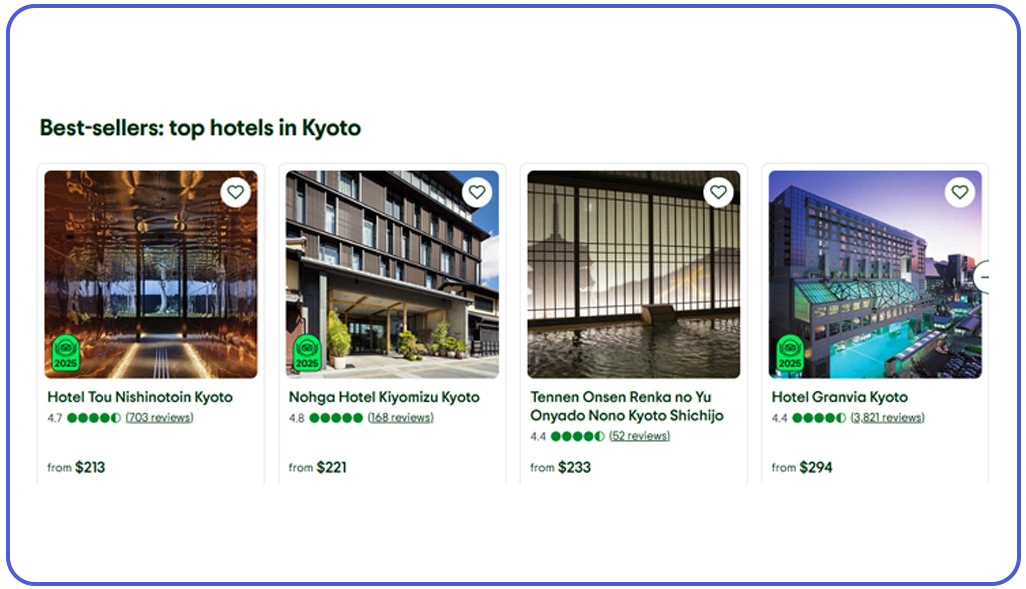
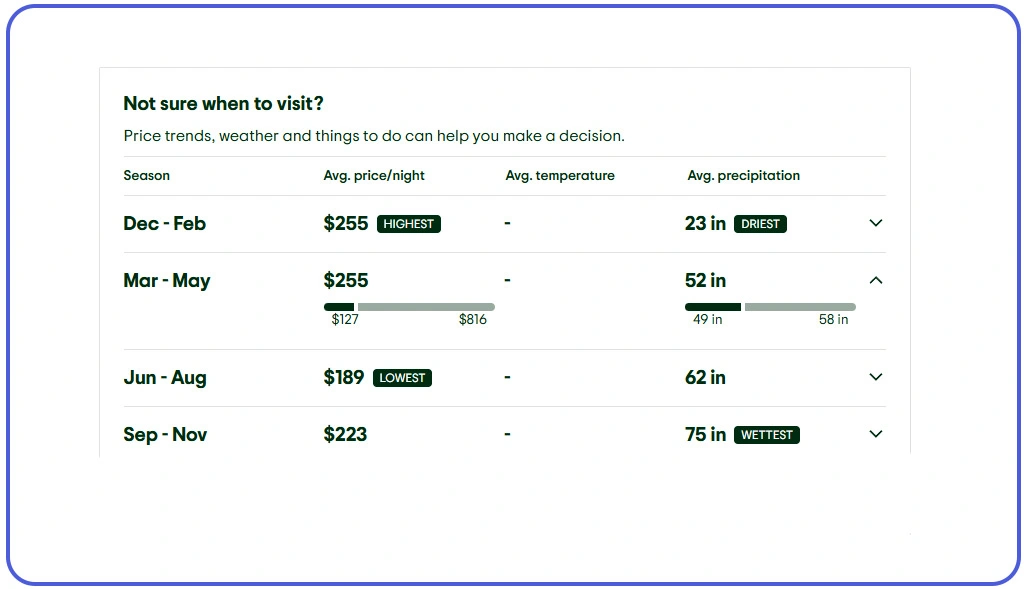
Managing pricing volatility across major travel destinations like Tokyo and Kyoto is one of the most pressing challenges for hospitality providers. Tokyo maintains a relatively stable demand due to its business ecosystem, while Kyoto experiences sharp seasonal surges driven by cultural tourism. Without structured insights, businesses often struggle to balance occupancy rates and profitability effectively.
Access to Travel Datasets allows organizations to analyze historical and current booking trends, helping them anticipate demand spikes and low-occupancy periods. Additionally, Real-Time Hotel Price Data Scraping for Insights enables businesses to continuously monitor competitor pricing and adjust their own rates accordingly.
| Factor | Tokyo Trends | Kyoto Trends | Business Impact |
|---|---|---|---|
| Demand Pattern | Consistent year-round | Seasonal peaks | Requires adaptive pricing |
| Price Variation | Moderate changes | High fluctuations | Flexible rate management |
| Booking Behavior | Short-term bookings | Advanced reservations | Better forecasting |
| Occupancy Rate | Stable | Highly variable | Revenue optimization |
Furthermore, integrating Travel Booking Data Scraping Tokyo & Kyoto helps companies track booking windows and customer preferences in real time. This ensures that pricing strategies remain aligned with market demand and competitor positioning. By combining these insights, travel businesses can build resilient pricing models that respond effectively to market dynamics while maximizing both occupancy and profitability.
Analyzing Visitor Preferences And Behavioral Trends Effectively
Understanding traveler expectations and behavior is essential for delivering personalized and engaging experiences. Tokyo attracts a diverse mix of business travelers and urban explorers, while Kyoto appeals more to tourists interested in culture and heritage. Without structured analysis, identifying these distinct preferences can be complex and time-consuming.
Using Travel Behavior Analysis via Data Scraping in Tokyo & Kyoto, businesses can uncover patterns related to traveler demographics, booking frequency, and service expectations. This insight enhances overall Market Research efforts by providing a deeper understanding of customer needs and emerging travel trends. Companies can also refine their offerings based on review sentiment and feedback data collected from various platforms.
| Insight Area | Tokyo Observations | Kyoto Observations | Strategic Benefit |
|---|---|---|---|
| Traveler Type | Business & tech-savvy | Cultural & leisure-focused | Targeted campaigns |
| Stay Duration | Short visits | Longer stays | Package optimization |
| Spending Habits | Convenience-driven | Experience-driven | Revenue growth |
| Feedback Trends | Service efficiency | Cultural authenticity | Service improvement |
Additionally, Tourism Market Research Data Extraction Across the Japan enables organizations to align their strategies with nationwide tourism patterns. This broader perspective helps identify untapped opportunities and optimize marketing efforts. By leveraging these insights, businesses can deliver highly personalized services, improve customer satisfaction, and build long-term loyalty in an increasingly competitive travel market.
Strengthening Business Strategies Through Competitive Intelligence Insights
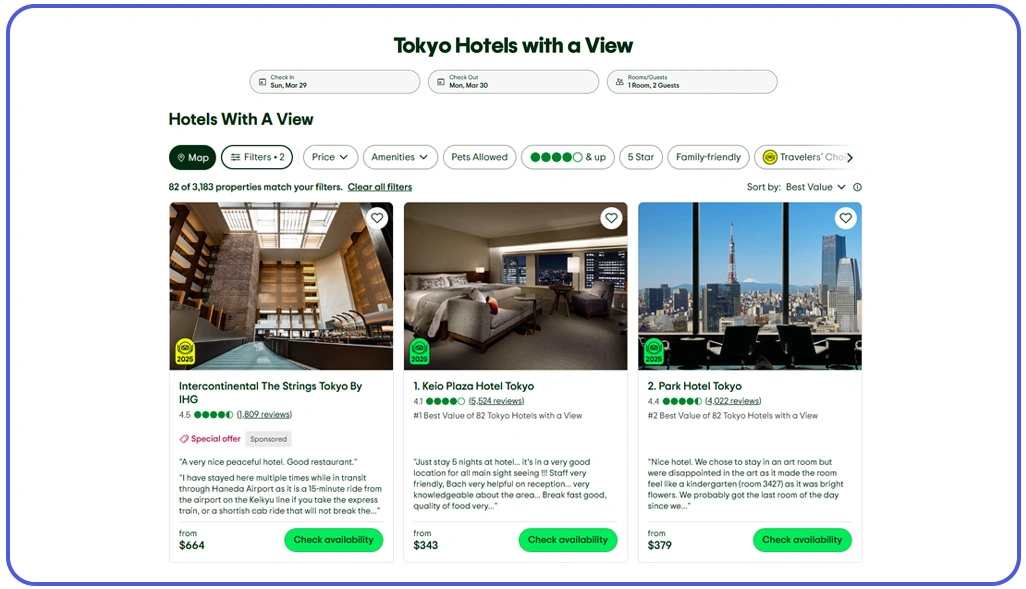
In a rapidly evolving tourism landscape, staying competitive requires continuous monitoring of market dynamics and competitor activities. Tokyo’s highly competitive hotel market and Kyoto’s experience-driven tourism ecosystem demand distinct strategic approaches. Without real-time intelligence, businesses risk falling behind in pricing, promotions, and customer engagement.
The use of Live Crawler Services allows organizations to automate data collection and maintain up-to-date insights on market changes. This ensures that businesses can quickly adapt to fluctuations in pricing, availability, and promotional strategies. Additionally, Tokyo Hotel Data Scraping for Strategy and Planning provides valuable benchmarks that help companies evaluate their performance against competitors.
| Competitive Factor | Tokyo Market | Kyoto Market | Strategic Outcome |
|---|---|---|---|
| Competition Level | High density | Moderate competition | Need differentiation |
| Pricing Approach | Dynamic pricing | Seasonal pricing | Adaptive strategies |
| Customer Engagement | Digital-first | Experience-focused | Personalized outreach |
| Marketing Channels | Online platforms | Cultural promotions | Channel optimization |
By combining these insights with structured data analysis, businesses can identify gaps in their offerings and refine their strategies accordingly. This approach not only enhances operational efficiency but also strengthens market positioning. Ultimately, data-driven competitive intelligence empowers travel companies to make informed decisions and sustain growth in a highly dynamic tourism environment.
How Web Data Crawler Can Help You?
In today’s competitive travel ecosystem, data accuracy and speed define success. Our expertise in Tourism Market Insights From Tokyo and Kyoto Data Scraping empowers travel businesses to transform raw information into meaningful intelligence.
What we offer:
- Continuous monitoring of hotel prices across multiple platforms.
- Automated extraction of booking and availability data.
- Structured datasets for better forecasting and planning.
- Advanced analytics for understanding traveler trends.
- Scalable solutions tailored to business requirements.
- Seamless integration with existing data systems.
By integrating Tokyo Hotel Data Scraping for Strategy and Planning, businesses can strengthen their market positioning and respond effectively to evolving customer expectations.
Conclusion
The travel industry’s rapid evolution highlights the importance of data-driven decision-making. By integrating Tourism Market Insights From Tokyo and Kyoto Data Scraping, businesses can better understand pricing dynamics, traveler preferences, and competitive positioning.
Additionally, adopting Travel Booking Data Scraping Tokyo & Kyoto allows companies to refine their offerings and improve overall operational efficiency. To stay competitive in a fast-growing tourism landscape, investing in advanced data solutions is essential. Contact Web Data Crawler today to transform your travel intelligence strategy and drive measurable growth.