
How Swiggy vs Zomato Restaurant Data Scraping: Which Is Better for 50+ Restaurant Data Points?
Sep 18
Introduction
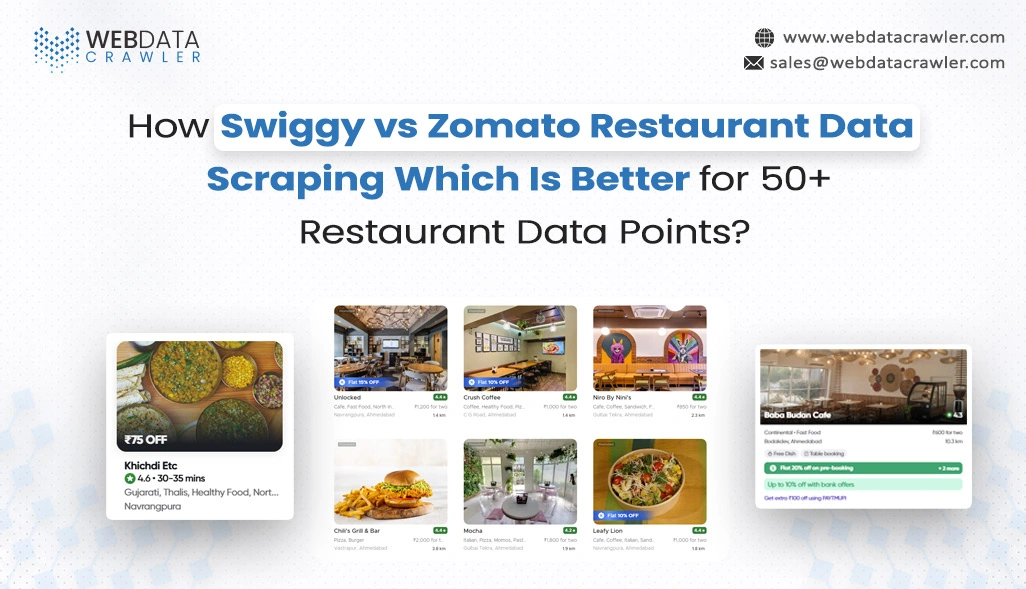
Food delivery platforms contain extensive restaurant information that can support pricing research, menu benchmarking, customer sentiment analysis, and competitor monitoring. Swiggy vs Zomato Restaurant Data Scraping: Which Is Better helps businesses examine restaurant-level information across more than 50 potential data points.
Restaurant datasets can include names, cuisines, locations, menu items, prices, discounts, ratings, reviews, delivery details, operating hours, and availability. Web Scraping Zomato Food Delivery Data can further support structured comparisons across restaurants, categories, and locations while reducing manual research requirements.
With organized datasets, businesses can evaluate pricing patterns, menu variety, customer feedback, and restaurant visibility across platforms. The resulting information can support market research teams, food-tech companies, restaurant chains, aggregators, and analysts in identifying measurable differences between competing delivery marketplaces.
Detailed Menu Pricing Patterns Across Swiggy And Zomato Platforms
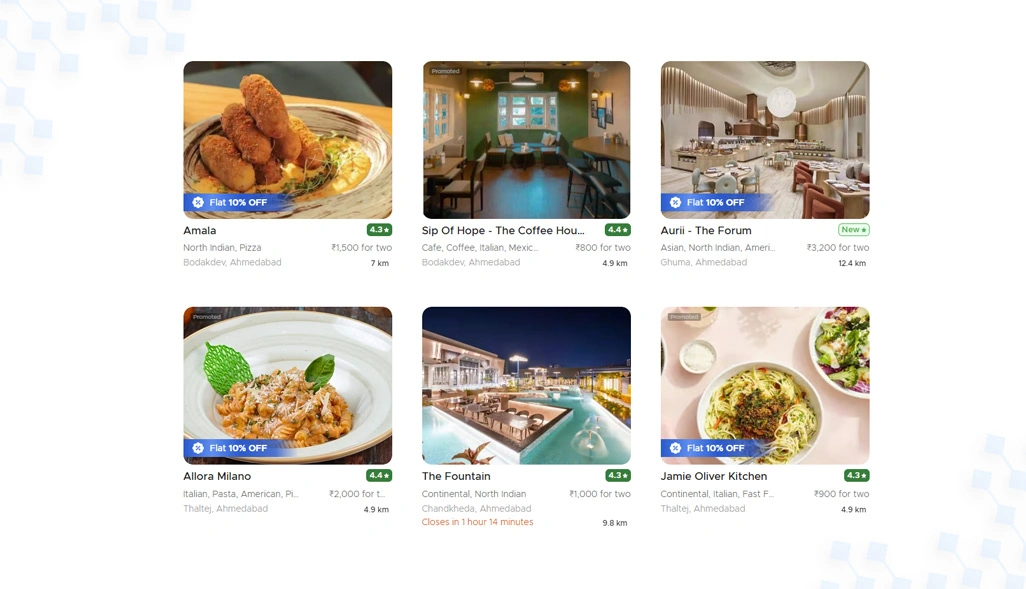
Restaurant menu information provides a strong foundation for comparing food delivery marketplaces. When these fields are standardized, analysts can compare similar restaurants across different locations and identify pricing variations without relying on manually collected information. Scrape Swiggy Restaurant Data for Insights can support this process by organizing restaurant-level information into structured records for further analysis and benchmarking.
For example, businesses can compare starter prices, main-course pricing, beverage costs, combo offers, and promotional discounts across competing restaurants. Web Scraping Swiggy Delivery Data can collect restaurant names, cuisines, menu categories, item prices, discounts, delivery charges, ratings, and availability. Changes can also be observed over different collection periods, helping researchers identify recurring pricing movements, promotional patterns, and differences in menu positioning across locations.
Important restaurant information can include:
- Restaurant names and locations
- Cuisine and food categories
- Individual menu items
- Item-level pricing
- Discounts and promotional offers
- Availability information
Businesses can further use structured restaurant records to evaluate assortment depth and platform visibility. A dataset covering 10,000 restaurants could contain thousands of individual menu items, allowing analysts to examine cuisine popularity, price ranges, category availability, and restaurant distribution. These insights can contribute to competitor research, pricing studies, and regional food-market analysis.
Data Area, Example Information, and Research Purpose:
| Data Area | Example Information | Research Purpose |
|---|---|---|
| Restaurant | Name, location, cuisine | Restaurant mapping |
| Menu | Items and categories | Assortment analysis |
| Pricing | Item prices and offers | Price benchmarking |
| Availability | Active menu items | Availability monitoring |
Consistent menu and pricing records make marketplace comparisons easier to manage at scale. Scrape Swiggy Restaurant Dataset can further support historical research when businesses need structured restaurant information for repeated analysis. Combining menu, pricing, location, and availability fields creates a broader view of restaurant positioning and competitive activity.
Customer Reviews Ratings And Restaurant Experience Signals
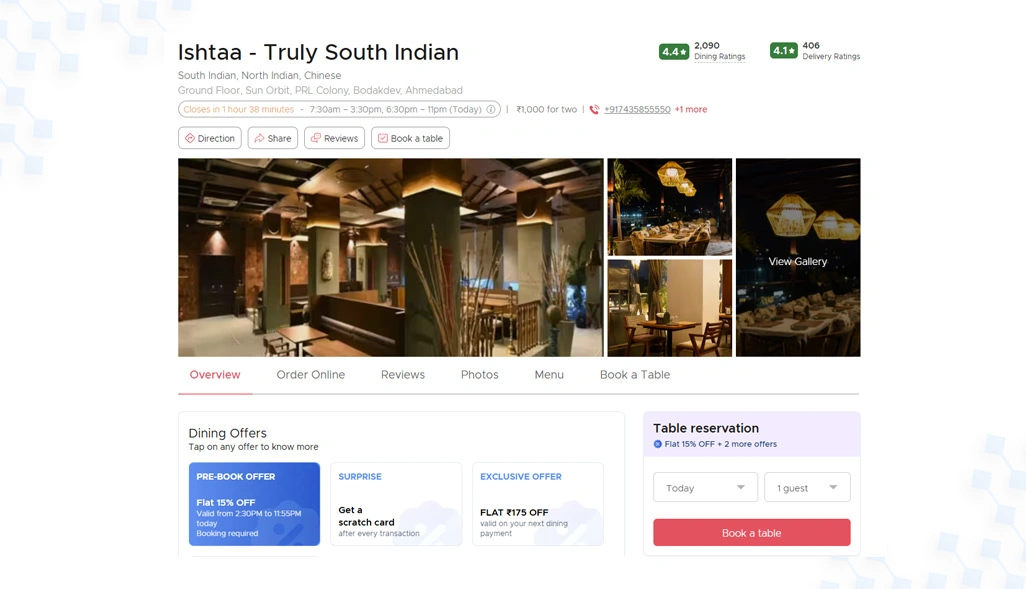
Customer reviews and ratings provide another important dimension for restaurant marketplace comparison. Alongside restaurant names, locations, cuisines, and menu details, businesses can organize rating values and review volumes to understand how customers respond to different establishments. These records can help researchers compare customer feedback patterns across restaurant categories and geographic markets.
A structured Zomato Restaurant Dataset can contain multiple attributes that support restaurant-level analysis, including ratings, review counts, cuisine information, locations, and menu-related details. When these attributes are combined, analysts can identify relationships between restaurant visibility, customer engagement, pricing, and perceived service quality without depending solely on individual platform pages.
Useful customer experience indicators may include:
- Average restaurant ratings
- Total review counts
- Rating distribution
- Cuisine categories
- Restaurant locations
- Customer feedback volume
Review information can also be grouped according to rating ranges, restaurant categories, locations, and review volumes. For example, a dataset containing 10,000 restaurant records may help identify locations with higher restaurant density or categories receiving greater customer engagement. Repeated collection can provide additional context by showing how restaurant ratings and review activity change over time.
Customer Signal, Measurement, and Analytical Value:
| Customer Signal | Measurement | Analytical Value |
|---|---|---|
| Rating | Average score | Quality benchmarking |
| Reviews | Review volume | Customer engagement |
| Cuisine | Category classification | Preference analysis |
| Location | Geographic area | Regional comparison |
Businesses can combine customer feedback with menu and pricing records to create more complete restaurant profiles. Swiggy Restaurant Reviews Scraping can add another layer of customer experience information to competitive research, especially when review activity is evaluated alongside restaurant ratings and pricing. This broader approach helps analysts examine restaurant performance from multiple perspectives instead of focusing on a single metric.
Competitive Restaurant Monitoring Across Locations And Categories
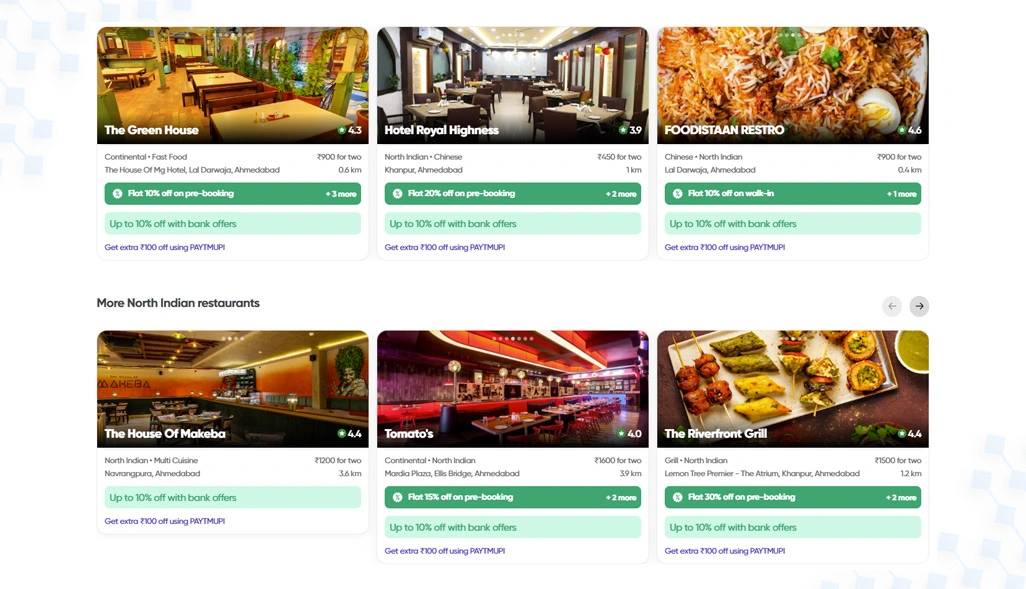
Competitive monitoring becomes more valuable when restaurant information is collected consistently across locations and time periods. Businesses can track restaurant presence, menu assortment, pricing, promotional activity, ratings, delivery information, and category coverage. This creates structured records that can be compared across markets and used to identify changes in competitive positioning.
Businesses conducting broader marketplace research can Scrape Zomato Restaurant Data for Analysis to organize restaurant-level information across multiple cities and categories. Such records can help researchers compare restaurant density, cuisine distribution, menu pricing, promotional activity, and customer engagement. Historical snapshots can also provide useful context when evaluating changes in marketplace conditions.
Competitive monitoring can focus on:
- Restaurant availability by location
- Cuisine and category distribution
- Menu and pricing changes
- Promotional activity
- Ratings and review volumes
- Delivery and availability information
A recurring collection strategy can cover hundreds of locations and thousands of restaurant listings. For example, a monitoring project might track restaurant availability across 50 cities and record changes in pricing, menu categories, discounts, ratings, and operating information. This approach allows analysts to create structured comparisons rather than relying on isolated observations.
Monitoring Area, Example Metric, and Business Application:
| Monitoring Area | Example Metric | Business Application |
|---|---|---|
| Competition | Restaurant count | Market mapping |
| Pricing | Item-level changes | Price monitoring |
| Promotions | Discounts and offers | Campaign research |
| Coverage | Cities and cuisines | Expansion analysis |
Structured competitive records can support recurring market intelligence programs. Scrape Zomato Restaurant Dataset workflows can help businesses maintain organized information for ongoing comparison and historical analysis. Combining these records with other restaurant attributes provides greater visibility into market movements and competitive activity.
Over time, businesses can use historical datasets to identify emerging categories, changing price structures, restaurant expansion, and shifts in customer engagement. This makes recurring data collection useful for restaurant chains, food-tech businesses, market researchers, aggregators, and analysts that require consistent information across multiple geographic markets.
How Web Data Crawler Can Help You?
Restaurant marketplace research requires consistent collection, structured formatting, and reliable organization of multiple data attributes. Swiggy vs Zomato Restaurant Data Scraping: Which Is Better can depend on the business objective, geographic coverage, required fields, collection frequency, and intended analytical use. We can support these requirements through scalable data collection workflows.
Key capabilities include:
- Automated restaurant data collection
- Structured menu information extraction
- Multi-location marketplace monitoring
- Pricing and discount tracking
- Review and rating organization
- Scheduled data collection workflows
These capabilities can help businesses build organized datasets for pricing research, competitive benchmarking, restaurant discovery, menu analysis, and market intelligence. Structured output can also simplify the process of transferring collected information into analytics platforms, dashboards, databases, or internal research systems.
For businesses requiring broader marketplace coverage, Scrape Swiggy Restaurant Dataset can become part of a recurring restaurant intelligence workflow. Historical records can support trend analysis, while standardized fields make it easier to compare restaurants across cities, cuisines, categories, and pricing segments.
Conclusion
Restaurant marketplace data becomes more valuable when menu, pricing, ratings, reviews, location, and competitive information are collected in consistent formats. Swiggy vs Zomato Restaurant Data Scraping: Which Is Better can be assessed according to the required data points, geographic coverage, collection frequency, and business objectives. Structured information supports clearer comparisons and more organized restaurant market research.
Businesses can further strengthen these workflows by combining restaurant attributes with customer feedback and competitive information. Scrape Zomato Restaurant Data for Analysis can support broader restaurant intelligence initiatives involving pricing research, menu benchmarking, competitor monitoring, and regional analysis. Contact Web Data Crawler today to discuss your restaurant data requirements and build a structured data collection solution.