


What Makes Swiggy Instamart & BigBasket Data API for Grocery Market Essential for Retail Growth?
07 September 2026
Introduction
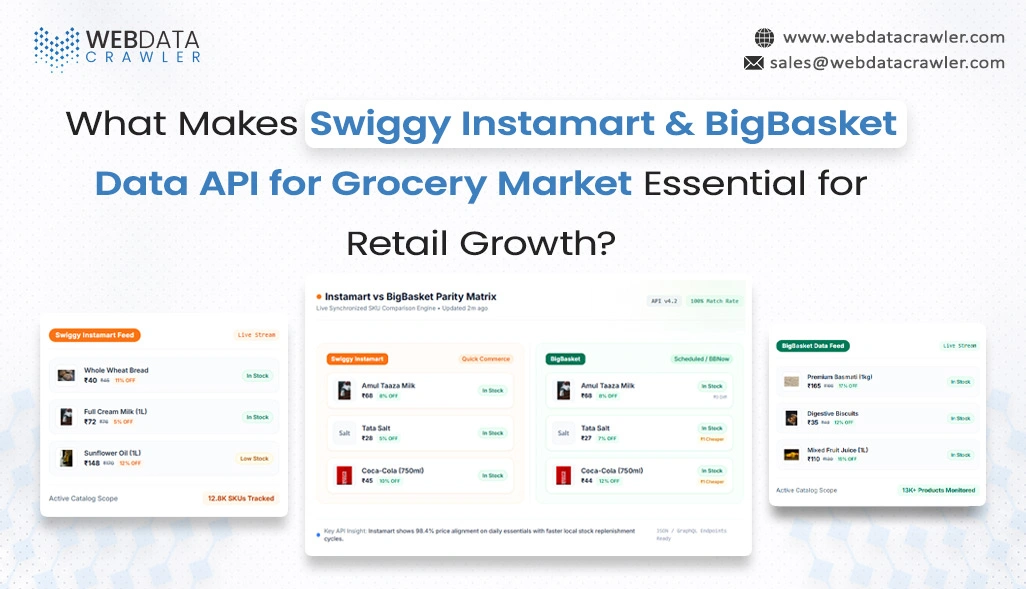
Grocery retail is becoming increasingly data-driven as shoppers compare prices, product availability, discounts, and delivery options across multiple platforms. Swiggy Instamart & BigBasket Data API for Grocery Market intelligence helps retailers evaluate these changing market conditions and build stronger decisions around pricing, assortment, and customer demand.
Retailers can collect structured information covering product names, brands, pack sizes, prices, discounts, ratings, and availability. Web Scraping Swiggy Delivery Data also supports broader analysis of delivery-related information, helping businesses understand service coverage and operational patterns across locations.
With consistent datasets, retailers can compare competitors more efficiently instead of relying on manual research. This approach supports faster identification of pricing gaps, popular products, promotional movements, and emerging grocery trends while reducing the effort required for recurring market analysis.
Strengthening Retail Decisions Through Grocery Market Intelligence
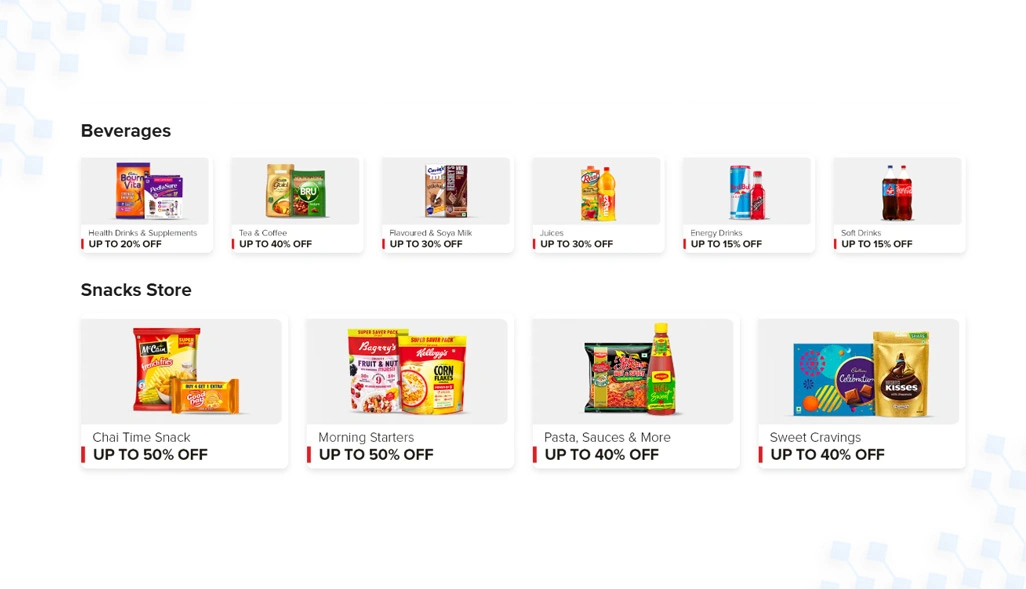
Understanding competitor activity is important for retailers operating in a highly dynamic grocery environment. Swiggy Instamart Data Scraping can provide organized information covering products, prices, promotions, pack sizes, brands, and availability. This information helps teams compare competing assortments and identify differences that may influence customer purchasing decisions across categories and locations.
Businesses can also use Big Basket Data Scraping Service to collect relevant grocery information at recurring intervals. Instead of depending on occasional manual checks, structured extraction can help analysts observe changes over time. This makes it easier to identify pricing movements, newly listed products, discontinued items, promotional campaigns, and assortment variations that may affect competitive positioning.
The value of organized grocery information becomes stronger when businesses define clear monitoring parameters. Teams can track selected categories, brands, locations, and product attributes according to their specific objectives. Such structured monitoring supports merchandising teams when evaluating assortment gaps, pricing teams when reviewing market differences, and strategy teams when assessing broader category movements.
Key areas supported include:
- Product and category comparison
- Competitor assortment evaluation
- Promotional activity tracking
- Location-based market analysis
- Pricing research
- Historical trend assessment
Regular data collection can also improve the speed of retail research. When information is cleaned, standardized, and arranged into usable records, analysts can spend less time preparing raw information and more time interpreting market patterns. This supports faster reporting while creating a consistent foundation for competitive benchmarking and future retail planning.
| Intelligence Area | Illustrative Improvement |
|---|---|
| Competitive comparison | 30% faster |
| Research preparation | 45% lower effort |
| Category monitoring | Daily |
| Market reporting | 35% quicker |
Improving Competitive Planning Through Product And Pricing Insights
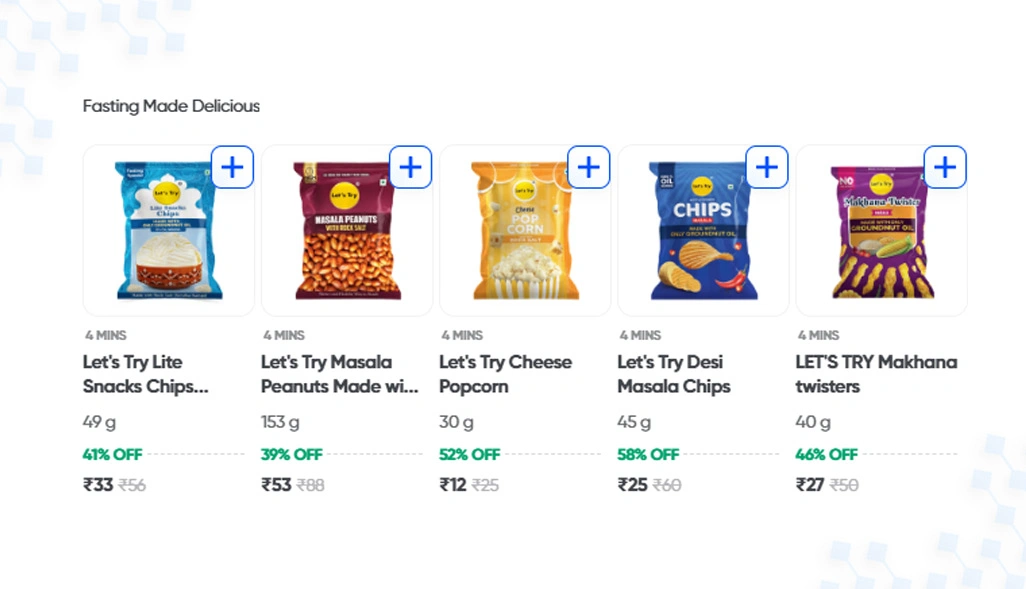
Product-level information gives retailers a clearer understanding of how competitors position their offerings. BigBasket Grocery Data Scraping can organize details such as product names, brands, pack sizes, listed prices, discounts, ratings, and availability. These records help analysts compare similar products and identify differences across categories that may influence purchasing behavior.
Broader datasets can also provide useful context for understanding demand patterns. Swiggy Restaurant Dataset information, for example, can complement grocery-focused research by providing signals around food categories and consumption-related trends. When different datasets are analyzed carefully, businesses can identify relationships between consumer interests, product categories, and changing market activity.
Pricing analysis becomes particularly valuable when product information is captured consistently. Retailers can compare similar products, review promotional differences, identify unusual price movements, and assess how frequently competitors change their offers. This can support more informed decisions about assortment positioning, promotional planning, and category-level pricing strategies.
Important planning applications include:
- Product-level competitive comparison
- Category assortment evaluation
- Promotion benchmarking
- Price movement analysis
- Brand-level research
- Consumer trend assessment
Structured product intelligence also helps merchandising teams evaluate whether their existing assortment remains competitive. By reviewing product availability and category coverage over time, businesses can identify potential gaps and changing preferences. This information can contribute to better planning, particularly when market conditions change quickly and retailers need timely evidence to adjust their strategies.
| Planning Metric | Illustrative Result |
|---|---|
| Product comparison | 38% faster |
| Price review frequency | 42% higher |
| Assortment evaluation | 31% quicker |
| Category analysis | Daily |
Supporting Retail Growth With Timely Market Signals
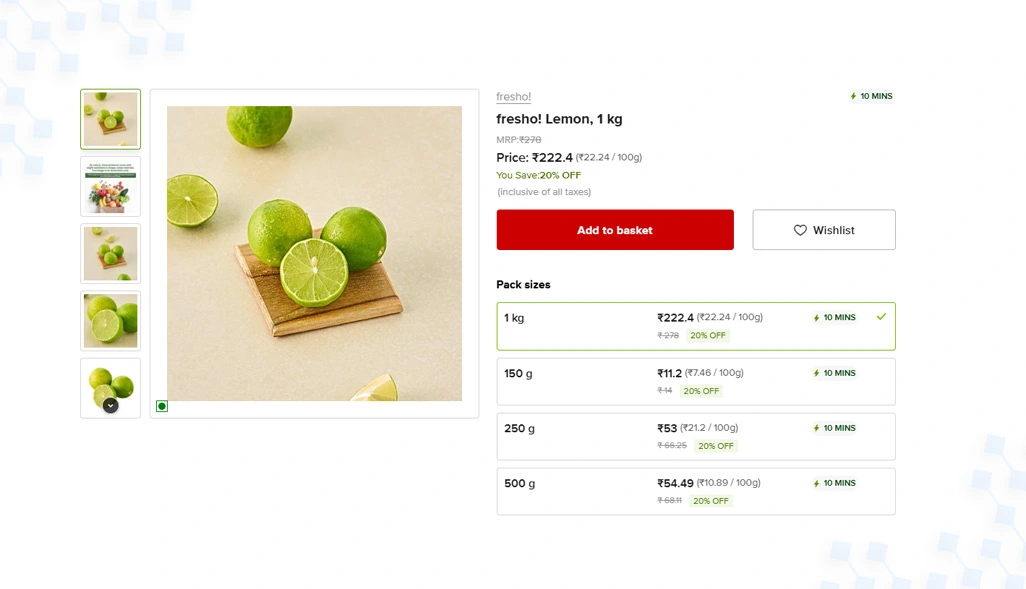
Timely grocery information is valuable because prices, promotions, and product availability can change frequently. BigBasket Product Data API can support structured access to product information for applications that require organized records. Businesses can use such information for competitive research, catalog analysis, assortment reviews, and recurring market intelligence activities.
Price changes can provide important signals about competitive behavior and customer-facing strategies. BigBasket Grocery Price Monitoring allows businesses to systematically observe movements across selected products and categories. Tracking these changes over time can help teams identify promotional periods, pricing inconsistencies, competitive adjustments, and recurring patterns that may otherwise be difficult to observe manually.
Fast-moving grocery environments also require businesses to monitor changes at appropriate intervals. BigBasket Now Quick Commerce Data API can support structured market analysis where rapid updates are important. More frequent information can help retailers understand availability patterns, promotional activity, and changing competitive conditions across fast-moving product categories.
Key growth applications include:
- Recurring price analysis
- Promotional monitoring
- Product availability tracking
- Quick-commerce market research
- Competitive benchmarking
- Category performance analysis
The resulting intelligence can support several retail functions simultaneously. Pricing teams can evaluate market movements, merchandising teams can review assortment changes, and strategy teams can study category trends. When data is collected consistently and prepared in a standardized format, businesses can create repeatable workflows for market analysis and reduce delays between information collection and business action.
| Growth Indicator | Illustrative Impact |
|---|---|
| Monitoring frequency | 4× daily |
| Competitive response | 35% faster |
| Promotional visibility | 40% higher |
| Assortment coverage | 28% broader |
How Web Data Crawler Can Help You?
For retailers handling multiple grocery sources, Swiggy Instamart & BigBasket Data API for Grocery Market solutions can simplify the collection and organization of competitive information. We can help businesses create structured datasets from relevant grocery platforms while supporting recurring extraction requirements.
Key capabilities include:
- Automated collection of product information
- Structured organization of pricing and promotional records
- Recurring monitoring across selected grocery categories
- Data cleaning and normalization for analysis
- Location-based market intelligence collection
- Flexible dataset preparation for business applications
Businesses can use these capabilities to support merchandising, competitive research, pricing analysis, assortment planning, and demand evaluation without depending entirely on manual data gathering. The resulting information can also support Swiggy Instamart Grocery Dataset requirements when historical or structured grocery information is needed for deeper analysis.
Conclusion
Retailers increasingly need timely information to understand pricing, assortment, availability, promotions, and competitive movements. Swiggy Instamart & BigBasket Data API for Grocery Market intelligence can help organize these signals into structured information that supports better research, stronger planning, and more informed retail decisions.
Consistent market monitoring can also improve how teams respond to changing grocery conditions and evaluate category opportunities. Swiggy Instamart Grocery Dataset resources can support deeper historical and analytical requirements across retail research workflows. Businesses can work with Web Data Crawler to develop customized data solutions aligned with their specific market intelligence goals.