
Why Businesses Use Swiggy Food Delivery Data Scraping in 2026?
June 24
Introduction
India's online food delivery industry has experienced remarkable growth over the past decade, driven by changing consumer lifestyles, digital payments, and rapid urbanization. Among the industry's leading platforms, Swiggy has become one of the largest food delivery marketplaces, connecting millions of customers with restaurants across hundreds of cities. Every day, the platform generates enormous volumes of valuable business data, including restaurant listings, menus, pricing, customer ratings, delivery times, promotional offers, and cuisine trends.
For restaurants, food aggregators, market research firms, cloud kitchens, investors, and analytics companies, this data provides valuable insights into customer preferences and competitive dynamics. As a result, many organizations invest in Swiggy data scraping services to collect structured information that supports pricing intelligence, restaurant benchmarking, demand forecasting, and business expansion.
Modern businesses also rely on Swiggy food delivery data scraping, Swiggy food scraping API, Swiggy scraper API, web scraping Swiggy food delivery data, and automated Swiggy scraper solutions to monitor thousands of restaurants and menu items in real time.
This comprehensive guide explains how Swiggy data extraction works, the business value of structured food delivery datasets, major use cases, best practices, challenges, and why automated restaurant intelligence has become essential for today's food delivery ecosystem.
Understanding Swiggy Food Delivery Data
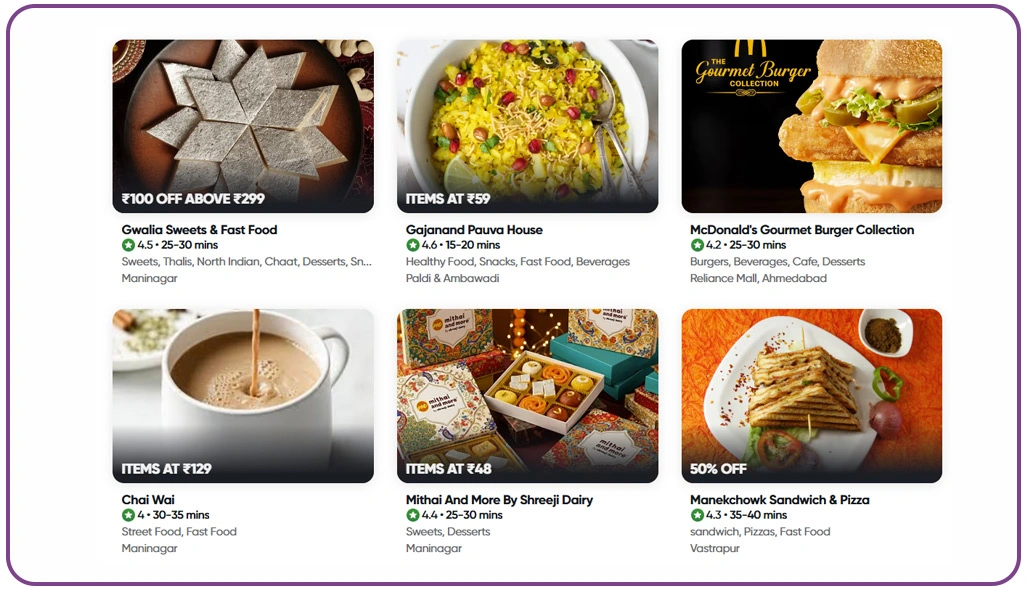
Swiggy hosts millions of menu items from restaurants ranging from local eateries to international chains. The platform continuously updates restaurant availability, delivery estimates, menu prices, discounts, ratings, and promotional campaigns.
Typical information available includes:
- Restaurant names
- Menu items
- Categories
- Cuisine types
- Pricing
- Discounts
- Delivery charges
- Delivery time
- Ratings
- Reviews
- Restaurant location
- Popular dishes
- Offers
- Images
- Availability
- Opening hours
Organizations using Swiggy data scraping services transform this information into structured databases for analytics and decision-making.
Why Businesses Choose Swiggy Data Scraping Services
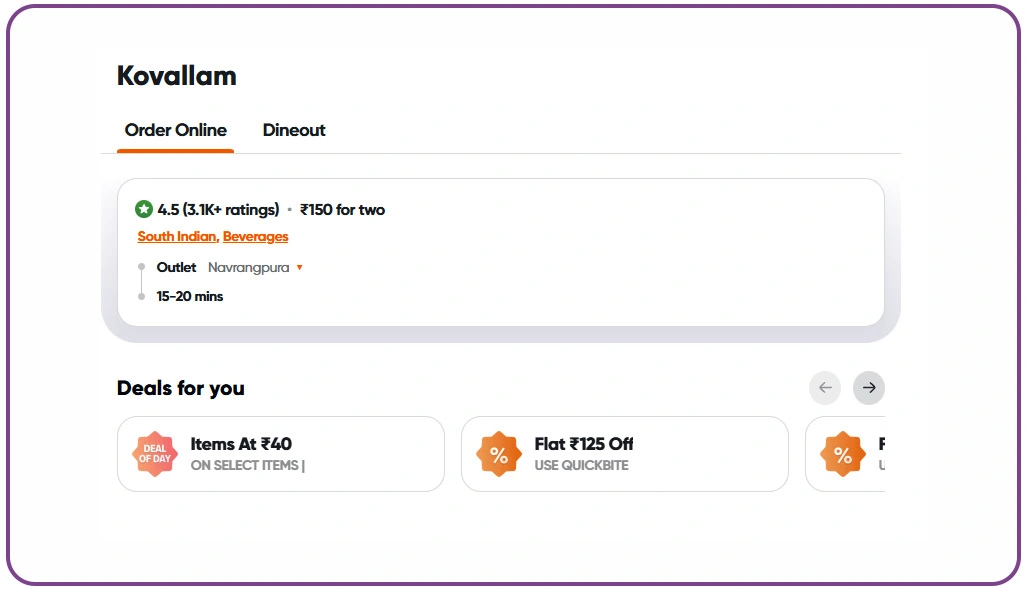
The food delivery market changes rapidly throughout the day. Menu prices, restaurant availability, delivery times, and promotional offers are updated frequently.
Businesses use Swiggy data scraping services to monitor:
- Restaurant pricing
- Menu changes
- Promotional campaigns
- Customer ratings
- Popular dishes
- Delivery performance
- Regional restaurant trends
- Cuisine demand
Automated monitoring provides real-time visibility across thousands of restaurants without manual effort.
What Is Swiggy Food Delivery Data Scraping?
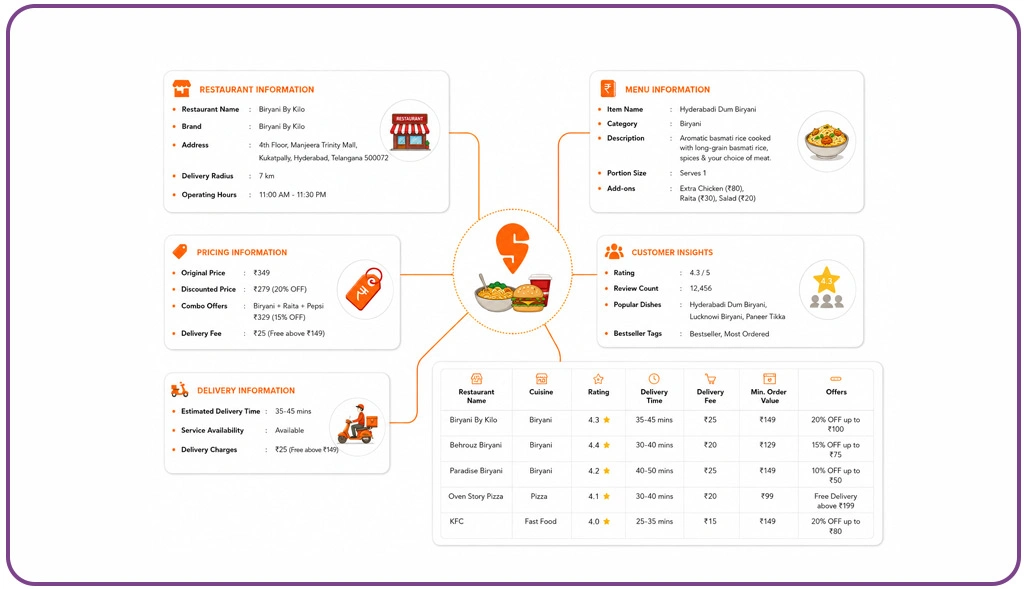
Swiggy food delivery data scraping refers to collecting publicly available restaurant information from the Swiggy platform in a structured format.
Collected information often includes:
Restaurant Information
- Restaurant name
- Brand
- Address
- Delivery radius
- Operating hours
Menu Information
- Item names
- Categories
- Descriptions
- Portion sizes
- Add-ons
Pricing Information
- Original prices
- Discounted prices
- Combo offers
- Delivery fees
Customer Insights
- Ratings
- Review counts
- Popular dishes
- Bestseller tags
Delivery Information
- Estimated delivery time
- Service availability
- Delivery charges
These datasets help organizations understand both restaurant performance and customer demand.
Many organizations deploy a Swiggy Food Data Crawler to automate the extraction of restaurant information, menu catalogs, pricing data, promotions, and customer feedback. Automated crawling systems help businesses maintain accurate and continuously updated datasets for analytics and competitive intelligence initiatives.
Benefits of Using a Swiggy Food Scraping API
A Swiggy food scraping API enables businesses to automate restaurant data collection at scale.
Major benefits include:
- Real-time data extraction
- Structured JSON or CSV output
- Continuous monitoring
- Historical data collection
- Scalable integrations
- Automated updates
Organizations can seamlessly integrate restaurant intelligence into dashboards, BI tools, or analytics platforms.
How a Swiggy Scraper API Supports Business Intelligence
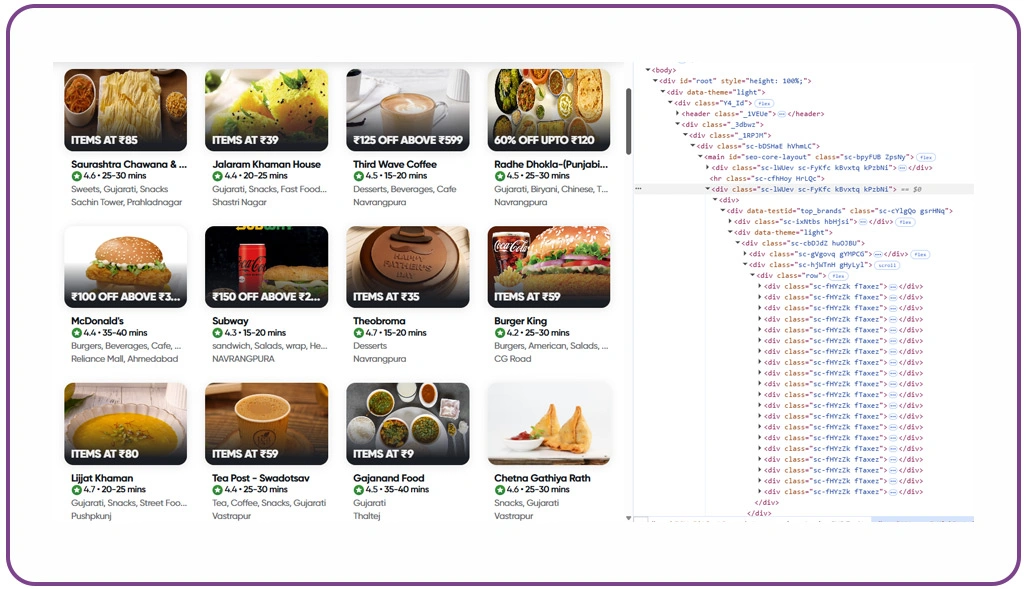
A Swiggy scraper API allows businesses to collect fresh restaurant and menu data without manually browsing the platform.
Common applications include:
- Restaurant benchmarking
- Price comparison
- Menu tracking
- Delivery performance monitoring
- Customer sentiment analysis
- Promotion tracking
- Competitor intelligence
The API supports ongoing monitoring across multiple cities and restaurant categories.
Advantages of Web Scraping Swiggy Food Delivery Data
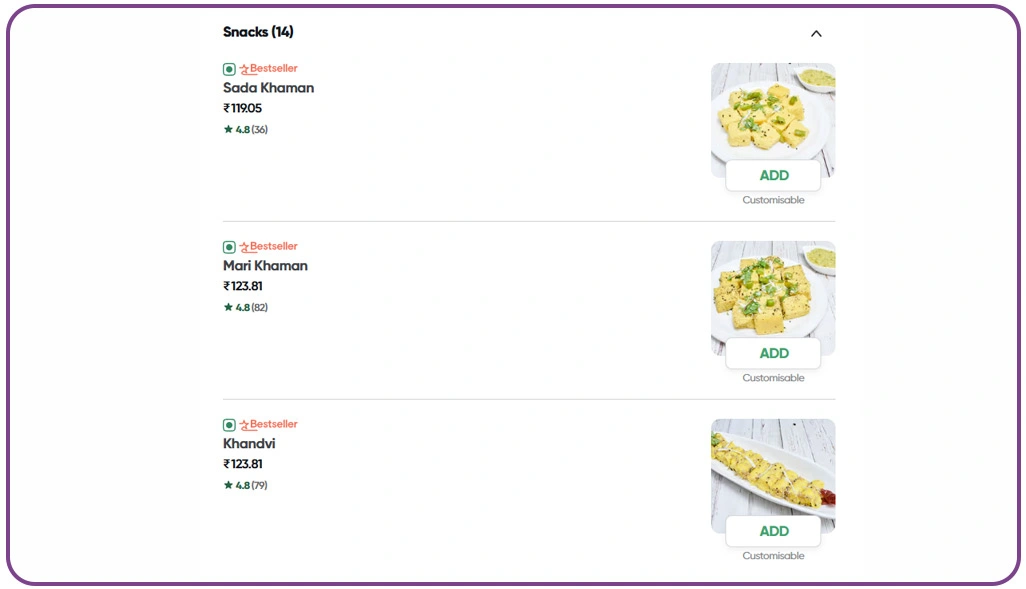
Web scraping Swiggy food delivery data offers businesses valuable market insights that support strategic planning.
Key advantages include:
Competitive Pricing Analysis
Restaurants compare menu prices against competitors to remain competitive.
Menu Optimization
Food brands identify:
- Trending dishes
- Seasonal offerings
- High-performing cuisines
- Premium menu opportunities
Restaurant Benchmarking
Businesses compare:
- Ratings
- Delivery speed
- Pricing
- Customer engagement
- Menu diversity
Promotion Monitoring
Track:
- Coupons
- Combo offers
- Festival discounts
- Limited-time promotions
Market Expansion
Restaurant chains evaluate:
- High-demand cities
- Cuisine popularity
- Market gaps
- Customer preferences
To streamline large-scale restaurant intelligence collection, businesses often integrate a Swiggy Food Data API that provides structured access to menu details, restaurant metadata, pricing information, and delivery-related insights. These datasets support operational planning, benchmarking, and market research activities.
Key Data Fields Captured by a Swiggy Scraper
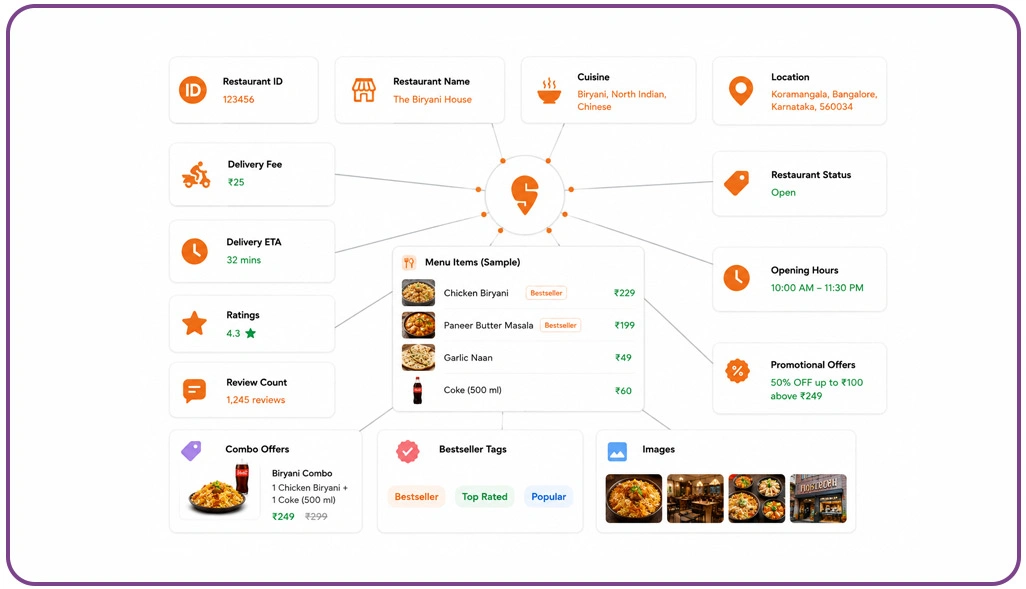
A modern Swiggy scraper can collect hundreds of valuable attributes.
Important fields include:
- Restaurant ID
- Restaurant name
- Cuisine
- Location
- Delivery fee
- Delivery ETA
- Ratings
- Review count
- Menu items
- Prices
- Combo offers
- Bestseller tags
- Images
- Restaurant status
- Opening hours
- Promotional offers
Structured datasets enable detailed business analysis.
Industries Using Swiggy Food Delivery Data

Several industries benefit from Swiggy food delivery data scraping.
Restaurant Chains
Monitor competitors and optimize menu pricing.
Cloud Kitchens
Identify demand hotspots and emerging cuisine trends.
Food Delivery Startups
Benchmark restaurant availability and pricing.
Market Research Firms
Generate reports on:
- Restaurant growth
- Consumer demand
- Regional trends
- Cuisine preferences
Investment Firms
Evaluate:
- Restaurant expansion
- Market performance
- Food delivery trends
- Consumer behavior
AI and Analytics Companies
Use datasets to develop:
- Recommendation engines
- Demand forecasting models
- Customer segmentation
- Dynamic pricing systems
Business Applications of Swiggy Data Scraping Services
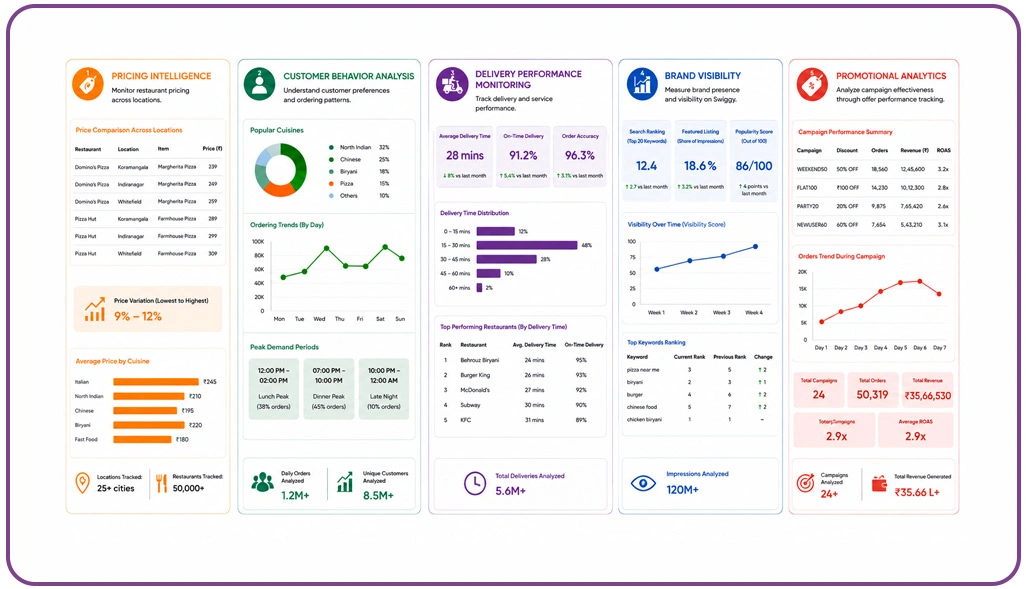
Organizations leverage Swiggy data scraping services for multiple business objectives.
Pricing Intelligence
Monitor restaurant pricing across locations.
Customer Behavior Analysis
Understand:
- Popular cuisines
- Ordering trends
- Peak demand periods
Delivery Performance Monitoring
Track:
- Delivery times
- Service quality
- Restaurant efficiency
Brand Visibility
Measure:
- Search rankings
- Featured listings
- Popularity indicators
Promotional Analytics
Analyze campaign effectiveness through historical offer tracking.
Challenges in Swiggy Food Delivery Data Scraping
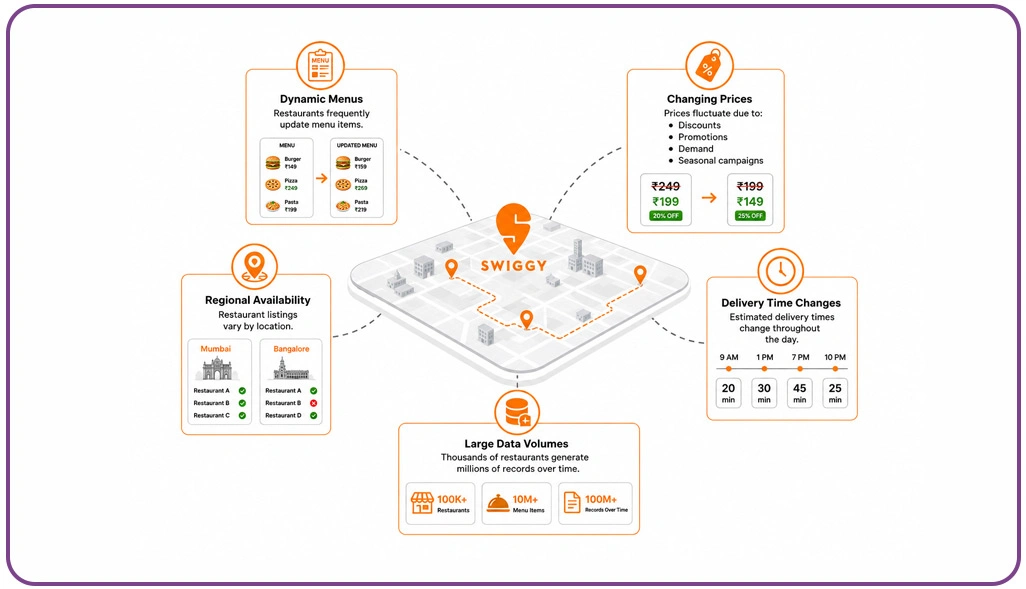
Extracting restaurant data at scale presents several challenges.
Dynamic Menus
Restaurants frequently update menu items.
Changing Prices
Prices fluctuate due to:
- Discounts
- Promotions
- Demand
- Seasonal campaigns
Regional Availability
Restaurant listings vary by location.
Delivery Time Changes
Estimated delivery times change throughout the day.
Large Data Volumes
Thousands of restaurants generate millions of records over time.
Best Practices for Using a Swiggy Scraper API
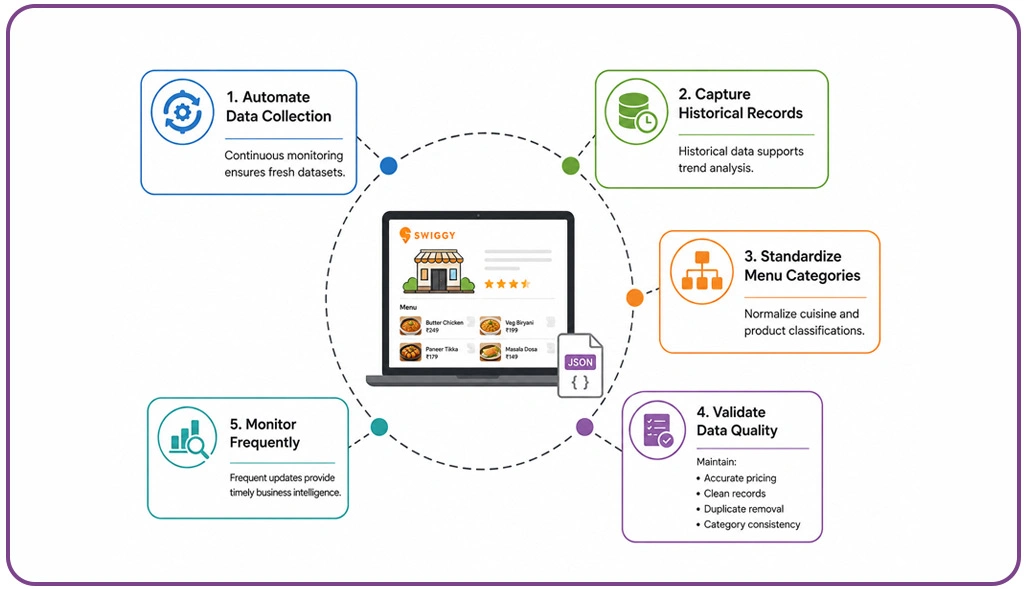
Successful restaurant intelligence projects typically follow these practices.
Automate Data Collection
Continuous monitoring ensures fresh datasets.
Capture Historical Records
Historical data supports trend analysis.
Standardize Menu Categories
Normalize cuisine and product classifications.
Validate Data Quality
Maintain:
- Accurate pricing
- Clean records
- Duplicate removal
- Category consistency
Monitor Frequently
Frequent updates provide timely business intelligence.
Predictive Analytics Using Swiggy Restaurant Data
Historical restaurant data enables advanced analytics.
Businesses can forecast:
- Cuisine demand
- Seasonal ordering trends
- Restaurant growth
- Price fluctuations
- Customer preferences
- Delivery performance
Predictive models improve strategic planning.
Future of Food Delivery Data Intelligence
The online food delivery ecosystem continues to evolve rapidly.
Future analytics will increasingly leverage:
- Artificial Intelligence
- Machine Learning
- Predictive Analytics
- Real-Time Monitoring
- Dynamic Pricing Intelligence
- Customer Personalization
- Restaurant Performance Dashboards
Organizations investing in automated data extraction today will gain stronger competitive advantages in the future.
Why High-Quality Restaurant Data Matters
Raw restaurant information alone provides limited value.
Actionable business intelligence requires:
- Structured datasets
- Clean records
- Historical tracking
- Accurate pricing
- Consistent menu classification
- Reliable delivery metrics
A comprehensive restaurant database helps organizations optimize pricing, improve customer experiences, benchmark competitors, and identify growth opportunities.
Whether collected through a Swiggy food scraping API, Swiggy scraper API, or advanced Swiggy scraper, structured restaurant intelligence supports better operational and strategic decisions across the food delivery industry.
Conclusion
A well-structured Swiggy Restaurant Dataset helps businesses analyze restaurant performance, cuisine popularity, pricing strategies, promotional effectiveness, and regional demand patterns. Such comprehensive datasets empower restaurants, cloud kitchens, investors, and analytics providers to make data-driven decisions with greater confidence.
As India's food delivery market continues to expand, businesses increasingly depend on Swiggy data scraping services to gain real-time insights into restaurant performance, menu pricing, delivery efficiency, customer preferences, and promotional trends. Whether organizations use Swiggy food delivery data scraping, a Swiggy food scraping API, Swiggy scraper API, web scraping Swiggy food delivery data, or an advanced Swiggy scraper, structured datasets enable smarter decision-making across pricing intelligence, market research, demand forecasting, and competitive analysis.
By leveraging accurate, scalable, and continuously updated restaurant data, businesses can stay ahead of changing market conditions and uncover new growth opportunities. Web Data Crawler provides reliable Swiggy data extraction solutions that transform large volumes of food delivery data into actionable business intelligence, helping organizations make informed decisions and achieve sustainable success in the competitive food delivery ecosystem.