
Seamless Restaurant Data Scraping: A Complete Guide to Extracting Food Delivery Data at Scale
June 26 2026
Introduction
Online food delivery has fundamentally reshaped how restaurants reach customers, and platforms like Seamless sit at the center of that shift. Behind every menu listing, delivery estimate, and price point lies a constantly updating stream of data data that restaurants, aggregators, market researchers, and competing platforms increasingly want to capture and analyze. This is where seamless restaurant data scraping comes in, giving businesses a structured, automated way to extract menu, pricing, and delivery information at scale.
In this guide, we'll break down how to scrape Seamless restaurant data, the technical considerations behind seamless food API scraping, and why this data has become essential for restaurant analytics, competitive intelligence, and food-tech innovation.
To efficiently capture this continuously changing information, many organizations rely on a Seamless Food Data Crawler that automates the collection of restaurant listings, menu updates, pricing details, delivery estimates, and customer ratings. By transforming raw food delivery data into actionable insights, businesses can strengthen competitive analysis, monitor market trends, and support data-driven growth strategies across the food-tech ecosystem.
Why Seamless Restaurant Data Matters
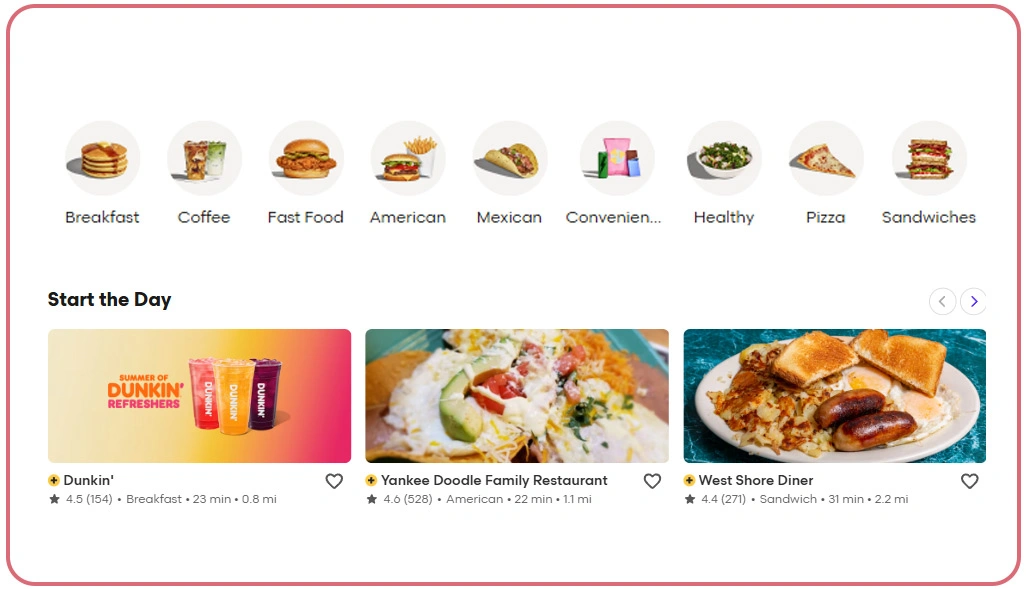
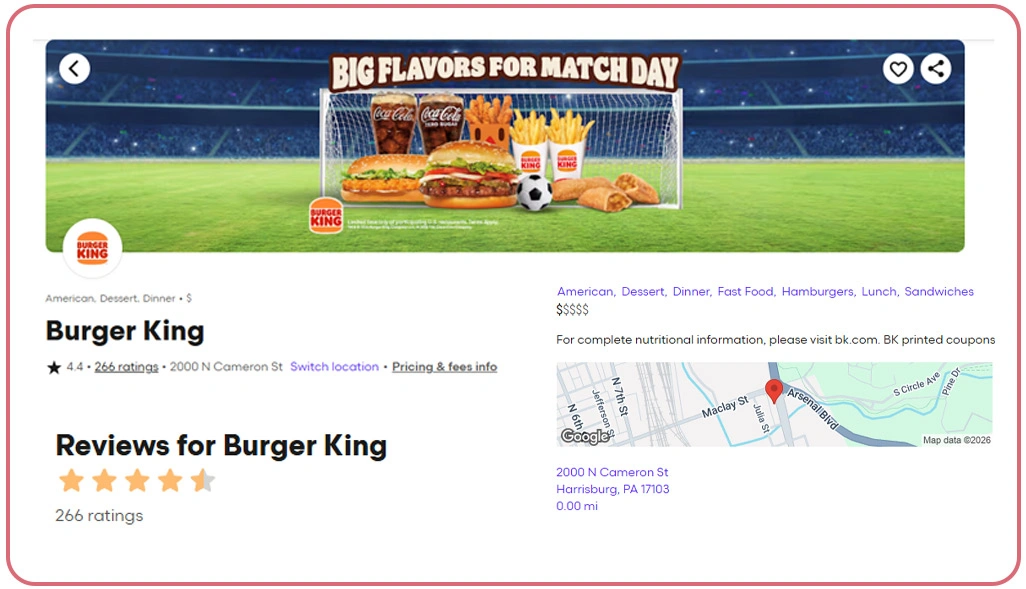
Seamless operates as a food ordering and delivery marketplace, connecting consumers with thousands of restaurants across major US cities. Each restaurant listing on the platform contains a wealth of structured information: menu items, prices, descriptions, ratings, delivery times, minimum order requirements, and promotional offers. Multiply that across thousands of restaurants and dozens of cities, and you get a massive, constantly shifting dataset.
Businesses tap into this data for a variety of reasons:
- Restaurant owners want to benchmark their menu pricing against competitors in their area
- Food-tech startups need restaurant and menu data to power their own discovery or aggregation apps
- Market researchers track delivery trends, pricing shifts, and regional cuisine popularity
- Investors and analysts use delivery platform data as a signal for local economic activity and consumer spending habits
- Aggregator platforms cross-reference pricing and availability across multiple delivery services
Manually tracking this information across thousands of listings simply isn't feasible which is why automated extraction has become the standard approach.
What Is Seamless Restaurant Data Scraping?
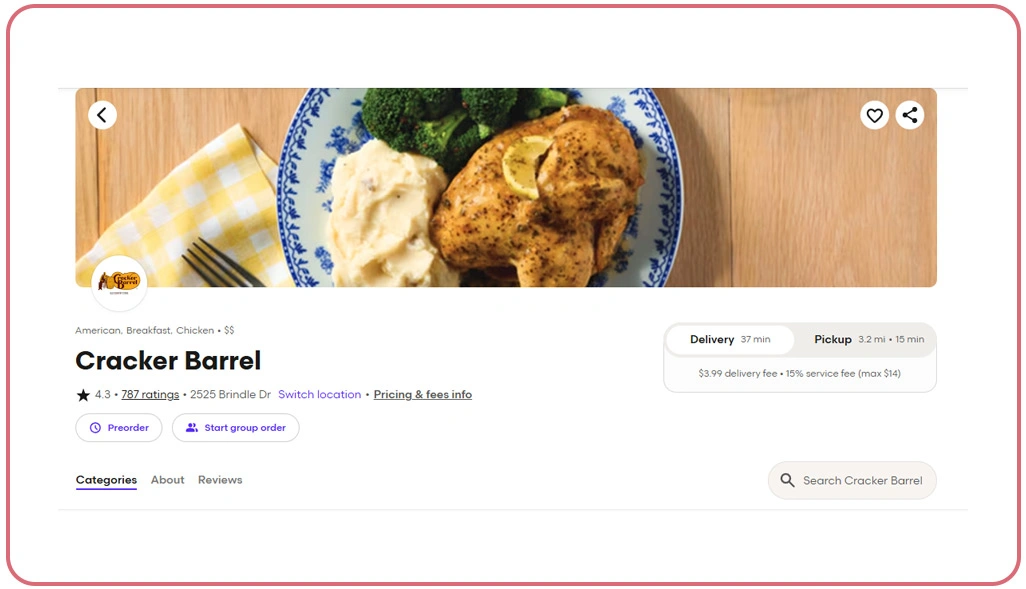
Seamless restaurant data scraping refers to the automated process of collecting structured data from Seamless's restaurant listings and menu pages. Rather than manually browsing and copying information, a scraper systematically visits pages, identifies relevant data fields, and exports them into clean, structured formats like CSV, JSON, or directly into a database.
Typical data points captured during a Seamless scrape include:
- Restaurant names, addresses, and cuisine categories
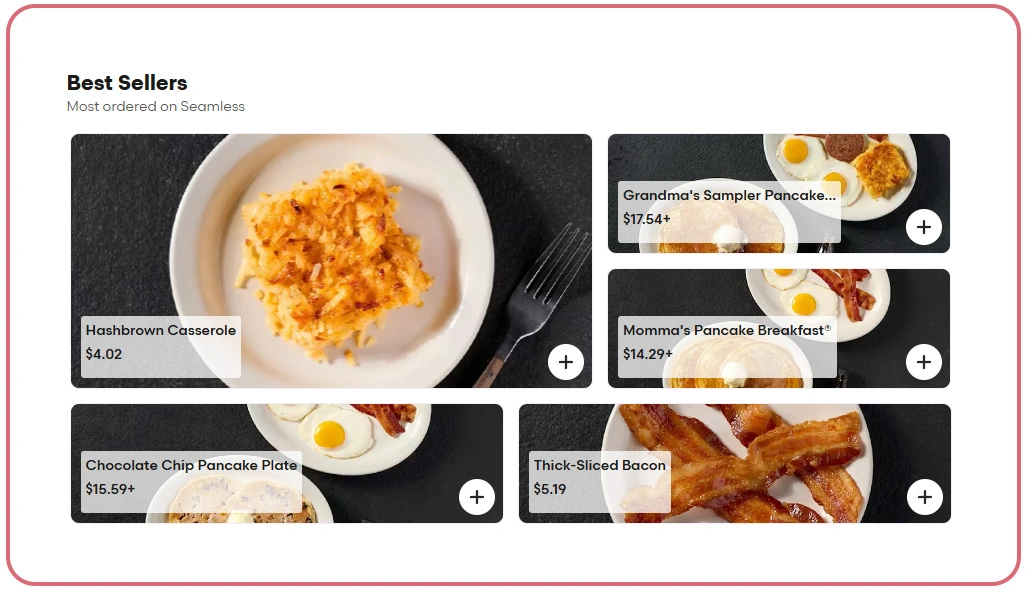
- Full menu listings with item names, descriptions, and prices
- Delivery and pickup time estimates
- Minimum order values and delivery fees
- Customer ratings and review counts
- Promotional deals, discounts, and bundle offers
- Restaurant operating hours and service area coverage
Because this data updates frequently menus change seasonally, prices fluctuate, and promotions rotate a one-time scrape rarely provides lasting value. Most businesses set up recurring extraction jobs that run daily or weekly to keep their datasets current.
By leveraging Web Scraping Food Data techniques, businesses can continuously monitor restaurant updates, menu changes, pricing trends, and delivery performance to maintain accurate and actionable datasets.
The Technical Side of Seamless Food API Scraping
While some scraping projects rely on parsing rendered HTML pages directly, a more efficient and reliable approach is seamless food API scraping interacting with the underlying data endpoints that power the platform's search, menu, and restaurant detail pages. Modern delivery platforms like Seamless are built as dynamic web applications, meaning the visible page content is populated by background API calls rather than static HTML.
Targeting these API endpoints (where accessible) offers several advantages:
- Cleaner data structure API responses are typically returned in JSON format, already organized into fields rather than buried in HTML markup
- Faster extraction pulling from an API call is generally quicker than rendering a full webpage with a headless browser
- Lower resource overhead API requests consume less bandwidth and processing power compared to full-page scraping
- More reliable pagination APIs often support clean parameters for retrieving large result sets, such as restaurant lists by zip code
That said, working directly with backend APIs introduces its own complexities request signatures, session tokens, and rate-limiting mechanisms are common safeguards that require careful, well-engineered handling to extract data reliably and sustainably.
Seamless Food Delivery API Extraction: Capturing Real-Time Delivery Data
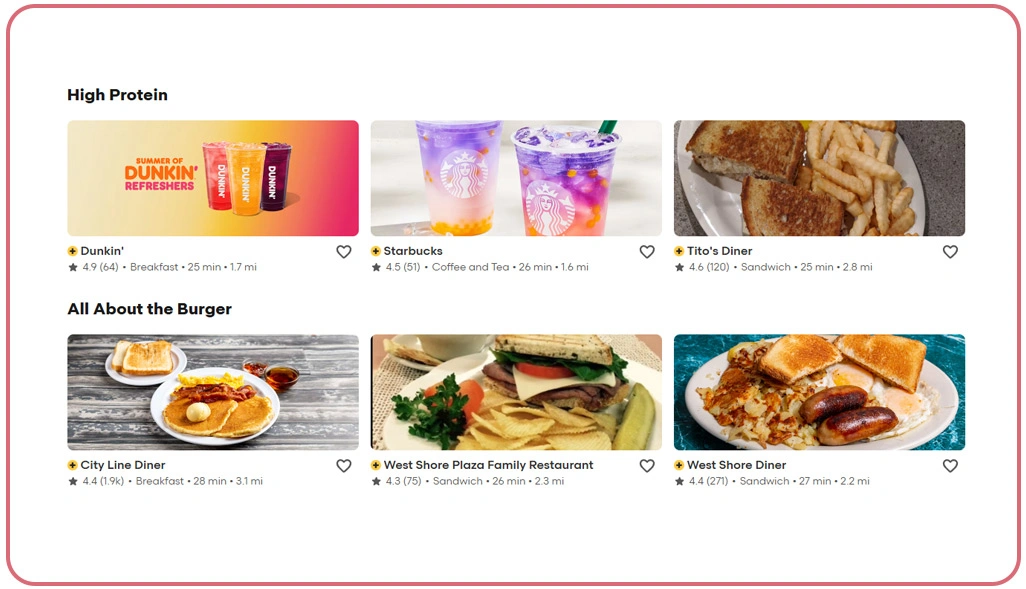
Beyond static menu content, one of the most valuable and most dynamic categories of data is delivery logistics information. Seamless food delivery API extraction focuses specifically on capturing real-time operational data such as:
- Current delivery time estimates for specific addresses or zip codes
- Real-time restaurant availability (open, closed, or temporarily paused)
- Surge pricing or peak-hour delivery fee adjustments
- Driver availability signals reflected in changing delivery windows
- Service area boundaries that shift based on demand or staffing
This type of extraction is particularly valuable for logistics companies and competing delivery platforms trying to understand market-level delivery performance. For example, a company benchmarking its own delivery speed against Seamless might track average delivery windows across the same set of restaurants and zip codes over time, identifying where its service over- or under-performs.
Because delivery estimates change minute by minute based on order volume and driver availability, seamless food delivery API extraction projects typically require high-frequency polling rather than periodic batch scraping a meaningful difference in infrastructure design compared to scraping relatively stable menu data.
Use Cases for Seamless Restaurant Data Extraction
1. Competitive Price Benchmarking
Restaurant owners and franchise groups use seamless restaurant data extraction to compare their menu prices against nearby competitors. If a popular nearby restaurant is pricing similar dishes lower, that's a critical signal for adjusting pricing strategy or highlighting differentiated value.
2. Menu Trend Analysis
By aggregating menu data across thousands of restaurants, food-tech companies and culinary trend analysts can identify which cuisines, ingredients, or dish formats are gaining popularity in specific cities insights that inform new restaurant concepts or product development for food brands.
3. Market Research and Investment Analysis
Investors and consulting firms use delivery platform data as alternative data signals tracking new restaurant openings, pricing inflation across delivery menus, and regional demand shifts as proxies for broader economic trends.
4. Aggregator and Comparison Platforms
Some businesses build their own meta-search or comparison tools that pull data from multiple delivery platforms, including Seamless, to show users price and delivery time comparisons in one place. This requires consistent, well-maintained scraping pipelines across multiple sources.
5. Restaurant Discovery and Recommendation Engines
Food-tech startups building recommendation apps often rely on scraped restaurant and menu data to populate their own databases before building proprietary curation or personalization layers on top.
Challenges in Scraping Seamless Restaurant Data
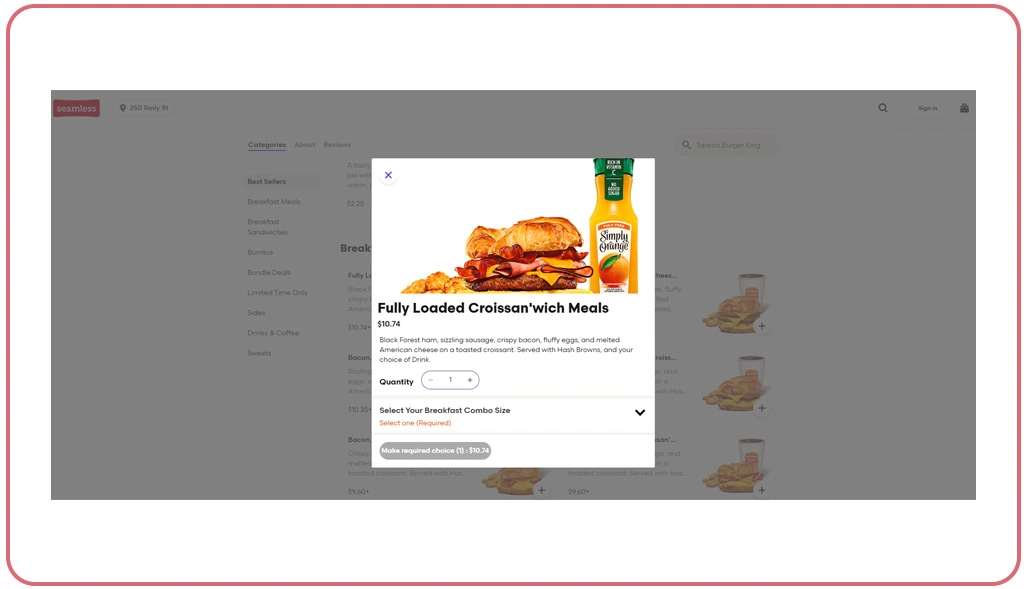
Extracting data from a platform like Seamless comes with several technical hurdles:
- Dynamic content rendering much of the page content loads asynchronously via JavaScript, requiring headless browser automation or direct API interaction rather than simple HTML parsing
- Geolocation-based listings restaurant results vary significantly based on the delivery address entered, requiring scrapers to simulate location-specific requests across many zip codes
- Anti-bot protections rate limiting, CAPTCHAs, and behavioral detection systems are common safeguards on high-traffic delivery platforms
- Frequent UI and API changes platform updates can break existing scraping logic, requiring ongoing maintenance to keep data pipelines functional
- Data volume management with thousands of restaurants and constantly changing menus, storing and updating data efficiently requires solid database architecture
These challenges are precisely why most companies pursuing seamless restaurant data scraping at scale choose to work with specialized data extraction providers rather than building and maintaining scrapers in-house. A dedicated provider can absorb the engineering overhead of adapting to platform changes, managing infrastructure, and ensuring consistent uptime letting the business focus on analyzing the resulting data rather than fighting to collect it.
Maintaining accurate Food And Restaurant Datasets requires continuous monitoring, validation, and updates, ensuring businesses have reliable data for market analysis, pricing intelligence, and operational decision-making.
Best Practices for Reliable Restaurant Data Extraction
For teams building or managing their own extraction pipelines, a few best practices go a long way:
- Build modular scrapers that separate data collection logic from data parsing logic, making it easier to update when page structures change
- Implement rotating proxies and request throttling to avoid triggering rate limits or IP bans
- Schedule extraction frequency based on data volatility menu data can be refreshed daily or weekly, while delivery time data may need near-real-time polling
- Validate and clean data on ingestion to catch formatting inconsistencies, duplicate listings, or missing fields before they reach downstream systems
- Monitor for structural changes on target pages or APIs so extraction logic can be updated proactively rather than reactively
The Strategic Value of Structured Food Delivery Data
What makes seamless restaurant data scraping so valuable isn't just the raw data itself, but what businesses can build on top of it. Structured menu and pricing data can feed dynamic pricing models, demand forecasting tools, and competitive dashboards. Delivery time data can inform logistics optimization and service-level benchmarking. Even customer rating and review data, when aggregated at scale, can reveal sentiment trends across cuisines, neighborhoods, or price tiers.
As food delivery continues to grow as a primary channel for restaurant revenue, the businesses that can systematically monitor and interpret this data rather than relying on anecdotal observation will have a clear strategic advantage in pricing, marketing, and operational decision-making.
Conclusion
From scrape Seamless restaurant data projects focused on menu benchmarking to advanced seamless food delivery Data Scraping pipelines tracking real-time delivery performance, structured food delivery data has become a critical asset for restaurants, food-tech companies, and market analysts alike. The technical complexity of dynamic rendering, geolocation handling, and anti-bot protections, however, means most organizations benefit from partnering with an experienced extraction provider rather than building this infrastructure from scratch.
At Web Data Crawler, we build custom, scalable scraping solutions for restaurant and food delivery platforms covering everything from menu and pricing extraction to real-time delivery API data. If you're looking to turn Seamless restaurant data into a reliable, structured asset for your business, our team can design an extraction pipeline tailored to your exact requirements.