
Quick Commerce Data Scraping Services: Extracting Q-Commerce Data Across the USA & UAE
June 26 2026
Introduction
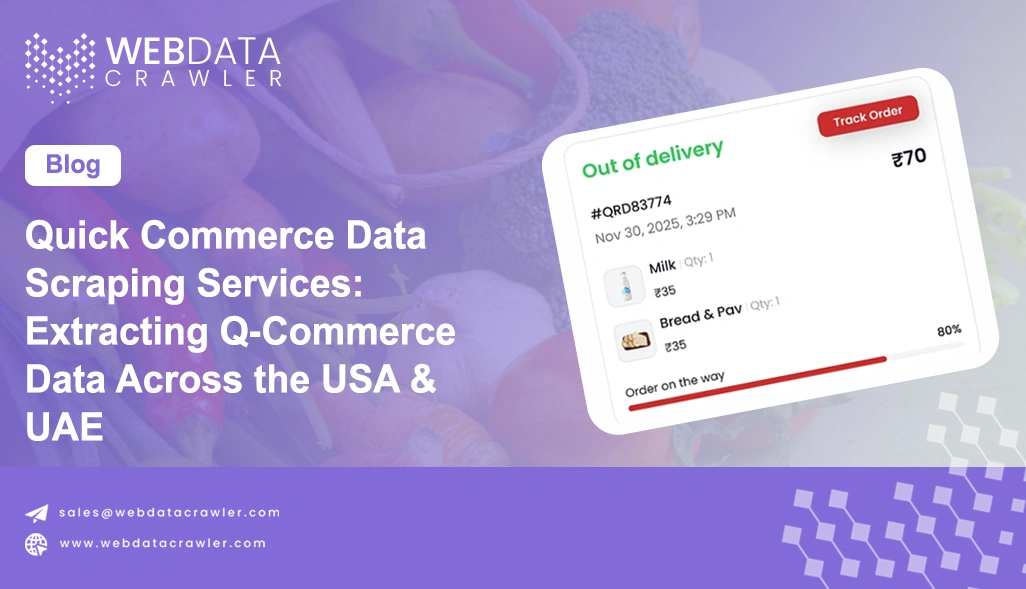
Quick commerce often called "q-commerce" has redefined what speed means in retail. Where same-day delivery once felt fast, platforms now compete on 10-to-30-minute delivery windows for groceries, snacks, electronics, and household essentials. This hyper-fast model generates an equally hyper-fast stream of data: prices change by the hour, inventory shifts in real time, and delivery zones expand or contract based on rider availability. For businesses trying to compete in or analyze this space, quick commerce data scraping services have become essential infrastructure.
In this guide, we'll explore how web scraping quick commerce data works, why quick commerce datasets are in growing demand, and how businesses are using scraping services to track this fast-moving market across both the USA and UAE.
What Is Quick Commerce, and Why Does Its Data Matter So Much?
Quick commerce refers to ultra-fast delivery services typically grocery, convenience, or essential goods fulfilled from small, localized "dark stores" or micro-fulfillment centers rather than traditional large warehouses. This model depends on hyper-local inventory management, dynamic pricing, and tightly optimized delivery logistics, all of which create constantly shifting data points.
Because the entire business model is built around speed and localized service availability, quick commerce platforms update their data far more frequently than traditional e-commerce or even standard grocery delivery services. Prices may change multiple times a day, stock levels fluctuate by the minute as nearby dark stores sell through limited inventory, and delivery time estimates shift based on real-time demand and rider availability.
This volatility is exactly why static, manual data collection doesn't work for this sector and why quick commerce data scraping services have emerged as a dedicated niche within the broader web scraping industry.
What Is Quick Commerce Data Scraping?
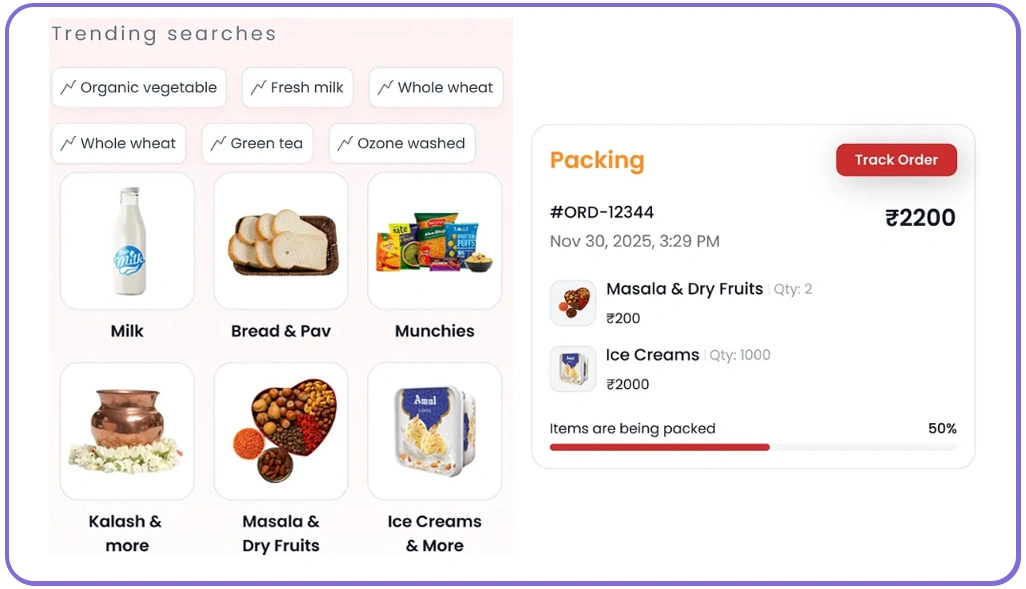
Quick commerce data scraping is the automated process of extracting structured information from q-commerce platforms and apps. This includes capturing data such as:
- Product listings, categories, and brand information
- Real-time pricing and promotional discounts
- Stock availability at the dark-store or micro-warehouse level
- Delivery time estimates for specific addresses or zip codes
- Minimum order values and delivery fee structures
- Service area boundaries and coverage maps
- New product launches and seasonal assortment changes
Given how quickly this data changes, scraping pipelines for quick commerce typically run far more frequently than scrapers built for traditional retail sometimes polling every few minutes rather than daily, especially when tracking pricing or delivery time data tied to demand surges.
Quick Commerce Scraping Services in the USA
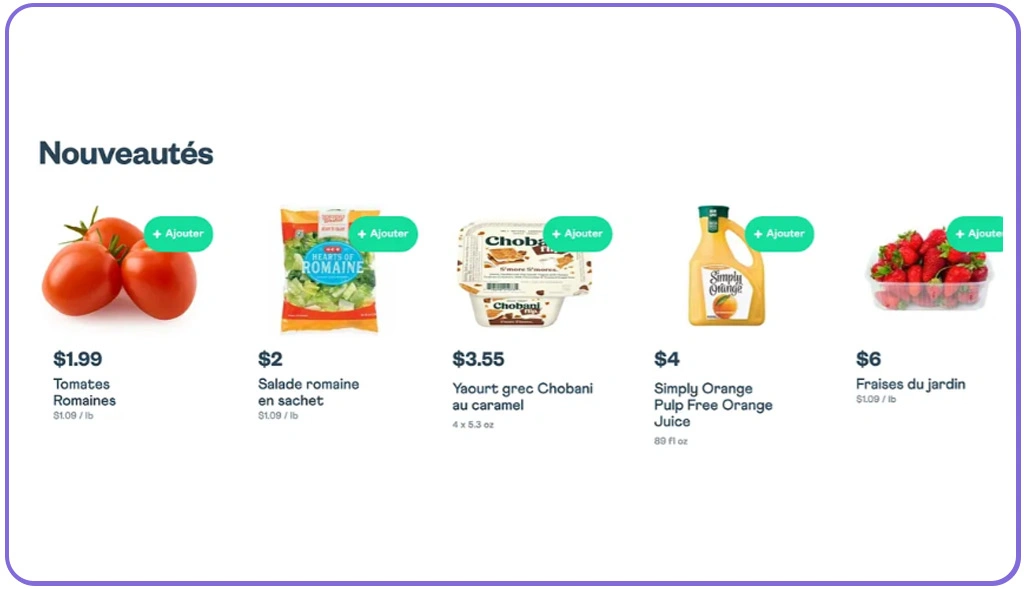
The U.S. market has seen rapid growth in ultra-fast delivery offerings, with established grocery and retail giants launching expedited delivery options alongside dedicated quick commerce startups. Quick commerce scraping services USA focus on capturing the nuances of this market, including:
- City-by-city and zip-code-level price and delivery variation
- Comparison of delivery speed promises versus actual performance across providers
- Tracking which neighborhoods have active dark-store coverage versus underserved areas
- Monitoring promotional strategies used to drive adoption in competitive urban markets
- Benchmarking minimum order thresholds and delivery fee structures across providers
Because U.S. quick commerce competition is heavily concentrated in dense urban areas where multiple providers often overlap in the same neighborhoods granular, location-specific data is critical. A scraper that only captures national average pricing misses the local competitive dynamics that actually drive business decisions in this space.
Scrape Quick Commerce Data in USA & UAE: A Cross-Market Approach
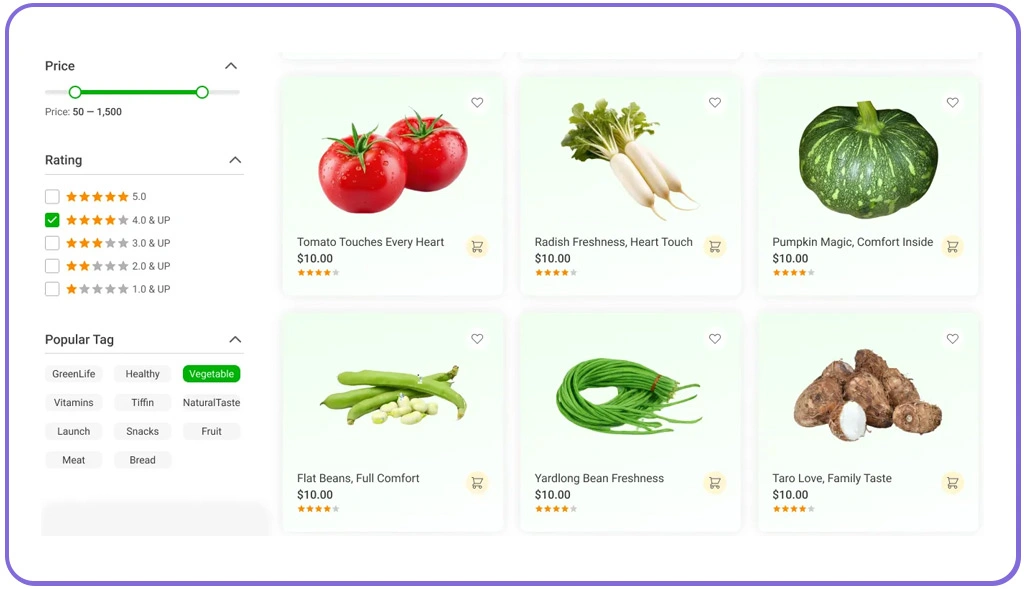
The UAE has emerged as one of the most active quick commerce markets globally, with high smartphone penetration, dense urban populations, and strong consumer demand for instant delivery driving rapid platform growth in cities like Dubai and Abu Dhabi. Businesses operating internationally or studying global q-commerce trends often need to scrape quick commerce data in USA & UAE simultaneously to build comparative datasets across these two very different but equally fast-growing markets.
Cross-market scraping introduces additional considerations:
- Currency and localization handling pricing data must be normalized across USD and AED for accurate comparison
- Regional platform differences apps and websites may have different structures, languages, or feature sets depending on the market
- Cultural and regulatory variation promotional structures, delivery fee models, and even product categories can differ significantly between US and UAE platforms
- Time zone-aware scheduling recurring scrapes need to account for different peak demand hours across regions to capture meaningful, comparable data
For global brands and investors trying to understand quick commerce adoption patterns across different economic and cultural contexts, this kind of dual-market data extraction provides a much richer picture than single-country analysis alone.
Quick Commerce Datasets: Pre-Built Data for Faster Analysis
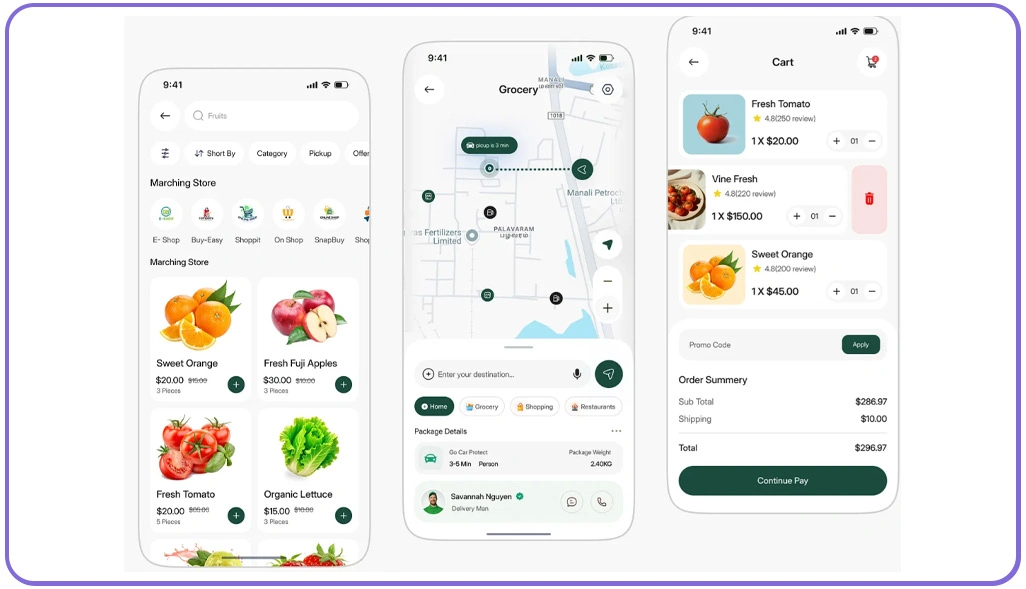
Not every business wants to build and maintain its own scraping infrastructure. For many, the more practical solution is sourcing pre-built quick commerce datasets structured, ready-to-use exports covering pricing, product assortment, and delivery performance across major q-commerce platforms.
These datasets are particularly valuable for:
- Academic researchers studying the economics of ultra-fast delivery models
- Investment analysts evaluating quick commerce startups or public companies in the space
- Consulting firms advising retail or logistics clients entering the q-commerce market
- Product teams benchmarking competitor assortment and pricing strategy before launching their own quick commerce offering
A well-structured quick commerce dataset typically includes historical pricing trends, delivery time benchmarks across regions, product category breakdowns, and platform-level service area coverage saving significant time compared to building this from scratch.
Web Scraping Quick Commerce Data: Technical Considerations
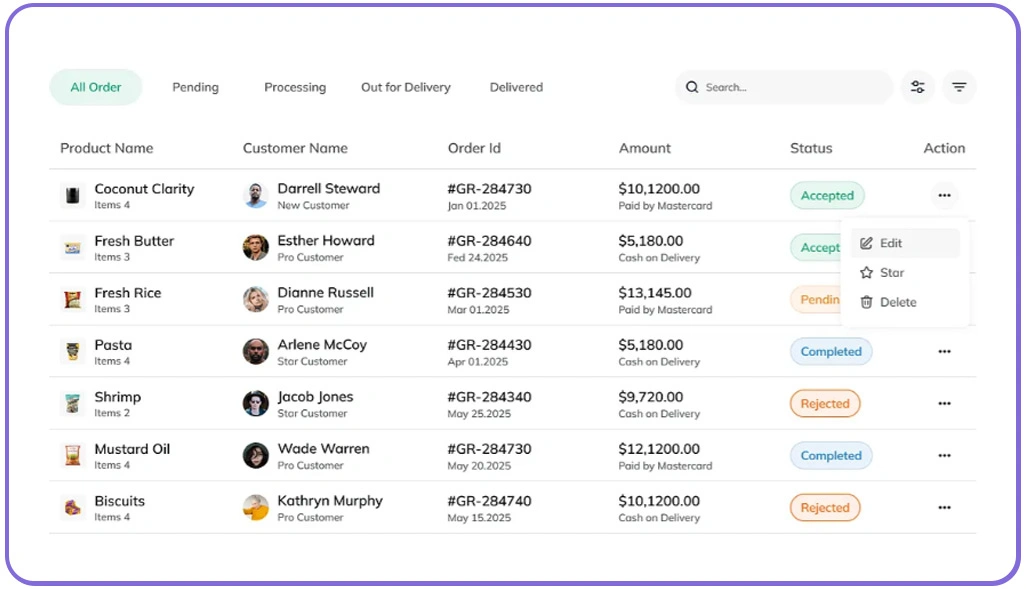
Quick commerce platforms present some unique technical challenges compared to traditional e-commerce scraping, largely due to how dynamic and localized their data structures are.
Real-Time Inventory Volatility
Stock levels at individual dark stores can change within minutes as popular items sell out. Scrapers need to be built for high-frequency polling if inventory accuracy is a priority, rather than relying on daily snapshots that may already be outdated.
Hyper-Local Pricing and Availability
Unlike traditional retail, where pricing might be relatively consistent across a region, quick commerce platforms often price and stock differently store-by-store. This means web scraping quick commerce data effectively requires simulating requests from many different micro-locations rather than a single regional request.
Dynamic, App-Centric Interfaces
Many quick commerce platforms are mobile-app-first, with web interfaces that may be simplified or less feature-complete. This sometimes requires scraping strategies that account for mobile API endpoints rather than relying solely on desktop web scraping techniques.
Aggressive Anti-Bot Measures
Given how competitive and data-sensitive this sector is, quick commerce platforms often implement strong anti-scraping protections, including device fingerprinting, CAPTCHAs, and rate limiting requiring sophisticated, well-maintained scraping infrastructure to operate reliably at scale.
Key Use Cases for Quick Commerce Data
1. Competitive Pricing Intelligence
Quick commerce operators and CPG brands use scraped data to benchmark pricing across competing platforms in the same delivery zones, adjusting strategy to remain competitive in tightly contested urban markets.
2. Delivery Performance Benchmarking
Logistics teams compare actual delivery times against advertised promises across providers, identifying where competitors are over- or under-delivering on speed commitments.
3. Market Expansion Planning
Before launching in a new city or neighborhood, companies analyze existing q-commerce coverage maps and pricing data to identify underserved areas or oversaturated markets.
4. Investor and Market Research
Analysts use pricing trends, product assortment changes, and service area expansion as indicators of a quick commerce company's growth trajectory and operational health.
5. Assortment and Category Strategy
Brands track which products are featured, promoted, or prioritized across different quick commerce platforms to understand category dynamics and negotiate better placement.
In these scenarios, a Scraping API streamlines data collection by providing structured, real-time access to pricing, delivery performance, and assortment data across multiple quick commerce platforms, helping businesses focus on insights rather than infrastructure management.
Best Practices for Quick Commerce Data Extraction
- Match polling frequency to data volatility inventory and delivery time data may need near-real-time updates, while broader assortment data can be tracked less frequently
- Build location-aware crawling logic capable of simulating requests across many specific delivery zones rather than a single regional check
- Normalize data across markets when scraping multiple countries, accounting for currency, language, and platform structure differences
- Use robust proxy and request management to handle aggressive anti-bot protections common in this sector
- Continuously monitor for platform changes, since fast-growing q-commerce apps tend to iterate quickly on their interfaces and underlying data structures
Why Businesses Choose Dedicated Quick Commerce Scraping Services
Given the technical demands high-frequency polling, hyper-local data requirements, cross-market normalization, and aggressive anti-bot defenses most businesses find it far more efficient to partner with dedicated quick commerce data scraping services rather than building this capability internally. A specialized provider can maintain the infrastructure needed to keep pace with rapidly evolving platforms while delivering clean, structured, and reliable data on a consistent schedule.
This approach also strengthens Market Research by enabling companies to track pricing trends, consumer demand shifts, and competitor strategies in real time, leading to more accurate insights and better-informed strategic planning across the quick commerce ecosystem.
Conclusion
Quick commerce has compressed the delivery timeline down to minutes, and the data behind it moves just as fast. Whether you need to scrape quick commerce data in USA & UAE for cross-market analysis, source ready-made quick commerce datasets for research, or build a continuous web scraping quick commerce data pipeline for competitive intelligence, having reliable, real-time data is no longer optional in this space it's a competitive necessity.
At Web Data Crawler, we build custom, high-frequency scraping solutions tailored specifically to the unique demands of quick commerce platforms covering hyper-local pricing, real-time inventory, and delivery performance data across markets including the USA and UAE. If you're ready to turn quick commerce data into a structured, decision-ready asset, our team can design an extraction pipeline built for the speed this industry demands.