
How to Scrape Pincode-Level Keyword Data From Zepto and Instamart to Decode 75% Local Search Patterns?
Nov 26
Introduction
Local search behavior across hyperlocal apps is no longer driven by broad city-level trends—consumers now express intent at a micro-area level. With rapid expansion of instant delivery platforms, businesses increasingly require structured insights based on area-specific patterns. When aiming to Scrape Pincode-Level Keyword Data From Zepto and Instamart, brands gain visibility into what shoppers are searching for in each zone, enabling smarter replenishment, product availability planning, and demand forecasting.
As millions rely on 10–20 minute delivery models, understanding the nuances of hyperlocal semantics becomes critical. The rising dependency on Zepto Quick Commerce Dataset further showcases how locality-driven preferences influence shopping outcomes. Pincode-based search patterns vary drastically even within a few kilometers. A premium neighborhood may search more for organic SKUs, whereas middle-income zones show high frequency for budget or bundled grocery terms.
Generating structured datasets to scrape pincode-level keyword data also enables more aligned targeted ads, regional SEO, and better category positioning. With increased competition within hyperlocal retail, businesses that act on pincode-level keyword signals gain an advantage in matching real demand with real-time availability.
Examining How Localized Search Patterns Shift Across Areas
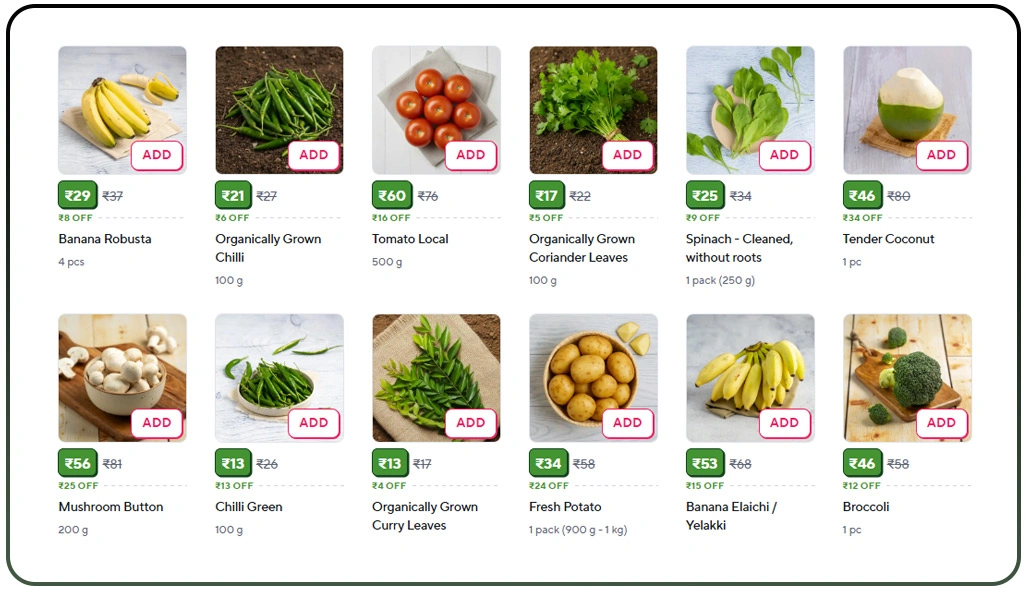
Understanding how hyperlocal shoppers behave across different neighborhoods requires consistent analysis of localized search terms. This becomes critical when teams rely on structured signals to map how preferences differ based on micro-markets. Integrating location-linked insights ensures that the variations in consumer interest are interpreted accurately.
Hyperlocal delivery platforms often show sharp differences even in nearby pin codes—while some neighborhoods demonstrate high interest in specialized categories, others prioritize essentials. Incorporating automated pipelines also supports consistent evaluation of search terms across all relevant areas. Insights derived from Swiggy Instamart Data Scraping Services create additional clarity by aligning keyword flows with locality-specific preferences.
The table below highlights how product intent differs significantly across locations and how product-type distribution influences trend scores:
| Pincode | High-Frequency Keywords | Product Type | Trend Score (%) |
|---|---|---|---|
| 400054 | Almond milk, chia seeds | Premium health foods | 82 |
| 400067 | Instant noodles, bread | Daily essentials | 71 |
| 560034 | Greek yogurt, kombucha | Wellness & lifestyle | 76 |
| 110092 | Basmati rice, sugar | Staple-heavy searches | 69 |
Acting on such intelligence helps businesses create neighborhood-specific planning, enabling better stock accuracy, targeted communication, and stronger customer relevance. Companies also use insights from Pincode-Level Grocery Delivery Insights to understand shopping cycles and category dependencies, shaping decisions that respond directly to local demand.
Building Structured Keyword Models for Local Product Categories
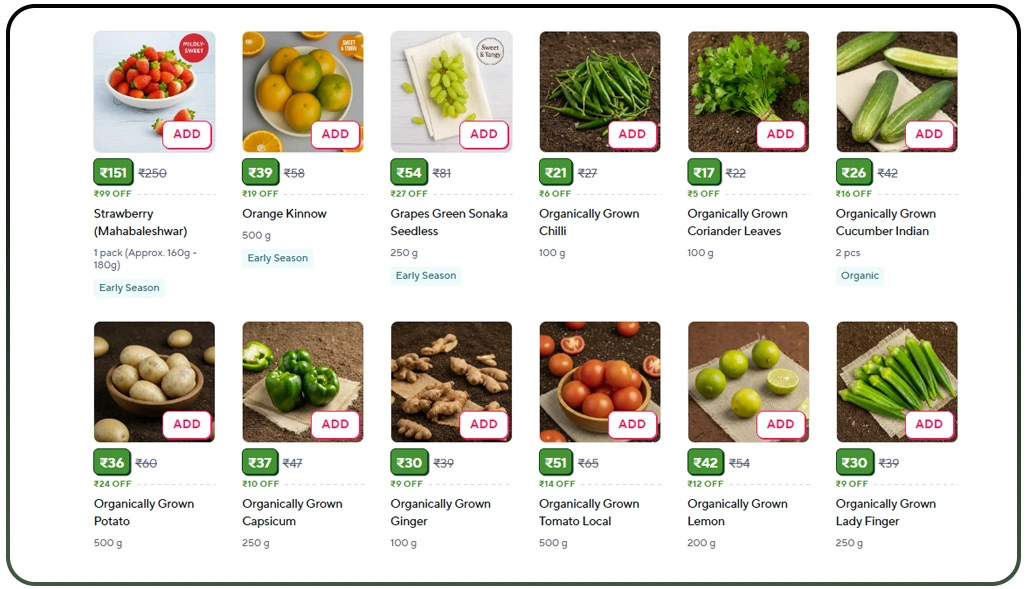
Creating a structured system to interpret locality-driven searches enhances category visibility and supports deeper analysis of micro-level product behavior. When businesses rely on organized models, they classify patterns more precisely across breakfast staples, snacks, beverages, and specialized categories. This helps teams understand how intent differs in each area and how users interact with various product groups at specific times.
A structured framework also enables businesses to standardize long-tail keywords and blend them with metadata for clearer categorization. Teams often reference automated datasets to maintain consistency when mapping categories to search patterns. Integrating systematic processes supported by Web Scraping Grocery Data ensures keyword-grouping accuracy across regions while eliminating inconsistencies in category labeling.
The sample table below illustrates how product categories vary at the neighborhood level:
| Pincode | Category | Top Keywords | Engagement Level |
|---|---|---|---|
| 411057 | Breakfast | Oats, peanut butter | High |
| 600042 | Snacks | Nachos, protein chips | Medium |
| 390012 | Beverages | Coconut water, cold coffee | Very High |
| 122002 | Baby Care | Diapers, baby lotion | High |
Such insights allow businesses to examine regions where certain categories consistently outperform others. Teams also rely on signals extracted from Zepto and Instamart Product Keyword Dataset to refine which SKUs deserve higher prioritization within each micro-market.
By maintaining structured models across multiple locations, decision-makers identify hidden search trends, optimize category planning efforts, and reduce operational guesswork. Retailers also incorporate to Extract Product Data by Pincode From Zepto and Instamart into their workflows to maintain continuous accuracy. Analyzing categories through these structured systems ensures demand visibility that is updated frequently and aligned with real-time consumer behavior.
Using Cluster-Based Analysis to Predict Hyperlocal Demand Patterns
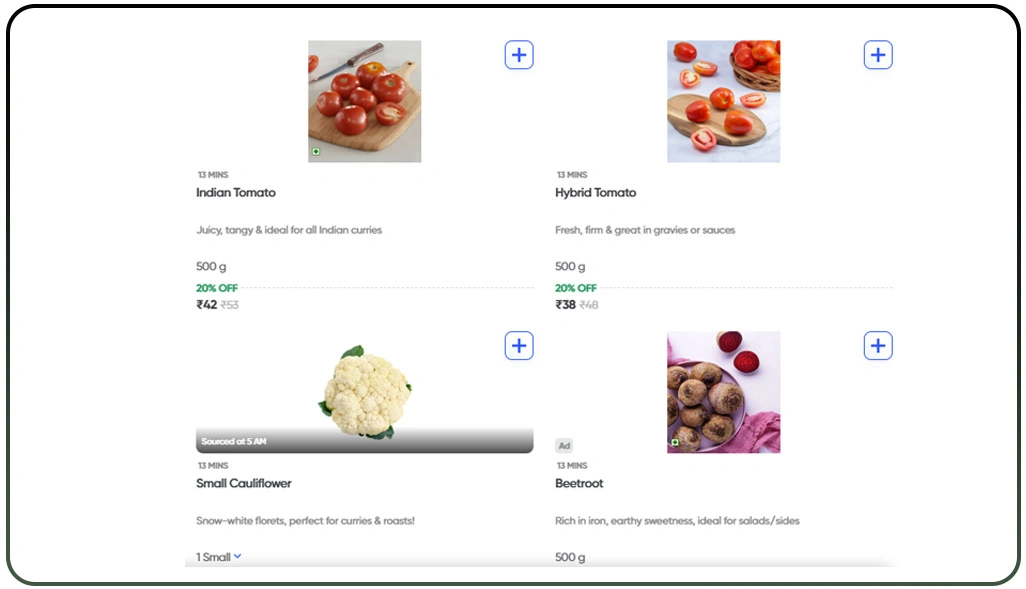
Cluster-based intelligence strengthens hyperlocal forecasting by organizing neighborhoods into behavioral groups such as residential areas, commercial hubs, premium localities, and mixed zones. Each cluster demonstrates distinct usage patterns and demand cycles, which influence product preferences and search intensity.
Using enriched datasets also helps retailers study shifts in consumer interest, seasonal sensitivities, and time-based variations. This ensures demand forecasting becomes more accurate when compared to using city-wide averages. Automated evaluation supported by Quick Commerce Datasets contributes to deeper accuracy in identifying upcoming patterns.
Below is a table showing how different clusters respond to various product types:
| Cluster Type | Demand Drivers | Upcoming Trend (%) | Seasonal Sensitivity |
|---|---|---|---|
| Residential | Snacks, bread, dairy | 78 | Medium |
| Commercial | Beverages, ready meals | 83 | High |
| Student Zones | Energy drinks, budget snacks | 91 | Low |
| Premium Areas | Health foods, gourmet items | 74 | High |
These insights help brands understand demand surges before they occur. Teams also examine signals using tools to Extract Pincode-Level Grocery Keyword Data for Market Analytics to refine how clusters evolve over time. By continuously analyzing these clustered insights, retailers respond quickly to micro-market shifts and strategically realign stock availability.
Clustered intelligence also supports pricing adjustments and promotional targeting for each locality, improving both speed and relevance. Organizations further reference Zepto & Instamart Product Keyword Mapping by Pincode to maintain precision in hyperlocal segmentation.
How Web Data Crawler Can Help You?
When teams initiate workflows to Scrape Pincode-Level Keyword Data From Zepto and Instamart, they require automated systems capable of capturing product-level, keyword-level, and pincode-level variations in real time. We provide powerful intelligence pipelines that extract structured data while maintaining quality, accuracy, and uniform formatting across regions.
Our approach includes:
- Automated extraction pipelines.
- Standardized keyword and product mapping.
- Structured datasets for trend identification.
- Scalable workflows for enterprise teams.
- Granular hyperlocal coverage.
- Real-time dataset refresh cycles.
By integrating these capabilities, businesses gain clarity into regional search patterns and build stronger product strategies supported by precise insights derived from Zepto & Instamart Pincode-Level Data Scraping Services.
Conclusion
Locality-based keyword intelligence helps teams refine every layer of product planning, especially when aiming strategically to Scrape Pincode-Level Keyword Data From Zepto and Instamart. These insights enable sharper predictions, stronger retailer alignment, and better targeting across micro-markets while supporting continuous operational improvements.
Demand forecasting becomes far more precise when teams integrate structured signals extracted from hyperlocal search behavior combined with Zepto & Instamart Product Keyword Mapping by Pincode. To build your customized dataset, get in touch with Web Data Crawler today.