
How to Scrape Ola Booking and Pricing Data to Measure 38% Fare Price Fluctuations Across Cities?
Feb 11
Introduction
The ride-hailing industry has become one of the fastest-changing markets in urban mobility, where pricing changes every hour depending on demand, distance, traffic, and availability. Ola, being one of India's most widely used ride platforms, generates massive real-time data related to bookings, surge pricing, cancellation rates, and route-based fare differences.
When companies collect fare and booking details regularly, they can identify where fares increase frequently, which areas face high demand, and which cities show consistent price stability. With proper automation, the ability to Scrape Ola Booking and Pricing Data helps organizations understand city-level pricing movement and measure changes that often reach 38% in peak hours.
Using Web Scraping Services, businesses can monitor fare trends daily and compare peak vs off-peak behavior. The insights extracted from Ola can also support smarter route planning, promotional strategy design, and dynamic pricing model evaluation across different metro and tier-2 locations.
Tracking Real-Time Fare Shifts Across Major Cities
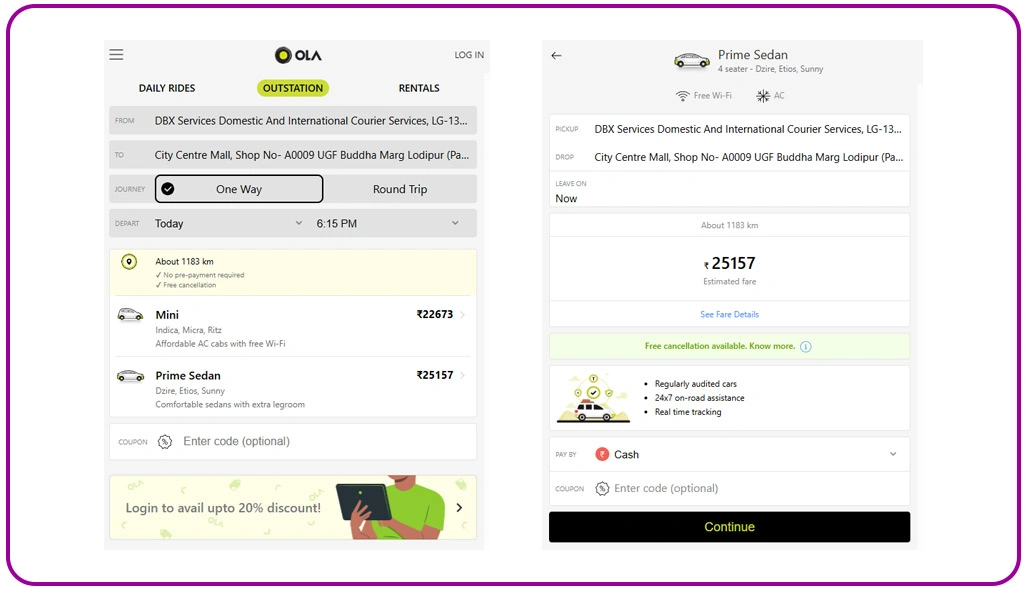
Ola fares change rapidly based on demand, traffic density, driver availability, and city-specific travel patterns. Many businesses fail to measure these shifts accurately because manual tracking cannot capture frequent pricing variations across multiple locations. A structured automated approach helps collect fare estimates at fixed intervals, enabling consistent comparisons between peak and normal pricing.
This is essential for mobility intelligence firms, fleet managers, and travel analytics platforms that rely on reliable ride-cost benchmarks. In many metro areas, surge pricing can increase fares by nearly 20% to 38%, especially during evening rush hours or major local events. Capturing this fluctuation consistently allows businesses to identify the most volatile cities and high-demand zones.
A well-built framework for Ola Ride-Hailing Data Extraction supports continuous fare monitoring and helps businesses build historical pricing datasets. Large-scale monitoring is possible through Enterprise Web Crawling, which enables collecting data across multiple cities simultaneously without missing time-sensitive price updates.
City-Wise Fare Fluctuation Monitoring:
| City Name | Normal Fare Range (₹) | Peak Fare Range (₹) | Avg Surge Increase (%) | High-Demand Time Slot |
|---|---|---|---|---|
| Mumbai | 180 - 250 | 240 - 340 | 36% | 7 PM - 10 PM |
| Bengaluru | 160 - 230 | 220 - 310 | 38% | 6 PM - 9 PM |
| Delhi NCR | 170 - 240 | 210 - 300 | 29% | 8 AM - 11 AM |
| Hyderabad | 140 - 210 | 190 - 260 | 32% | 6 PM - 8 PM |
| Pune | 120 - 180 | 150 - 240 | 33% | 8 PM - 11 PM |
Understanding Booking Demand Through Data Patterns
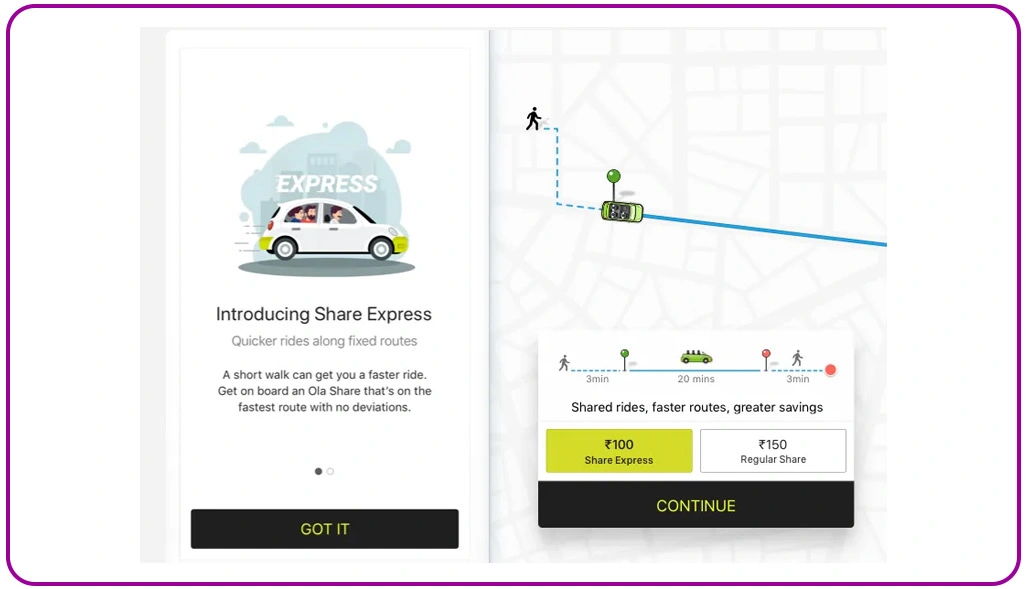
Booking trends are equally important as pricing data because they reflect real customer demand across different areas. Many businesses struggle to forecast ride demand since they rely on limited survey-based assumptions or incomplete datasets. However, booking frequency, ride availability, and cancellation behavior provide clear signals of how mobility demand changes across cities and zones.
By monitoring this information, businesses can identify high-growth routes, underserved areas, and seasonal booking peaks. Industry observations suggest that ride-hailing demand often rises by 25% to 40% during weekends, holiday seasons, and large public events. Tracking this behavior enables companies to predict demand shifts and prepare fleet capacity accordingly.
To build strong booking intelligence, businesses often use Ola Car Rental Data Scraping for Booking and Pricing Analysis to capture ride availability, wait time changes, and booking success rates. This structured dataset becomes valuable for Market Research, helping analysts compare city demand patterns and evaluate which locations show higher customer activity.
Booking Availability and Demand Signals:
| City Zone Type | Avg Bookings Per Hour | Avg Cancellation Rate (%) | Avg Wait Time (Minutes) | Demand Indicator |
|---|---|---|---|---|
| Airport Routes | 120 - 180 | 9% | 6 - 9 | High |
| IT Park Locations | 90 - 140 | 11% | 5 - 8 | Medium-High |
| Railway Stations | 80 - 130 | 14% | 7 - 12 | Medium |
| Residential Areas | 60 - 110 | 10% | 6 - 10 | Medium |
| Shopping Zones | 70 - 125 | 13% | 8 - 14 | Medium-High |
Creating Smarter Fare Benchmarks for Competition
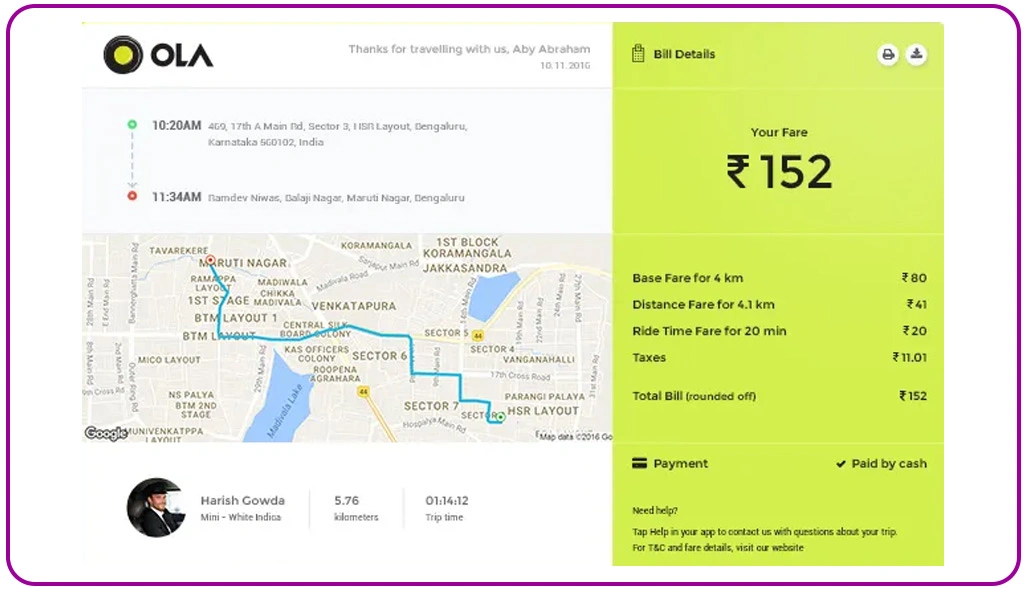
Building competitive pricing models requires more than checking ride fares occasionally. Ola prices shift based on time, traffic, ride category, demand surges, and route length. Businesses that rely on fixed ride-cost assumptions often miscalculate budgets, marketing strategies, and service planning.
Reports indicate that surge multipliers can increase ride costs by 30% to 38% in premium city zones, especially during peak hours. When businesses track this consistently, they can understand which city markets are becoming more expensive and which remain stable for long-term operations. A well-planned approach to Extract Ola Cab Rental Pricing Model enables businesses to track base fare, peak fare, distance-based pricing changes, and ride-type differences.
Using Pricing Intelligence, companies can evaluate competitive gaps and design smarter pricing strategies for their own services. Tools like Ola Booking and Fare Data Scraper can also support automated extraction of ride-category pricing data at scale, ensuring reliable decision-making and long-term cost prediction.
Ride Category Pricing and Surge Comparison:
| Ride Category | Base Fare (₹) | Peak Fare (₹) | Avg Price Jump (%) | Common Surge Trigger |
|---|---|---|---|---|
| Ola Mini | 150 - 210 | 200 - 290 | 38% | High Demand Areas |
| Ola Prime | 220 - 320 | 290 - 420 | 34% | Traffic + Surge |
| Ola Auto | 80 - 130 | 110 - 170 | 31% | Short Ride Rush |
| Outstation | 1200 - 1800 | 1500 - 2300 | 28% | Weekend Travel |
| Rentals | 650 - 900 | 780 - 1150 | 27% | Long Hour Demand |
How Web Data Crawler Can Help You?
Modern mobility intelligence requires more than basic fare tracking. When companies aim to Scrape Ola Booking and Pricing Data, they require automation that can handle dynamic fare updates, location-based variations, and ride-type comparisons without data loss.
What We Deliver:
- Accurate multi-city fare tracking with time-based logs.
- Automated booking and availability monitoring across zones.
- Structured ride-type comparison for pricing benchmarks.
- Data cleaning, validation, and normalization support.
- Flexible output formats like JSON, CSV, or database integration.
- Scalable architecture for high-volume extraction requirements.
With our expertise in Ola Car Rental Data Scraping for Booking and Pricing Analysis, businesses can build stronger demand forecasting, cost models, and real-time city mobility intelligence.
Conclusion
Ride-hailing markets change rapidly, and fare volatility can directly impact travel businesses, fleet providers, and mobility intelligence firms. With the right automation strategy, businesses can effectively to Scrape Ola Booking and Pricing Data and turn raw ride information into meaningful pricing and booking insights for smarter operational planning.
At the same time, using Ola Booking and Fare Data Scraper solutions ensures consistent monitoring across ride categories, time slots, and high-demand zones. These insights support cost forecasting, city expansion planning, and better competitive fare strategy development. Contact Web Data Crawler now to get real-time Ola fare and booking datasets delivered at scale.