
How to Scrape Cruise Prices and Cabin Availability in Real-Time and Unlock 30% Better Booking Trends?
Feb 23
Introduction
The global cruise industry has witnessed steady recovery and expansion, with CLIA reporting over 31 million passengers sailing worldwide in recent years. As cruise lines reintroduce routes and dynamic pricing models, real-time visibility into fares and cabin inventory has become essential for travel businesses, aggregators, and maritime analysts.
Businesses aiming to Scrape Cruise Prices and Cabin Availability in Real-Time can access critical pricing movements, last-minute deals, and inventory adjustments across major cruise operators. These insights support smarter fare comparison engines, revenue forecasting models, and itinerary-based demand predictions.
Modern Travel Data Scraping Services enable organizations to track sailing dates, ports of call, onboard amenities, and category-level pricing with precision. By integrating automated maritime intelligence systems, companies can analyze trends across multiple cruise brands, monitor competitor pricing strategies, and identify booking windows that historically yield up to 30% improved conversion rates.
Managing Dynamic Fare Fluctuations Across Global Cruise Routes
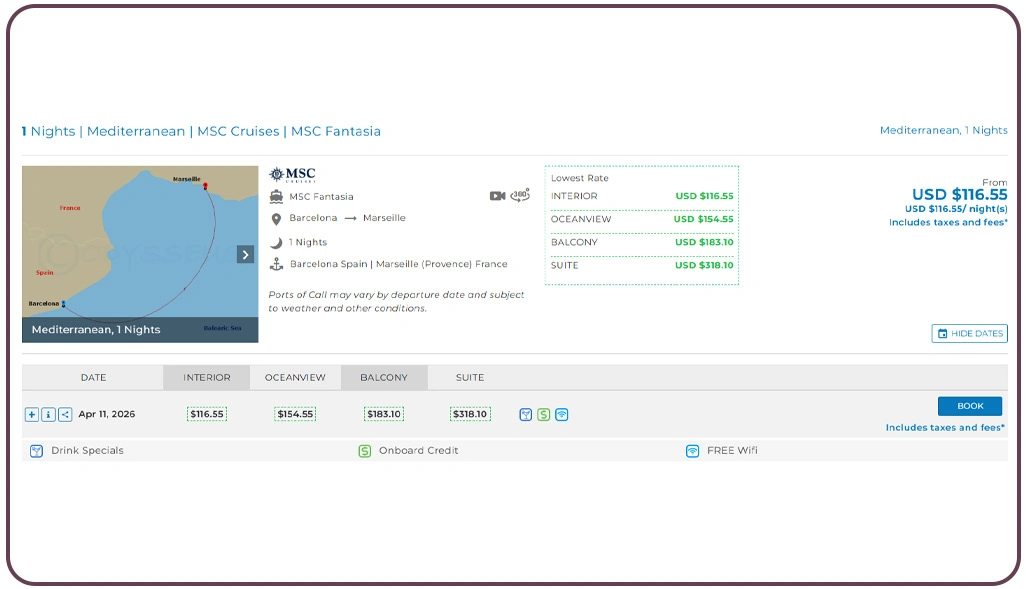
Cruise pricing is influenced by multiple moving factors, including seasonal demand, fuel costs, promotional campaigns, and occupancy rates. Without structured automation, tracking thousands of sailings across different cruise brands becomes inefficient and prone to error. Businesses that rely on intelligent extraction systems can reduce manual monitoring time by over 60% while significantly improving fare comparison accuracy.
A well-structured Cruise Itinerary and Schedule Data Scraper enables companies to systematically capture departure dates, embarkation ports, route sequences, onboard inclusions, and promotional bundles. When these insights are compiled into standardized Travel Datasets, revenue managers can evaluate sailing-level profitability and detect route-specific booking trends with greater precision.
Industry research highlights:
- 72% of travelers prioritize itinerary structure over cabin category.
- Fare adjustments may occur 5–8 times per week per sailing.
- Early booking windows often reflect 15–25% price variation.
| Data Parameter | Business Impact | Optimization Outcome |
|---|---|---|
| Sailing Dates | Demand Forecasting | 18% improved planning accuracy |
| Port Sequences | Route Benchmarking | Enhanced itinerary positioning |
| Fare Categories | Revenue Segmentation | Targeted discount strategy |
| Onboard Packages | Upsell Planning | 12% ancillary revenue increase |
Through structured monitoring supported by travel data scraping, organizations can create continuous tracking pipelines instead of relying on periodic snapshots. This approach enables proactive pricing decisions, faster campaign adjustments, and better fare alignment with evolving traveler demand patterns.
Eliminating Inventory Uncertainty with Automated Cabin Monitoring
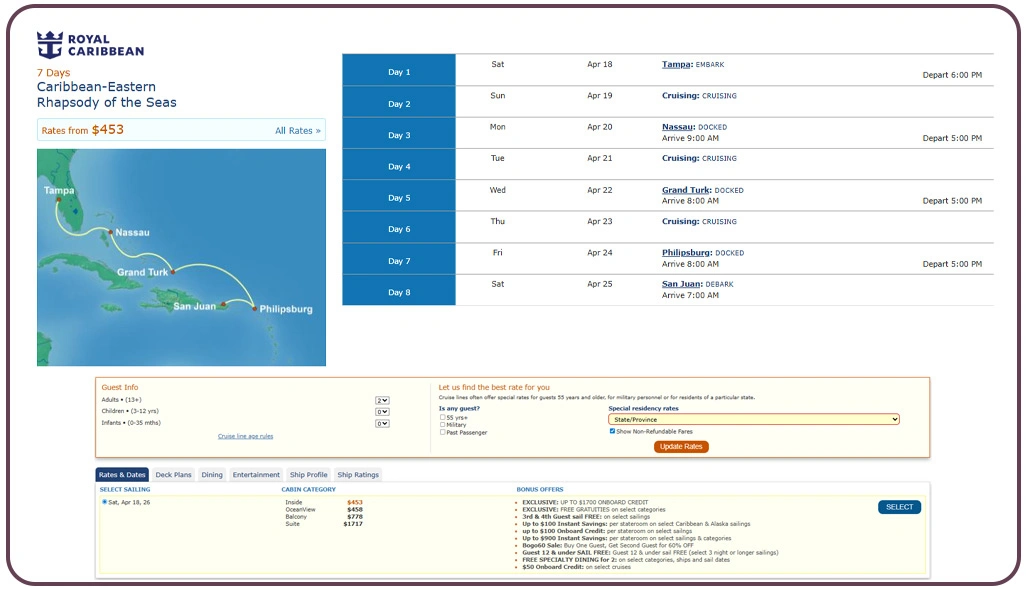
Cabin availability changes rapidly due to promotional bursts, group allocations, cancellations, and last-minute bookings. Without automated monitoring, businesses often operate with incomplete visibility into cabin-level inventory. A dedicated Cruise Cabin Availability Data Extractor helps eliminate these blind spots by tracking real-time occupancy shifts across interior, ocean-view, balcony, and suite categories.
By integrating Popular Travel Data Scraping, travel platforms can capture structured inventory updates at frequent intervals. This enables data teams to map scarcity patterns and correlate occupancy changes with fare movements for improved decision-making.
Recent market insights reveal:
- Balcony cabins generate 40% higher revenue than interior cabins.
- Around 35% of cancellations occur within 45 days of departure.
- Limited inventory alerts improve booking conversion rates by 22%.
| Cabin Type | Monitoring Metric | Strategic Benefit |
|---|---|---|
| Interior | Occupancy Rate | Budget targeting efficiency |
| Ocean View | Price Spread | Mid-tier positioning |
| Balcony | Sell-Out Speed | Premium upsell strategy |
| Suite | Revenue Contribution | Luxury segment focus |
When inventory and pricing data are combined, businesses can perform advanced demand modeling. Leveraging Web Scraping Cruise Travel Market Data further strengthens cross-brand benchmarking by identifying inventory shortages and pricing surges across competing operators.
Automated cabin monitoring ensures better forecasting accuracy, faster marketing triggers, and enhanced transparency for customers seeking timely booking decisions.
Transforming Maritime Data into Predictive Booking Intelligence
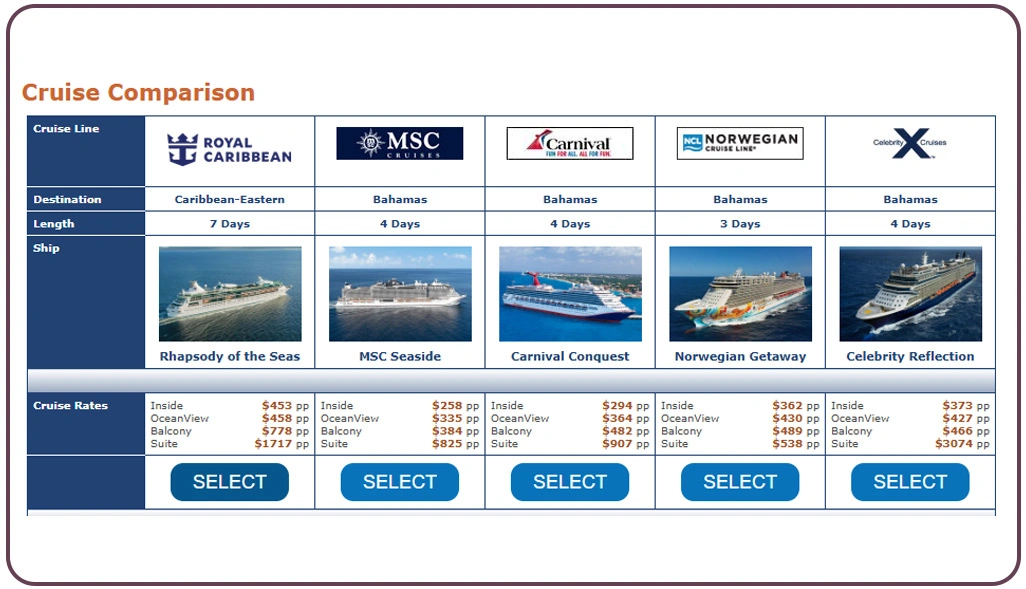
Collecting cruise-related data is only valuable when transformed into actionable insights. With scalable Web Scraping Services, organizations can centralize itinerary, pricing, and inventory information into unified analytical dashboards that support strategic planning.
Applying Cruise Booking Analytics Using Scraped Data, companies can evaluate historical fare patterns, promotional timing effectiveness, peak booking windows, and route popularity trends. Analytical models indicate that brands leveraging structured booking intelligence experience up to 30% stronger performance in occupancy optimization and dynamic pricing refinement.
| Analytical Insight | Data Source | Business Impact |
|---|---|---|
| Fare Trend Mapping | Historical Price Logs | Smarter dynamic pricing |
| Occupancy Forecasting | Cabin Availability Feeds | Reduced unsold inventory |
| Route Demand Analysis | Itinerary Tracking | Better bundle creation |
| Promotion Evaluation | Discount Monitoring | Improved ROI planning |
Combining structured maritime feeds with predictive modeling tools allows businesses to anticipate peak demand periods and adjust strategies accordingly. Instead of reacting to market shifts, companies can proactively refine pricing tiers, optimize sailing schedules, and align marketing initiatives with real-time traveler behavior.
This data-driven transformation ensures improved booking cycles, stronger revenue planning, and measurable operational efficiency across cruise commerce ecosystems.
How Web Data Crawler Can Help You?
Real-time maritime intelligence requires scalable infrastructure, compliance-focused extraction methods, and structured data pipelines. When businesses aim to Scrape Cruise Prices and Cabin Availability in Real-Time, they need reliable automation supported by high-frequency updates and data normalization capabilities.
We offer:
- Automated sailing schedule monitoring.
- Multi-brand fare comparison tracking.
- Cabin-level inventory detection.
- Historical pricing trend archives.
- API-ready structured output formats.
- Real-time dashboard integration.
These solutions enable travel platforms, cruise aggregators, and maritime analysts to reduce manual research time while increasing pricing accuracy and booking visibility. Our expertise in Cruise Itinerary and Schedule Data Scraper implementation ensures that your maritime intelligence framework remains scalable and insight-driven.
Conclusion
Dynamic maritime markets demand precision intelligence. Businesses that Scrape Cruise Prices and Cabin Availability in Real-Time position themselves to capture better fare comparisons, inventory visibility, and revenue forecasting accuracy. Leveraging structured tracking systems such as Cruise Cabin Availability Data Extractor ensures inventory transparency and optimized booking performance.
As competition intensifies across global cruise routes, data-driven strategy becomes the defining factor for profitability. Integrating Web Scraping Cruise Travel Market Data with predictive analytics empowers companies to anticipate demand shifts and refine pricing decisions. Partner with Web Data Crawler today to transform cruise intelligence into measurable booking growth.