


What Can Sam's Club Product Data API for Retail Product & Price Insights Reveal About 10K+ Products?
07 September 2026
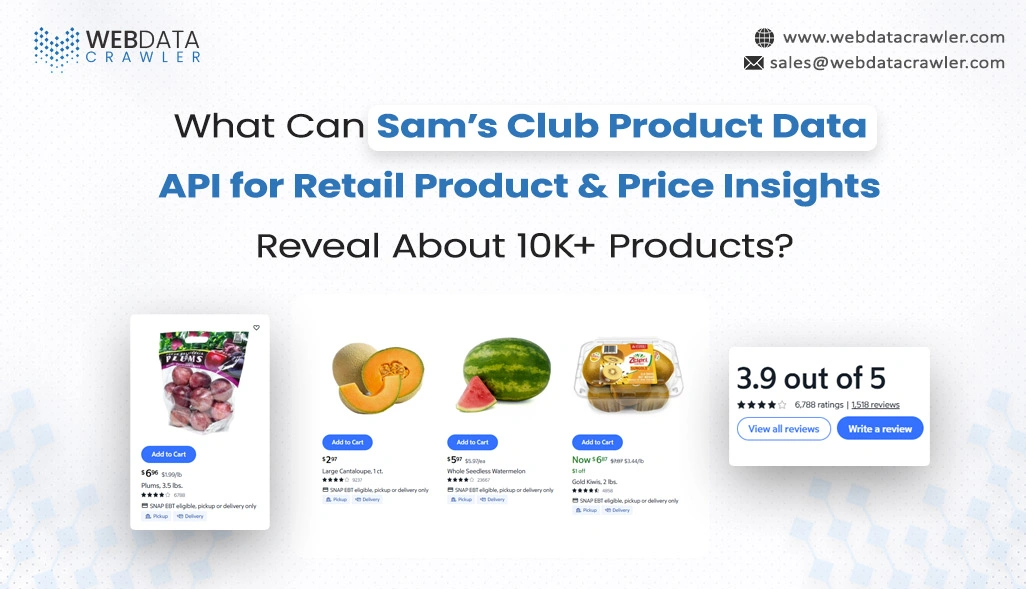
Introduction
Retailers managing large assortments need structured information on prices, brands, pack sizes, availability, ratings, and promotions. A reliable data workflow turns scattered marketplace information into comparable records. Scrape Sams Product Data can support this process when collection follows permitted sources, responsible request rates, and consistent extraction practices for retail analysis.
For catalogs exceeding 10K products, manual checks become difficult to maintain. Product feeds can organize thousands of SKUs into consistent fields for analysis, helping teams compare price points, identify assortment gaps, monitor promotions, and review changes across categories. This creates a practical foundation for recurring retail intelligence without relying on isolated observations.
The Sam's Club Product Data API for Retail Product & Price Insights can structure product and pricing information into analysis-ready outputs. Scheduled collection, standardized fields, and historical snapshots help retail teams evaluate trends across a broad catalog while connecting product-level observations with pricing, assortment, promotional, and competitive decisions.
Sharper Retail Pricing Signals Through Large Product Assortments
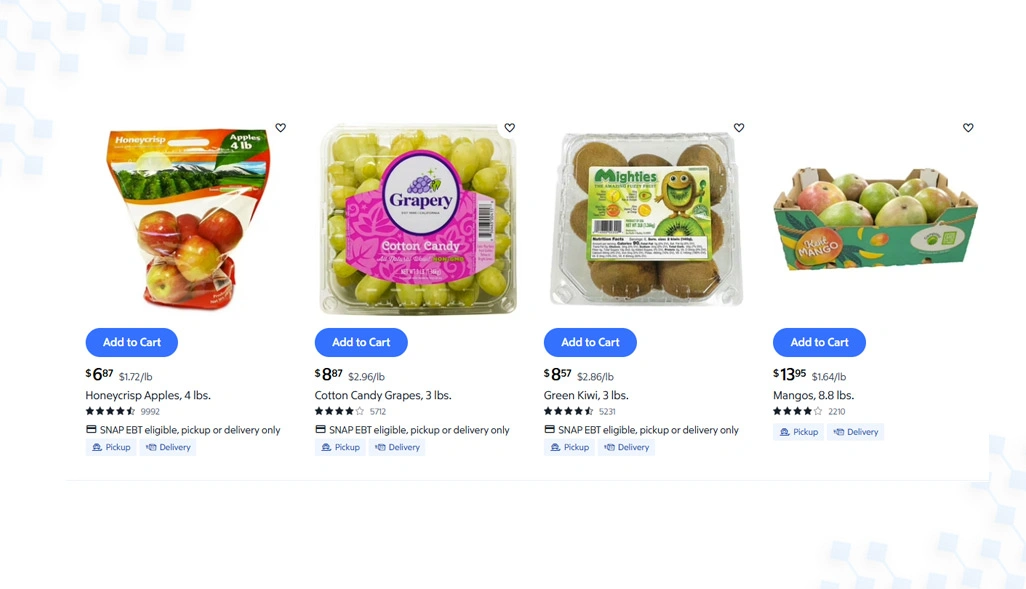
Retailers handling thousands of products require consistent product information to compare prices and assortment conditions. Product-level collection can organize titles, brands, pack sizes, categories, ratings, availability, and promotional information into standardized records. This makes it easier for analysts to evaluate individual items and identify changes that may influence pricing or merchandising decisions across broad retail assortments.
When product information is collected repeatedly, teams can build historical records instead of relying on occasional checks. Sam's Club Product Data Scraping for Insights can help structure recurring observations around important product attributes and pricing fields. This approach allows analysts to review changes by category, brand, or price segment while maintaining a consistent reference point for ongoing retail analysis.
Large-scale Web Scraping Ecommerce Data workflows can further support comparisons when collection schedules and data fields remain consistent. For a catalog containing more than 10K products, one daily snapshot could represent 10K+ product observations. Over 30 days, this can result in approximately 300K observations, depending on product availability and collection coverage.
Key pricing signals that retailers can monitor include:
- Current and previous product prices
- Promotional and discounted values
- Brand-level price positioning
- Product availability changes
- Category-level price movements
| Monitoring Area | Illustrative Scale | Business Application |
|---|---|---|
| Products monitored | 10K+ | Assortment visibility |
| Daily observations | 10K+ | Frequent tracking |
| Monthly observations | 300K+ | Historical comparison |
| Product attributes | 15+ | Structured analysis |
Smarter Catalog Structures for Deeper Assortment Analysis Decisions
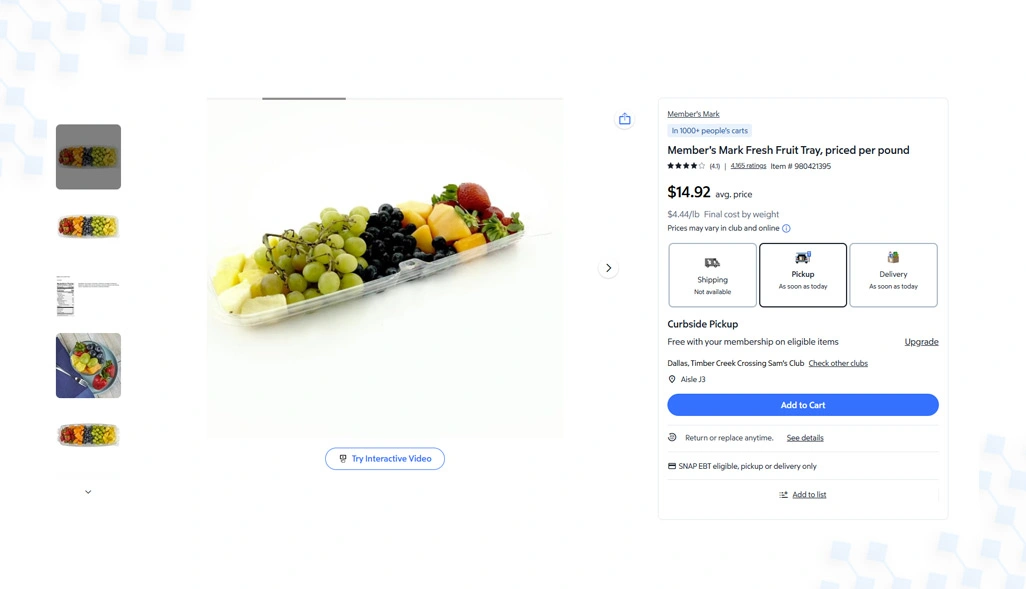
A structured catalog provides retailers with a consistent foundation for evaluating product breadth and category composition. Product records can include names, descriptions, specifications, brands, categories, pack sizes, ratings, and other attributes. Maintaining these fields over time allows analysts to identify assortment gaps, compare product groups, and understand how catalog composition changes across different periods.
For large catalogs, consistency is particularly important because manually reviewing thousands of records can introduce delays and inconsistencies. Sam's Club Product Catalog Scraping for Analysis can organize product information into repeatable records, allowing teams to compare attributes across categories and brands. Historical snapshots can also highlight newly added products, discontinued items, and changes in product positioning.
Retail teams can combine structured catalog information with E-Commerce Datasets to support broader benchmarking and analytical models. For example, a 10K-product catalog containing 15 standardized attributes represents approximately 150K field-level values in one snapshot. Repeated weekly collection could create millions of observations over a year, depending on catalog stability and coverage.
Important assortment evaluation areas include:
- Category and subcategory distribution
- Brand representation across product groups
- Product attribute completeness
- New and removed product identification
- Pack-size and specification comparisons
| Catalog Element | Illustrative Volume | Analytical Purpose |
|---|---|---|
| Product records | 10K+ | Assortment analysis |
| Standard attributes | 15 per product | Product comparison |
| Snapshot values | 150K+ | Catalog evaluation |
| Weekly snapshots | 52 annually | Historical analysis |
Precision SKU Tracking for Continuous Retail Change Monitoring
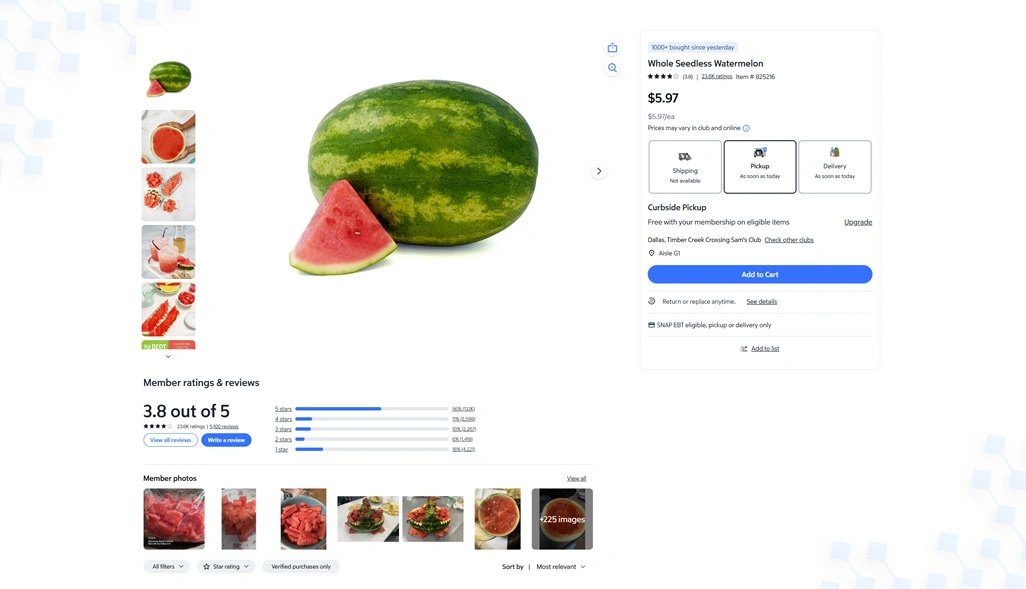
SKU-level monitoring provides a more detailed view of individual products and their changing market conditions. Stable product identifiers allow analysts to connect information collected at different times, making it easier to track price movements, availability changes, promotional activity, and assortment status. This creates a historical product trail that supports more reliable retail evaluation.
Consistent identifiers also help reduce confusion caused by similar product names or changing descriptions. Sam's Club SKU Data Extraction for Analytics can organize identifiers with supporting fields such as product titles, prices, brands, categories, ratings, and availability. When these records are maintained over repeated collection cycles, analysts can examine product-level changes without rebuilding the dataset each time.
A properly configured Web Crawler can collect defined fields at scheduled intervals while maintaining consistent extraction rules. For 10K SKUs reviewed weekly, the process could generate approximately 520K SKU observations annually. These records can help identify frequently changing products, unusual price movements, assortment additions, or products requiring additional validation.
Useful SKU-level monitoring activities include:
- Tracking product-level price changes
- Identifying availability fluctuations
- Monitoring promotional updates
- Recording assortment additions and removals
- Comparing historical SKU observations
| SKU Monitoring Area | Illustrative Figure | Business Use |
|---|---|---|
| SKUs tracked | 10K+ | Product coverage |
| Collection frequency | Weekly | Recurring monitoring |
| Annual observations | 520K+ | Historical visibility |
| Core signals | Price, stock, assortment | Change detection |
How Web Data Crawler Can Help You?
Retail teams need dependable collection and delivery when working with large assortments. For this requirement, Sam's Club Product Data API for Retail Product & Price Insights can support structured product records, recurring updates, and analysis-ready outputs. We can organize the workflow around defined fields, validation rules, and delivery schedules.
Key ways the workflow can help include:
- Capture product titles, brands, categories, and specifications consistently.
- Track price changes, promotional values, and historical snapshots.
- Monitor availability indicators and identify assortment changes.
- Standardize records for dashboards, models, and reporting.
- Schedule recurring collection for ongoing retail monitoring.
- Deliver structured files or feeds for downstream analysis.
After collection, validation can reduce duplicate records, inconsistent attributes, and obvious parsing errors before delivery. The resulting workflow can support Retail Competitive Intelligence Using Web Scraping by turning recurring product observations into structured evidence for pricing, assortment, and market reviews teams.
Conclusion
A well-structured retail data workflow can make a 10K+ product assortment easier to evaluate across pricing, categories, brands, promotions, and availability. Sam's Club Product Data API for Retail Product & Price Insights can provide consistent records that support historical comparisons, recurring monitoring, and more informed assortment decisions.
For deeper product-level analysis, Sam's Club SKU Data Extraction for Analytics can help organize identifiers, price points, attributes, ratings, and availability signals into usable datasets. When paired with validation and historical snapshots, these records can support pricing reviews, assortment planning, category benchmarking, and market analysis.
The value ultimately depends on responsible collection, permitted access, data quality, and clear business objectives. Request a customized retail data solution from Web Data Crawler to start building structured product and price intelligence for your business.