
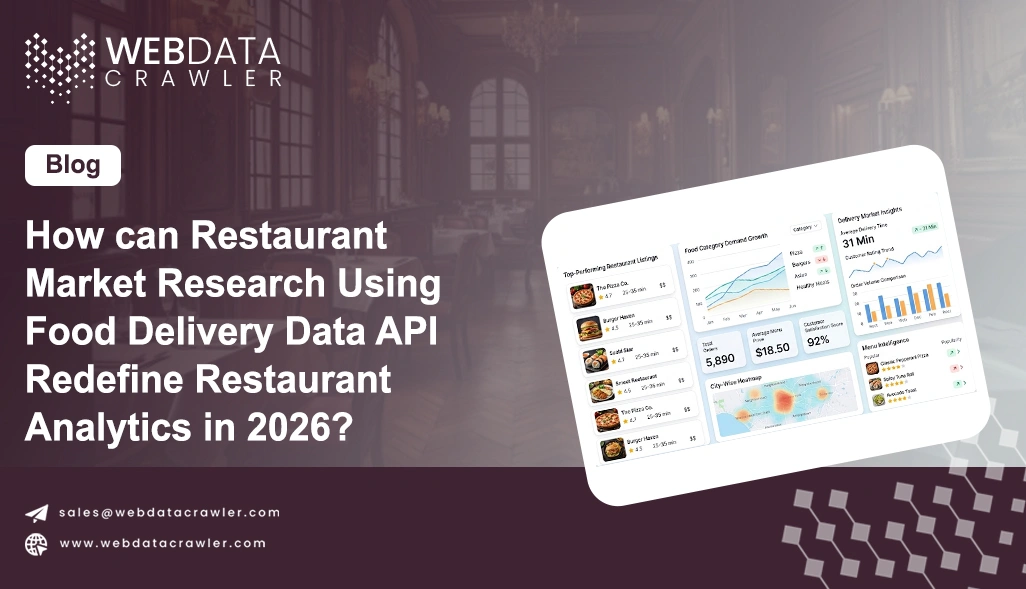
How can Restaurant Market Research Using Food Delivery Data API Redefine Restaurant Analytics in 2026?
June 04
Introduction
The restaurant industry is experiencing a major transformation as digital ordering and delivery platforms continue to influence customer purchasing behavior. In 2026, restaurant operators are expected to rely more heavily on data-driven decision-making to improve menu performance, pricing strategies, customer retention, and competitive positioning.
Modern analytics frameworks are no longer limited to in-store sales reports. Restaurants can analyze customer preferences, pricing patterns, delivery trends, menu popularity, promotional effectiveness, and regional demand shifts through advanced data collection methods. One of the most effective ways to obtain these insights is through Web Scraping Food Data, which enables restaurants to gather large-scale information from food delivery platforms and convert it into actionable intelligence.
As competition intensifies, Restaurant Market Research Using Food Delivery Data API solutions are becoming essential for businesses seeking accurate market visibility. These insights help restaurants understand evolving consumer preferences, optimize operations, and develop sustainable growth strategies in an increasingly digital food marketplace.
Turning Customer Ordering Patterns Into Actionable Growth Strategies
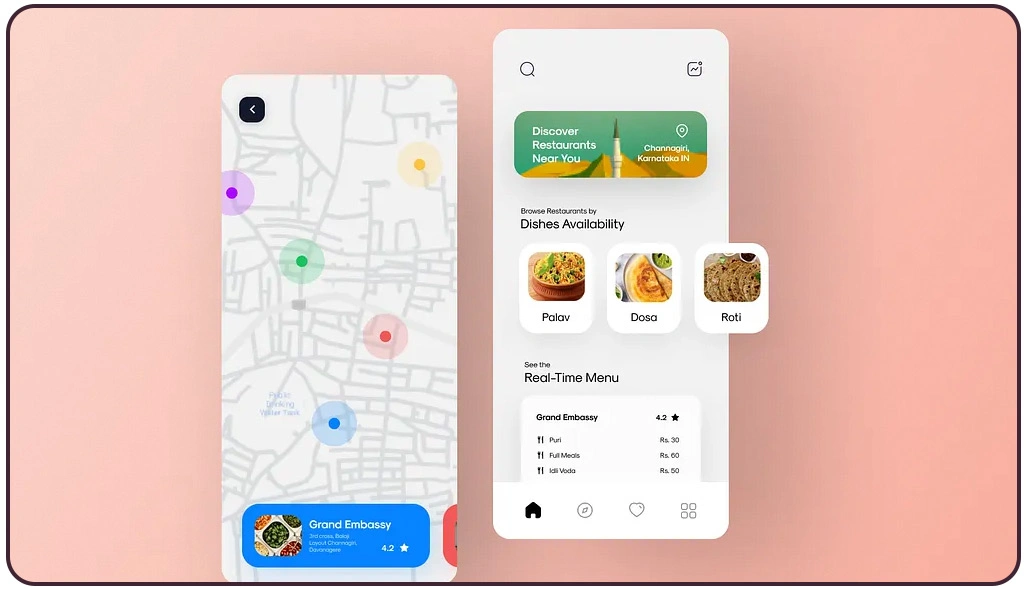
Customer behavior data has become one of the most valuable assets for restaurant operators seeking sustainable growth in competitive food delivery markets. When analyzed effectively, these insights help restaurants make smarter decisions about menu planning, promotional campaigns, and customer retention initiatives.
Access to structured Food and Restaurant Datasets allows businesses to evaluate changing customer preferences and identify products that consistently drive revenue. Restaurant operators can determine which menu items perform best during specific periods, which categories attract repeat buyers, and which offers generate the strongest engagement.
Industry reports suggest that more than 70% of customers are influenced by menu visibility, ratings, reviews, and value perception when placing online orders. Restaurants that continuously monitor these indicators are often better positioned to adapt to changing consumer expectations and market dynamics. Data-driven analysis also enables businesses to recognize seasonal demand fluctuations and optimize inventory planning accordingly.
| Analytics Focus | Business Benefit |
|---|---|
| Order Frequency Analysis | Supports retention strategies |
| Menu Performance Evaluation | Identifies top-selling items |
| Customer Preference Insights | Improves menu planning |
| Geographic Demand Assessment | Guides expansion decisions |
| Promotion Effectiveness Tracking | Increases marketing efficiency |
Additionally, organizations utilizing Food Ordering Data API for Restaurant Analytics can track customer interactions in near real time, helping teams respond quickly to market changes and evolving dining preferences.
Creating Unified Visibility Across Multiple Digital Ordering Channels
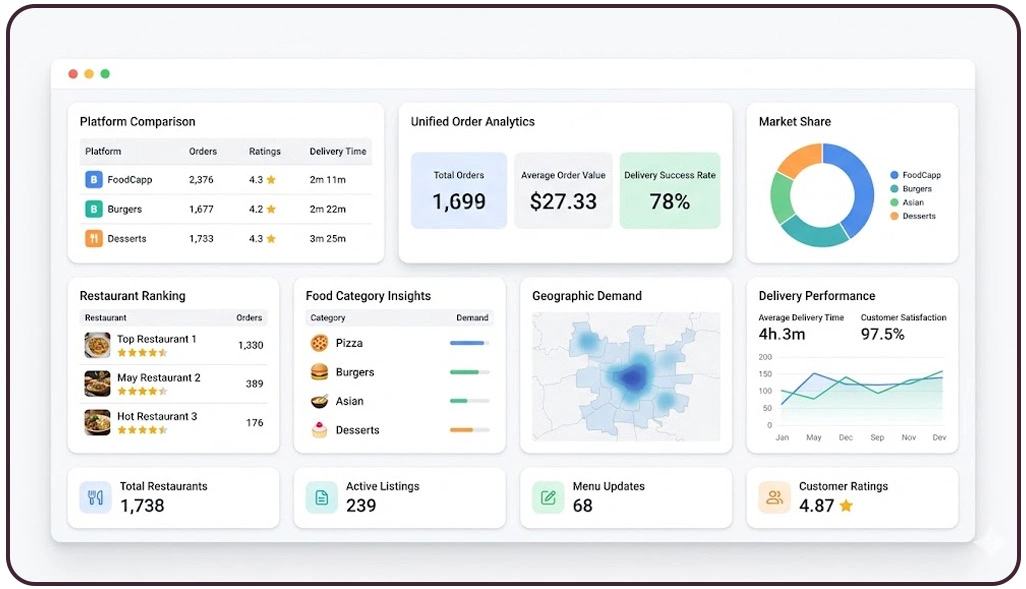
As restaurants expand their presence across several delivery platforms, managing fragmented information becomes increasingly difficult. Each platform generates unique performance metrics, customer reviews, pricing structures, and operational data. Without a centralized view, decision-makers may struggle to identify opportunities, benchmark performance, and maintain consistency across channels.
Modern data integration approaches help restaurants collect and organize information from multiple sources into a single analytical framework. Through a reliable Web Scraping API, businesses can automate large-scale collection of platform data and transform unstructured information into meaningful insights. This reduces manual effort while improving data accuracy and reporting efficiency.
Research indicates that restaurants utilizing integrated analytics solutions can improve operational performance by up to 25% compared with businesses relying solely on internal reporting systems. The adoption of Multi-Platform Food Delivery Data API for Analytics solutions enables organizations to aggregate information such as customer ratings, menu availability, order volume, and delivery efficiency into a unified dashboard.
| Data Category | Strategic Advantage |
|---|---|
| Cross-Platform Metrics | Improves decision-making |
| Delivery Performance Data | Enhances customer experience |
| Review Aggregation | Strengthens reputation management |
| Menu Availability Insights | Reduces revenue loss |
| Demand Trend Analysis | Supports market expansion |
Furthermore, Restaurant Performance Tracking With Delivery Data API helps restaurant brands evaluate key performance indicators, benchmark results across locations, and identify opportunities for continuous improvement. As competition increases, access to centralized operational intelligence becomes a critical component of long-term success.
Strengthening Market Position Through Continuous Competitive Intelligence
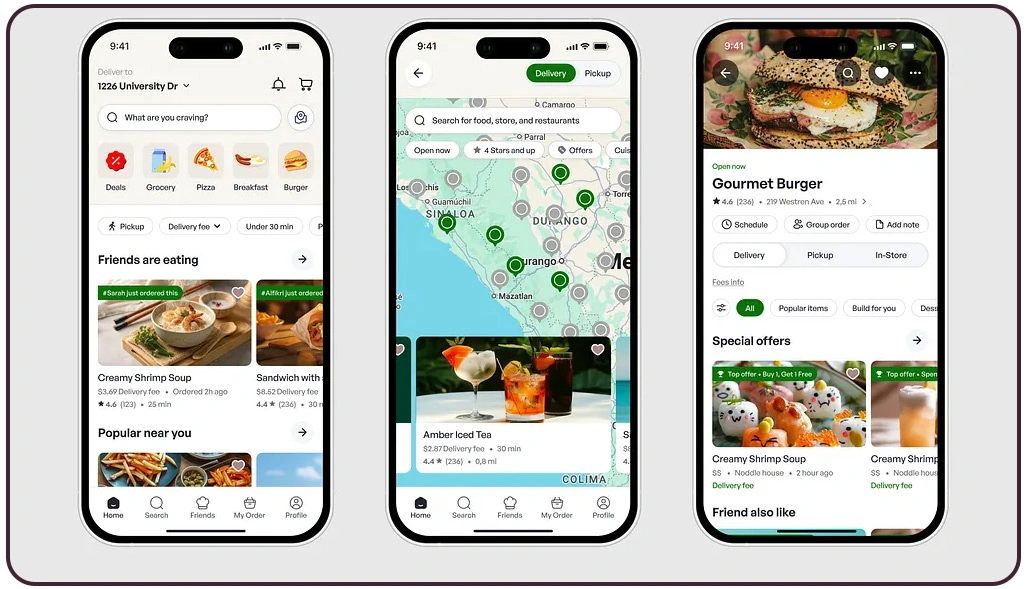
Maintaining a strong market position requires more than understanding internal performance metrics. Restaurants must also monitor external market conditions, including competitor pricing, promotional activities, customer sentiment, and menu strategies. Continuous market intelligence allows businesses to identify opportunities and respond proactively to competitive challenges.
One of the most important aspects of restaurant analytics is Competitor Price Monitoring, which provides visibility into pricing movements across delivery platforms. Industry studies show that organizations actively tracking competitor activity are often able to respond faster to market changes and improve revenue performance. Real-time intelligence enables operators to identify emerging trends before they become widespread, creating opportunities for differentiation and customer acquisition.
Businesses implementing Restaurant Competitor Monitoring Using Food Delivery Data gain access to valuable insights related to menu updates, delivery coverage, customer reviews, and promotional effectiveness. These insights support strategic planning and help brands adapt quickly in highly dynamic food delivery environments.
| Competitive Metric | Business Impact |
|---|---|
| Pricing Trend Analysis | Protects profit margins |
| Promotion Tracking | Improves campaign planning |
| Customer Review Monitoring | Enhances service quality |
| Menu Benchmarking | Identifies product opportunities |
| Delivery Coverage Evaluation | Expands market reach |
Additionally, Food Delivery Pricing Intelligence API for Restaurants provides a detailed view of pricing trends across multiple platforms. By combining competitor analysis with operational insights, restaurants can refine pricing models, improve value perception, and maintain stronger market positioning over time.
How Web Data Crawler Can Help You?
Modern restaurant analytics require accurate, timely, and large-scale data collection capabilities. Through Restaurant Market Research Using Food Delivery Data API, organizations can obtain comprehensive market insights that support smarter strategic planning and sustainable growth.
Our solutions help restaurants, aggregators, food-tech companies, and market researchers collect and analyze valuable delivery ecosystem data through:
- Automated menu data extraction
- Real-time pricing trend collection
- Customer review aggregation
- Regional demand monitoring
- Delivery performance analysis
- Market trend intelligence reporting
Businesses can also strengthen their analytics initiatives using Restaurant Performance Tracking With Delivery Data API to continuously measure performance and optimize outcomes.
Conclusion
As restaurant competition becomes increasingly data-driven, organizations must adopt advanced analytics strategies to remain relevant and profitable. By utilizing Restaurant Market Research Using Food Delivery Data API, businesses can transform delivery platform information into meaningful intelligence that improves pricing, operations, customer engagement, and growth planning.
The future of restaurant analytics will depend on real-time visibility, competitive benchmarking, and actionable insights powered by Food Delivery Pricing Intelligence API for Restaurants. Contact Web Data Crawler today to build customized restaurant intelligence solutions and accelerate your business growth with reliable data-driven strategies.