


What Makes Redfin Data API for Extracting Property Prices and Features Useful for Market Analysis?
Oct 08
Introduction
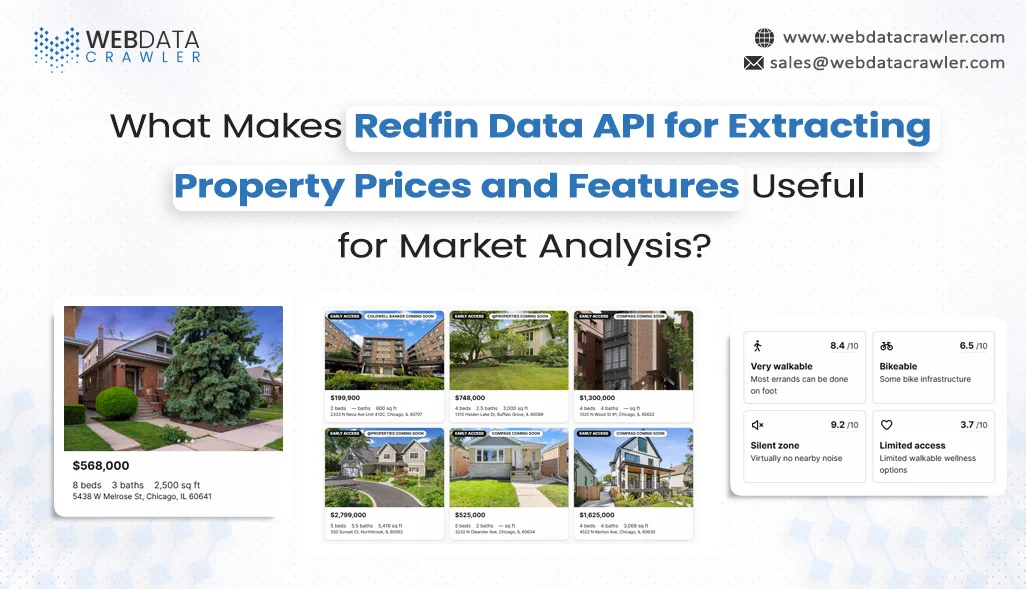
Real estate professionals need accurate listing information, property attributes, pricing movements, and inventory signals to evaluate changing markets. Redfin Data API for Extracting Property Prices and Features provides structured access to property information that can support pricing analysis, competitive research, investment evaluation, and housing market intelligence.
Property-level information becomes more valuable when collected consistently across locations and listing categories. A Redfin Real Estate Data API can help businesses organize listing prices, addresses, bedrooms, bathrooms, property types, square footage, availability, and other relevant attributes for ongoing analytical workflows.
With structured information, analysts can compare neighborhoods, identify pricing patterns, assess inventory changes, and evaluate opportunities more efficiently. Historical and current records can also support dashboards, forecasting models, investment research, and market comparison strategies while reducing the effort involved in manually collecting property information.
Sharper Pricing Signals From Detailed Property Listing Intelligence
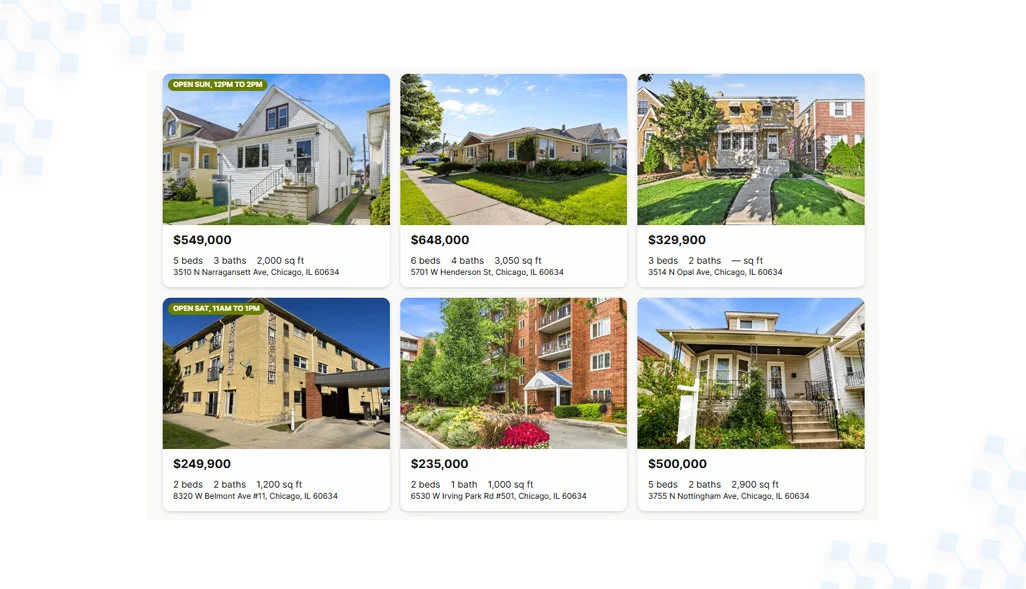
Property pricing intelligence depends on collecting detailed listing information across relevant markets and maintaining consistency between records. Real estate analysts can examine asking prices, property types, locations, room counts, square footage, listing status, and other attributes to understand how properties differ. These details create a stronger foundation for comparing neighborhoods and evaluating competitive positioning.
For broader market monitoring, Redfin Property Data Scraping Services can help businesses organize listing information into structured records that are easier to process. Analysts can use these records to compare properties based on location, features, and pricing characteristics. This approach also supports research teams that need recurring information for internal reports, property comparison tools, or market intelligence dashboards.
| Data Indicator | Analytical Use |
|---|---|
| Listing Price | Price comparison |
| Property Type | Market segmentation |
| Bedrooms | Property comparison |
| Bathrooms | Feature evaluation |
| Square Footage | Value assessment |
| Location | Regional analysis |
Businesses can Scrape Redfin Property Listings and Pricing Data to examine market-level pricing differences and changes in property availability. Such information can support competitor benchmarking, valuation analysis, and neighborhood-level comparisons. It also provides a practical way to organize large volumes of listing information without depending entirely on manual collection.
Key applications include:
- Comparing asking prices across locations
- Evaluating property characteristics
- Monitoring listing availability
- Supporting competitive market research
- Building property comparison dashboards
These capabilities help analysts develop a more consistent view of property pricing and listing conditions across selected markets.
Deeper Rental Insights Through Changing Inventory Market Patterns
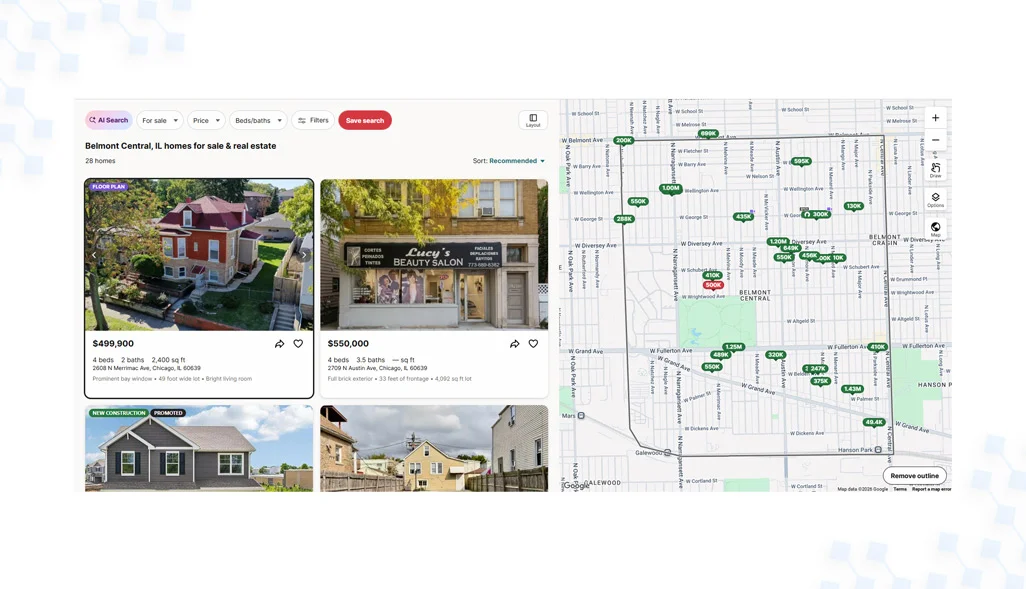
Rental and housing inventory data can provide important signals about supply, availability, pricing behavior, and changing demand. Analysts can compare rental prices, property types, locations, listing statuses, and other attributes to understand how different markets are performing. Recurring data collection is particularly useful because rental conditions can change frequently.
Consistent collection also makes it easier to identify changes in listing status, pricing, and availability across different locations. A Redfin Real Estate Data Crawler can support recurring collection workflows by organizing property information from selected markets into structured records. This can help businesses monitor rental activity without repeatedly gathering information manually.
| Market Metric | Example Application |
|---|---|
| Rental Price | Rent comparison |
| Listing Status | Availability monitoring |
| Inventory Count | Supply analysis |
| Property Location | Geographic comparison |
| Listing Changes | Trend tracking |
These insights can support rental strategy, market research, portfolio assessment, and regional planning. With Redfin Rental Property Data Extraction for Real Estate Analytics, businesses can examine rental market movements across selected areas and compare pricing patterns over time. Inventory information can further indicate whether supply is increasing, declining, or remaining relatively stable.
Useful applications include:
- Monitoring rental listing activity
- Comparing supply across neighborhoods
- Tracking pricing movements
- Identifying availability changes
- Supporting recurring market reports
Businesses can also use Web Scraping Redfin Housing Inventory Data to create repeatable monitoring workflows. Organized inventory records help analysts evaluate market movement more efficiently while providing a consistent data foundation for dashboards, forecasting models, and real estate research.
Strategic Investment Clarity Through Structured Housing Market Records

Investment analysis requires reliable property information that can be compared across locations, asset types, and pricing levels. Property records containing sale prices, features, locations, listing statuses, and other attributes can help analysts evaluate potential opportunities more systematically. When this information is collected over time, investment teams can also examine historical changes and identify areas showing different pricing or inventory patterns. Structured records therefore provide a useful foundation for both individual property assessment and broader market research.
A Redfin Real Estate Dataset can organize property records into a consistent format for analysis, reporting, and modeling. Investment teams can examine multiple attributes together rather than relying on isolated listing observations. This makes it easier to compare properties with similar characteristics, evaluate geographic differences, and identify potential opportunities. Structured data can also be integrated into analytical workflows that support portfolio reviews, research reports, and internal investment dashboards.
| Data Point | Investment Relevance |
|---|---|
| Sale Price | Valuation comparison |
| Property Features | Asset assessment |
| Location | Area selection |
| Listing Status | Market activity |
| Historical Records | Trend analysis |
The Redfin Housing Market Data Extraction API can support automated workflows where property information needs to be collected and refreshed regularly. This helps investment teams work with more current records while reducing repetitive manual research. Data can be organized according to specific market, property, or analytical requirements, making it easier to evaluate changing conditions and compare opportunities.
Key investment applications include:
- Comparing properties across selected markets
- Evaluating pricing differences
- Assessing neighborhood characteristics
- Monitoring market activity
- Supporting investment research
- Building analytical dashboards
Organizations can Extract Redfin Property Data for Investment Research to evaluate property opportunities using structured information rather than fragmented observations. Combining property attributes with pricing and market activity can provide a clearer basis for evaluating locations, comparing assets, and supporting informed investment decisions.
How Web Data Crawler Can Help You?
Real estate analysis requires structured information that can be collected consistently across multiple locations and property categories. Redfin Data API for Extracting Property Prices and Features helps transform listing-level information into organized datasets suitable for pricing analysis, property comparison, inventory monitoring, and investment research.
Key capabilities include:
- Collecting property information from selected sources and locations
- Structuring listing records for easier analysis and reporting
- Supporting recurring data collection and scheduled updates
- Organizing property attributes into consistent fields
- Preparing datasets for dashboards, analytics, and research
- Delivering information in business-ready formats for further processing
With these capabilities, teams can reduce manual collection work and establish repeatable workflows for real estate intelligence. Web Scraping Redfin Housing Inventory Data can further support ongoing analysis by providing organized information for monitoring inventory, pricing movements, property characteristics, and regional market activity.
Conclusion
Property prices, features, inventory levels, and listing activity provide valuable signals for understanding real estate markets. Redfin Data API for Extracting Property Prices and Features can help organizations organize these signals into structured information for market comparison, property evaluation, investment research, and recurring analytical workflows.
Businesses looking to improve property intelligence can combine automated collection with structured datasets, scheduled updates, and customized analytical workflows. Extract Redfin Property Data for Investment Research to support more informed evaluations of properties, neighborhoods, and market opportunities. Contact Web Data Crawler today to build a customized real estate data solution for your market analysis needs.