
Sharper Decisions with Real Estate Price Monitoring for Analysis via Web Scraping Across Markets
14 August 2026
Introduction
The real estate industry operates in a landscape where pricing dynamics shift rapidly across regions, property types, and market segments. This case study examines how a growing real estate investment and advisory firm partnered with us to build a sharper competitive edge through Real Estate Price Monitoring for Analysis via Web Scraping across multiple markets simultaneously.
The firm required a dependable mechanism to track listing prices, neighborhood-level fluctuations, and property valuation patterns in real time. Without structured data pipelines, their analysts were spending excessive time on manual research with inconsistent results. Understanding the fundamentals of Web Scraping Real Estate Data became the backbone of a solution that transformed how the client approached property intelligence.
By deploying our tailored extraction infrastructure, the client gained continuous visibility into pricing behavior across target markets, enabling sharper investment decisions, faster response to market shifts, and measurably stronger returns on their property portfolios.
Client Success Story
Our client is a mid-sized real estate investment advisory group with active operations spanning eight metropolitan regions across North America. Over twelve years, they built a reputation for identifying undervalued properties and advising institutional investors on acquisition timing and pricing strategy. However, as competition intensified and market volatility increased, their traditional research workflows began showing clear limitations.
Their analysts relied heavily on periodic MLS reports, broker updates, and manual data pulls from listing platforms all of which produced outdated snapshots rather than live intelligence. The firm needed a scalable approach to Real Estate Price Monitoring for Analysis via Web Scraping that could cover multiple cities and property categories simultaneously without inflating their research headcount.
They also recognized the urgency of adopting Real Estate Price Monitoring Services to replace their fragmented data gathering with a structured, automated intelligence system capable of supporting high-frequency investment decisions across diverse market conditions.
Within eight months of deploying Web Data Crawler's solution, the client recorded:
- 38% improvement in property valuation accuracy
- 31% reduction in research cycle time per market
- 24% increase in deal conversion rates
- 19% growth in overall portfolio return performance
The Core Challenges
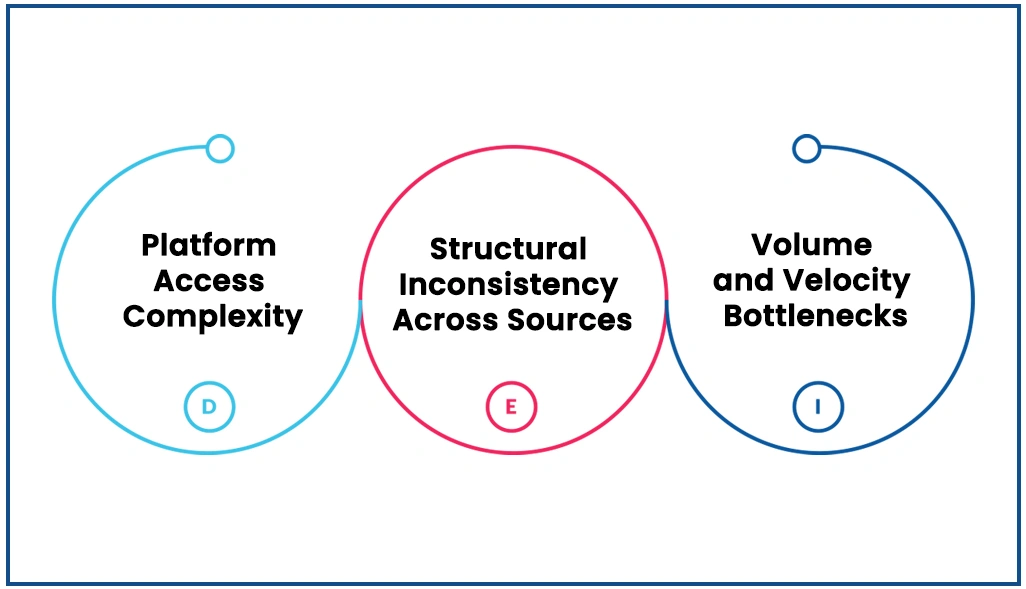
The client encountered several interconnected obstacles that limited their ability to operate with the precision and speed their market demanded.
-
Platform Access Complexity
Extracting consistent listing data from major real estate portals proved difficult due to dynamic JavaScript rendering, session-based access controls, and bot-detection mechanisms that blocked conventional scraping attempts. Building reliable Real Estate Datasets required overcoming these technical barriers without disrupting platform integrity.
-
Structural Inconsistency Across Sources
Property data across different portals and regional MLS systems arrived in incompatible formats varying field names, price display conventions, and location classification systems making cross-market comparison nearly impossible without extensive manual normalization.
-
Volume and Velocity Bottlenecks
The sheer number of active listings across eight markets generated enormous data volumes. Without automated pipelines, the client's team struggled to process information fast enough to act on emerging pricing trends before they shifted again.
– Main Client Requirement –
Beyond addressing these technical challenges, the client's primary need was a unified system capable of delivering clean, structured, and continuously refreshed property pricing intelligence across all target markets, one that could scale alongside their expanding portfolio without requiring proportional increases in analyst hours.
Smart Solution
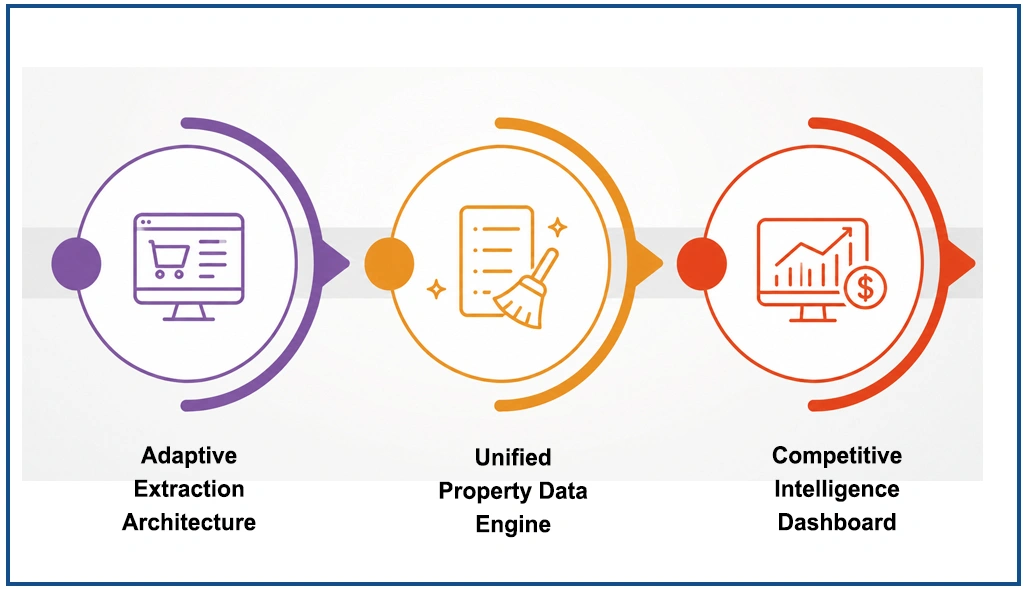
After conducting a thorough audit of the client's current workflows, technology environment, and data requirements, we engineered a purpose-built solution designed around the specific demands of multi-market real estate intelligence.
-
Adaptive Extraction Architecture
This infrastructure enabled reliable access to listing data across all target platforms. Understanding How Real Estate Price Monitoring Works in Scraping guided every design decision in this layer, ensuring data collection matched the rhythm of real market activity.
-
Unified Property Data Engine
This engine supports Scrape Property Price Data for Market Research workflows by ensuring every data point is analytically ready upon delivery, eliminating the preprocessing burden from the client's internal team.
-
Competitive Intelligence Dashboard
This component supports Real Estate Price Monitoring Services by surfacing pricing anomalies, neighborhood-level trend shifts, and comparative valuation benchmarks across all monitored geographies all accessible through a single, intuitive reporting interface.
Execution Strategy
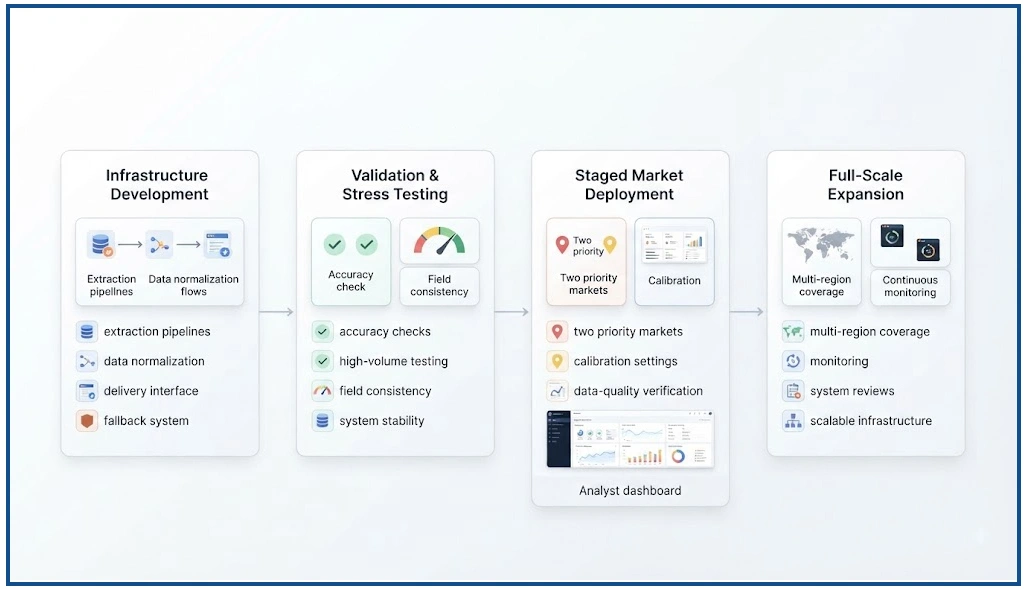
We followed a phased deployment methodology designed to minimize disruption, validate performance at each stage, and ensure the solution scaled smoothly alongside the client's growing data needs.
-
Infrastructure Development Phase
Engineering teams built and configured the core extraction pipelines, normalization modules, and delivery interfaces. We deployed Web Scraping Services infrastructure with redundant fallback mechanisms to maintain uninterrupted data flow even when source platforms introduced structural changes or access restrictions.
-
Validation and Stress Testing Phase
Before going live, we ran extensive simulations across all eight target markets, testing data accuracy under high-volume conditions, validating field-level consistency, and confirming system stability during peak listing activity periods.
-
Staged Market Deployment Phase
Rollout began in the client's two highest-priority markets, allowing the team to calibrate thresholds, confirm data quality in real conditions, and train analysts on the new dashboard before expanding coverage.
-
Full-Scale Expansion Phase
With performance benchmarks met in initial markets, we extended extraction coverage across all regions. Ongoing monitoring protocols and regular system reviews ensured the infrastructure remained adaptive to platform changes and evolving client priorities.
Impact & Results
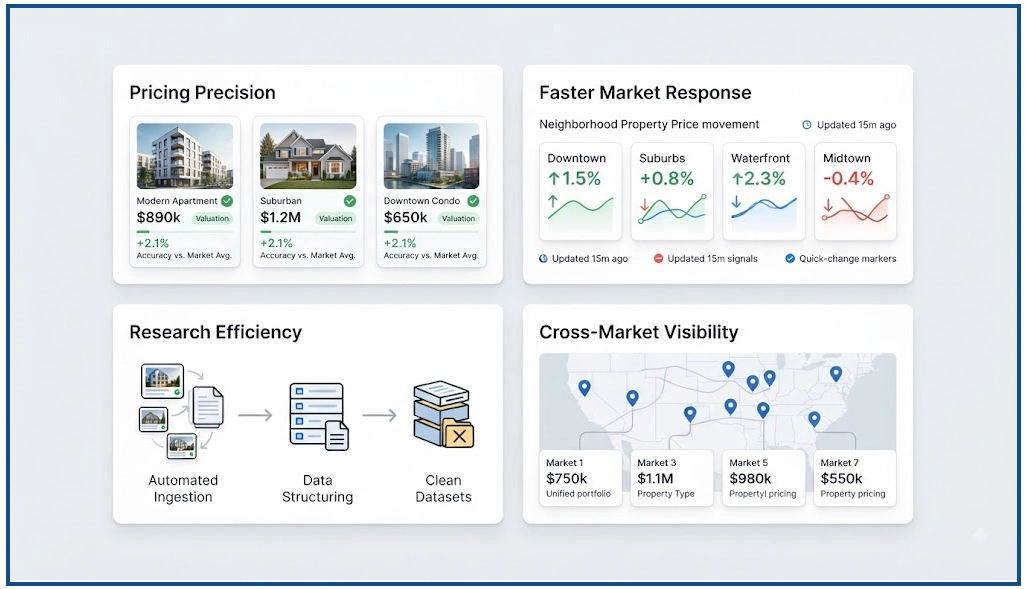
The deployment of our real estate intelligence platform produced measurable improvements across every dimension the client had identified as critical.
-
Pricing Precision Gains
With continuous access to listing-level price data, the client's analysts replaced estimate-based valuations with data-confirmed assessments. Understanding How Businesses Track Real Estate Market Changes through automated pipelines proved to be a significant operational advantage.
-
Accelerated Market Response
Real-time data feeds allowed the client to detect price movements within hours rather than days. When a target neighborhood began showing consistent listing price compression, the team was positioned to act before competing firms identified the same pattern.
-
Research Efficiency Transformation
Automating the data collection and normalization process freed senior analysts from repetitive manual tasks, redirecting their expertise toward interpretation and strategy. The ability to Scrape Real Estate Data API for Real Property Tracking at scale replaced hours of manual sourcing with structured, reliable feeds delivered on a defined schedule.
-
Cross-Market Portfolio Visibility
For the first time, the client's leadership team had a unified view of pricing behavior across all eight markets simultaneously. This consolidated perspective supported more confident portfolio-level decisions and made it easier to identify geographic opportunities and risks in parallel.
Final Takeaways
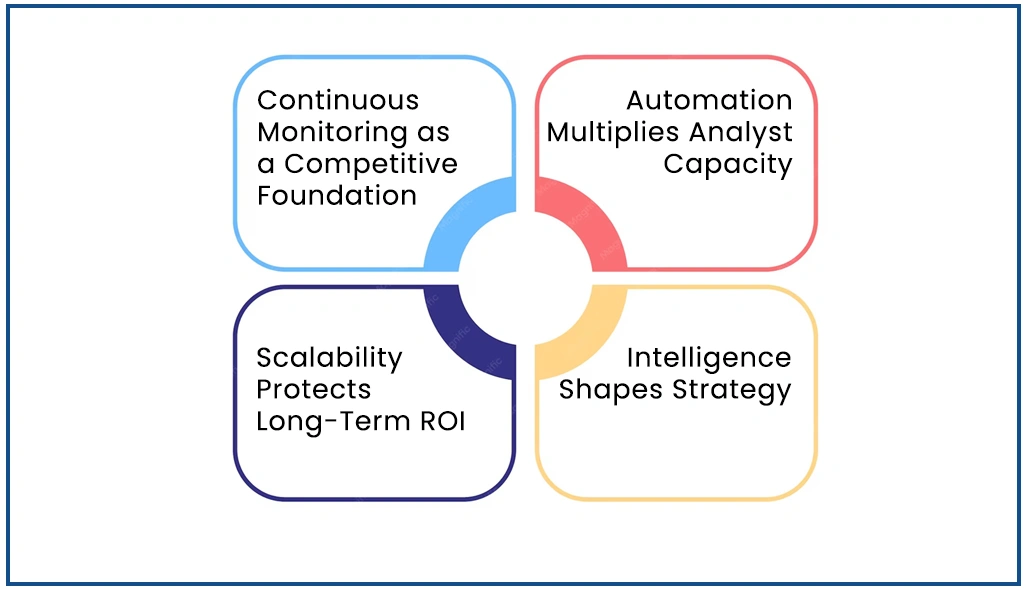
This engagement demonstrates the real and measurable impact that structured data intelligence can deliver for real estate firms navigating complex, fast-moving markets.
-
Continuous Monitoring as a Competitive Foundation
Firms that treat market data as a continuous input rather than a periodic snapshot consistently outperform peers relying on static reports. Automating How Businesses Track Real Estate Market Changes at scale gives investment teams the situational awareness needed for confident, timely decisions.
-
Automation Multiplies Analyst Capacity
When extraction and normalization are handled systematically, skilled analysts redirect their attention from gathering data to interpreting it. The ability to Scrape Real Estate Data API for Real Property Tracking automatically multiplies the effective output of every analyst on the team.
-
Scalability Protects Long-Term ROI
A well-designed data infrastructure grows with the business. As the client expanded into new markets, the existing system absorbed the additional scope without requiring significant re-engineering, protecting the original investment and enabling faster geographic expansion.
-
Intelligence Shapes Strategy
The most significant shift the client experienced was cultural. Armed with reliable, real-time Market Research intelligence, their investment committees began making decisions grounded in data confirmation rather than informed intuition, a shift that directly influenced portfolio performance outcomes.

Web Data Crawler changed the way we approach property investment decisions entirely. Their platform brought Real Estate Price Monitoring for Analysis via Web Scraping to life for our team in a way we hadn't thought possible. The system also supports our ability to Scrape Property Price Data for Market Research, which has deepened our understanding of neighborhood-level pricing dynamics significantly.
– Head of Investment Research, Real Estate Advisory Group
Conclusion
Real estate markets reward preparation, precision, and speed three qualities that become far more attainable when investment teams have reliable, continuously updated pricing data at their disposal. Our Real Estate Price Monitoring for Analysis via Web Scraping solution gave our client exactly that, transforming how they research, evaluate, and act on property opportunities across eight competitive markets.
By combining adaptive extraction infrastructure with intelligent normalization and analytics, we addressed not just the technical barriers our client faced but the strategic limitations those barriers imposed. Our How Real Estate Price Monitoring Works in Scraping methodology is built to match the pace of real markets capturing pricing shifts as they happen, not after they've passed.
And our Real Estate Price Monitoring Services continue to evolve alongside the platforms and markets our clients depend on, ensuring that the intelligence advantage we deliver remains durable over time. Contact Web Data Crawler today. Our team is prepared to design a custom data extraction solution that fits your specific markets, property categories, and decision-making workflows.