


How Can Quick Commerce Competitor Analysis Using Product Data Scraping Strengthen Retail Analysis?
Oct 06
Introduction
Quick commerce has transformed retail competition by making product availability, pricing, assortment, and delivery speed highly visible to consumers. In India, the market reached an estimated ₹64,000 crore in FY2025 after recording a 142% CAGR between FY2022 and FY2025. These developments have increased the importance of continuously monitoring competitive marketplace activity.
For retailers, Quick Commerce Competitor Analysis Using Product Data Scraping creates a structured way to compare competitor assortments, product prices, stock conditions, promotions, and category movements. With Quick Commerce Data Scraping Services, businesses can convert frequently changing marketplace information into organized datasets that support pricing, merchandising, inventory, and market research decisions.
This approach helps teams identify pricing gaps, changing customer preferences, product availability patterns, and competitive assortment shifts without relying entirely on manual research. As quick-commerce platforms expand their product ranges and geographic coverage, consistent product-level monitoring can provide retailers with timely information for evaluating market movements and refining their retail strategies.
Competitive Signals Strengthen Quick Commerce Retail Benchmarking Strategies
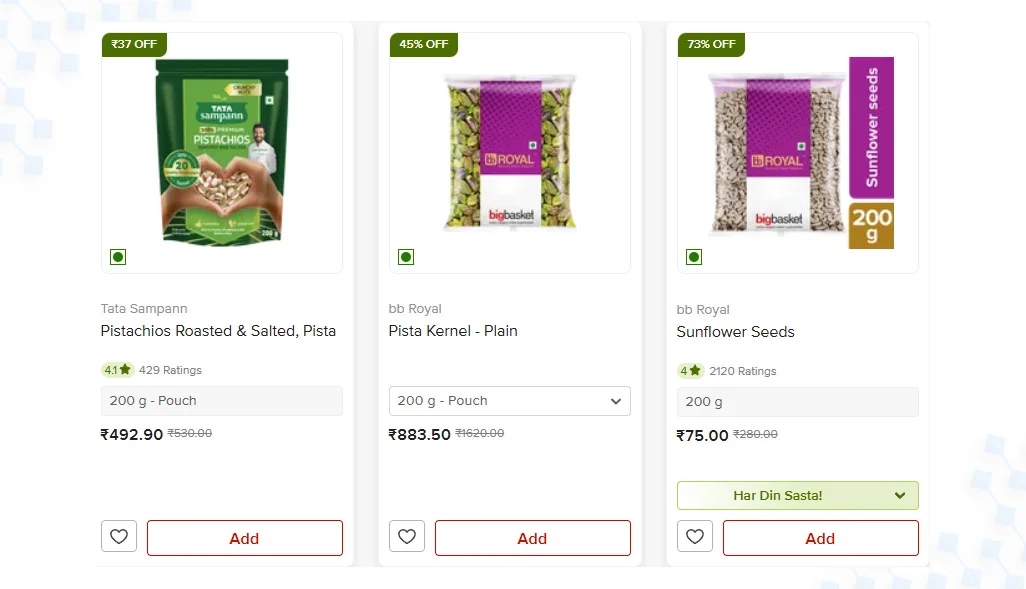
Competitive quick-commerce markets change rapidly as retailers adjust product assortments, prices, promotions, and inventory according to local demand. Quick Commerce Datasets for Demand and Supply Analysis can organize these signals across products, categories, locations, brands, and collection periods, giving retail teams a consistent foundation for comparing competitive activity.
Product assortment is another important indicator because retailers need to understand which products competitors prioritize within different categories. By reviewing product presence, pack sizes, brands, and category coverage, businesses can identify assortment gaps and evaluate whether their own catalog adequately addresses market expectations. Quick Commerce Datasets can support this process by bringing fragmented marketplace information into a more organized format for category managers and analysts.
Competitive benchmarking also becomes more meaningful when retailers compare multiple indicators together rather than reviewing individual products in isolation. Price, availability, assortment depth, and category movement can reveal broader market patterns that may not be visible through occasional manual checks. This allows teams to recognize emerging opportunities, evaluate competitive positioning, and determine where additional research or operational attention may be necessary.
Key competitive signals include:
- Product assortment and category coverage
- Brand and pack-size comparisons
- Competitor product presence
- Location-based assortment differences
- Category-level market movements
- Historical competitive changes
| Metric | Business Application |
|---|---|
| Product assortment | Category benchmarking |
| Brand presence | Competitive evaluation |
| Category coverage | Assortment planning |
| Location variation | Regional analysis |
| Historical changes | Trend assessment |
Retailers can apply these insights across several planning activities, including category management, assortment optimization, demand evaluation, and competitor monitoring. Regularly collected information also provides historical references that help teams understand how competitive conditions evolve over time.
Pricing Intelligence Reveals Shifting Quick Commerce Competitive Opportunities
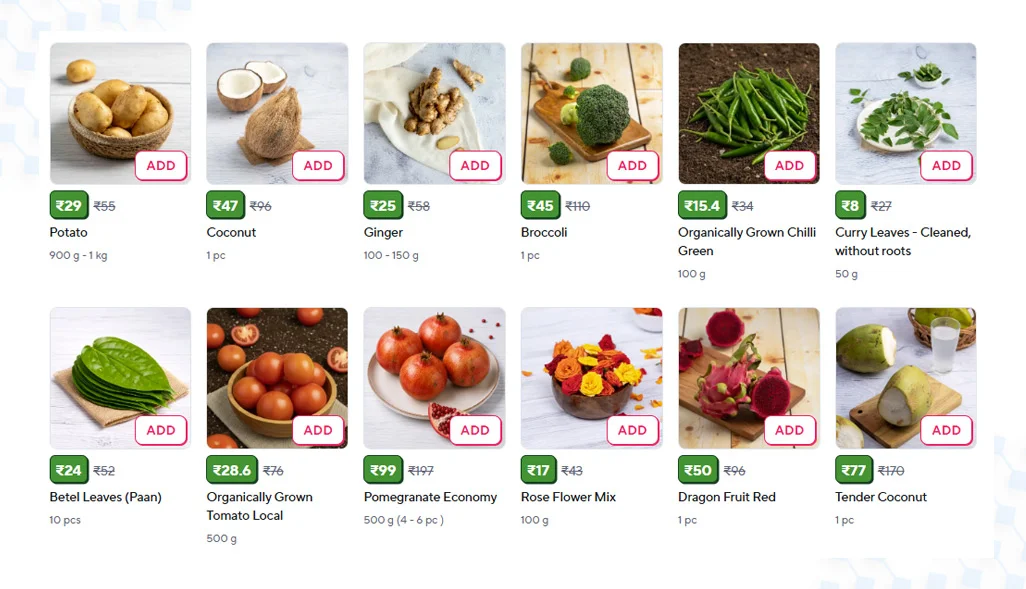
Pricing remains one of the most visible competitive factors in quick commerce because customers can compare similar products across platforms within a short period. Real-Time Quick Commerce Product Price Data Scraping for Retailers can capture listed prices, discounts, promotional changes, pack sizes, and other pricing signals at recurring intervals. This information helps retailers understand how competitors position similar products and where meaningful pricing differences occur.
A product may have different prices or promotional conditions depending on the market being monitored. Quick Commerce Pricing Dataset for Business can help organize these observations so analysts can compare pricing behavior across categories, brands, geographic areas, and collection periods while identifying recurring patterns.
Promotional activity can also reveal important competitive strategies. Retailers may adjust discounts, bundle offers, or product pricing to influence purchasing behavior during specific periods. Monitoring these changes can help businesses understand the intensity and frequency of promotional competition. Comparing regular prices against promotional prices can further clarify whether competitors are pursuing sustained price positioning or short-term campaign strategies.
Important pricing signals can include:
- Listed product prices
- Discount percentages
- Promotional price changes
- Pack-size variations
- Category-level price movements
- Location-based pricing differences
| Pricing Indicator | Strategic Application |
|---|---|
| Listed price | Benchmarking |
| Discount level | Promotion review |
| Pack size | Value comparison |
| Price movement | Trend evaluation |
| Regional difference | Market comparison |
Consistent price monitoring can contribute to several retail functions, including competitive benchmarking, promotion planning, category management, and pricing strategy development. Historical observations can also help teams recognize recurring price movements and evaluate whether certain categories experience greater competitive volatility.
Availability Trends Clarify Consumer Demand And Retail Competition

Product availability provides another valuable perspective because stock conditions can influence purchasing decisions and competitor selection. Quick Commerce Stock Availability Data Scraping for Retailers can help retailers monitor whether products are available, unavailable, newly listed, or removed across selected locations. Repeated observations can provide a clearer picture of supply consistency and highlight products or categories experiencing frequent availability changes.
Consumer behavior can also be evaluated by connecting product visibility with assortment and availability patterns. Web Scraping Quick Commerce Data for Consumer Behavior Analysis can support research into category preferences, product movements, brand visibility, and changing marketplace behavior. When these signals are observed consistently, analysts can compare shifts across locations and categories rather than depending solely on occasional surveys or manually reviewed listings.
Technology-assisted collection can make large-scale monitoring more practical, particularly when businesses need to evaluate thousands of products across several platforms. AI Web Scraping Services can support automated processing, categorization, and organization of large datasets, allowing analysts to spend more time interpreting patterns instead of repeatedly collecting and cleaning marketplace information.
Key availability and behavior signals include:
- Product availability by location
- Out-of-stock frequency
- New product appearances
- Product removal patterns
- Category preference changes
- Regional marketplace differences
| Data Point | Potential Business Use |
|---|---|
| Stock status | Inventory review |
| Product visibility | Assortment evaluation |
| Category movement | Demand assessment |
| Location | Regional comparison |
| Listing changes | Market monitoring |
Availability and consumer-related insights can contribute to inventory planning, assortment evaluation, category research, and regional strategy development. Combining stock observations with product and category information can help teams recognize recurring supply gaps, identify frequently changing products, and understand where competitive availability may differ significantly.
How Web Data Crawler Can Help You?
Retail teams require consistent competitive visibility because quick-commerce information can change frequently across products, prices, inventory, promotions, and locations. Quick Commerce Competitor Analysis Using Product Data Scraping can help us to collect and organize these changing marketplace signals into structured, business-ready information.
The solution can support several practical use cases across retail operations. Scheduled collection can further help teams create historical records, making it easier to compare marketplace conditions across different dates, locations, and competitive segments.
Key capabilities can include:
- Automated collection across selected quick-commerce platforms
- Product-level monitoring across multiple retail categories
- Structured extraction of prices and promotional information
- Location-based collection for regional comparisons
- Scheduled datasets for recurring competitive analysis
- Data formatting for dashboards and analytical systems
The resulting Quick Commerce Product Datasets for Retailers can support assortment planning, competitor benchmarking, product research, category evaluation, and market analysis. By organizing large volumes of changing marketplace information into consistent formats, we can help businesses establish repeatable analytical workflows and make competitive research more systematic.
Conclusion
Retail competition increasingly depends on how quickly businesses understand changes in assortment, pricing, availability, and consumer demand. Quick Commerce Competitor Analysis Using Product Data Scraping provides a structured approach for converting rapidly changing marketplace information into useful retail intelligence. It can support price benchmarking, assortment evaluation, category planning, and regional market assessment.
Consistent Quick Commerce Inventory Monitoring Using Scraped Data can also help retailers identify availability patterns and respond more effectively to changing supply conditions. As quick-commerce networks continue expanding across cities and product categories, structured marketplace monitoring can become an important component of modern retail planning. Contact Web Data Crawler today to build a customized quick-commerce data solution for your retail analysis needs.