


How Does OTA Room Rate Monitoring and Travel Analytics Using Web Scraping Track Search-Based Rates?
Oct 01
Introduction
Hotel prices displayed on online travel agencies can change frequently based on demand, booking windows, occupancy, destination, room category, and search conditions. For hotels, travel platforms, and market analysts, tracking these changes provides a clearer view of how room rates respond to different customer searches and market situations.
Instead of depending on occasional manual checks, businesses can collect room prices, availability, discounts, cancellation conditions, meal plans, and property details under comparable search parameters. This creates a broader view of market pricing behavior. Competitor Price Monitoring becomes more effective when accommodation rates are observed consistently across several OTAs.
With OTA Room Rate Monitoring and Travel Analytics Using Web Scraping, businesses can organize search-based pricing observations into structured records. Historical data can reveal recurring rate movements, seasonal fluctuations, pricing gaps, and availability changes, helping revenue teams and travel analysts evaluate market conditions using consistent and timely information.
Uncovering Search Patterns Behind Changing Hotel Rates Across OTA Platforms
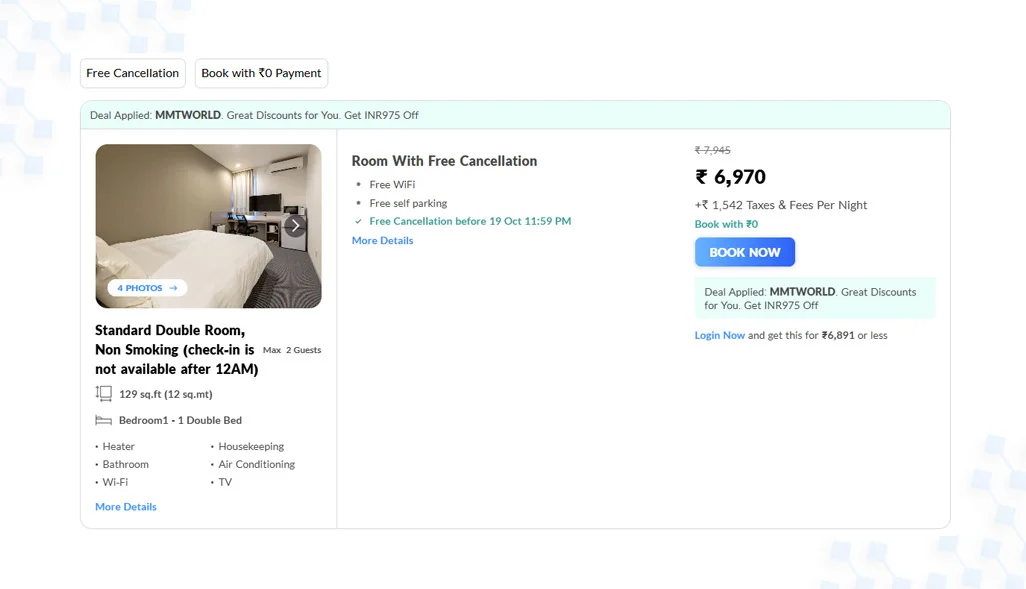
Search-based hotel pricing depends on several variables, including destination, travel dates, occupancy, room category, length of stay, and booking conditions. Collecting these attributes together creates a more reliable foundation for comparing rates displayed across different online travel platforms. This approach allows analysts to distinguish genuine pricing differences from variations caused by search parameters.
Businesses using Hotel Availability Scraping for Dynamic Pricing Analysis can connect room availability with observed rate movements. For example, a property showing limited rooms may display higher prices than the same property when availability is broader. Recording both attributes together helps analysts understand whether pricing changes correspond with inventory conditions or other market factors.
Another important component is Web Scraping Travel Data, which can organize hotel names, room types, displayed prices, taxes, discounts, policies, and availability into structured records. Consistent extraction makes it easier to examine the same properties repeatedly and compare changes across different dates, destinations, and booking windows without relying on fragmented manual observations.
| Tracking Area | Typical Data Collected |
|---|---|
| Property information | Hotel name and location |
| Room details | Room type and occupancy |
| Pricing | Base rate and displayed total |
| Availability | Available rooms or status |
| Booking conditions | Cancellation and meal policies |
- Standardized search parameters for consistent comparisons
- Scheduled collection of changing room rates
- Property-level monitoring across selected OTAs
- Room and occupancy information captured together
- Historical records for rate movement analysis
- Structured outputs for travel analytics workflows
Rate comparison can also become more systematic when search conditions remain consistent. Scrape Compare Hotel Rates Across Online Travel Agencies can support structured benchmarking by placing comparable room offers into a common dataset. Teams can then examine price differences, promotional activity, and availability across selected OTAs.
Decoding Rate Fluctuations Through Search Context and Market Signals
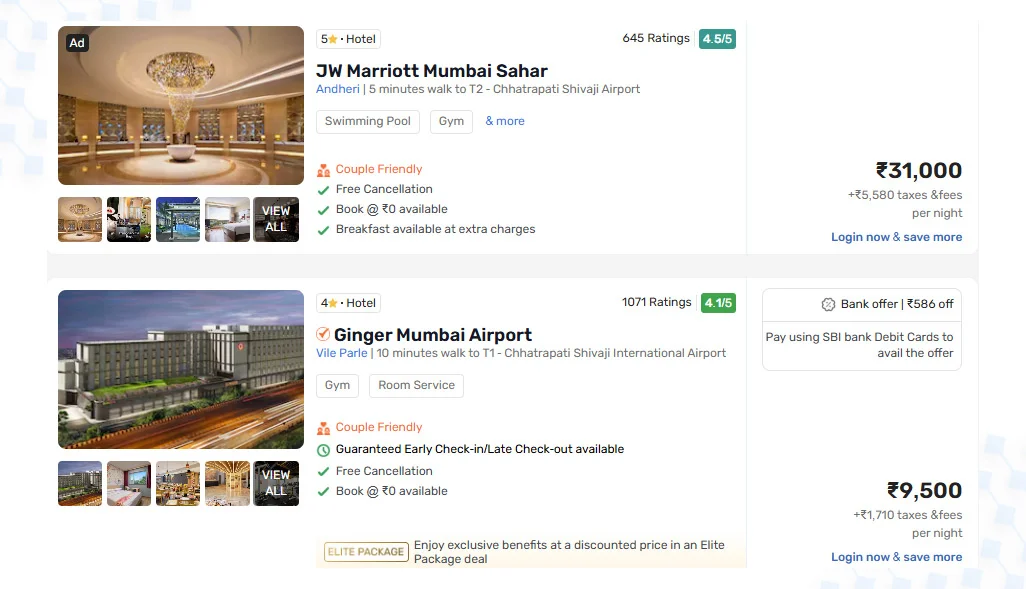
Hotel rate analysis becomes more meaningful when pricing observations retain their surrounding search context. A rate collected without travel dates, occupancy, room category, or cancellation conditions may provide limited analytical value. Capturing these attributes together allows analysts to determine why apparently similar hotel offers may show different prices.
Using Hotel Dynamic Pricing Data Scraping for Market Research, teams can collect rate observations across different periods and destinations. The resulting records can help identify changes associated with booking windows, seasonal demand, room availability, or promotional campaigns. Repeated observations also make it easier to separate temporary fluctuations from broader pricing patterns.
Automation can further improve the consistency of large-scale data collection. AI Web Scraping Services can assist with classifying extracted hotel information, organizing recurring attributes, and processing large volumes of records. Automated workflows can reduce repetitive preparation tasks while creating standardized datasets that are easier to use for reporting and analytical models.
| Analysis Metric | Example Application |
|---|---|
| Average room rate | Property benchmarking |
| Rate difference | OTA comparison |
| Discount percentage | Promotion analysis |
| Booking window | Demand evaluation |
| Availability status | Inventory assessment |
- Capture search dates and stay duration
- Record occupancy alongside room prices
- Standardize room-category information
- Track promotions and cancellation conditions
- Compare recurring observations across periods
- Prepare structured records for analytics
Search-based rate analysis can then be converted into practical comparison dashboards. Teams may examine average prices, rate gaps, discount percentages, room availability, and changes across selected dates. Such analysis provides a clearer representation of how hotels position their rates under different search scenarios.
Transforming Historical Hotel Pricing Records Into Actionable Market Insights
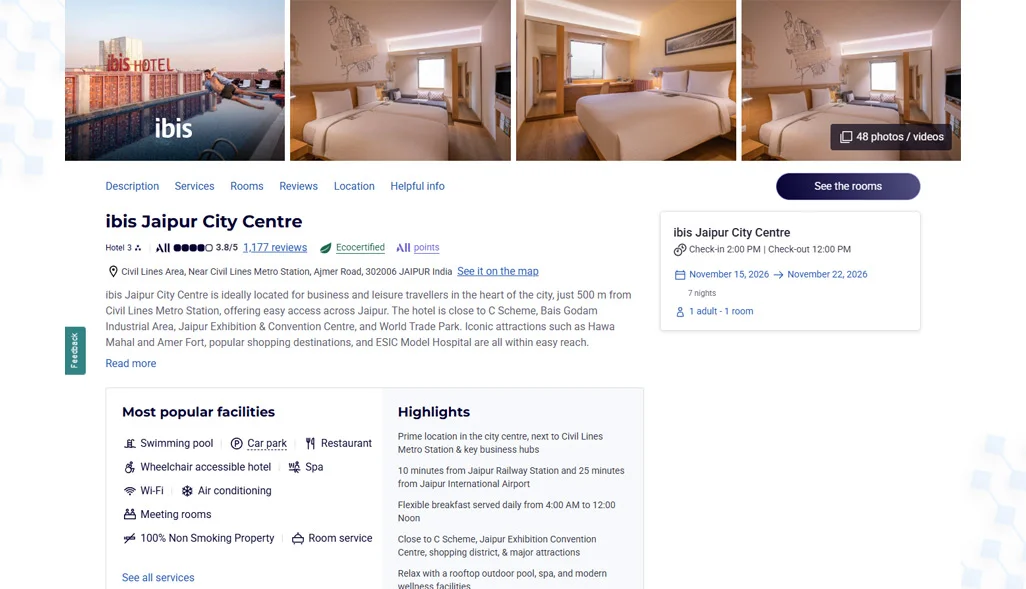
Historical accommodation data provides context that individual rate checks cannot offer. When observations are collected repeatedly, analysts can identify recurring pricing movements across weekdays, weekends, holidays, destinations, and booking windows. This makes historical records useful for studying market behavior rather than focusing only on individual price changes.
Structured Travel Datasets can combine property information, room rates, availability, search conditions, discounts, and booking policies into organized records. With these attributes stored consistently, businesses can compare historical observations across destinations and property groups. The same dataset can also support segmentation based on room category, stay duration, occupancy, or travel period.
For broader pricing research, OTA Data Scraping for Hotel Price Analysis can provide comparable observations from multiple travel platforms. Analysts can examine differences between displayed rates, identify recurring price gaps, and evaluate how pricing changes under similar search conditions. This can be particularly useful when studying competitive markets with frequent rate adjustments.
| Historical Dimension | Analytical Use |
|---|---|
| Time period | Seasonal comparison |
| Destination | Market benchmarking |
| Room category | Product-level analysis |
| Booking window | Pricing behavior |
| Rate history | Trend identification |
- Maintain historical hotel rate observations
- Segment records by destination and property
- Compare weekday and weekend pricing
- Track recurring promotional patterns
- Monitor availability alongside historical rates
- Prepare datasets for forecasting and benchmarking
Longer historical coverage can reveal patterns that are difficult to identify through short-term monitoring. Hotel Pricing Trends Using OTA Data Scraping can help teams examine seasonal movements, recurring demand periods, changing discounts, and variations between destinations. These observations can contribute to market research, revenue planning, benchmarking, and forecasting workflows.
How Web Data Crawler Can Help You?
Travel businesses need dependable systems to collect and organize accommodation information from multiple online travel platforms. OTA Room Rate Monitoring and Travel Analytics Using Web Scraping can create a structured view of room prices, availability, promotions, room categories, and search-specific conditions while reducing repetitive manual monitoring.
We can support this workflow through automated extraction, scheduled monitoring, data structuring, and customized delivery. Businesses can define relevant properties, destinations, search parameters, and fields according to their analytical requirements. The resulting information can then be prepared for reporting, comparison, or integration with existing data workflows.
Key capabilities include:
- Automated collection from selected travel platforms
- Scheduled monitoring of changing room rates
- Structured organization of property information
- Historical storage for pricing comparisons
- Customized data fields for specific requirements
- Practical delivery formats for analytics workflows
By maintaining consistent observations across multiple sources, businesses can evaluate pricing movements with greater context. Hotel Dynamic Pricing Data Scraping for Market Research can further support structured competitive analysis, destination research, and pricing evaluation when collected according to defined business requirements.
Conclusion
Search-based hotel pricing can fluctuate according to availability, demand, travel dates, occupancy, room categories, and promotional conditions. OTA Room Rate Monitoring and Travel Analytics Using Web Scraping provides a structured approach for observing these changes across multiple OTAs while maintaining historical records for comparison and analysis.
Consistent data collection can also support OTA Data Scraping for Hotel Price Analysis by bringing comparable hotel observations into a standardized analytical workflow. Connect with Web Data Crawler to build a customized hotel rate monitoring and travel data solution for your business.