
What Makes Companies Adopt NLP Web Scraping for Job Description Data Extraction for Smarter Hiring?
Jun 02
Introduction
The recruitment landscape has evolved dramatically as organizations increasingly rely on data-driven decision-making to identify, evaluate, and hire top talent. As hiring markets become more competitive, businesses require intelligent systems capable of extracting, organizing, and interpreting large volumes of job-related information from diverse online sources. This shift has encouraged enterprises to integrate advanced automation technologies into their talent acquisition strategies.
One of the most effective approaches involves combining natural language processing with large-scale data extraction techniques. These technologies help organizations identify hiring trends, analyze skill requirements, monitor industry demand, and optimize workforce planning. Many organizations also depend on Recruitment Data Scraping Services to gather accurate market insights and improve recruitment planning efficiency.
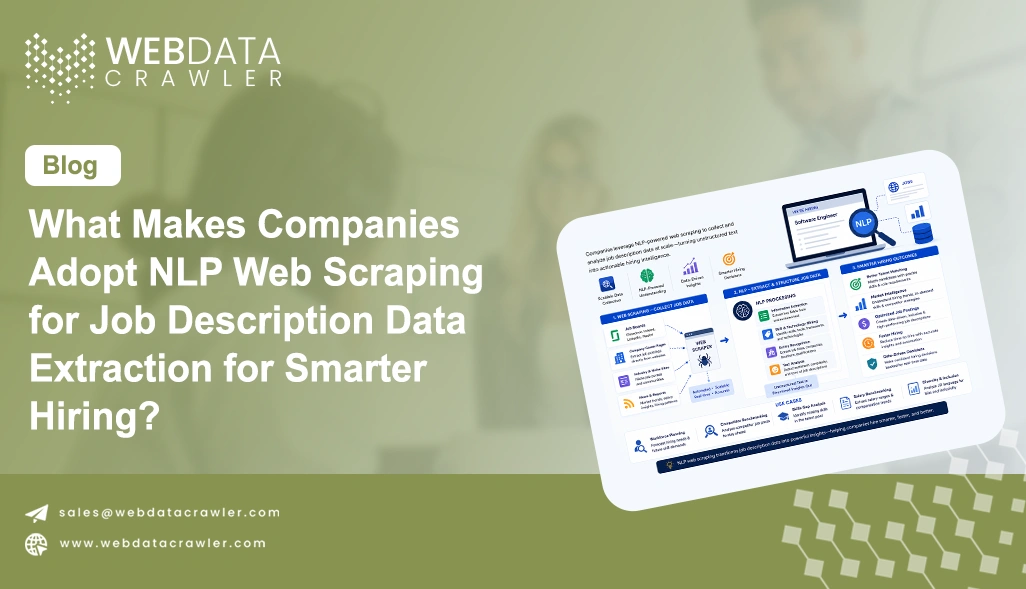
Modern hiring teams are adopting NLP Web Scraping for Job Description Data Extraction because it enables structured analysis of job postings while reducing manual effort. This approach helps recruiters understand evolving job requirements, benchmark competitors, and improve candidate matching. As organizations seek smarter hiring solutions, automated data extraction continues to become a critical component of recruitment intelligence and workforce optimization strategies.
Creating Structured Talent Intelligence From Fragmented Hiring Information

Organizations often struggle with recruitment information scattered across numerous websites, company career pages, and employment platforms. When hiring teams rely on manually collected data, they frequently encounter inconsistent job formats, duplicate records, and missing details that reduce the effectiveness of workforce planning. Automated data collection helps recruitment teams overcome these challenges by gathering information at scale and converting it into usable business insights.
Research indicates that organizations implementing automated recruitment analytics can reduce data processing workloads by more than 60% while improving hiring visibility across multiple industries. The increasing adoption of Recruitment Datasets allows businesses to build structured repositories that support long-term recruitment planning and market analysis.
At the same time, companies use Web Scraping Job Listings From Multiple Job Portals to obtain broader visibility into labor market activities across regions and industries. This process helps identify emerging roles, hiring demand fluctuations, and competitive recruitment patterns. Businesses also rely on Recruitment Data Scraping Services to strengthen data accuracy and improve talent intelligence initiatives.
| Recruitment Challenge | Impact on Hiring | Data-Driven Solution |
|---|---|---|
| Fragmented job data | Limited visibility | Centralized collection |
| Inconsistent descriptions | Poor analysis | Standardized datasets |
| Manual processing | Higher workload | Automated extraction |
| Delayed reporting | Slow decisions | Real-time updates |
By consolidating information from multiple sources, organizations can create more reliable recruitment intelligence systems that support strategic workforce planning and improve overall hiring efficiency.
Strengthening Workforce Visibility Through Continuous Market Monitoring

Recruitment leaders must constantly adapt to evolving labor market conditions, changing skill requirements, and growing competition for qualified candidates. Traditional market research methods often fail to provide the speed and accuracy required for modern workforce planning. Businesses also depend on Web Scraping Services for Job Market Research to obtain valuable insights into labor market movements, compensation trends, and emerging employment opportunities.
Studies suggest that data-driven recruitment programs are significantly more effective at identifying talent shortages and forecasting workforce demand than manual research approaches. A modern Web Crawler plays a crucial role in collecting hiring information from multiple online sources and maintaining updated recruitment intelligence.
Additionally, AI-Powered Job Posting Data Extraction Solutions assist recruitment teams in interpreting complex job descriptions by identifying qualifications, technical skills, certifications, and role expectations. Automated analysis enables organizations to process large volumes of hiring information while maintaining consistency and accuracy.
| Market Intelligence Need | Traditional Approach | Automated Approach |
|---|---|---|
| Competitor monitoring | Manual tracking | Continuous analysis |
| Skill demand evaluation | Periodic reviews | Real-time insights |
| Trend identification | Delayed reporting | Instant visibility |
| Recruitment planning | Limited data | Comprehensive intelligence |
By integrating automated monitoring systems into recruitment workflows, organizations can make informed hiring decisions, improve responsiveness, and maintain a stronger position in competitive labor markets.
Improving Long-Term Hiring Strategies With Predictive Analytics

Successful workforce planning requires more than collecting recruitment information; organizations must also transform data into strategic insights that guide future hiring decisions. As industries continue evolving, businesses need predictive analytics capabilities that help identify workforce requirements before talent shortages impact operations.
Research shows that organizations utilizing predictive recruitment analytics can improve hiring efficiency by up to 35% while reducing recruitment-related operational costs. The growing use of Mobile App Scraping has expanded recruitment intelligence by providing access to employment opportunities advertised through mobile-first platforms. This additional source of hiring information allows organizations to analyze broader talent markets and improve workforce forecasting accuracy.
Businesses increasingly implement Recruitment Industry Web Scraping Solutions to collect structured hiring intelligence that supports long-term strategic planning. These solutions enable organizations to evaluate labor market trends, monitor skill demand, and identify workforce gaps before they become significant challenges.
| Strategic Goal | Data Requirement | Expected Outcome |
|---|---|---|
| Workforce forecasting | Hiring trend analysis | Better planning |
| Skill gap identification | Qualification insights | Improved readiness |
| Market benchmarking | Industry intelligence | Competitive advantage |
| Recruitment optimization | Performance metrics | Higher efficiency |
Similarly, Job Board Scraping for Recruitment Analytics provides valuable insights into hiring volumes, qualification requirements, and emerging employment patterns across multiple industries.
How Web Data Crawler Can Help You?
Modern recruitment environments demand accurate, structured, and scalable hiring intelligence. Businesses seeking stronger workforce planning often implement NLP Web Scraping for Job Description Data Extraction to collect, organize, and analyze job-related information from multiple online sources.
Our solutions help organizations:
- Collect hiring information from diverse online platforms.
- Standardize job descriptions into structured formats.
- Monitor changing skill requirements across industries.
- Identify emerging workforce trends in real time.
- Improve recruitment analytics and reporting accuracy.
- Support strategic talent acquisition planning.
By integrating advanced automation and analytics into recruitment workflows, organizations can improve efficiency, reduce manual effort, and make data-backed hiring decisions. Businesses looking for deeper labor market intelligence can also benefit from Web Scraping Services for Job Market Research to strengthen recruitment planning and competitive analysis.
Conclusion
Organizations continue adopting NLP Web Scraping for Job Description Data Extraction because it provides structured hiring intelligence, improves recruitment efficiency, and enables data-driven workforce planning. As talent markets become increasingly competitive, automated extraction and analysis technologies help businesses identify opportunities and respond to evolving hiring demands with greater precision.
The growing reliance on Job Board Scraping for Recruitment Analytics demonstrates how recruitment teams are prioritizing actionable market intelligence to optimize hiring outcomes. Ready to transform recruitment data into strategic hiring insights? Contact Web Data Crawler today to build a scalable workforce intelligence solution tailored to your business needs.