


What Makes LoopNet Property Data API for Real Estate Intelligence Essential for CRE Market Research?
Aug 25, 2026
Introduction
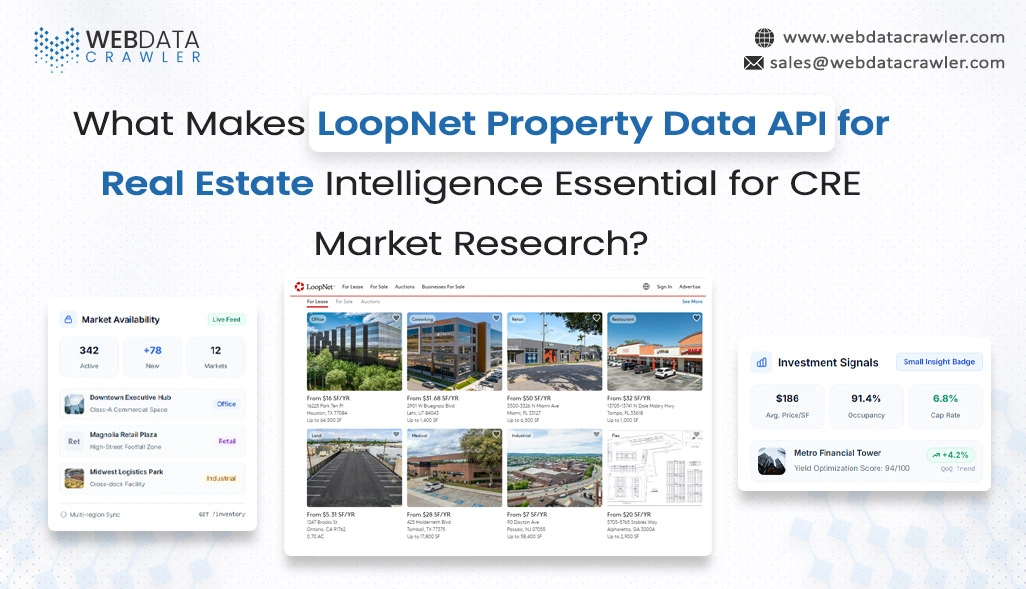
Commercial real estate research depends on accurate property information, current asking prices, location details, and market signals. The LoopNet Real Estate Data API can help organize these inputs into structured datasets for analysis. With the LoopNet Property Data API for Real Estate Intelligence, businesses can evaluate commercial listings more efficiently and support faster research workflows.
CRE professionals often work across thousands of listings where manual collection creates delays and inconsistent records. Structured property data can simplify comparisons across asset types, locations, prices, sizes, and availability. This makes it easier for analysts, investors, brokers, and platforms to identify market patterns while reducing repetitive research activities and improving data accessibility.
A scalable data workflow also supports recurring market monitoring instead of one-time research. Organizations can track listing changes, pricing movements, property characteristics, and geographic trends over time. These capabilities make structured commercial property intelligence valuable for investment screening, portfolio research, competitive benchmarking, and broader CRE market analysis.
Understanding How Structured Data Strengthens CRE Market Research
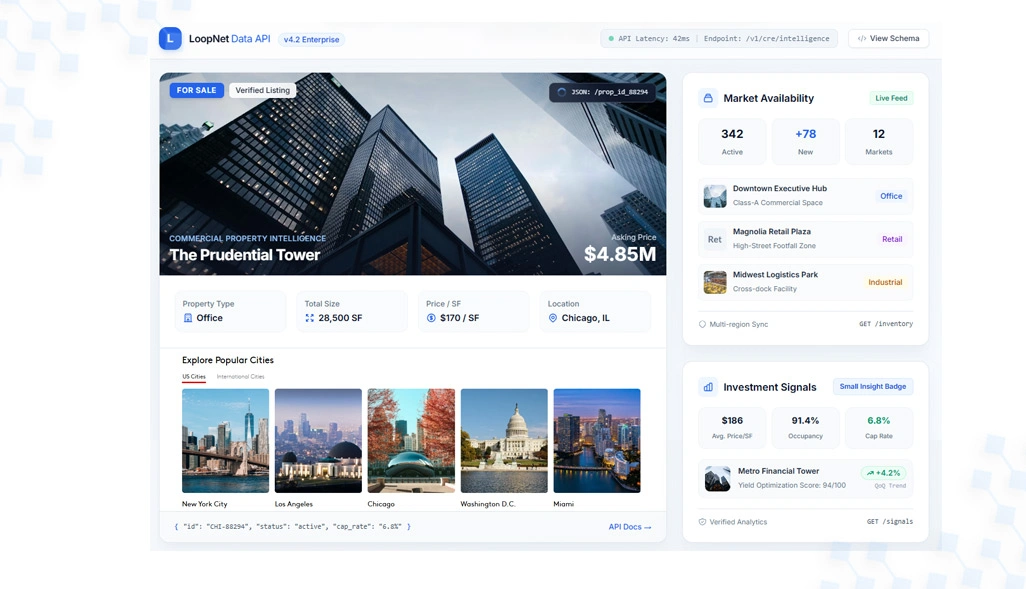
Commercial real estate research becomes more effective when property information is standardized across consistent fields. Automated collection can organize listing attributes such as property type, location, asking price, size, availability, and building characteristics. The LoopNet Real Estate Data Crawler can support this process by helping transform scattered listing information into structured records that are easier to filter, analyze, and integrate into research workflows.
Another important advantage is consistency. When property information follows a predefined structure, researchers can compare similar assets using common parameters rather than interpreting different formats manually. The LoopNet Commercial Real Estate API for CRE can also support applications that require organized commercial property information for analytical dashboards and internal research systems.
Research Area and Business Application:
| Research Area | Business Application |
|---|---|
| Property Comparison | Evaluate similar assets |
| Market Segmentation | Group properties by characteristics |
| Location Analysis | Compare geographic markets |
| Pricing Research | Identify asking-price differences |
Automated workflows can also improve the frequency of market research. Instead of collecting information only when a specific report is required, organizations can establish scheduled processes that refresh records at defined intervals. Recurring collection makes market intelligence more useful for teams that need current information for ongoing CRE analysis.
The overall benefit is a more organized research environment where property information can move efficiently from collection to analysis. Analysts can apply filters, build comparisons, generate reports, and connect structured records with existing business intelligence systems. This reduces repetitive administrative work while creating a stronger foundation for commercial property research, portfolio evaluation, and market monitoring.
Key advantages include:
- Standardized property attributes for easier comparison
- Faster collection across large listing inventories
- Better support for geographic market analysis
- Consistent inputs for reporting and dashboards
Evaluating Property Intelligence For Investment Research Decisions
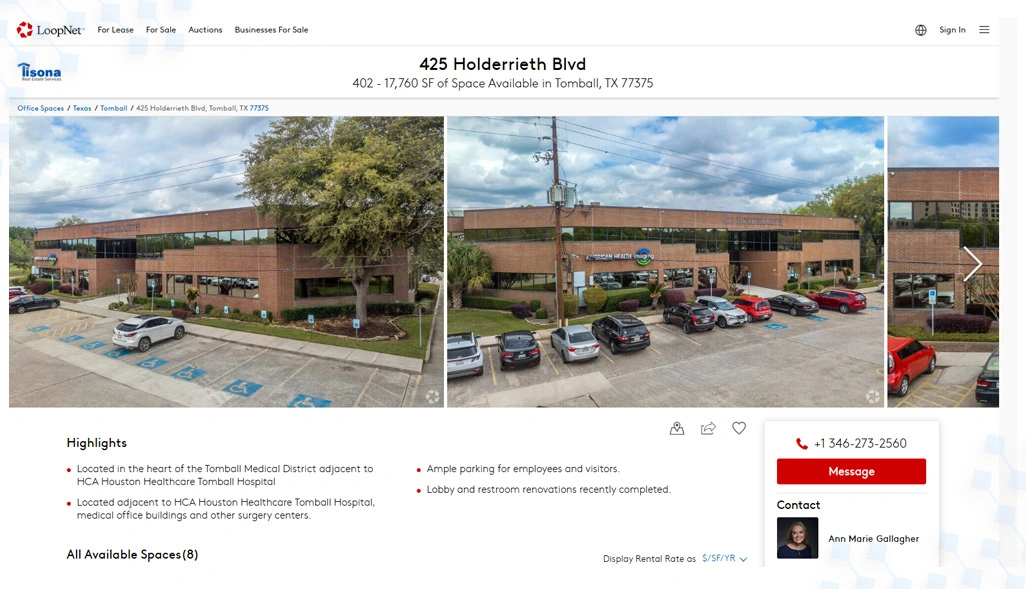
Investment research requires a broader view than examining individual properties. Analysts need to compare asking prices, property sizes, locations, asset categories, availability, and other characteristics before identifying potentially relevant opportunities. A structured LoopNet Real Estate Dataset can bring these attributes together in a consistent format, allowing researchers to evaluate multiple properties simultaneously and create more systematic screening processes.
Historical collection can make this analysis even more useful. When records are refreshed periodically, organizations can compare current information against previously collected observations. LoopNet Data for Investment Analysis Using Web Scraping can support workflows where collected listing information becomes a structured input for comparative research and market assessment.
Investment Research Area and Useful Analytical Input:
| Investment Research Area | Useful Analytical Input |
|---|---|
| Price Evaluation | Asking-price comparison |
| Property Screening | Size and asset type |
| Geographic Research | Market and location |
| Availability Analysis | Active listing status |
Structured property intelligence can also help investors narrow large inventories into more manageable groups. Researchers may filter properties according to location, asset category, size, pricing range, or other predefined criteria. This approach can reduce unnecessary manual review and allow teams to focus their attention on properties that meet specific investment research parameters.
For organizations developing analytical tools, structured property information can become a reusable data asset rather than a one-time research output. The information can feed internal databases, dashboards, reporting systems, and analytical models. With consistent records available across selected markets, investment teams can establish repeatable research processes and evaluate market conditions using comparable data points.
Investment research can benefit through:
- Consistent property screening criteria
- Faster comparison across commercial assets
- Periodic monitoring of listing changes
- Structured inputs for investment reports
Improving Scalable Monitoring Across Commercial Property Markets
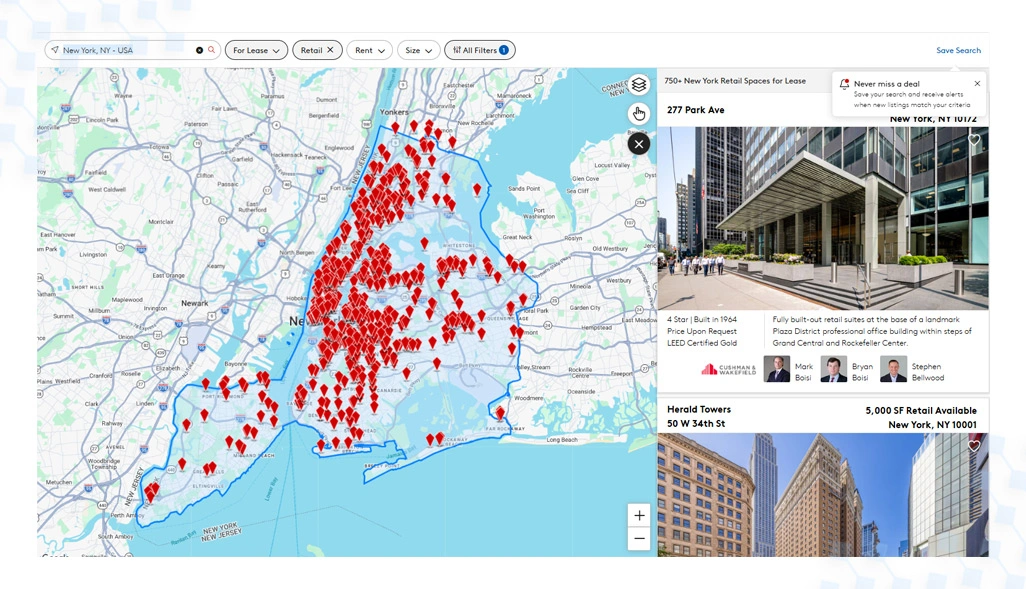
Commercial property markets change continuously, making recurring monitoring important for businesses that depend on current listing information. Scheduled data collection can capture new properties, price changes, availability updates, and modifications to existing records. LoopNet Property Data Scraping Services can help organizations establish repeatable collection workflows designed around selected markets, asset categories, and research requirements.
Scalability is another important consideration when monitoring commercial property inventories. A manual process may become difficult to maintain as the number of properties and geographic markets increases. Automated workflows can collect information according to defined schedules while applying consistent extraction and formatting rules.
Monitoring Area and Typical Business Purpose:
| Monitoring Area | Typical Business Purpose |
|---|---|
| New Listings | Identify fresh market inventory |
| Price Changes | Monitor pricing movements |
| Availability | Track active opportunities |
| Property Updates | Maintain current records |
Data quality also plays a significant role in ongoing monitoring. Duplicate records, inconsistent formats, missing fields, and outdated information can reduce the usefulness of a property database. A structured workflow can incorporate validation, normalization, duplicate handling, and field-level checks before records are delivered for analysis. These controls help maintain a more dependable information base for recurring commercial research.
The resulting workflow can support multiple business functions at the same time. Brokers can monitor market inventory, investors can screen opportunities, analysts can evaluate pricing patterns, and platforms can provide property intelligence through their applications. LoopNet Property Intelligence API can fit into such environments by supporting structured property intelligence for applications that require organized and regularly refreshed commercial market information.
Scalable monitoring can support:
- Scheduled property information refreshes
- Market-specific data collection
- Automated quality and consistency checks
- Integration with analytics platforms
- Broader commercial market coverage
How Web Data Crawler Can Help You?
For organizations managing large-scale commercial property research, the LoopNet Property Data API for Real Estate Intelligence can become part of a broader automated workflow. Web Data Crawler can help collect, structure, clean, and organize property information according to specific research requirements. This approach supports repeatable data pipelines instead of fragmented manual collection processes.
Key ways the workflow can support CRE research include:
- Automating recurring property data collection
- Structuring listings into consistent data fields
- Filtering information by selected markets
- Supporting scheduled data refreshes
- Preparing records for analytics and dashboards
- Delivering organized datasets for business applications
A well-designed workflow can also support quality checks, duplicate handling, field standardization, and customized delivery formats. This helps businesses integrate property intelligence into existing research environments and reduce operational friction. For organizations seeking scalable market intelligence, LoopNet API for Real Estate Investors for Getting Real Insights can support data-driven research and recurring investment analysis.
Conclusion
Commercial real estate decisions require timely information, consistent property records, and efficient market comparison. By organizing listing attributes into structured datasets, businesses can improve research workflows, evaluate opportunities more systematically, and monitor changing commercial markets. The LoopNet Property Data API for Real Estate Intelligence supports these objectives by making property information easier to analyze across locations, asset categories, and pricing conditions.
A scalable data strategy can further support investment research, competitive monitoring, and property intelligence applications. Scrape LoopNet Data for CRE Platforms can help organizations build richer property intelligence solutions and integrate relevant data into their operational systems. Connect with Web Data Crawler today to build a customized commercial property data solution for your CRE research and intelligence needs.