
How Kroger Scraper API Helps Brands Analyze Product Catalogs and Compare Grocery Prices at Scale?
Nov 20
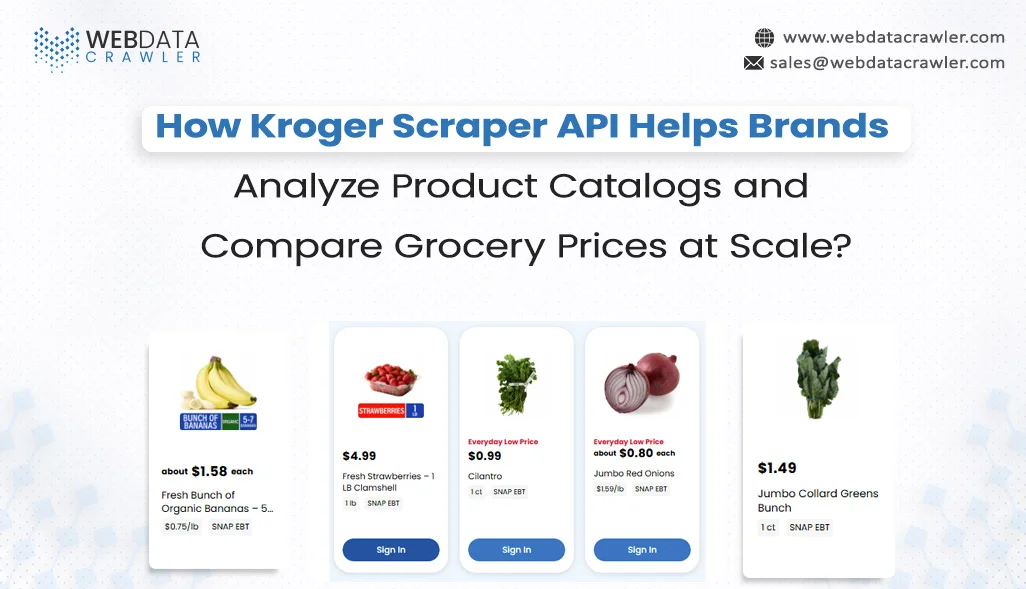
Introduction
Retail competition across digital grocery shelves demands constant visibility into SKU availability, regional pricing shifts, and promotional cycles. Enterprise analytics teams struggle to track thousands of changing listings manually across multiple store locations. Automated extraction eliminates blind spots, turning raw storefront listings into structured intelligence for faster commercial decisions across every grocery category.
Understanding How Kroger Scraper API Helps Brands starts with capturing accurate shelf data without operational bottlenecks. Instead of relying on delayed syndicated reports, category managers receive daily updates directly from digital storefronts. Integrating a reliable Kroger Product Dataset empowers pricing analysts to benchmark private-label and national brands with complete accuracy.
When organizations scale Kroger Grocery Data Collection, they gain clear visibility into stockouts, pack-size variations, and localized discounts. These granular insights allow suppliers to negotiate better placement, adjust promotional calendars, and protect profit margins while maintaining strong shelf presence across every regional Kroger banner nationwide.
Automating Large Scale Product Assortment Auditing Across Stores
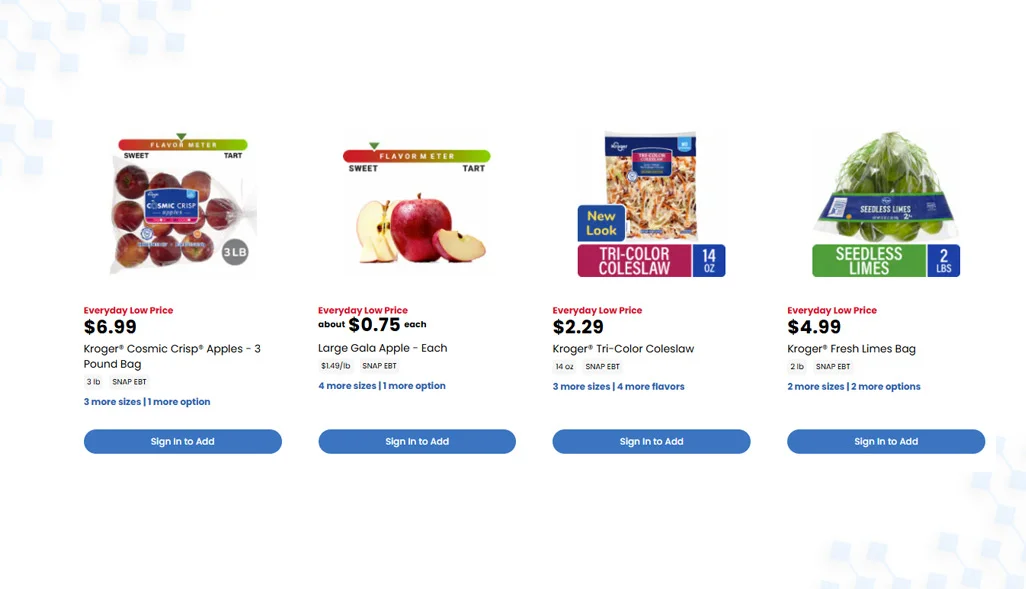
Managing tens of thousands of grocery SKUs across regional zip codes requires automated infrastructure capable of handling dynamic web architectures without failure. Industry benchmarks demonstrate that enterprise retail organizations using automated digital shelf monitoring reduce assortment discrepancies by 38% and improve overall listing compliance within a single financial quarter.
Modernizing digital merchandising begins when analytics teams deploy a dedicated Kroger E-Commerce Data API to capture structured storefront attributes across thousands of regional branches. Collecting standardized UPCs, nutritional panels, ingredient lists, high-resolution imagery, and verified customer ratings eliminates manual entry errors while maintaining complete brand consistency across every division.
When category managers systematically Scrape Kroger Catalog records, they gain immediate visibility into regional assortment gaps and competitor shelf expansions. This granular intelligence empowers commercial teams to align inventory allocations with local consumer preferences while strengthening retailer negotiations during annual line reviews.
| Catalog Metric | Manual Auditing Approach | Automated Extraction Pipeline |
|---|---|---|
| SKU Coverage Capacity | 500–1,000 SKUs per week | 500,000+ SKUs daily |
| Data Accuracy Rate | 84% (prone to human entry errors) | 99.4% validated structured output |
| Regional Zip Code Tracking | Limited to 2–3 sample stores | All 2,700+ store locations nationwide |
| Assortment Update Latency | 14 to 21 days | Real-time to 24-hour refresh |
- Automated daily tracking of new item introductions and seasonal pack-size variations
- Continuous verification of product titles, bullet descriptions, and nutritional compliance
- Early detection of unauthorized third-party sellers and duplicate storefront listings
Continuous catalog visibility transforms how merchandising teams plan seasonal launches and line extensions across competitive grocery categories. Instead of guessing which flavor variants or multipacks perform best in specific territories, brands rely on verified shelf presence metrics to guide production schedules and retail media investments.
Tracking Real Time Competitor Pricing And Promotional Shifts
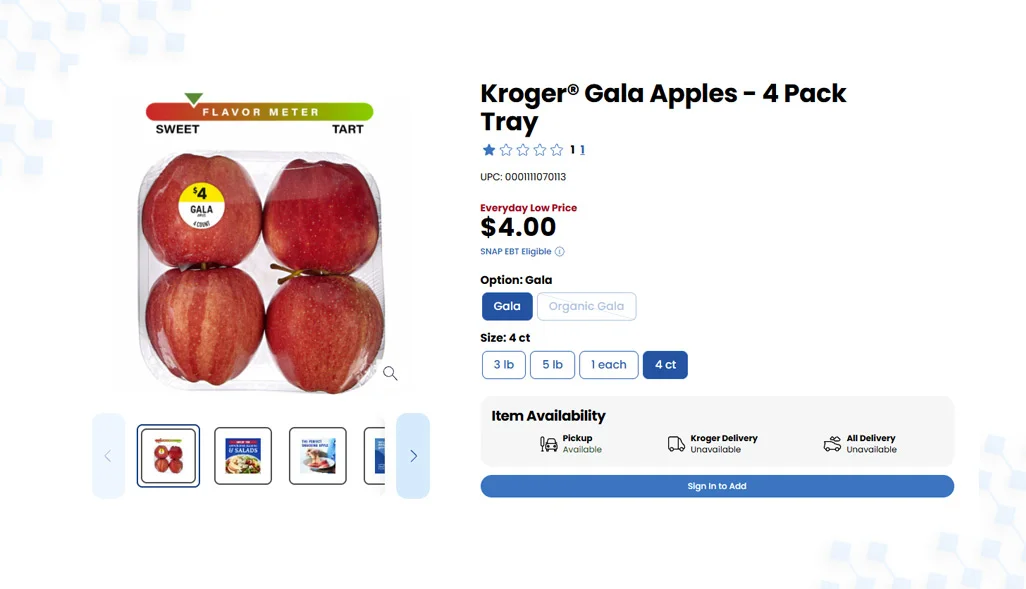
Grocery pricing fluctuates rapidly due to localized inflation, fuel surcharges, and aggressive weekly circular promotions across competing retail banners. Brands that react slowly to competitor price drops risk losing valuable basket share during peak weekend shopping windows. Recent retail analytics indicate that 67% of online grocery shoppers actively compare unit prices across competing brands before adding everyday staples to their digital carts, making real-time price intelligence essential for margin protection.
Streamlining commercial revenue operations requires integrating a scalable Kroger Grocery Data API capable of capturing base shelf prices, loyalty card discounts, and digital coupons simultaneously. Automated price tracking reveals exact promotional mechanics across national and private-label product lines, giving pricing analysts complete transparency into regional discounting strategies.
Executing structured Kroger Competitor Web Scraping across local divisions enables revenue teams to measure true promotional elasticity before adjusting wholesale trade spend. Rather than deploying costly blanket discounts nationwide, brands apply surgical price adjustments strictly in territories where rival promotions actively threaten category share.
| Pricing & Promo Parameter | Strategic Business Impact | Recommended Refresh Frequency |
|---|---|---|
| Base Shelf Price | Identifies regional margin gaps and MAP violations | Daily |
| Loyalty & Digital Coupons | Measures true net promotional depth of rivals | Every 12 hours |
| Unit Price ($/oz or $/ct) | Benchmarks value perception across pack sizes | Daily |
| Out-of-Stock Competitor SKUs | Highlights immediate opportunities to capture demand | Every 4 to 6 hours |
- Real-time monitoring of base retail prices and unit cost fluctuations across zip codes
- Automated tracking of digital coupon values, loyalty rewards, and multi-buy bundles
- Instant alerts when rival brands initiate aggressive holiday or weekend markdowns
Armed with clean historical and live pricing tables, commercial teams prevent unnecessary margin erosion while defending premium brand positioning. Accurate competitive benchmarks empower account managers to negotiate stronger promotional co-op agreements and maximize return on every trade dollar spent.
Monitoring Hyperlocal Store Inventory And Rapid Delivery Fulfillment
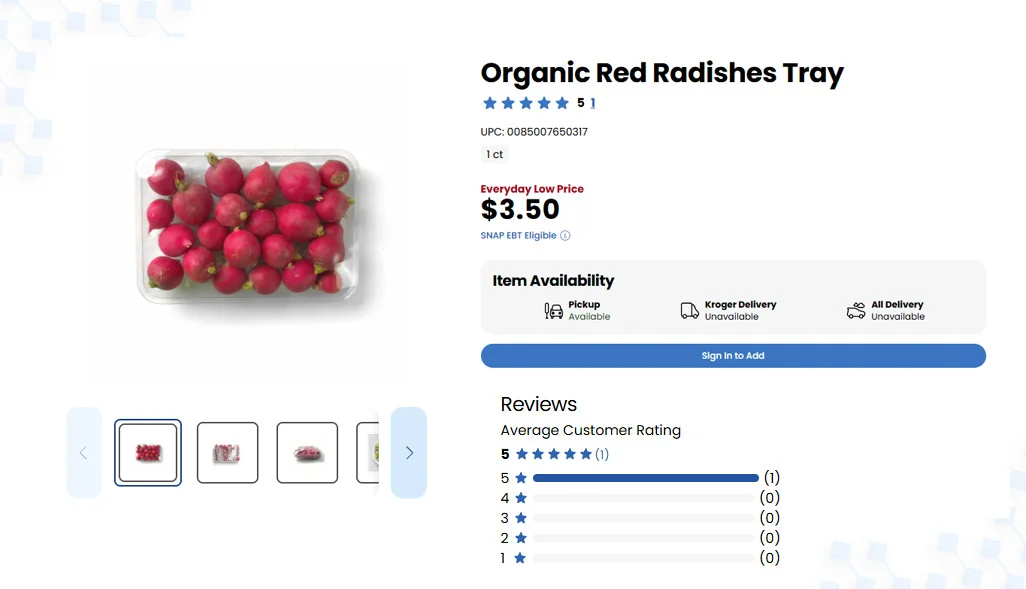
Same-day grocery delivery and curbside pickup have permanently reshaped consumer expectations around local product availability and fulfillment speed. A product appearing in stock at the national level may be completely unavailable at high-volume urban fulfillment centers during peak weekend ordering hours. Market research confirms that hyperlocal stockouts cost consumer packaged goods brands an estimated 4.2% in lost annual digital revenue, while rapid fulfillment orders now account for over 35% of total online grocery growth.
Optimizing last-mile retail execution becomes achievable when supply chain analysts integrate a specialized Kroger Quick Commerce Dataset covering store-specific inventory flags and fulfillment fees. Granular visibility into pickup slot availability, express delivery markups, and regional warehouse stock levels helps logistics planners prevent empty digital shelves before demand spikes.
Running high-frequency Kroger Data Scraping across individual store identifiers allows merchandising teams to synchronize digital advertising with actual local stock levels. When inventory dips below threshold limits at specific branches, automated rules pause local sponsored product ads and redirect marketing budgets toward fully stocked locations.
| Hyperlocal Fulfillment Metric | Supply Chain & Sales Application | Operational Impact |
|---|---|---|
| Store-Level Stock Status | Triggers proactive replenishment alerts to buyers | Cuts lost sales from stockouts by 29% |
| Pickup vs. Delivery Pricing | Tracks fulfillment fee shifts and basket minimums | Optimizes digital cart conversion strategies |
| Regional Assortment Gaps | Identifies high-demand zip codes lacking core SKUs | Accelerates distribution expansion |
| Peak-Hour Availability | Measures weekend and holiday shelf resilience | Improves demand forecasting accuracy |
- Store-level inventory tracking across curbside pickup and rapid delivery zones
- Monitoring fulfillment fee structures, basket minimums, and peak delivery surcharges
- Automated low-stock alerts routed directly to regional replenishment and sales teams
Connecting hyperlocal shelf availability with retail media campaigns ensures advertising budgets generate measurable incremental sales rather than wasted clicks. Supply chain and e-commerce leaders gain a unified operational view that strengthens retailer partnerships and maximizes local market capture.
How Web Data Crawler Can Help You?
Enterprise retail teams often face technical roadblocks such as anti-bot defenses, geo-location routing, and messy HTML structures when extracting grocery intelligence at scale. Understanding How Kroger Scraper API Helps Brands requires pairing powerful extraction infrastructure with managed data engineering so your internal analysts focus strictly on strategy rather than pipeline maintenance.
- Custom store-level geo-targeting across thousands of nationwide zip codes
- Automated schema normalization delivering clean JSON, CSV, or Parquet feeds
- Built-in proxy rotation and browser rendering for uninterrupted data delivery
- Scheduled extraction frequencies ranging from hourly alerts to daily snapshots
- Dedicated quality assurance pipelines verifying pricing and SKU accuracy
- Seamless direct integration into cloud warehouses like Snowflake and BigQuery
By partnering with us, your organization eliminates infrastructure overhead while scaling Kroger Grocery Data Collection to match evolving market demands. Our managed pipelines adapt automatically to website layout changes, ensuring your pricing, assortment, and availability dashboards remain accurate every single day.
Conclusion
Winning on digital grocery shelves requires more than periodic spreadsheet audits and delayed market reports. Recognizing How Kroger Scraper API Helps Brands enables merchandising and revenue teams to execute Kroger Competitor Web Scraping with precision, turning daily storefront changes into measurable market share growth.
Whether you need to Scrape Kroger Catalog attributes across thousands of stores or track competitor discounts in real time, structured grocery intelligence provides the foundation for smarter commercial execution. Connect with Web Data Crawler today to request a custom sample feed and start transforming live grocery shelf data into profitable retail decisions.