


What Makes Flipkart Data Scraping Services Useful for Product, Price, Review and Seller Tracking?
Sep 09
Introduction
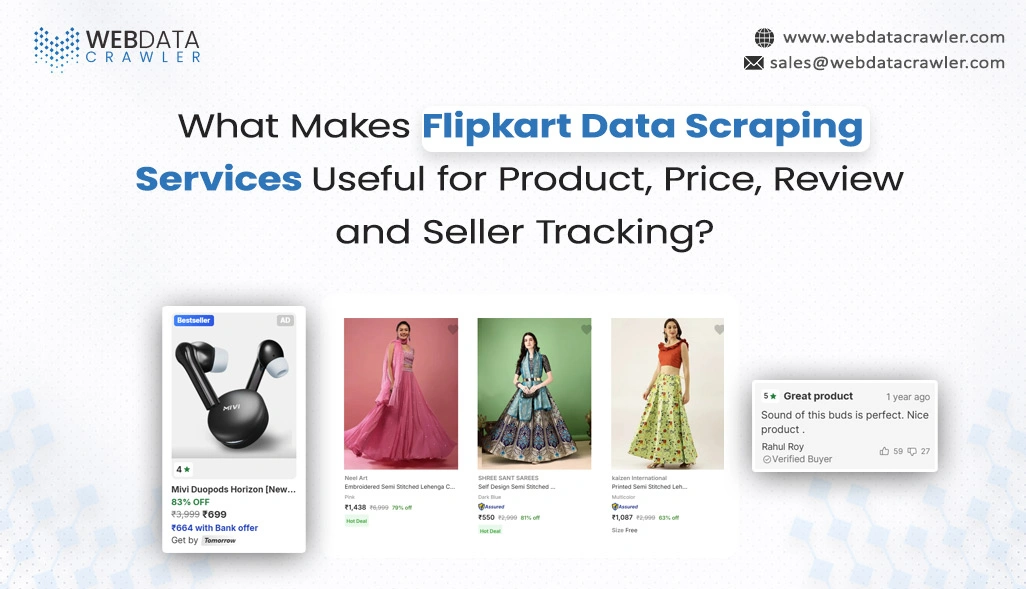
India's e-commerce market is becoming increasingly data-driven, making reliable marketplace information important for retailers, brands, analysts, and sellers. Flipkart Data Scraping Services help collect structured information across product listings, pricing, seller details, ratings, reviews, availability, and promotional activity for organized market research.
Retail teams can use Web Scraping Flipkart Product Data to compare product assortments, monitor price movements, evaluate customer feedback, and identify seller-level changes. Consistent collection also helps businesses organize marketplace information into usable datasets, supporting competitor monitoring and category-level analysis without depending on manual tracking.
A structured approach to marketplace intelligence can improve reporting speed and simplify recurring analysis. Flipkart Product Catalog Scraping supports broader catalog monitoring, while product and seller attributes can be arranged into standardized fields for dashboards, historical comparisons, pricing studies, and strategic e-commerce decision-making.
Smarter Product Tracking Strengthens Marketplace Catalog Visibility
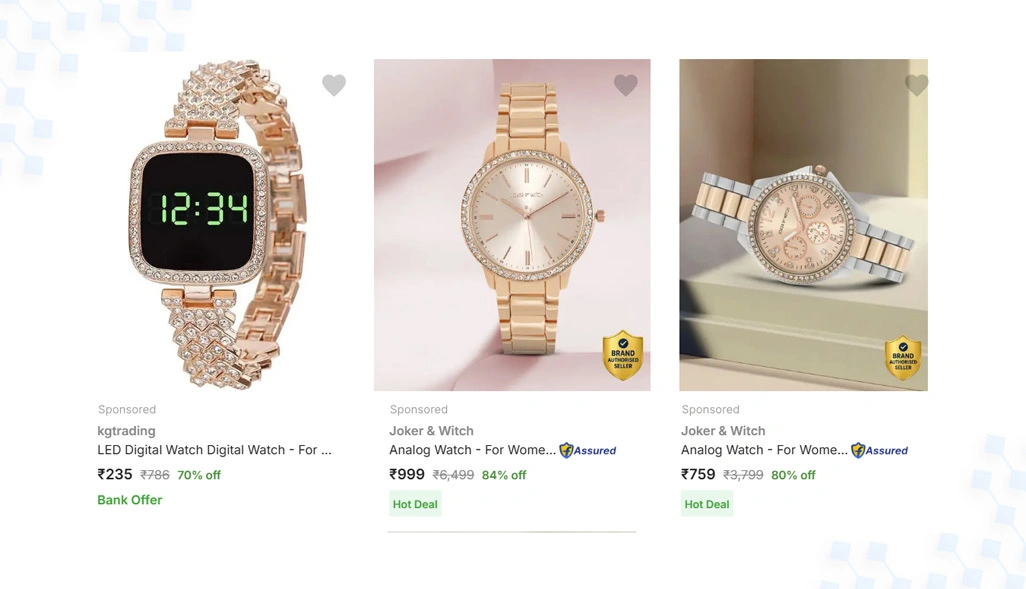
Product tracking gives retailers a practical view of how marketplace assortments change over time. Product names, brands, categories, specifications, images, availability, and listing status can be collected regularly to create a more complete catalog picture. Flipkart E-Commerce Data Crawler workflows can organize these records into standardized fields, making it easier to compare current listings with historical records and identify meaningful assortment changes.
For businesses monitoring thousands of products, structured catalog information can reveal which categories are expanding, which products are becoming unavailable, and where new listings are appearing. Web Scraping Flipkart Product Data for Analysis can support these comparisons by arranging product-level attributes into datasets suitable for dashboards, reporting systems, and category evaluations. This reduces dependence on manual catalog checking and creates a consistent foundation for recurring research.
Key product monitoring activities can include:
- Tracking newly added product listings
- Comparing product availability across periods
- Monitoring category-level assortment changes
- Recording brand and product attributes
- Identifying discontinued or unavailable listings
Tracking Area and Example Business Value:
| Tracking Area | Example Business Value |
|---|---|
| Product information | Better catalog comparison |
| Category coverage | Improved assortment visibility |
| Availability | Faster stock-status identification |
| Brand tracking | Stronger competitive evaluation |
Consistent catalog monitoring also helps businesses identify assortment gaps and understand how product availability influences marketplace competition. Flipkart Product Catalog Scraping can support structured collections across different categories, helping analysts evaluate product depth, brand presence, and listing changes without repeatedly reviewing individual pages.
Overall, organized product tracking creates a stronger foundation for marketplace research. It allows retailers to evaluate catalog movement, compare competing assortments, and identify changes that may influence customer choices. With historical records available, teams can also study recurring patterns and connect catalog changes with pricing, promotions, and availability trends.
Dynamic Pricing And Seller Tracking Improve Competitive Intelligence
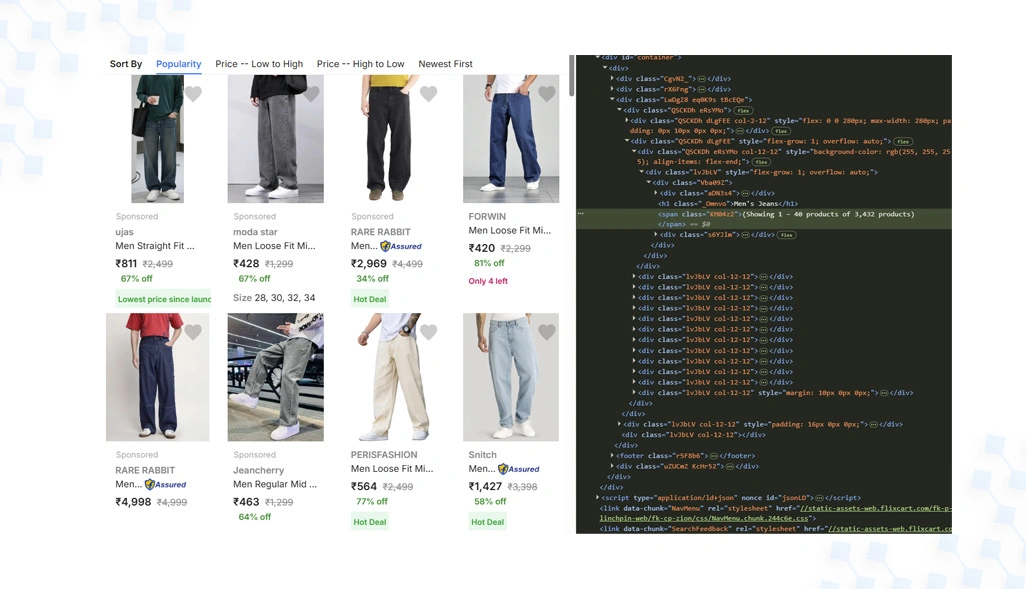
Marketplace prices can change frequently because of promotions, seller competition, inventory conditions, and category demand. Regular monitoring helps businesses understand these movements rather than relying on occasional manual observations. A structured collection workflow can capture product prices, discount values, seller names, availability, and related attributes at defined intervals for consistent competitive comparisons.
For retailers and analysts, an automated interface can make recurring information collection more efficient. Flipkart E-Commerce Data API workflows can support systematic access to relevant marketplace fields and help integrate collected records into internal analytics environments. This approach is particularly useful when teams need repeated datasets for pricing studies, seller comparisons, or competitive reporting across large product groups.
Important monitoring activities can include:
- Comparing product prices across sellers
- Recording discount and promotional changes
- Tracking seller availability over time
- Identifying pricing differences between listings
- Monitoring competitive movement within categories
Business Metric and Monitoring Purpose:
| Business Metric | Monitoring Purpose |
|---|---|
| Product price | Competitive comparison |
| Discount value | Promotion evaluation |
| Seller presence | Marketplace competition |
| Availability | Supply visibility |
| Price history | Trend assessment |
Price intelligence becomes more meaningful when historical observations are retained rather than viewed as isolated numbers. Scrape Flipkart Sales Dataset projects can incorporate structured marketplace attributes to support broader evaluations of product performance, seller activity, pricing movement, and category behavior. Historical records also make it easier to identify recurring promotional patterns.
Seller monitoring adds another layer to this analysis by showing how marketplace competition develops around similar products. Businesses can compare seller presence, pricing positions, availability, and promotional behavior to understand competitive dynamics. These insights can support assortment planning, pricing reviews, and marketplace strategy while reducing repetitive data collection efforts.
Customer Reviews Reveal Valuable Product Performance Signals
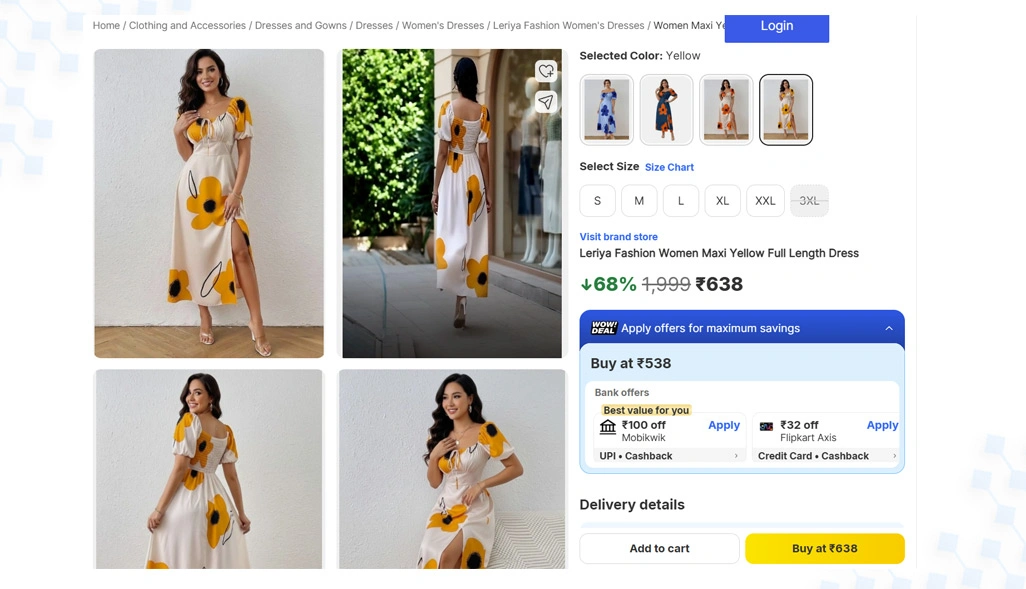
Customer reviews contain direct feedback that can help businesses understand product quality, satisfaction levels, recurring concerns, and purchasing experiences. Ratings and review volumes can be studied alongside product information to identify patterns across brands and categories. This makes review monitoring valuable for retailers that want to understand how customers respond to products after purchase.
Large-scale review analysis can become more useful when information is organized into structured records. Flipkart Ecommerce Dataset workflows can combine ratings, review counts, product attributes, seller information, and pricing details for broader analysis. Analysts can then compare customer responses across products, categories, brands, and different performance periods instead of examining individual reviews manually.
Useful review monitoring activities can include:
- Tracking rating changes over time
- Measuring review volume by product
- Identifying recurring customer complaints
- Comparing feedback across competing products
- Evaluating customer response patterns
Review Area and Analytical Purpose:
| Review Area | Analytical Purpose |
|---|---|
| Star rating | Customer satisfaction comparison |
| Review volume | Product engagement assessment |
| Feedback themes | Issue identification |
| Product comparison | Competitive evaluation |
| Historical reviews | Trend monitoring |
Review information can also help retailers identify recurring product concerns that may influence purchasing decisions. Flipkart Data Scraping API for Insights can support scalable data workflows where review and product records need to be collected regularly for analysis. When these records are retained historically, teams can examine how customer perception changes alongside pricing, availability, or product updates.
Combining customer feedback with other marketplace signals creates a broader understanding of product performance. Review patterns can indicate strengths, weaknesses, recurring quality concerns, and changing customer expectations. Businesses can use these findings to support product evaluations, category planning, competitor comparisons, and marketplace research while maintaining a more structured approach to customer intelligence.
How Web Data Crawler Can Help You?
Our Flipkart Data Scraping Services can simplify recurring marketplace data collection by organizing large volumes of product, price, seller, and review information into structured datasets. Instead of manually checking thousands of listings, businesses can establish automated workflows for collecting relevant fields at defined intervals.
Key capabilities can include:
- Automated product information collection
- Recurring price and discount monitoring
- Seller availability and listing tracking
- Review and rating data organization
- Category and assortment comparison
- Structured dataset preparation for analysis
With these capabilities, teams can create repeatable workflows for marketplace research, competitive analysis, catalog monitoring, and historical comparisons. The collected information can also support Scrape Flipkart Sales Dataset projects by providing organized marketplace attributes for downstream analysis, reporting, and business intelligence applications.
Conclusion
Retailers need dependable marketplace information to understand catalog movements, pricing changes, seller competition, and customer feedback. Flipkart Data Scraping Services bring these data points together through structured collection workflows, making recurring monitoring more practical and supporting detailed e-commerce research across categories and product groups.
When product, seller, price, and review information is organized consistently, teams can build stronger comparisons and make research processes more efficient. Flipkart Product Catalog Scraping can further support automated data workflows where scalable collection and recurring marketplace monitoring are required. Connect with Web Data Crawler to build a structured Flipkart data collection solution for your e-commerce research and marketplace intelligence needs.