


How Does Jumia Competitor Price Tracking for E-Commerce Businesses Improve Competitive Benchmarking?
Oct 27
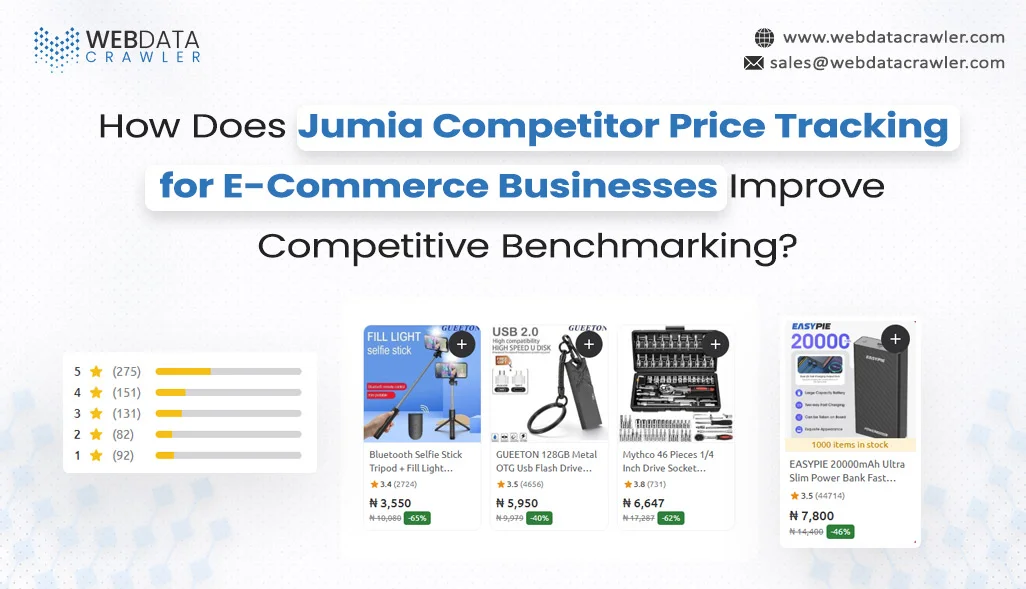
Introduction
Navigating Africa's dynamic digital storefronts demands real-time intelligence to protect your margins. Utilizing Jumia Competitor Price Tracking for E-Commerce Businesses allows brands to monitor shifting cost structures, understand localized demand spikes, and respond instantly to aggressive seller discounts across key regional markets.
Sellers who rely on manual catalog checks often fall behind during major campaign events like Black Friday. Accessing continuous data streams through a Jumia E-Commerce Data API gives retail teams clear visibility into marketplace movements, stock outages, and shifting baseline prices across multiple competing storefronts.
Building a resilient strategy requires moving past simple estimation. Integrating precise automated extraction pipelines transforms raw marketplace listings into clear strategic benchmarks, enabling e-commerce brands to optimize product positioning, protect profit margins, and claim market leadership efficiently.
Dynamic Pricing Strategies For E-Commerce Marketplace Benchmarking Advantage
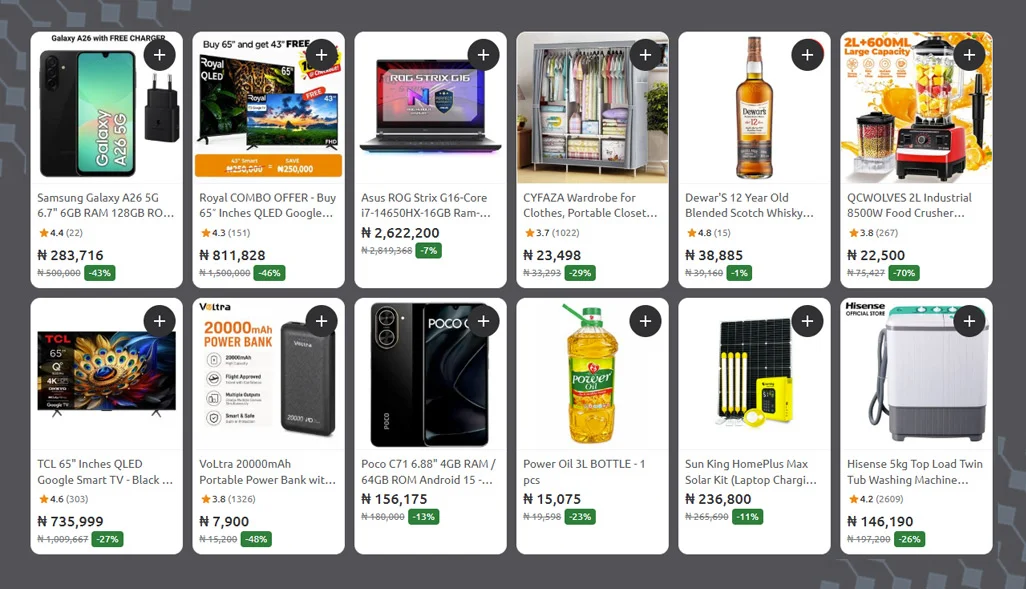
Navigating online retail spaces across African markets demands consistent, automated oversight of competitor price fluctuations. E-commerce businesses that implement structured tracking solutions can observe dynamic updates across high-demand categories while maintaining their baseline profit margins. Having continuous visibility into competing storefronts empowers retail managers to respond instantly when rivals initiate promotional drops or alter seller fees.
Dynamic pricing models rely on continuous data inputs to ensure product listings remain competitive without initiating an unnecessary race to the bottom. Relying on accurate market data via Jumia Food Food Delivery Data Scraping demonstrates how fast-moving consumer sectors manage high-frequency price adjustments during peak shopping hours. Analyzing these adjacent sector trends provides category managers with valuable context on consumer price sensitivity and discount thresholds.
Automated data collection replaces guesswork with empirical evidence, enabling retail teams to build sophisticated repricing rules. Collecting clean datasets enables brands to Scrape Jumia Prices for E-Commerce Competitor stores to evaluate real-time listing strategies across multiple regional markets. Having access to structured product data ensures that pricing adjustments occur systematically rather than reactively during critical campaign events.
- Automated repricing triggers prevent manual catalog update delays during major sales events.
- Real-time price variance alerts protect margins against aggressive seller undercut strategies.
- Historical price tracking identifies competitor discount cycles and seasonal promotional patterns.
- Regional price monitoring highlights localized purchasing power differences across markets.
| Metric | Manual Tracking | Automated Tracking |
|---|---|---|
| Price Update Frequency | Weekly / Monthly | Real-time / Hourly |
| Data Accuracy Rate | High Error Risk | High Precision Extraction |
| Catalog Scope | Limited SKUs | Full Catalog Scope |
| Revenue Impact | Reactive Baseline | Dynamic Margin Growth |
Evaluating market movements through dynamic analytics protects long-term brand equity while driving sustained revenue growth. Combining automated monitoring with clear strategic execution ensures your e-commerce operations maintain strong profit margins and sustainable growth.
Inventory Availability Analysis For Strategic Retail Competitor Positioning
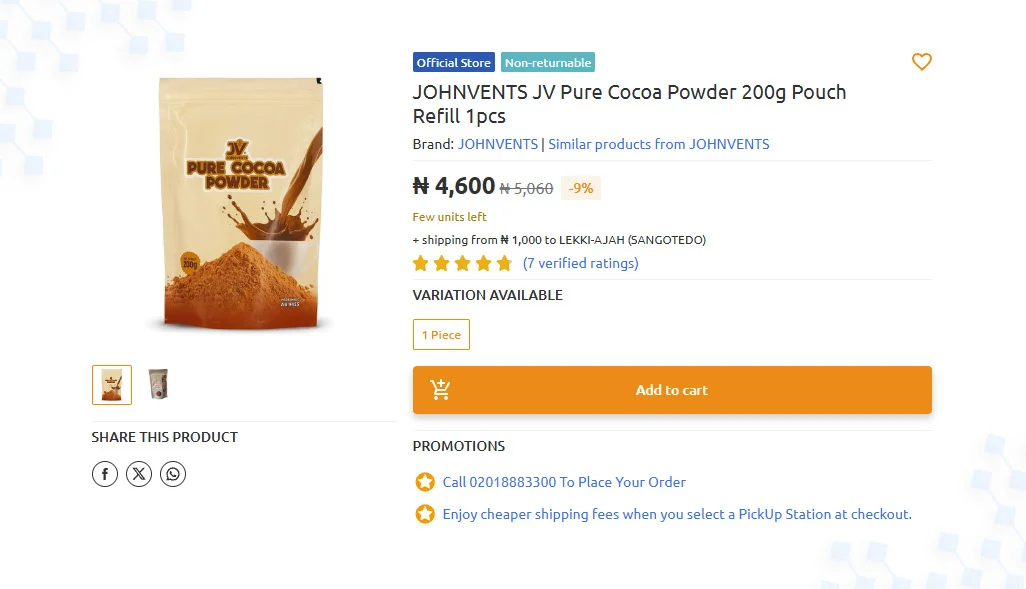
Tracking listing prices only reveals half of the competitive landscape, as product stock availability directly impacts consumer buying decisions. Out-of-stock events on major e-commerce platforms frequently force shoppers to consider alternative sellers offering similar products. Monitoring competitor inventory levels alongside pricing data allows brands to capture diverted demand when rival sellers face sudden stock shortages.
Analyzing fast-moving inventory categories yields crucial insights into supply chain bottlenecks and localized purchasing patterns. Insights gathered from Jumia Grocery Delivery Data Scraping show how rapid inventory turnover in fast-moving consumer goods categories mirrors broader stock depletion patterns across general marketplace listings. Understanding these availability trends allows merchants to adjust inventory distribution strategies accordingly.
Maintaining optimal product visibility requires continuous tracking of competitor stock status across core product lines. Category managers who systematically Extract Jumia Competitor Pricing Data can identify exact moments when rival inventory levels drop below critical thresholds. Capturing this data enables sellers to optimize their pricing power during inventory shortages without sacrificing sales volume.
- Inventory tracking identifies rival stockouts to capture diverted marketplace buyer traffic instantly.
- Regional stock distribution analysis highlights localized supply chain strengths and regional gaps.
- Supply chain forecasting improves by evaluating rival product depletion rates over time.
- Pricing power increases significantly during periods when competitor inventory runs low across platforms.
| Product Category | Stockout Rate | Price Fluctuation | Priority Level |
|---|---|---|---|
| Consumer Electronics | High | Rapid Variations | High Priority |
| Fashion & Apparel | Moderate | Seasonal Shifts | Medium Priority |
| Home Appliances | Low | Steady Baselines | High Priority |
| Beauty & Personal Care | High | Promotional Drops | Medium Priority |
Integrating stock availability metrics into your strategic benchmarking framework transforms raw marketplace numbers into actionable commercial decisions. Brands can optimize supply chain scheduling and inventory placement by identifying recurring regional outages.
Margin Optimization Tactics Through Strategic E-Commerce Data Analytics
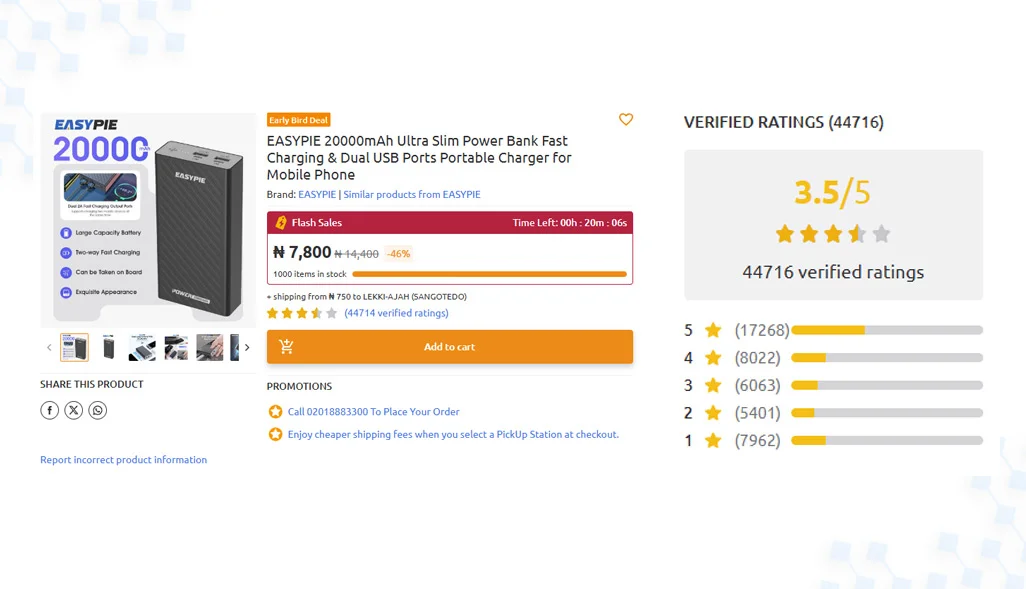
Executing promotional campaigns without comprehensive competitive data often leads to eroded profit margins and uncalculated financial loss. E-commerce platforms feature complex discounting structures, including flash sales, voucher codes, and bundled offers, making manual tracking ineffective. Category managers require structured market intelligence to evaluate whether rival discounts reflect long-term pricing adjustments or temporary promotional events.
Unplanned price drops harm brand perception and reduce overall profitability when executed without clear market context. Applying Jumia Data Scraping for Market Research enables analytics teams to evaluate competitor promotional calendars, identify discount triggers, and structure profitable counter-promotions. Analyzing past campaign performance allows retailers to build promotional strategies grounded in verified marketplace data.
Data-driven discounting ensures that every promotional dollar spent yields measurable returns across your product catalog. Accessing structured data feeds using a Jumia API for E-Commerce Product Data Extraction helps teams identify high-margin SKUs capable of sustaining promotional discounts. Leveraging granular catalog metrics ensures discounting decisions enhance buyer acquisition while protecting net bottom-line performance.
- Historical promotional tracking reveals rival campaign patterns to prepare effective counter-strategies.
- Margin protection rules prevent uncalculated price wars during major marketplace discount events.
- Bundle offer analysis highlights winning product combinations used by top-performing category rivals.
- Promotional ROI tracking identifies which discount structures drive genuine conversion volume spikes.
| Discount Strategy | Competitor Adoption | Margin Impact | Conversion Lift |
|---|---|---|---|
| Flash Sales | High Frequency | Substantial Impact | High Volume Lift |
| Bundle Offers | Moderate Frequency | Controlled Impact | Steady Volume Lift |
| Tiered Volume Discounts | Low Frequency | Minimal Impact | Moderate Volume Lift |
| Voucher Codes | High Frequency | Measured Impact | Direct Conversion Lift |
Developing a robust analytics framework transforms complex marketplace dynamics into clear, actionable commercial decisions. Utilizing systematic data extraction ensures your e-commerce strategy remains resilient, profitable, and aligned with market opportunities.
How Web Data Crawler Can Help You?
Modern online retail moves too fast for manual monitoring. Deploying customized tools like Jumia Competitor Price Tracking for E-Commerce Businesses empowers your analytics team with actionable, structured datasets delivered straight into your internal databases or dashboards.
Our specialized web scraping solutions handle the heavy lifting of data extraction:
- Custom crawling pipelines built specifically for complex e-commerce catalog structures.
- Automated anti-scraping bypass mechanisms including residential proxy rotating networks.
- Normalized CSV, JSON, or SQL delivery formats ready for direct system ingestion.
- Real-time stock alerts and automated competitor price variation tracking.
- High-frequency monitoring scaled across thousands of SKUs simultaneously.
- Dedicated technical support ensuring uninterrupted data flows during platform updates.
Partnering with a dedicated scraping partner enables your team to bypass setup delays. Integrating our Jumia Web Data Scraper for E-Commerce Benchmarking into your workflow gives you the continuous market visibility needed to protect margins and outpace rivals.
Conclusion
Building a resilient strategy requires real-time marketplace intelligence that adapts alongside shifting consumer demand. Implementing reliable Jumia Competitor Price Tracking for E-Commerce Businesses removes blind spots from your strategy, letting category managers spot trends, capture shifting demand, and maintain consistent profit margins across competitive categories.
Modern storefronts require data-driven clarity to stay profitable against aggressive sellers. Integrating a robust Jumia Web Data Scraper for E-Commerce Benchmarking into your analytics stack turns raw marketplace data into a clear strategic engine. Contact Web Data Crawler today to schedule a demo and upgrade your market data infrastructure!