
How Does Instacart Product Data API for Competitive Intelligence Improve Grocery Price Tracking?
Oct 08
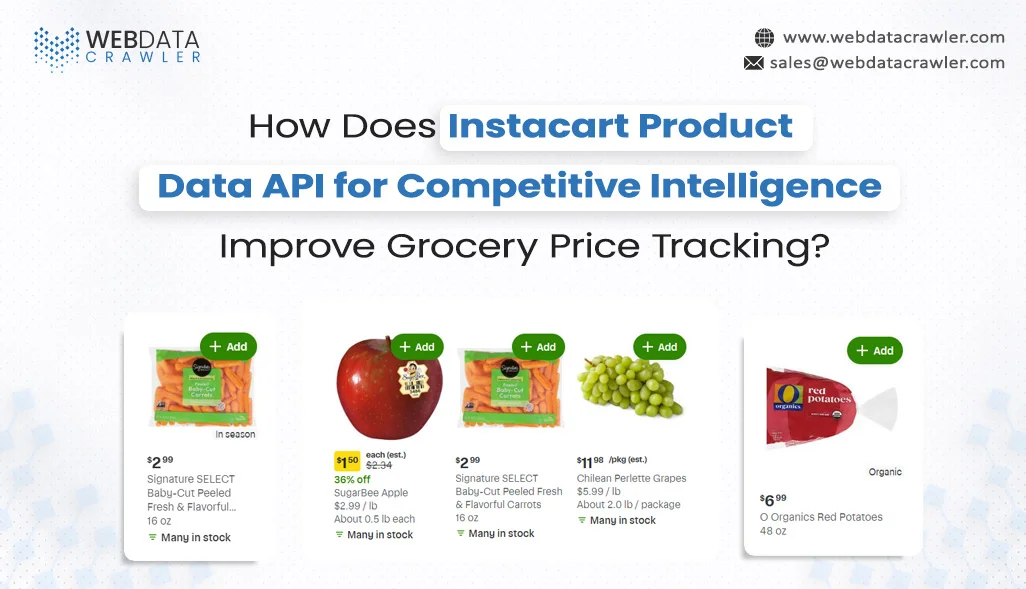
Introduction
Grocery pricing changes frequently due to promotions, local demand, inventory levels, and competitor movements. Retailers need accurate and timely information to compare prices across stores and categories. Instacart Product Data API for Competitive Intelligence helps businesses organize product, pricing, availability, and assortment information for structured grocery market analysis.
Online grocery platforms contain valuable information about product names, brands, package sizes, prices, discounts, availability, and category placement. Using Instacart Grocery Data API, businesses can transform these changing product signals into structured datasets for ongoing analysis, comparison, and reporting across different grocery segments and locations.
With consistent data collection, retailers can identify pricing gaps, monitor assortment changes, evaluate promotional activity, and understand competitive positioning. These insights support better pricing decisions while reducing the manual effort required to gather information from multiple product listings and grocery categories.
Strengthening Grocery Price Visibility Through Consistent Product Tracking
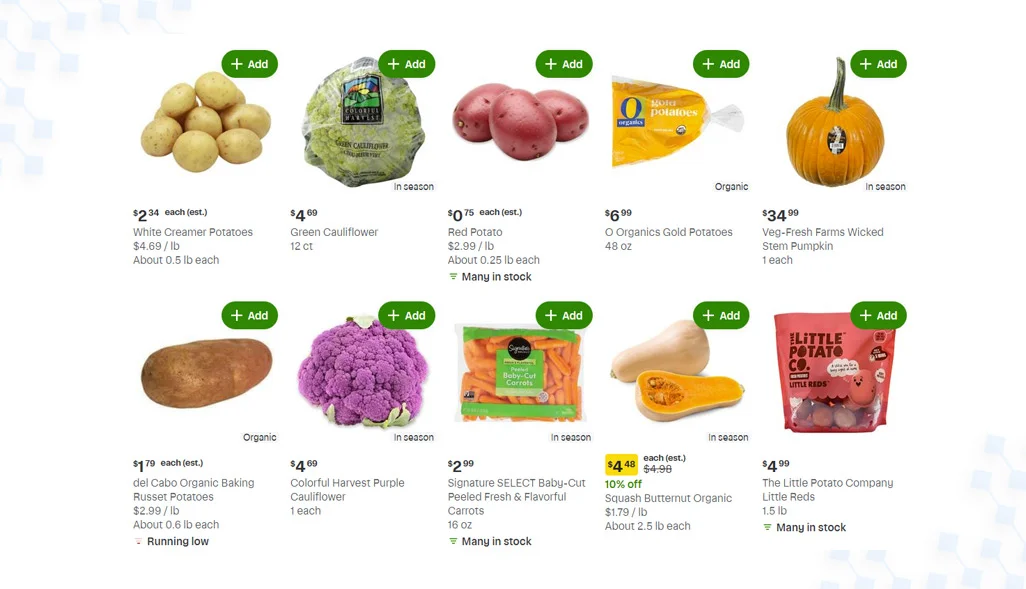
Grocery pricing changes frequently across categories, locations, brands, and competing sellers, making regular market observation important for retailers. Manual checks can provide limited snapshots but become difficult to maintain when businesses need historical comparisons across large product ranges. Accurate grocery intelligence depends on collecting pricing and product information at regular intervals. Web Scraping Instacart Grocery Data can capture product names, brands, sizes, prices, discounts, availability, and category information.
For competitive evaluation, Scrape Instacart Pricing Data for Competitive Analysis can help businesses examine listed prices, promotional adjustments, pack sizes, and comparable product offers. When these observations are collected at defined intervals, analysts can identify recurring pricing movements instead of depending on individual checks.
This makes it easier to recognize products experiencing frequent changes, categories showing stronger price volatility, and competitive offers that may require closer attention during pricing reviews. Product-level research can become more comprehensive when Web Scraping Instacart Product Listing Data for Market Research is incorporated into a recurring collection process. Analysts can compare product names, brands, categories, sizes, and listing information while maintaining historical records.
Key applications include:
- Monitoring comparable products across selected categories
- Recording recurring price and promotion changes
- Comparing product assortment between collection periods
- Organizing observations by location and category
- Supporting historical pricing and market analysis
| Analysis Area | Business Purpose | Review Focus |
|---|---|---|
| Product pricing | Competitive benchmarking | Price movements |
| Promotions | Offer evaluation | Discount changes |
| Product listings | Assortment research | Listing variations |
| Market coverage | Regional comparison | Location differences |
These records can support assortment comparisons and provide context for understanding whether pricing changes are connected with product substitutions, new listings, discontinued items, or promotional activity.
Connecting Product Availability With Competitive Market Signals
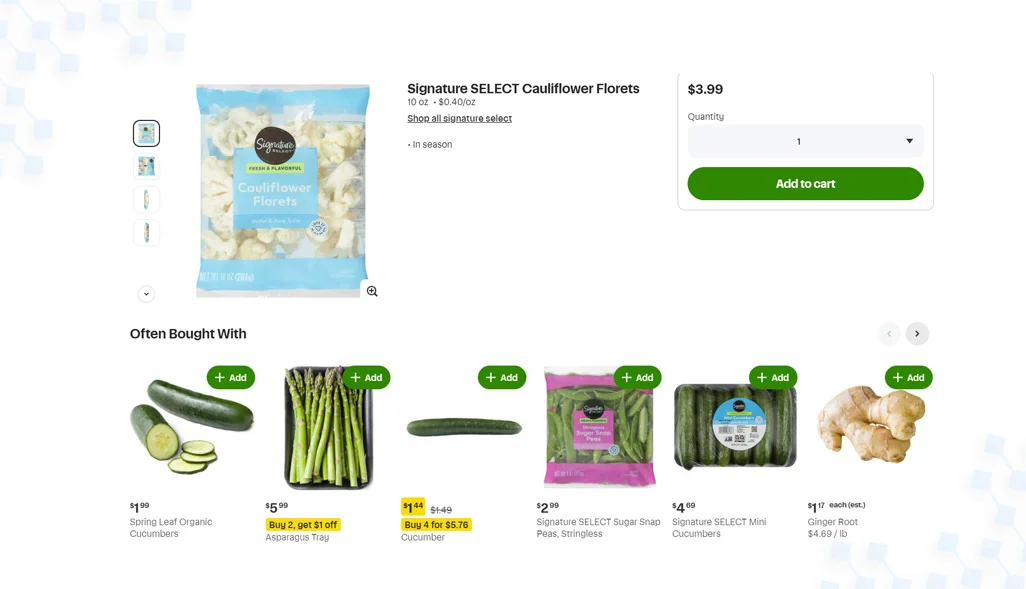
Product availability provides an important layer of competitive intelligence because pricing alone cannot explain every change in marketplace performance. A product may have a competitive price but limited availability, while another item may remain consistently listed across several locations. Monitoring these differences gives retailers additional context when evaluating competitor positioning, assortment depth, and customer-facing product options over time.
Using Instacart Inventory and Availability Data Extraction, businesses can examine whether products remain available, become unavailable, or appear differently across selected markets. Repeated observations can help identify recurring availability patterns and location-specific differences. When these records are combined with product and pricing information, analysts can distinguish temporary changes from broader assortment movements that may affect competitive positioning.
A structured Instacart Grocery Data Crawler can support recurring collection by organizing product observations from selected categories and locations. Instead of relying on isolated manual checks, businesses can maintain a consistent flow of records for subsequent comparison. This can help analysts identify newly listed products, removed products, changing availability conditions, and differences between markets that may otherwise remain difficult to track.
Useful applications include:
- Comparing availability across multiple locations
- Identifying products with recurring availability changes
- Reviewing assortment differences between markets
- Tracking newly listed or removed products
- Supporting location-level competitive assessments
| Availability Area | Analytical Use | Comparison |
|---|---|---|
| Product status | Availability review | Available/unavailable |
| Market coverage | Regional analysis | Location groups |
| Assortment | Product comparison | Category ranges |
| Listing changes | Trend identification | Historical snapshots |
These observations become more useful when businesses maintain historical records instead of evaluating availability as a one-time signal. Comparing multiple collection periods can reveal whether a product repeatedly disappears, whether certain categories experience broader changes, or whether individual markets show different patterns.
Converting Historical Grocery Records Into Actionable Benchmarks
Historical product records can provide greater value when they are organized for recurring comparison rather than stored as isolated observations. A structured Instacart Quick Commerce Dataset can help analysts examine product information across categories, brands, locations, and collection periods. Reviewing these records over time makes it easier to identify recurring movements and distinguish temporary changes from broader competitive patterns.
Price history is particularly useful for understanding how grocery categories behave over different periods. Analysts can compare increases, decreases, promotional adjustments, and pack-size differences while examining the surrounding assortment. This broader perspective can show whether a price movement occurs alongside a new product launch, an assortment reduction, or a change in competitive positioning. Such comparisons can support more informed category-level reviews.
For ongoing retail analysis, Instacart Product Price Monitoring for Grocery Retailers can provide a structured approach to reviewing recurring price movements. Businesses can define specific categories, products, markets, or competitors for regular observation and then organize collected records into historical datasets. This supports reporting workflows where teams need to review pricing patterns, promotional frequency, and product-level changes at consistent intervals.
Important applications include:
- Building historical product price benchmarks
- Comparing category-level pricing movements
- Reviewing assortment changes over time
- Identifying recurring promotional patterns
- Supporting competitive pricing reports
- Segmenting records by market or product type
| Benchmark Area | Analytical Objective | Review Period |
|---|---|---|
| Price history | Identify movement patterns | Weekly/monthly |
| Product mix | Compare assortment | Recurring |
| Category trends | Evaluate market changes | Monthly |
| Promotional activity | Review offer frequency | Periodic |
Historical benchmarking also allows teams to prioritize products and categories that show the greatest level of change. This creates a practical connection between raw marketplace observations and business reporting, helping grocery teams evaluate competitive conditions with greater consistency and clarity.
How Web Data Crawler Can Help You?
For grocery retailers, structured competitive information can support faster and more informed pricing decisions. Instacart Product Data API for Competitive Intelligence helps organize large volumes of product information into usable datasets that can be analyzed across categories, locations, and time periods.
We can support grocery intelligence workflows through scalable data collection and structured delivery. Its approach can help businesses reduce manual research while maintaining consistent data for recurring analysis.
- Collect product information from targeted grocery categories
- Structure pricing records for easier comparison
- Monitor product availability and assortment changes
- Organize data according to business-specific requirements
- Support scheduled collection for recurring market analysis
- Deliver structured datasets for reporting and analytics
Retail teams can use Grocery Competitive Price Scraping Using Instacart Data to compare competitor pricing, evaluate promotional changes, and identify meaningful shifts in the grocery market. The resulting information can support pricing strategies, assortment planning, competitor benchmarking, and category-level analysis.
Conclusion
Reliable grocery intelligence requires more than collecting isolated prices. Instacart Product Data API for Competitive Intelligence enables retailers to organize pricing, availability, assortment, and product information into a structured competitive analysis workflow. These insights can help businesses evaluate market movements and make more informed pricing decisions.
Consistent monitoring can also improve the effectiveness of Instacart Product Price Monitoring for Grocery Retailers by providing historical information for comparison and trend analysis. Contact Web Data Crawler today to build a customized grocery data solution for competitive pricing and market intelligence.