


What Can Alibaba Supplier Data Scraping Reveal About Prices, Suppliers, MOQ, Ratings, and Trends?
Sep 22
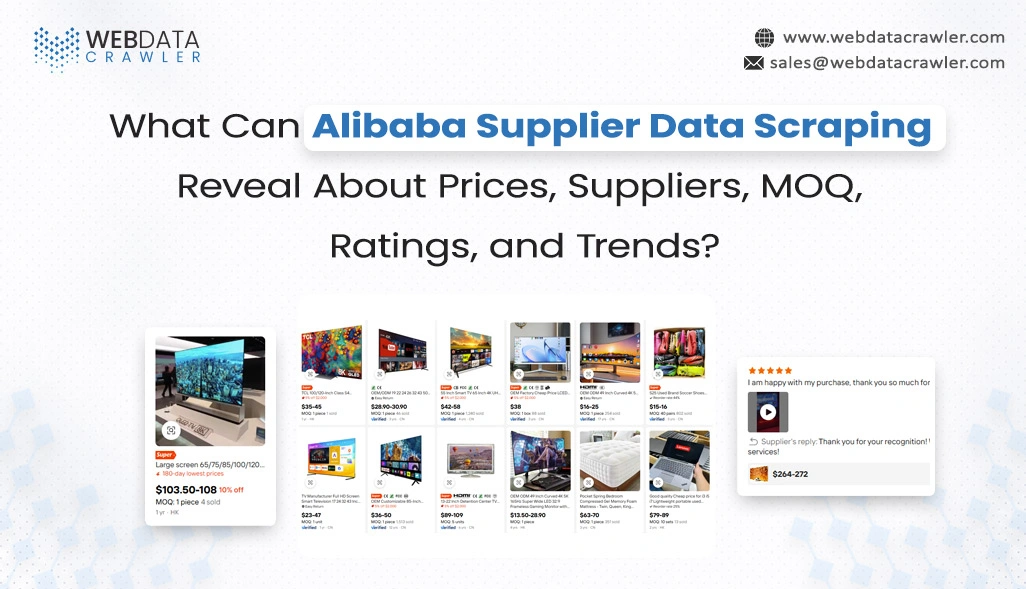
Introduction
Alibaba has become a major marketplace for sourcing products across categories, suppliers, and price ranges. Procurement teams often need structured information to compare vendor offers, minimum order quantities, ratings, product variations, and listing details. Organized datasets make this information easier to evaluate and apply during supplier research.
With Web Scraping Alibaba Product Data, businesses can collect product names, prices, supplier information, ratings, MOQ details, specifications, and listing attributes from relevant marketplace pages. Instead of reviewing individual listings manually, teams can consolidate important sourcing fields into standardized datasets that support product comparisons, vendor screening, pricing research, and category-level analysis.
This approach also supports Alibaba Supplier Data Scraping by turning scattered marketplace information into usable records for procurement analysis. Historical collections can help identify changing prices, supplier activity, product availability, rating movements, and emerging category patterns. These insights can support sourcing decisions while reducing repetitive research and improving the consistency of vendor evaluation.
Comparing Supplier Prices Across Diverse Alibaba Product Categories
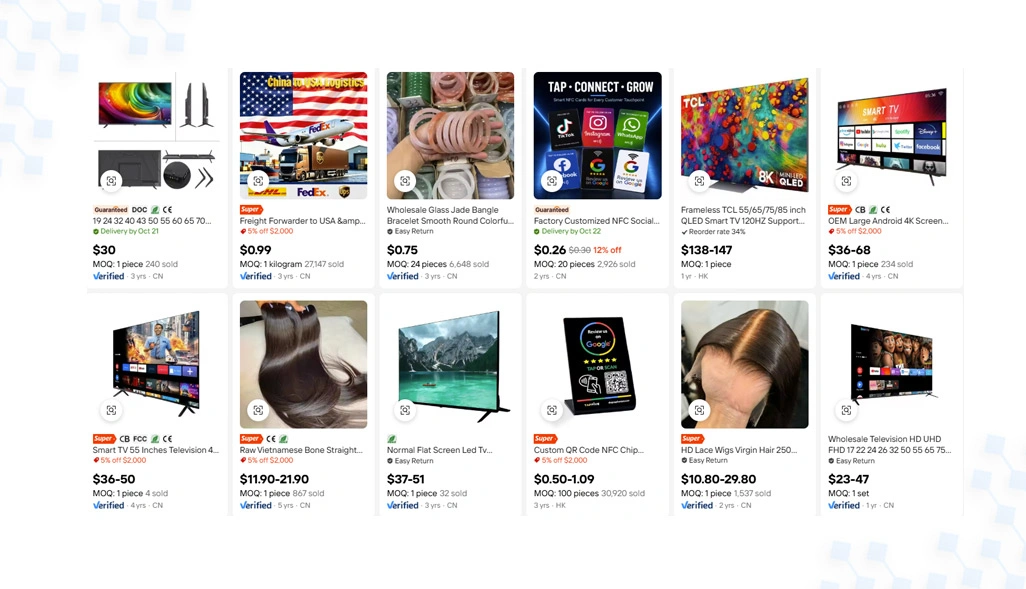
Supplier pricing can differ considerably across Alibaba categories because vendors may offer different product specifications, materials, quantities, customization options, and commercial terms. Scrape Alibaba Product Data can help organize these variations into consistent records, allowing procurement teams to compare similar products without repeatedly opening individual listings. Such structured information also makes it easier to identify low, average, and high price ranges across selected product groups.
Price comparisons become more meaningful when additional supplier attributes are considered alongside displayed rates. MOQ, product variants, packaging requirements, customization availability, and order conditions can influence the practical purchasing cost. By combining these fields, sourcing teams can separate simple price differences from variations caused by product specifications and purchasing requirements.
| Comparison Area | Business Use |
|---|---|
| Unit Pricing | Compare supplier offers |
| MOQ Levels | Assess purchasing requirements |
| Product Variants | Separate comparable products |
| Customization | Review sourcing flexibility |
Automated collection can reduce repetitive browsing while creating a consistent foundation for supplier research, category analysis, and pricing comparisons. An Alibaba E-Commerce Data Crawler can support recurring collection of relevant marketplace information, helping teams maintain updated datasets as listings and commercial details change.
- Compare prices across multiple supplier listings
- Organize product attributes into structured records
- Track differences between product variants
- Review MOQ alongside displayed pricing
- Identify category-level pricing movements
With regularly collected information, procurement teams can examine pricing patterns across broader product groups rather than relying on isolated listings. This approach provides a clearer foundation for supplier comparisons and supports more organized sourcing research.
Assessing Supplier Quality Through MOQ Ratings And Reviews
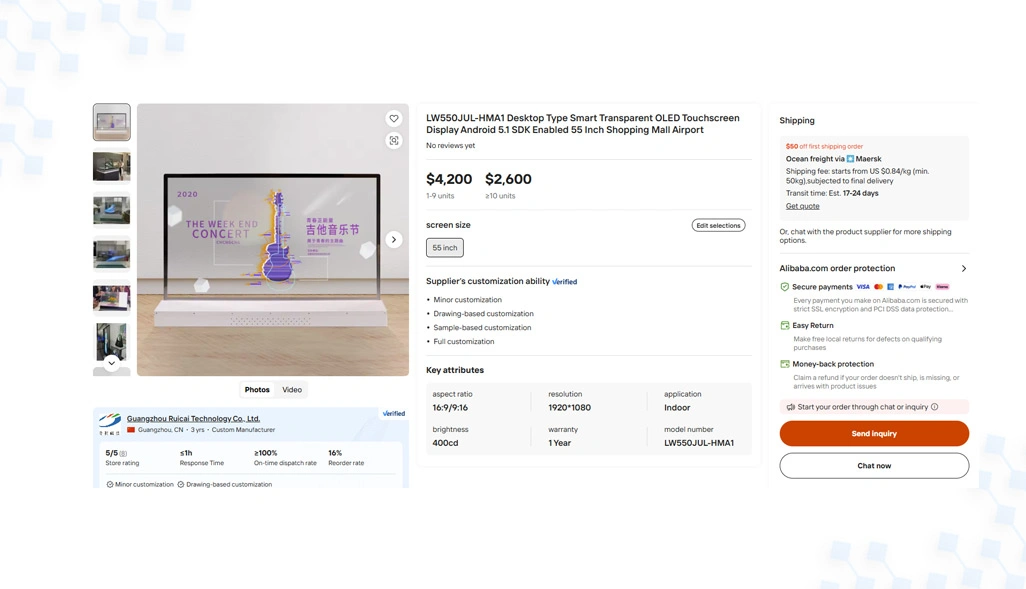
Supplier assessment requires broader information than product pricing alone. Alibaba Product Data Scraping can organize supplier ratings, review counts, MOQ requirements, product information, and other listing attributes into comparable records. Bringing these fields together helps sourcing teams evaluate vendor profiles according to predefined procurement requirements instead of relying on one marketplace signal.
Ratings and reviews can provide useful customer-facing indicators, while MOQ information helps determine whether a supplier fits a particular purchasing model. A vendor with a suitable product may still require quantities beyond a buyer's immediate requirements. Reviewing these factors together can make supplier screening more structured and reduce the effort involved in comparing numerous marketplace listings.
| Supplier Attribute | Evaluation Purpose |
|---|---|
| Seller Rating | Compare marketplace reputation |
| Review Volume | Understand feedback coverage |
| MOQ | Assess order suitability |
| Product Details | Verify sourcing requirements |
This can make supplier information easier to process when teams need recurring updates, standardized reporting, or integration with broader procurement workflows. An Alibaba E-Commerce Data API can support the movement of structured marketplace records into internal databases, dashboards, or analytical systems.
- Compare supplier ratings across product categories
- Review MOQ requirements before vendor selection
- Organize customer feedback indicators
- Track supplier-specific listing information
- Standardize vendor records for internal analysis
Combining supplier attributes into one structured dataset can simplify vendor screening and provide a more consistent basis for comparison. Procurement teams can then examine multiple signals together while maintaining organized records for future sourcing activities and supplier research.
Identifying Marketplace Trends Through Changing Product Listing Signals
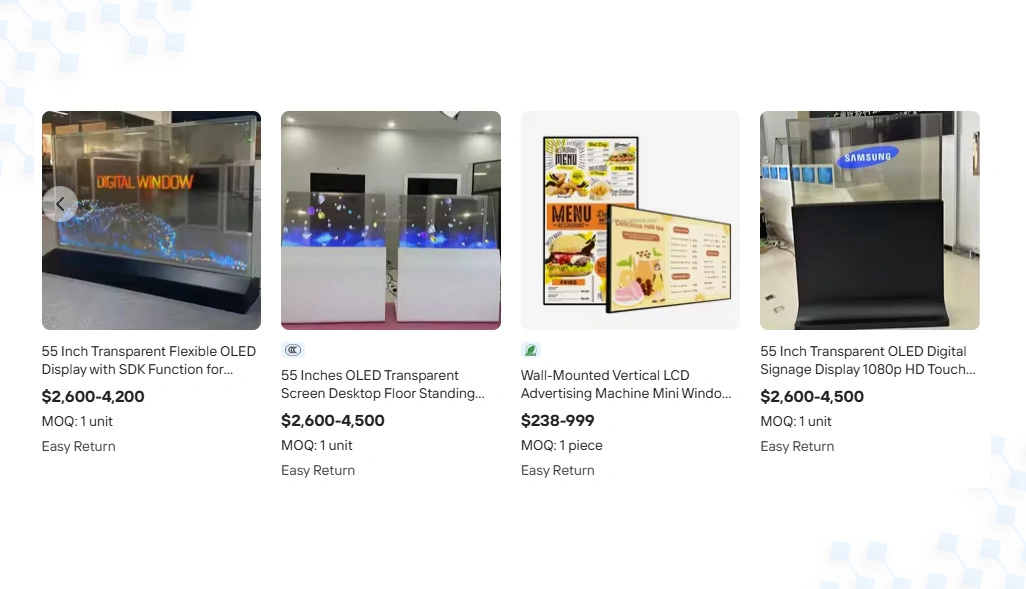
Marketplace trends can become visible through repeated changes in product listings, prices, specifications, categories, and supplier participation. What Sourcing Teams Need to Know About Alibaba Data Scraping includes maintaining consistent collection fields so records from different periods can be compared accurately. This creates a useful foundation for identifying changes across product categories and supplier activity.
New listings may indicate expanding product categories, while repeated price movements can highlight changing market conditions. Structured E-Commerce Datasets can therefore help businesses move from isolated marketplace observations toward repeatable trend analysis. Instead of reviewing individual listings independently, teams can work with organized records that make product, supplier, and pricing changes easier to compare across categories and time periods.
| Trend Signal | Analytical Value |
|---|---|
| New Listings | Category growth |
| Price Movement | Market comparison |
| Specification Changes | Product development |
| Supplier Activity | Marketplace participation |
Through Alibaba Product Listing Extraction, teams can organize listing-level details such as titles, specifications, pricing information, supplier attributes, and other available fields. These records can then be compared across collection periods to identify recurring patterns, changing product characteristics, and shifts in supplier participation.
- Monitor newly appearing product listings
- Compare historical marketplace pricing
- Track specification changes over time
- Observe supplier participation patterns
- Organize category-level trend indicators
When these records are maintained over multiple collection cycles, they can provide useful historical context for category analysis, assortment monitoring, and procurement planning. Ecommerce Product Catalog Data Extraction can further support broader catalog research by bringing product records into a consistent structure.
How Web Data Crawler Can Help You?
Modern procurement teams need reliable marketplace information without spending excessive time manually reviewing individual supplier pages. We can support Alibaba Supplier Data Scraping by collecting relevant product, supplier, pricing, MOQ, rating, and listing attributes in structured formats. The resulting datasets can be organized for research, reporting, comparison, and downstream analytics.
Key capabilities can include:
- Automated collection of supplier and product information
- Structured extraction of pricing and MOQ fields
- Collection of ratings, reviews, and vendor attributes
- Scheduled monitoring of changing marketplace listings
- Category-based organization for procurement research
- Delivery of datasets in formats suitable for analysis
By standardizing marketplace information, teams can reduce repetitive browsing and create more consistent sourcing workflows. The collected information can also support Alibaba Product Listing Extraction when procurement teams need focused listing-level records for vendor comparison, catalog analysis, and product research.
Conclusion
Supplier marketplaces contain valuable information that can support pricing research, vendor comparison, MOQ assessment, and category monitoring when organized systematically. Alibaba Supplier Data Scraping can convert scattered listing information into structured records that procurement and analytics teams can review more efficiently.
Consistent datasets also make it easier to compare suppliers and identify meaningful marketplace changes over time. Ecommerce Product Catalog Data Extraction can support broader catalog analysis across product categories and supplier records. Contact Web Data Crawler to build a structured data collection solution tailored to your Alibaba sourcing and procurement analysis requirements.