


How iFood Menu and Price Data Scraping for Restaurant Analytics Supports Smarter Menu Decisions?
Oct 08
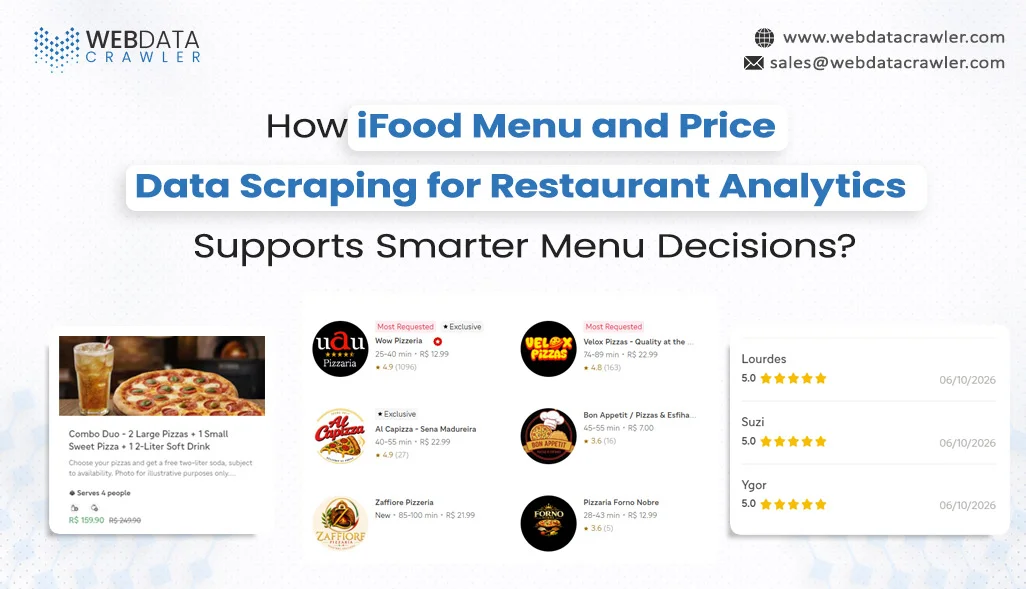
Introduction
Restaurant menus change frequently according to customer preferences, seasonal demand, competitor activity, and pricing conditions. For restaurant brands operating across multiple locations, manually tracking these changes can become time-consuming and inconsistent. Structured digital data provides a practical way to compare menu items, prices, categories, and promotional patterns across competing restaurants.
Using an iFood Food Data API can support systematic access to relevant food marketplace information for analysis and operational planning. Restaurants can evaluate pricing variations, identify popular categories, compare product positioning, and monitor changes across locations. These insights help decision-makers understand market movements while developing menus that better align with customer expectations and competitive conditions.
With iFood Menu and Price Data Scraping for Restaurant Analytics, businesses can organize menu and pricing information into usable datasets for ongoing evaluation. Historical comparisons can reveal pricing shifts, changing menu structures, and competitive gaps. This information supports better menu planning, pricing adjustments, promotional decisions, and regional strategies based on measurable market intelligence.
Smarter Menu Decisions Through Consistent Restaurant Market Insights
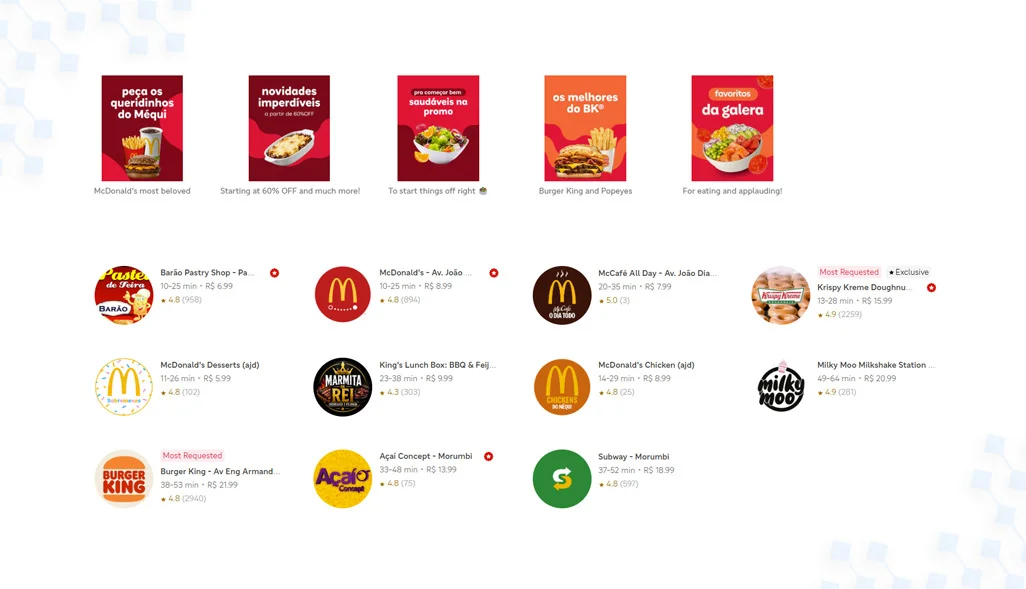
Restaurant businesses need dependable menu intelligence to understand how product assortment, pricing, and availability differ across competing establishments. Manually reviewing restaurant listings can consume considerable time, particularly when brands operate across several cities or frequently update their offerings. Extract iFood Menu Items and Prices Data can help organize these details into usable records, making comparisons easier across restaurants and locations while reducing repetitive manual research and improving the consistency of analytical workflows.
Price information becomes more valuable when it is evaluated alongside menu composition and regional availability. Restaurants can compare similar dishes, identify different pricing tiers, and examine how product categories are represented across selected markets. Through iFood Food Delivery Data Scraping, businesses can collect broader marketplace information and establish a clearer view of competing offerings.
Menu intelligence can contribute to several operational decisions beyond basic price comparison. Restaurant managers can examine which categories appear frequently, where menu gaps exist, and how competing brands structure their offerings. These observations can inform product development, promotional planning, regional menu variations, and pricing reviews.
Key menu intelligence applications include:
- Comparing product assortment across restaurants
- Reviewing price differences between similar dishes
- Identifying regional menu variations
- Monitoring changes in product availability
- Supporting category-level assortment planning
- Preparing structured information for reporting
| Data Category | Analytical Purpose |
|---|---|
| Menu Information | Assortment assessment |
| Pricing Information | Competitive evaluation |
| Product Categories | Category comparison |
| Availability Details | Operational planning |
Reliable menu information gives restaurant teams a stronger foundation for evaluating competitive conditions and planning future offerings. Instead of depending on occasional manual checks, businesses can establish repeatable data workflows that make market observations easier to validate. This approach also helps teams identify changes more quickly and prioritize areas requiring further analysis.
Competitive Pricing Strategies Based On Changing Market Patterns
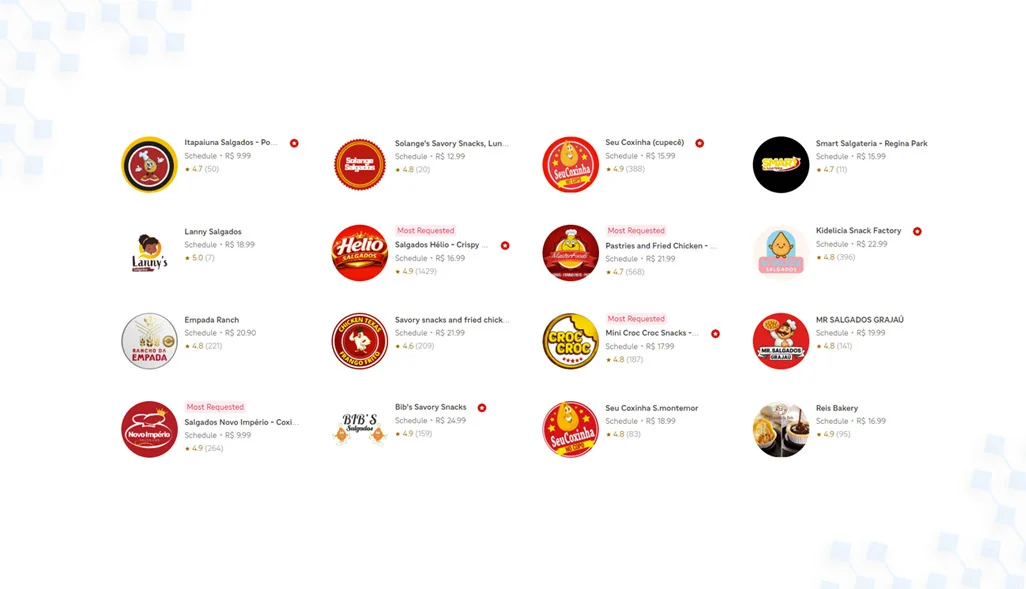
Understanding competitor positioning is essential for restaurants seeking to maintain relevant pricing and menu structures. Restaurants operate in markets where similar dishes can have noticeably different prices depending on location, brand positioning, portion size, promotions, and customer demand. Web Scraping iFood Data for Market Research can provide organized information that supports broader comparisons across selected restaurants, categories, and locations.
An iFood Food Data Crawler can support scheduled collection of relevant information according to defined requirements, helping businesses maintain updated records for analysis. Instead of relying on individual observations, teams can compare multiple collection periods to identify increases, decreases, additions, removals, and other marketplace changes.
Competitive information can also support menu expansion and product positioning decisions. These comparisons may reveal underserved categories or opportunities to introduce products at strategically selected price points. Marketing teams can additionally review promotional patterns and use the findings to support campaign planning without relying solely on assumptions about competitor behavior.
Useful competitive analysis activities include:
- Comparing restaurant pricing across locations
- Identifying common menu categories
- Tracking additions and removals from menus
- Evaluating competitive price ranges
- Reviewing promotional positioning
- Supporting product expansion decisions
| Comparison Area | Strategic Application |
|---|---|
| Price Range | Market benchmarking |
| Menu Frequency | Assortment evaluation |
| Restaurant Location | Regional analysis |
| Product Category | Competitive positioning |
A structured competitive dataset allows restaurant operators to move from isolated observations toward repeatable market analysis. Regular monitoring also creates historical context, making it easier to understand whether a competitor's adjustment represents a temporary change or a sustained strategy.
Data-Driven Menu Planning For Stronger Restaurant Performance
Restaurant menu planning involves balancing customer expectations, competitive positioning, pricing, and product variety. Data collected from food marketplaces can help businesses evaluate these factors together instead of reviewing them separately. iFood Restaurant Data Analytics Using Web Scraping allows analysts to examine menu structures, pricing movements, category patterns, and restaurant-level information within an organized analytical framework.
Pricing patterns are particularly useful for evaluating how a restaurant's offerings compare with similar establishments. Businesses can examine price differences between comparable products, identify premium or budget positioning, and monitor recurring adjustments. iFood Price Monitoring for Restaurants can support this process by providing relevant pricing information for ongoing comparison.
A well-organized dataset can also support more detailed segmentation and reporting. Businesses may categorize information according to restaurant type, location, cuisine, product category, price range, or availability. An iFood Restaurant Dataset can bring these data points together for analysis and help teams create consistent reporting structures.
Important applications for menu strategy include:
- Evaluating competitive price positioning
- Identifying gaps within existing assortments
- Comparing product categories across markets
- Reviewing regional menu differences
- Supporting promotional planning
- Improving recurring management reports
| Strategic Factor | Business Decision |
|---|---|
| Pricing Patterns | Price review |
| Category Representation | Assortment planning |
| Regional Differences | Localized strategy |
| Competitor Changes | Market response |
Turning marketplace information into structured analysis allows restaurants to make menu decisions with greater consistency. When supported by reliable reporting processes, restaurant data can become a practical resource for coordinating strategic decisions and improving visibility into market conditions that directly influence menu competitiveness.
How Web Data Crawler Can Help You?
Restaurant businesses require dependable data collection to evaluate changing menus, prices, and competitive activity across food delivery platforms. With iFood Menu and Price Data Scraping for Restaurant Analytics, we can help convert marketplace information into structured datasets suitable for restaurant intelligence, benchmarking, and strategic planning.
Key capabilities include:
- Automated collection of menu and pricing information
- Structured datasets prepared for analytical workflows
- Recurring data extraction based on business requirements
- Location-based restaurant and menu comparisons
- Organized delivery through preferred data formats
- Scalable collection for multiple restaurants and markets
The collected information can support reporting, dashboards, pricing analysis, and competitive benchmarking without requiring teams to depend entirely on manual research. Businesses can use the resulting datasets to compare restaurant offerings, evaluate pricing movements, identify menu gaps, and review regional differences according to their specific analytical requirements.
Through consistent data workflows, restaurant teams can spend less time gathering marketplace information and more time interpreting relevant trends. The collected records can also be prepared for integration with analytical systems, helping businesses build repeatable processes for menu intelligence, competitor evaluation, and strategic planning.
Conclusion
Restaurant decisions become more precise when menu and pricing changes are supported by structured market information. iFood Menu and Price Data Scraping for Restaurant Analytics helps businesses evaluate menu composition, compare prices, identify competitive shifts, and build data-supported strategies across different locations. These insights can contribute to more informed pricing, assortment planning, and promotional decisions.
Consistent data collection also makes it easier to evaluate marketplace movements over time and respond to changing customer and competitor behavior. iFood Competitor Menu Price Scraping can further support benchmarking by providing a clearer view of comparable restaurant offerings and pricing structures. Contact Web Data Crawler today to build reliable restaurant data solutions for smarter menu and pricing decisions.