


How Can Grocery Product Catalog Scraping Track 10M+ SKUs for Smarter Grocery App Data Analysis?
Sep 28
Introduction
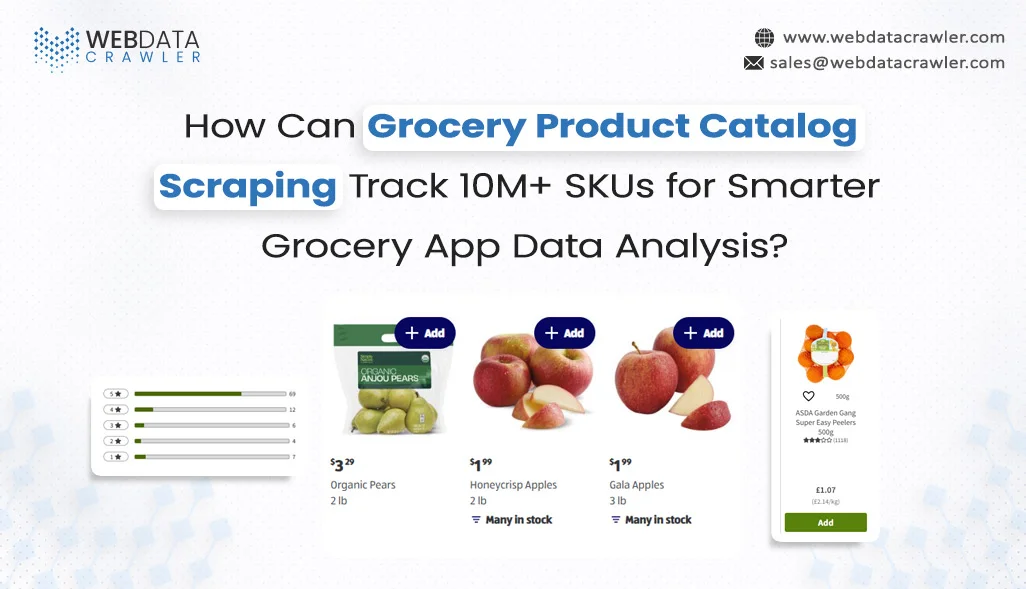
Modern grocery apps manage millions of products across categories, brands, pack sizes, prices, and locations. Managing this information manually can create inconsistent records and delayed updates. Grocery Product Catalog Scraping helps business's structure large product catalogs into organized datasets containing SKU details, pricing, availability, and category information.
A dataset covering 10M+ SKUs can provide valuable visibility into product assortment and marketplace changes. Businesses can monitor price movements, stock conditions, discounts, pack variations, and category expansion across multiple grocery platforms. With Web Scraping Grocery Delivery Data, analysts can also build structured datasets for competitive and operational research.
Accurate catalog data becomes increasingly important as grocery applications expand their digital assortment. Automated collection can capture recurring product updates while maintaining consistent fields across large datasets. This supports better product matching, catalog quality checks, pricing analysis, and market intelligence without depending entirely on manual research.
Scaling Product Coverage Across Ten Million Grocery SKUs
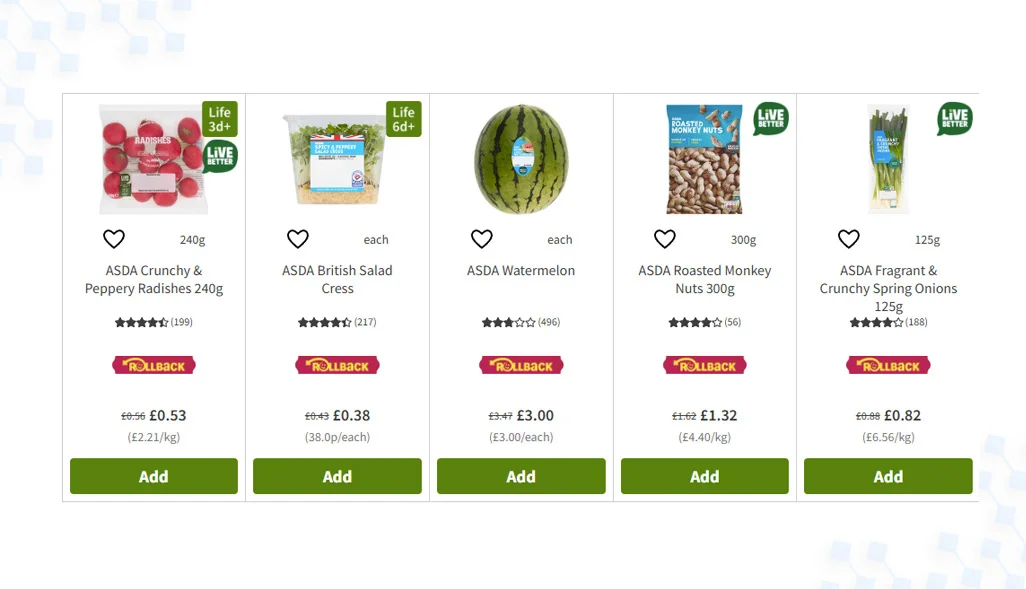
Tracking more than 10 million grocery SKUs requires a structured approach to product collection, identification, and organization. Every item may contain different names, brands, pack sizes, quantities, categories, prices, discounts, and availability information. Grocery Store Product Data Extraction can organize these attributes into standardized records, making large catalogs easier to compare and analyze across multiple grocery applications and locations.
At this scale, product coverage cannot depend on occasional manual collection. Automated workflows can repeatedly capture product information and maintain records as catalogs expand or existing listings change. Grocery Data Scraping can support recurring collection schedules, allowing teams to monitor newly introduced products, discontinued listings, modified descriptions, and category movements without rebuilding the complete dataset for every analysis cycle.
A reliable SKU structure also helps analysts identify relationships between products that appear under slightly different names or pack configurations. The SKU-Level Catalog Scraping for Grocery Apps Technical Guide approach can define fields, identifiers, normalization rules, and collection logic before extraction begins. This makes product matching more consistent and reduces confusion when thousands of similar grocery items appear across different catalogs.
Key elements that can improve large-scale catalog organization include:
- Standardized SKU identification
- Product attribute normalization
- Category hierarchy mapping
- Duplicate record detection
- Location-specific catalog tracking
- Historical update timestamps
| Catalog Element | Tracking Purpose |
|---|---|
| Product Name | Item Identification |
| Brand | Brand Classification |
| Pack Size | Product Comparison |
| Category | Assortment Mapping |
| Availability | Stock Monitoring |
| Timestamp | Change History |
With these foundations, large grocery catalogs become easier to maintain, filter, segment, and prepare for downstream analysis.
Connecting Dynamic Prices And Availability With Automation
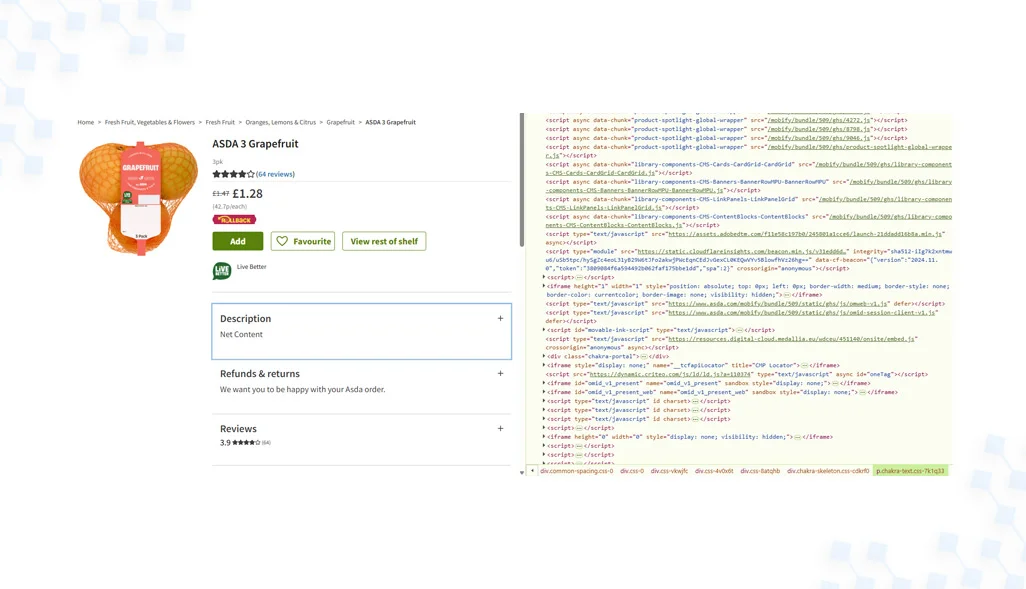
Grocery product information changes frequently because retailers adjust prices, promotions, inventory, pack configurations, and product availability throughout the day. A scalable collection process needs to capture these changes at the SKU level while preserving when each observation occurred. Scraping API integrations can help transfer structured records into databases, dashboards, and analytical environments for recurring monitoring.
Price and availability information becomes more meaningful when connected with supporting product attributes. Analysts can compare current prices with historical records, identify products experiencing repeated changes, and observe how promotional activity affects individual SKUs. Grocery Product Data Extraction Service workflows can also be configured around selected categories, locations, products, or marketplaces depending on the requirements of a particular analysis project.
Automation can further reduce repetitive collection activities by scheduling extraction at predefined intervals. Instead of collecting an entire catalog manually, teams can establish refresh cycles based on how frequently product information changes. Faster refresh intervals may be useful for highly dynamic pricing environments, while broader intervals can suit relatively stable categories and long-term assortment research.
Important automation considerations include:
- Defined extraction schedules
- Consistent product identifiers
- Historical record preservation
- Price-change tracking
- Availability-state monitoring
- Category-specific refresh requirements
| Data Attribute | Analytical Use |
|---|---|
| Current Price | Price Comparison |
| Previous Price | Change Measurement |
| Discount | Promotion Tracking |
| Stock Status | Availability Review |
| Update Time | Temporal Analysis |
| Product Category | Segment Analysis |
A properly automated workflow gives analysts cleaner information for dashboards, reports, competitive monitoring, and recurring grocery market analysis without repeatedly preparing raw catalog records.
Strengthening Catalog Accuracy Before Analytical Reporting
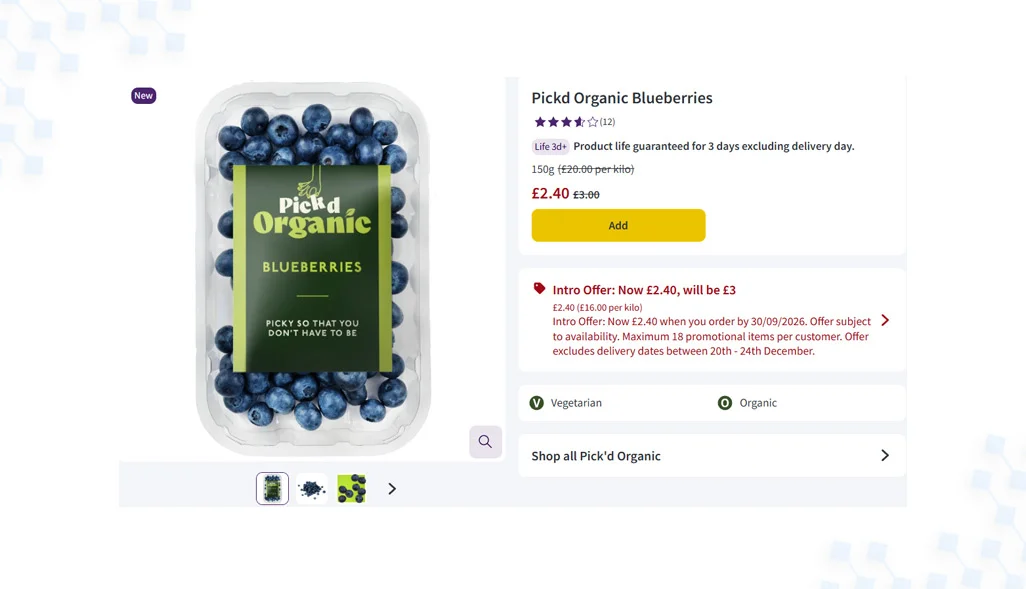
Large-scale grocery datasets can become difficult to analyze when records contain duplicate products, inconsistent units, incomplete attributes, or outdated information. Before records reach analytical systems, validation processes should check whether individual SKU entries follow predefined structures. A Web Crawler can collect product information at scale, while downstream validation helps organize the resulting records into consistent datasets.
Product normalization is particularly important when the same grocery item appears with variations in naming, pack size, measurement units, or category placement. Standardizing these attributes allows analysts to compare similar products without treating minor formatting differences as separate items. This is especially valuable when datasets combine information from multiple grocery platforms or geographic markets.
Historical preservation also strengthens catalog analysis because a current snapshot cannot explain how a product reached its present price, category, or availability state. Web Scraping Grocery Data for Analysis can support structured historical datasets where records are associated with collection timestamps. Analysts can then examine product movements over defined periods and identify recurring catalog patterns.
A strong quality-control process can include:
- Duplicate SKU identification
- Product name normalization
- Measurement-unit standardization
- Missing-field validation
- Category consistency checks
- Timestamp verification
- Historical record management
| Quality Area | Expected Outcome |
|---|---|
| Duplicate Checks | Cleaner Records |
| Attribute Validation | Better Completeness |
| Unit Standardization | Consistent Comparisons |
| Category Checks | Accurate Segmentation |
| Timestamp Review | Reliable History |
When these controls operate consistently, large grocery datasets become more dependable for dashboards, business intelligence systems, pricing studies, assortment research, and recurring analytical reporting across millions of product records.
How Web Data Crawler Can Help You?
Modern grocery businesses need more than raw product pages; they need structured, refreshable datasets that fit analytical workflows. Grocery Product Catalog Scraping can support this process by organizing product names, SKUs, prices, categories, brands, pack sizes, availability, and timestamps into usable records across large catalogs.
Key Capabilities:
- Scalable collection across extensive product catalogs
- Scheduled refreshes for frequently changing attributes
- Structured fields suitable for database integration
- Duplicate identification and product normalization
- Historical storage for price and availability analysis
- Validation checks for incomplete catalog records
For teams building dashboards, research datasets, or competitive monitoring systems, Web Scraping Grocery Data for Analysis can provide a consistent foundation for recurring reporting.
We can configure extraction workflows around selected sources, fields, locations, and refresh frequencies, helping teams receive organized datasets that are easier to review, validate, analyze, and maintain without rebuilding collection processes for every reporting cycle.
Conclusion
Reliable grocery datasets depend on consistent collection, validation, and timely updates rather than catalog size alone. With structured Grocery Product Catalog Scraping, businesses can organize millions of SKU records and turn product, pricing, category, and availability changes into practical inputs for dashboards, research, and ongoing market analysis.
A scalable workflow can also support Grocery Product Data Extraction Service requirements when teams need recurring datasets across multiple sources, locations, or product categories. With clear schemas, historical storage, and automated quality checks, catalog information becomes easier to compare and maintain over time while supporting consistent analytical workflows across teams. Contact Web Data Crawler today to discuss a tailored grocery data collection workflow for your catalog analysis needs.