


Why Grocery vs Food Delivery Data Scraping APIs Which Is Better for Real-Time Market Analysis?
Sep 09
Introduction
Real-time market intelligence has become essential for businesses operating across grocery and food delivery ecosystems. Both sectors generate valuable information around products, prices, availability, promotions, ratings, and delivery conditions. However, the type and frequency of data required can differ significantly depending on business objectives, competitive pressures, customer expectations, and regional marketplace activity.
Web Scraping Grocery Delivery Data helps businesses monitor rapidly changing catalogs, regional availability, promotional offers, product information, restaurant menus, and delivery conditions. Grocery platforms generally emphasize household products and FMCG categories, while food delivery platforms focus on restaurants, menu items, cuisine types, ratings, serviceability, and delivery performance. These differences directly influence data collection requirements.
When comparing Grocery vs Food Delivery Data Scraping APIs Which Is Better, businesses should evaluate data freshness, coverage, scalability, geographic requirements, product complexity, and update frequency. Grocery-focused intelligence can support assortment and pricing decisions, while food delivery intelligence can provide restaurant and menu-level insights.
Distinct Marketplace Data Needs Shape Competitive Intelligence Strategies
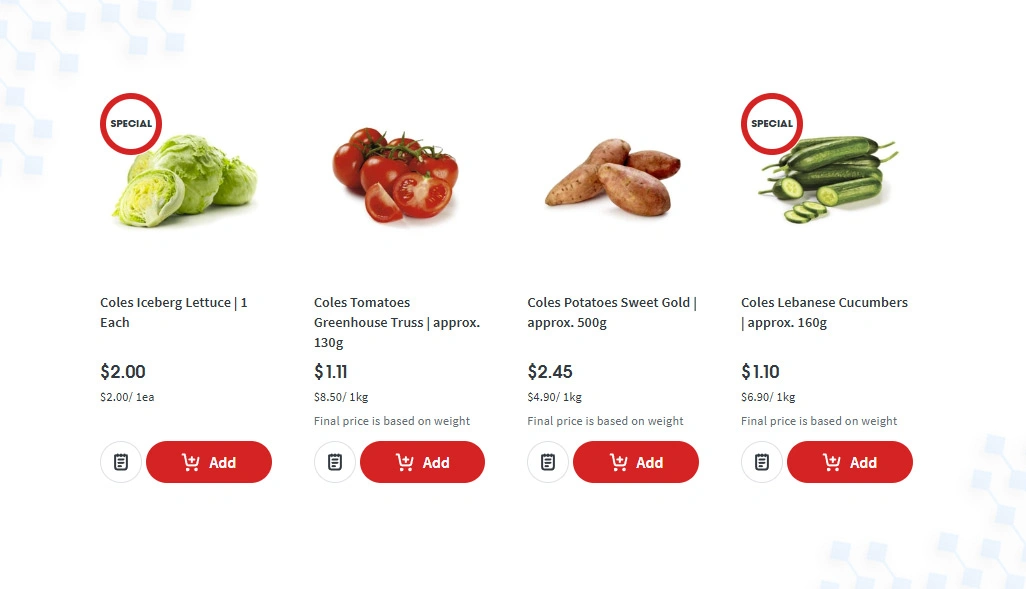
Grocery and food delivery platforms generate different information because their business models, customer journeys, and operational structures vary considerably. Grocery analysis typically centers on products, brands, pack sizes, prices, discounts, availability, and category movement. Food delivery analysis, meanwhile, concentrates on restaurants, menus, cuisines, ratings, delivery charges, estimated times, and serviceable locations. Understanding these distinctions helps businesses define suitable collection priorities.
For organizations handling large volumes of marketplace information, Enterprise Web Crawling can support recurring collection across numerous pages, categories, locations, and platforms. Structured extraction makes it easier to organize marketplace information into consistent datasets. Businesses can then compare pricing movements, assortment changes, availability patterns, promotional activity, and other indicators without depending entirely on manual research or fragmented information sources.
Several important factors influence the type of data required for each marketplace:
- Product and menu information
- Pricing and discount changes
- Availability and serviceability
- Ratings and customer feedback
- Geographic marketplace coverage
- Promotional and competitive activity
The distinction becomes particularly important when businesses compare Grocery Data Scraping vs Food Delivery Scraping for market research. Grocery datasets can support retail assortment, pricing, and inventory decisions, while food delivery datasets can assist restaurant benchmarking and menu analysis. A clear understanding of these requirements allows companies to establish more focused monitoring strategies and select data workflows that align with their operational and analytical priorities.
Data Factor, Grocery Platforms, and Food Delivery Platforms:
| Data Factor | Grocery Platforms | Food Delivery Platforms |
|---|---|---|
| Core Information | Products and SKUs | Restaurants and menus |
| Pricing | Product-level pricing | Item-level pricing |
| Availability | Stock conditions | Restaurant serviceability |
| Promotions | Discounts and offers | Restaurant promotions |
| Location | Store or delivery area | Delivery zone |
Real-Time Market Signals Influence Smarter Business Decisions
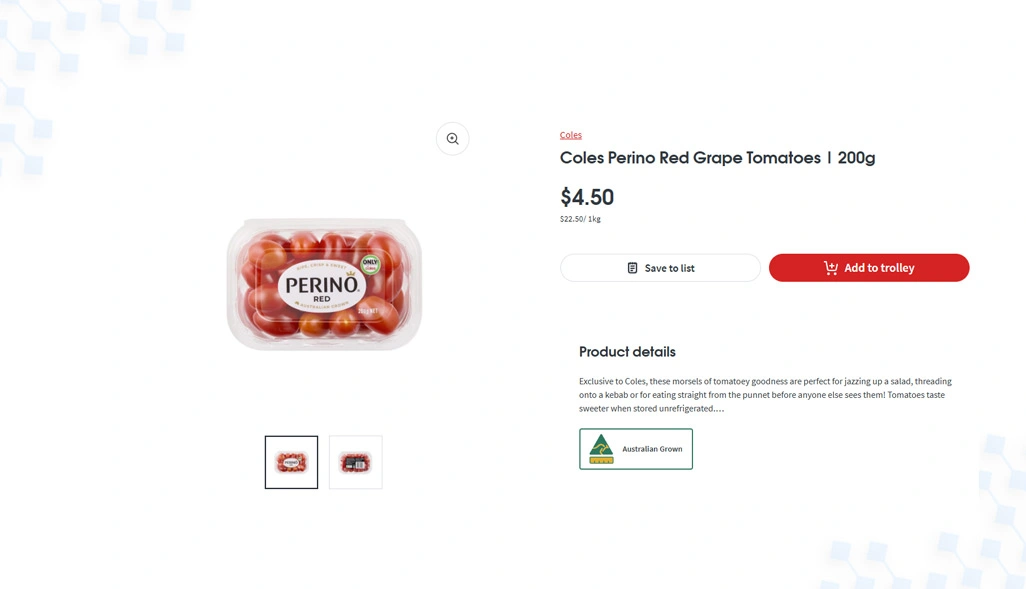
Real-time intelligence becomes increasingly important when marketplace conditions change throughout the day. Grocery businesses may experience frequent price adjustments, promotional updates, stock changes, and assortment movements. Food delivery platforms can also see rapid changes in menu pricing, restaurant availability, delivery charges, estimated delivery times, and promotional campaigns. Monitoring these changes regularly allows businesses to identify market movements more efficiently.
High-frequency retail environments require structured information that can be refreshed according to business requirements. Quick Commerce Datasets can provide useful information for examining fast-moving product availability, pricing fluctuations, discounts, and location-based assortment changes. Such datasets can help analysts compare marketplace conditions across different areas and time periods while supporting broader competitive and operational assessments.
Businesses can focus their monitoring efforts around several important market indicators:
- Price fluctuations across competing platforms
- Promotional changes and discount activity
- Product or restaurant availability
- Regional assortment variations
- Delivery-related service conditions
- Category-level competitive movements
The usefulness of real-time collection ultimately depends on the analytical purpose. Grocery businesses may prioritize SKU-level pricing and inventory signals, while food delivery operators may focus more heavily on restaurant menus, ratings, and delivery performance. This makes structured data particularly useful for pricing analysis, competitor benchmarking, assortment planning, and location-specific decision-making.
Market Metric, Grocery Analysis, and Food Delivery Analysis:
| Market Metric | Grocery Analysis | Food Delivery Analysis |
|---|---|---|
| Price Tracking | Product prices | Menu prices |
| Promotions | Coupons and discounts | Restaurant offers |
| Availability | SKU stock status | Restaurant availability |
| Location | Store-level | Delivery-zone level |
| Updates | Frequent catalog changes | Frequent menu changes |
Scalable Data Infrastructure Supports Consistent Market Monitoring
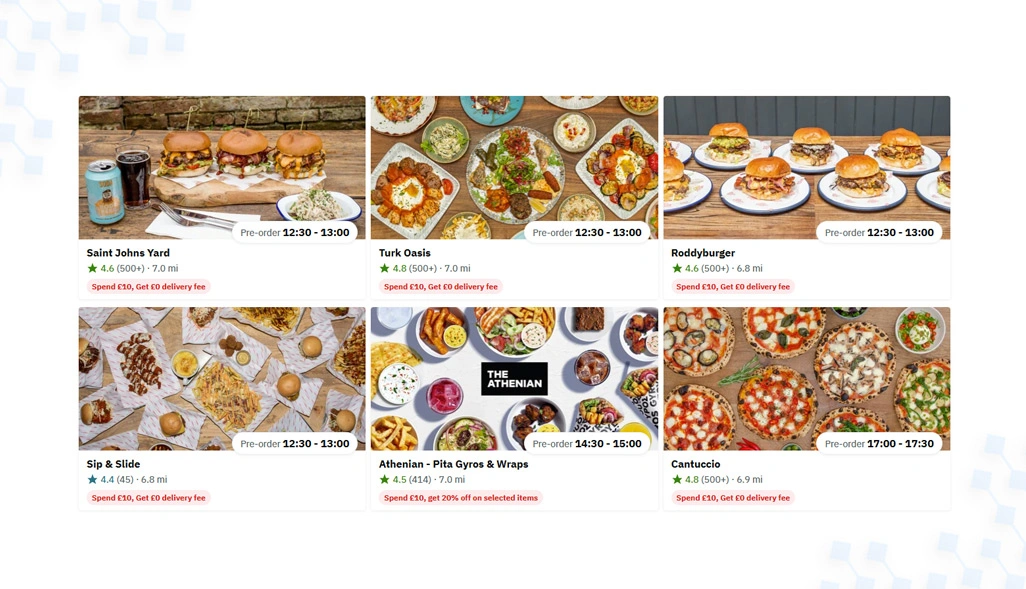
Selecting an appropriate data collection approach requires businesses to consider operational scale, analytical objectives, source complexity, and desired refresh frequency. Grocery intelligence can support assortment planning, competitor price comparisons, promotional monitoring, and availability tracking. Food delivery intelligence can assist restaurant benchmarking, menu comparisons, customer-rating analysis, delivery monitoring, and service-area evaluation.
A flexible Scraping API can simplify recurring data extraction from multiple sources while producing structured information suitable for downstream analysis. Businesses can integrate collected information into databases, dashboards, reporting systems, or analytical workflows. This reduces the need for repetitive manual collection and makes marketplace monitoring more consistent as the number of sources and locations increases.
Important considerations when establishing a scalable monitoring workflow include:
- Source coverage and platform compatibility
- Data freshness and update schedules
- Geographic and category coverage
- Structured output requirements
- Processing and storage capabilities
- Long-term scalability requirements
For broader retail intelligence, Grocery Fmcg Web Scraping Services for Get Insights can help businesses organize marketplace information around products, brands, prices, promotions, and availability. A carefully planned infrastructure also makes it easier to standardize information, compare competing marketplaces, identify meaningful changes, and provide analysts with reliable data for regular business decisions.
Selection Area, Grocery Priority, and Food Delivery Priority:
| Selection Area | Grocery Priority | Food Delivery Priority |
|---|---|---|
| Product Intelligence | High | Medium |
| Menu Intelligence | Low | High |
| Price Monitoring | High | High |
| Delivery Analysis | Medium | High |
| Catalog Tracking | High | High |
How Web Data Crawler Can Help You?
Businesses comparing grocery and food delivery intelligence need a dependable data infrastructure that can manage frequent changes across multiple platforms. We support structured collection workflows, while Grocery vs Food Delivery Data Scraping APIs Which Is Better becomes easier to evaluate through consistent data coverage, refresh schedules, and standardized outputs across different marketplaces.
Key capabilities can include:
- Collecting product and menu information from multiple sources
- Monitoring changing prices and promotional offers
- Tracking availability across targeted locations
- Structuring ratings, reviews, and category information
- Supporting recurring extraction and data refresh workflows
- Preparing datasets for reporting and business analytics
After collection, businesses can organize extracted information into usable datasets for pricing, assortment, competitor, and operational analysis. Food Data Scraping API Services can support structured delivery of relevant information through scalable workflows. This approach helps teams reduce manual research and build repeatable market-monitoring processes across grocery and food delivery environments.
Conclusion
Selecting the right data solution depends on the market being analyzed, the required update frequency, geographic scope, and type of intelligence needed. Grocery vs Food Delivery Data Scraping APIs Which Is Better can be determined by matching technical capabilities with specific pricing, assortment, restaurant, availability, and delivery-analysis objectives.
For broader retail intelligence, Grocery Fmcg Web Scraping Services for Get Insights can help organize continuously changing marketplace information into actionable datasets. A well-designed collection strategy also improves consistency, scalability, and reporting efficiency. Contact Web Data Crawler today to build a reliable data collection solution tailored to your market analysis requirements.