


How Can Grainger Data API for B2B Industrial Product Intelligence Simplify Complex Product Analysis?
Sep 01, 2026
Introduction
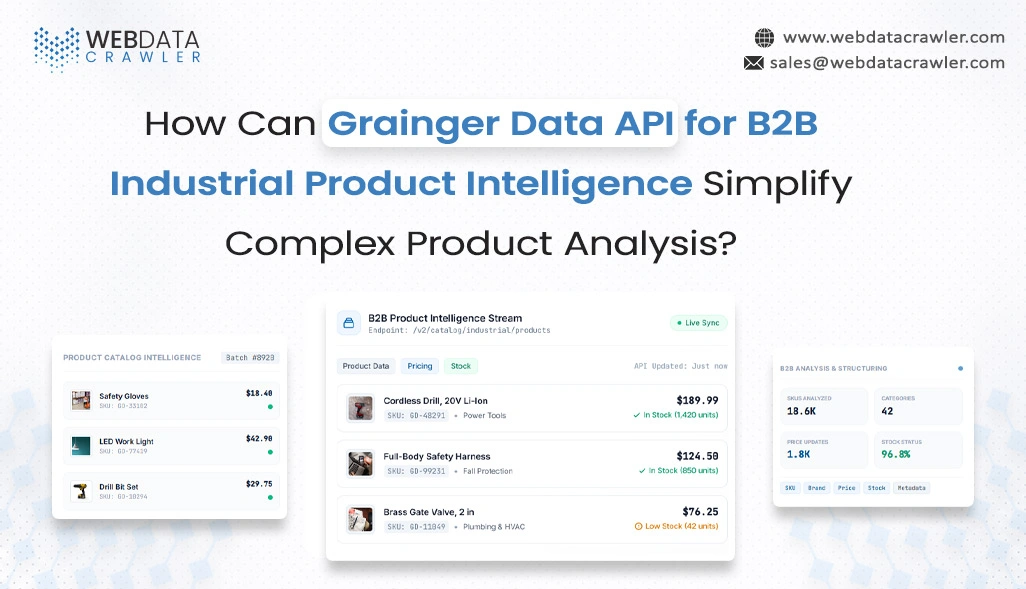
Industrial catalogs often contain thousands of products, specifications, SKUs, prices, brands, and category attributes. Analyzing this information manually can consume substantial time while creating inconsistencies. Scrape Grainger Product Data can help businesses organize extensive product information into structured datasets suitable for comparison, research, and operational decision-making.
With Grainger Data API for B2B Industrial Product Intelligence, organizations can process product information across categories and convert scattered catalog details into consistent intelligence. Structured information makes it easier to compare specifications, evaluate pricing patterns, identify product alternatives, and analyze assortment changes without depending entirely on manual research.
Industrial buyers and analysts increasingly require timely information to support procurement and market analysis. According to industry benchmarks, structured product intelligence can reduce manual catalog-review workloads by around 60%, while automated data workflows can process thousands of product records significantly faster than spreadsheet-based methods. This creates a more consistent foundation for B2B product analysis.
Structuring Extensive Catalog Data For Smarter Industrial Analysis
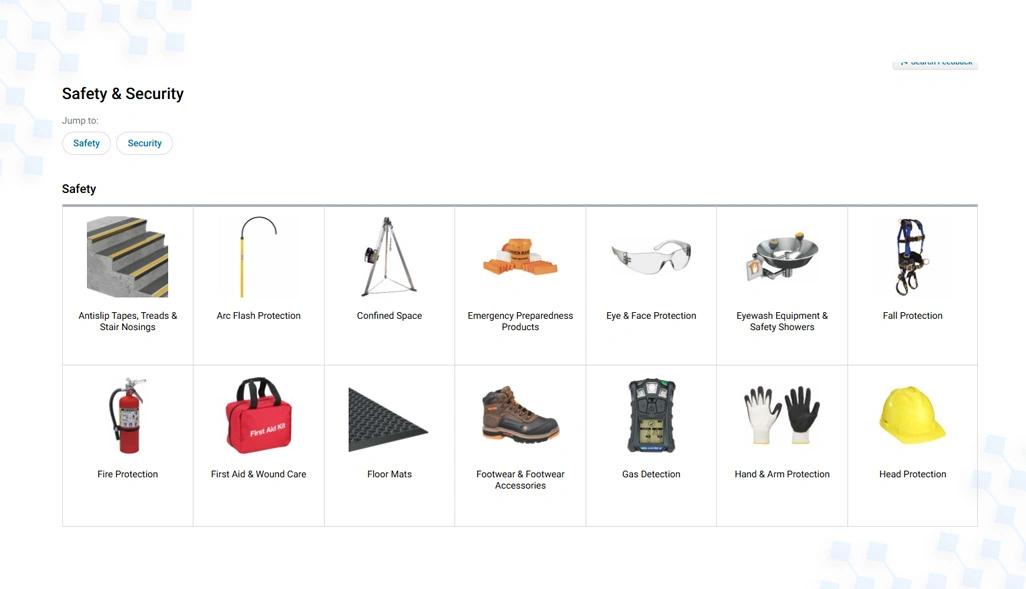
Industrial catalogs cover diverse product groups, including tools, safety equipment, electrical components, plumbing supplies, cleaning products, and maintenance materials. Each category may contain different technical attributes, packaging information, manufacturer details, and purchasing specifications. Organizing these fields consistently creates a stronger foundation for meaningful product comparisons and category-level analysis.
Businesses can use Grainger Product Data Scraping for Insights to structure important product attributes into standardized records. Product names, SKUs, brands, technical specifications, categories, availability indicators, and pricing fields can be organized according to analytical requirements. This helps research teams reduce repetitive catalog reviews while creating cleaner information for databases and reporting systems.
Structured information also becomes valuable when businesses combine industrial catalog research with broader E-Commerce Datasets. Such datasets can provide additional context for studying product categories, pricing patterns, assortment structures, and digital commerce behavior. Combining standardized records allows analysts to identify similarities and differences across product groups more efficiently.
- Standardized product attribute collection
- Category-wise product organization
- SKU-level record structuring
- Technical specification normalization
- Availability and assortment analysis
The resulting workflow can support multiple business activities without requiring analysts to repeatedly examine individual product pages. Automated collection, field normalization, duplicate handling, and structured delivery can improve data consistency and simplify downstream processing.
| Data Area | Analytical Purpose |
|---|---|
| Product identity | Record matching |
| Technical details | Product comparison |
| Category information | Assortment evaluation |
| Brand details | Supplier research |
| Availability data | Procurement planning |
Strengthening Pricing Comparisons Across Industrial Product Categories
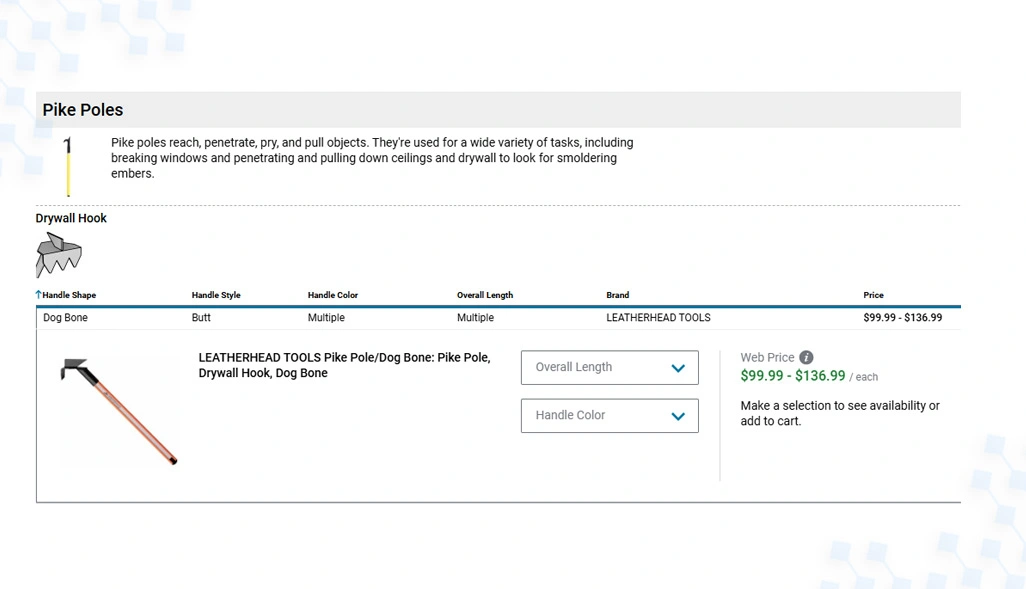
Industrial purchasing decisions often depend on several connected factors, including product specifications, pack sizes, brands, prices, and availability. Comparing these attributes manually across large catalogs can create delays and increase the possibility of overlooking important differences. A structured workflow makes recurring product evaluation more systematic and easier to manage.
Using Grainger SKU Data Extraction for Analysis, businesses can organize SKU-level information into consistent records for comparison and evaluation. Standardized fields allow analysts to examine product variations, identify comparable items, and prepare information for pricing or procurement dashboards. For larger catalogs, automated processing can handle thousands of records within significantly shorter review cycles.
Businesses requiring recurring collection can also use Web Scraping Services to support scheduled extraction, cleaning, validation, and delivery. Automated workflows can help maintain consistent datasets when product information changes regularly. Instead of repeatedly collecting information manually, teams can establish predefined processes for refreshing selected categories and maintaining usable historical records.
- Automated SKU-level collection
- Recurring information refreshes
- Consistent attribute formatting
- Comparative pricing preparation
- Reduced manual research workload
This approach can support pricing research, supplier comparison, product positioning, and procurement analysis. When structured information is connected with analytics systems, teams can create reports that highlight product-level differences and category movements. This improves visibility while reducing the administrative effort associated with repetitive product research.
| Evaluation Area | Business Value |
|---|---|
| SKU comparison | Better product matching |
| Price information | Cost evaluation |
| Pack details | Purchasing accuracy |
| Brand attributes | Supplier assessment |
| Update history | Trend analysis |
Scaling Product Intelligence Across Diverse Industrial Categories
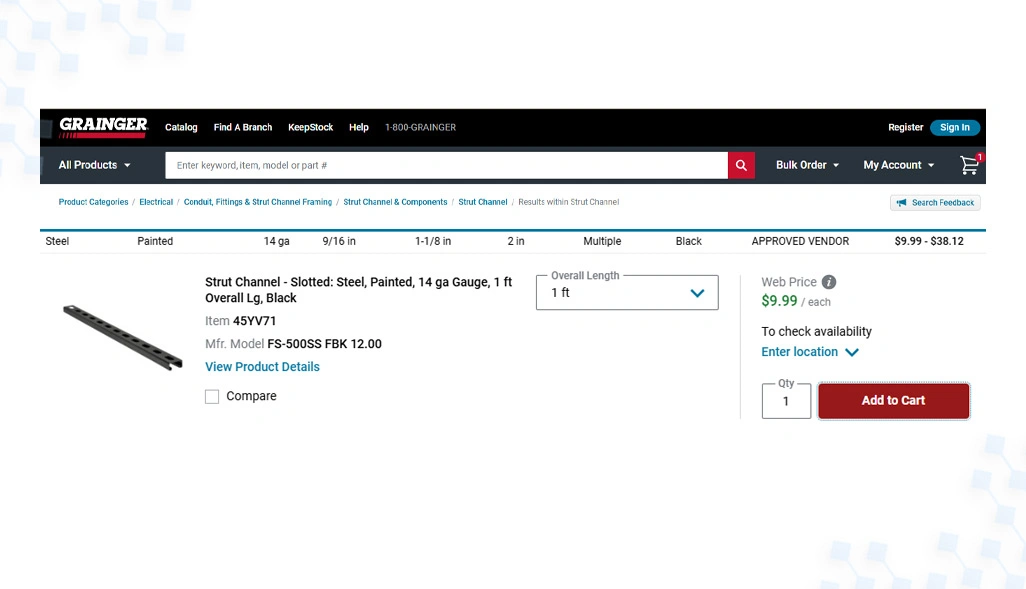
Industrial product analysis becomes increasingly complex when businesses need to evaluate numerous categories simultaneously. Different product groups often use different specifications, units, packaging formats, and technical attributes. A scalable data workflow can standardize these variations while preserving category-specific information needed for detailed research and operational decisions.
A structured Scrape Grainger Industrial Product Dataset workflow can organize product titles, categories, manufacturers, specifications, SKUs, pricing details, and availability information into consistent records. Such structured datasets can support large-scale filtering and segmentation while making it easier for analysts to compare products across related categories and identify gaps within existing assortments.
Businesses may also incorporate Mobile App Scraping into broader data programs when product information is presented through application-based shopping environments. Combining information from multiple digital channels can help organizations examine product visibility, assortment differences, pricing variations, and availability patterns across customer-facing platforms.
- Multi-category product comparison
- Assortment gap identification
- Product attribute normalization
- Cross-channel information analysis
- Large-volume dataset preparation
Scalable processing is particularly useful for businesses managing tens of thousands of records. Automated validation, normalization, categorization, and delivery can reduce repetitive preparation work while improving consistency. The resulting information can then be integrated with databases, dashboards, business intelligence tools, or internal analytical applications.
| Analysis Area | Relevant Information |
|---|---|
| Product comparison | Specifications |
| Assortment planning | Categories and SKUs |
| Market evaluation | Brand information |
| Availability review | Stock indicators |
| Data integration | Structured records |
How Web Data Crawler Can Help You?
For businesses managing extensive industrial catalogs, Grainger Data API for B2B Industrial Product Intelligence can provide a structured approach to collecting and organizing product information. We can help convert complex catalog information into usable datasets designed around specific analytical requirements, whether the objective involves pricing research, product comparison, assortment evaluation, or procurement intelligence.
Its approach can support:
- Automated product information collection across selected categories
- Structured extraction of SKU and specification attributes
- Data cleaning and normalization for consistent analysis
- Scheduled updates for changing product information
- Custom output formats aligned with business workflows
- Scalable processing for large industrial product catalogs
Businesses can also integrate collected information into databases, dashboards, analytics platforms, or internal applications. B2B Product Data API Using Grainger Data can support structured access to product intelligence while reducing repetitive collection activities and making large-scale information easier to analyze.
Conclusion
Complex industrial catalogs require more than basic product collection; they require organized information that supports accurate comparison and practical decision-making. Grainger Data API for B2B Industrial Product Intelligence can help businesses structure extensive product information for pricing, specifications, assortment, and procurement analysis.
Consistent monitoring also creates opportunities to evaluate market movements and purchasing patterns over time. Grainger Product Price Tracking can provide valuable pricing intelligence for teams managing competitive research and procurement strategies. Connect with Web Data Crawler to build a customized industrial product intelligence solution for your business.