


What Makes Glovo Restaurant Data Scraping for Menu, Pricing & Delivery Valuable for Food Brands?
07 September 2026
Introduction
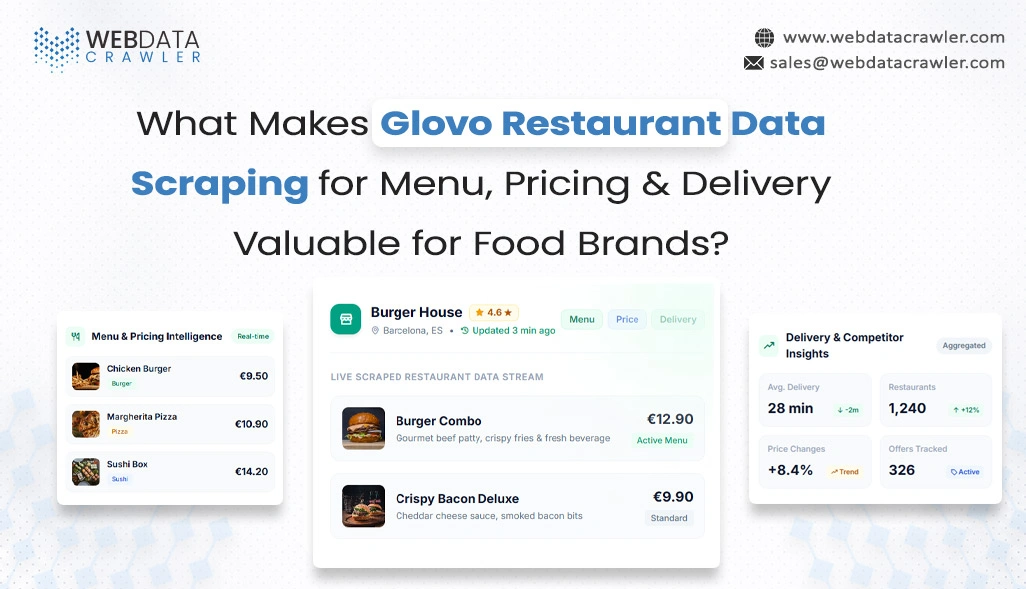
Food brands need timely visibility into menus, prices, promotions, ratings, and delivery conditions to understand how customers experience competing restaurants. Glovo Restaurant Data Scraping for Menu, Pricing & Delivery provides structured information that can support competitor analysis, assortment planning, pricing evaluation, and market research across multiple locations.
Restaurant information changes frequently because menus, item availability, delivery fees, discounts, and operating hours can shift throughout the day. Web Scraping Glovo Delivery Data helps businesses collect these changing details systematically, making it easier to compare restaurants and identify meaningful market patterns without depending entirely on manual research.
With organized food marketplace information, brands can evaluate pricing movements, menu depth, customer sentiment, and delivery performance more efficiently. Glovo Food Delivery Data Scraping for Insights can help transform restaurant-level information into actionable datasets for strategic decisions, especially when businesses monitor several restaurants, categories, cities, or competitive segments simultaneously.
Sharpening Restaurant Market Intelligence Through Structured Competitive Data
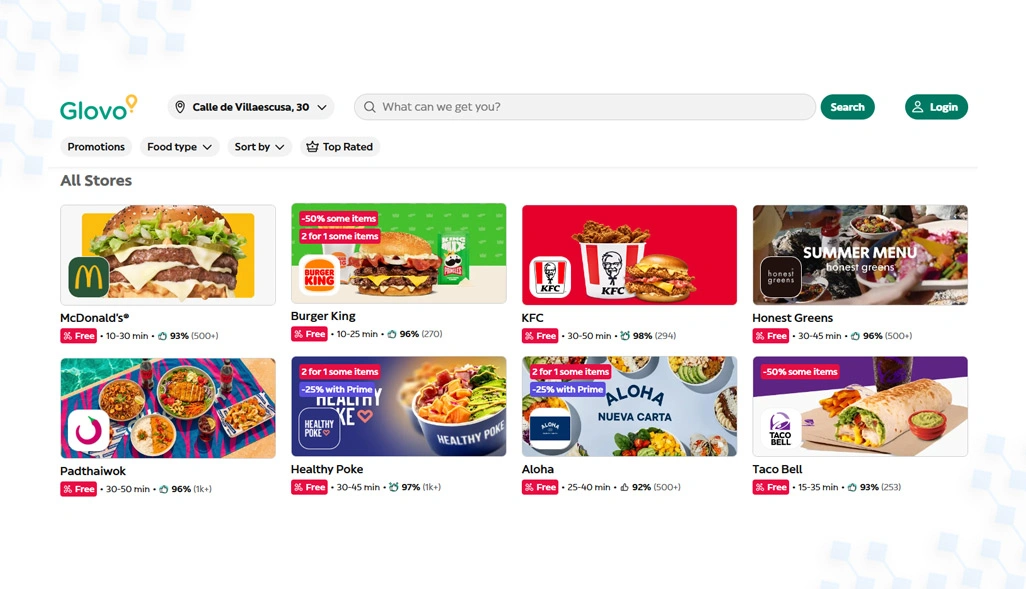
Restaurant listings provide valuable information about product assortment, menu categories, item names, prices, descriptions, ratings, delivery conditions, and availability. This information also creates a stronger foundation for evaluating competitors without depending on scattered manual observations. Glovo Food Delivery Data Scraping for Insights can organize these restaurant-level signals into structured records that support benchmarking, category evaluation, and market research.
A well-organized dataset can also reveal how restaurants position similar products at different price points. Glovo Restaurant Dataset records can help analysts establish historical comparisons and identify changes over time. For example, monitoring 500 restaurants with an average of 20 tracked items can create approximately 10,000 product-level observations during one collection cycle.
| Monitoring Metric | Example Volume |
|---|---|
| Restaurants monitored | 500 |
| Average items per restaurant | 20 |
| Product observations | 10,000 |
| Monitoring frequency | Weekly |
Such information can support practical decisions around assortment planning, competitive positioning, and category development. Teams can identify frequently listed products, underrepresented categories, price differences, and changes in restaurant offerings. Historical records are especially useful because they allow analysts to compare current observations against earlier collections instead of reviewing each listing independently.
Businesses can further use structured restaurant information to create recurring monitoring programs and performance reports. This approach helps reduce repetitive research while giving commercial teams a consistent reference point for decision-making. Key activities may include:
- Comparing restaurant assortments across locations.
- Measuring differences between competing price ranges.
- Identifying frequently offered menu categories.
- Tracking changes in restaurant positioning.
- Building historical market comparison records.
Strengthening Menu Monitoring With Consistent Collection Workflows
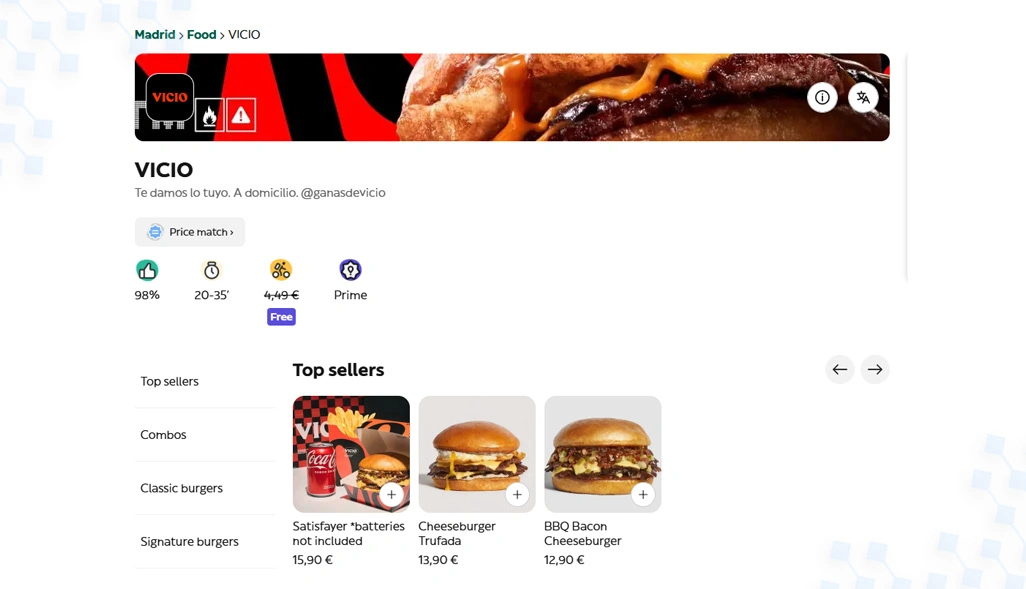
Restaurant menus are highly dynamic, with businesses regularly adding seasonal dishes, modifying recipes, removing unavailable products, changing portions, or updating descriptions. Consistent data collection allows food brands to identify these changes without manually checking every restaurant. Glovo Food Data Crawler workflows can help organize restaurant names, categories, item descriptions, prices, and availability into structured records for recurring analysis and comparison.
Menu monitoring becomes more valuable when historical observations are maintained over time. Glovo Food Data Extraction for Real Time Menu Insights can support frequent collection cycles where brands need timely visibility into menu movements. A program covering 300 restaurants with two checks per week could generate around 31,200 restaurant-level checks annually.
| Monitoring Area | Example Volume |
|---|---|
| Restaurants monitored | 300 |
| Weekly checks | 600 |
| Annual checks | 31,200 |
| Core attributes | 8+ |
Structured monitoring can also improve assortment research by showing which products appear consistently across competing restaurants and which items are less common. Brands can evaluate menu depth, category representation, product descriptions, and availability patterns to identify opportunities for product development. Such comparisons may help commercial teams make more informed decisions when reviewing their own assortment against market activity.
A repeatable collection workflow also reduces dependence on manual spreadsheet updates and disconnected research activities. Teams can organize collected records for dashboards, reports, historical comparisons, or internal analytics systems. Common monitoring activities include:
- Tracking newly added menu products.
- Identifying removed or unavailable dishes.
- Comparing category depth across restaurants.
- Reviewing product description changes.
- Monitoring recurring assortment movements.
Connecting Pricing Delivery And Customer Signals For Better Decisions
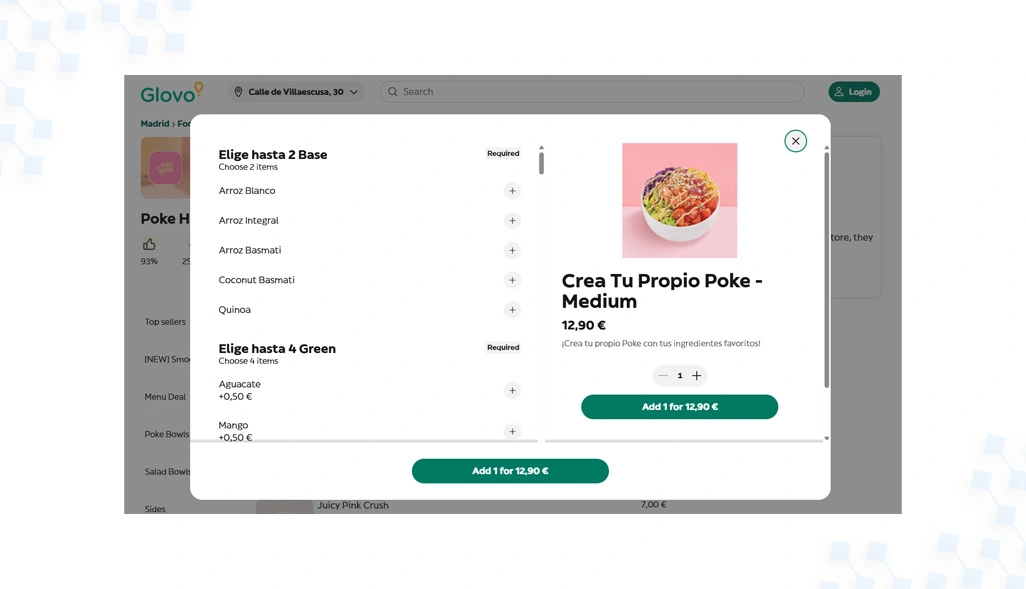
Restaurant competitiveness depends on more than the price of an individual menu item. Delivery charges, estimated delivery times, discounts, ratings, reviews, and availability can influence how customers evaluate the overall offer. Bringing these signals together allows food brands to examine marketplace positioning from several perspectives. Glovo Food Data API integration can help connect structured restaurant information with dashboards, analytics platforms, or internal reporting systems.
Pricing analysis becomes more meaningful when businesses examine individual product prices alongside promotional activity and delivery-related costs. Extract Glovo Pricing Dataset information can support historical price comparisons and help teams understand how competitors adjust their customer-facing offers. For example, monitoring 1,000 restaurants across 15 attributes produces approximately 15,000 data points per collection cycle.
| Intelligence Category | Example Indicators |
|---|---|
| Product pricing | Item price, discount |
| Delivery | Fee, estimated time |
| Customer response | Rating, review volume |
| Availability | Listed, unavailable |
Customer feedback provides another important layer of competitive intelligence. Ratings and reviews can indicate customer perceptions regarding food quality, service, value, and overall experience. When combined with pricing and delivery observations, these signals can help brands evaluate whether competitive offers appear stronger or weaker across different locations and categories.
Brands can organize these signals into recurring reports and monitoring dashboards for easier interpretation. Instead of reviewing individual listings manually, analysts can compare structured indicators across restaurants and periods. Useful applications include:
- Comparing prices across competing restaurants.
- Reviewing delivery-related customer-facing charges.
- Evaluating promotional positioning.
- Monitoring ratings and review patterns.
- Supporting recurring competitive intelligence reports.
How Web Data Crawler Can Help You?
For food brands managing competitive intelligence, Glovo Restaurant Data Scraping for Menu, Pricing & Delivery can simplify the collection of restaurant information across selected locations and categories. We can organize extracted information into structured datasets, making restaurant-level comparisons easier for analysts, marketers, retailers, and food delivery businesses.
Key capabilities can include:
- Collect restaurant information across selected locations and categories.
- Capture menu items, descriptions, prices, and availability details.
- Monitor delivery charges and estimated delivery information.
- Track discounts, promotions, and changing restaurant offers.
- Organize ratings and customer feedback into usable records.
- Deliver structured information for analysis, reporting, and dashboards.
The collected information can then support broader competitive research and recurring market monitoring. Glovo Food Data Extraction for Real Time Menu Insights can help teams identify menu changes, pricing movements, assortment shifts, and promotional patterns through regularly refreshed information. This creates a practical foundation for data-driven planning without relying solely on manual restaurant checks.
Conclusion
Food brands increasingly require structured marketplace information to understand competitor positioning, menu changes, pricing movements, and delivery conditions. By combining restaurant, menu, pricing, and delivery attributes, Glovo Restaurant Data Scraping for Menu, Pricing & Delivery can support more informed market research and competitive analysis.
Consistent monitoring can also help businesses evaluate customer-facing changes through ratings, reviews, promotions, and availability patterns. Scrape Glovo Restaurant Review & Rating Data can add valuable customer sentiment signals to broader competitive datasets. Build a smarter restaurant intelligence workflow with Web Data Crawler today and turn marketplace information into actionable business insights.