


How Does Gelson's Grocery Data API for Price & Product Monitoring Simplify Grocery Price Tracking?
Sep 01, 2026
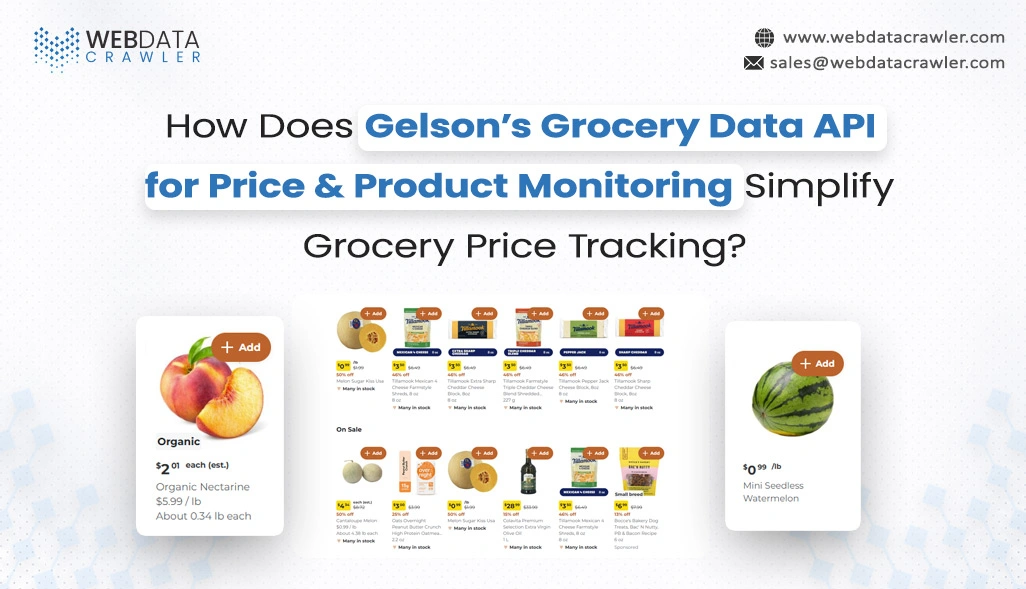
Introduction
Grocery retailers manage thousands of products across changing categories, prices, promotions, and availability conditions. Manual tracking can quickly become time-consuming and inconsistent, especially when teams need frequent updates from online storefronts. Automated Grocery Price Monitoring API solutions help organize this information into structured and usable datasets.
Accurate pricing intelligence supports better assortment planning, competitor analysis, promotion evaluation, and revenue decisions. Grocery Data Scraping enables businesses to collect product names, SKUs, prices, discounts, ratings, and availability information at scale. This gives retail teams a more consistent view of changing marketplace conditions.
With Gelson's Grocery Data API for Price & Product Monitoring, businesses can streamline product and pricing intelligence through structured data collection. Automated workflows reduce repetitive monitoring tasks while helping teams identify pricing changes, promotional movements, and stock conditions faster. The resulting datasets can support dashboards, analytics platforms, and internal decision-making processes.
Improving Product Visibility Through Structured Grocery Monitoring
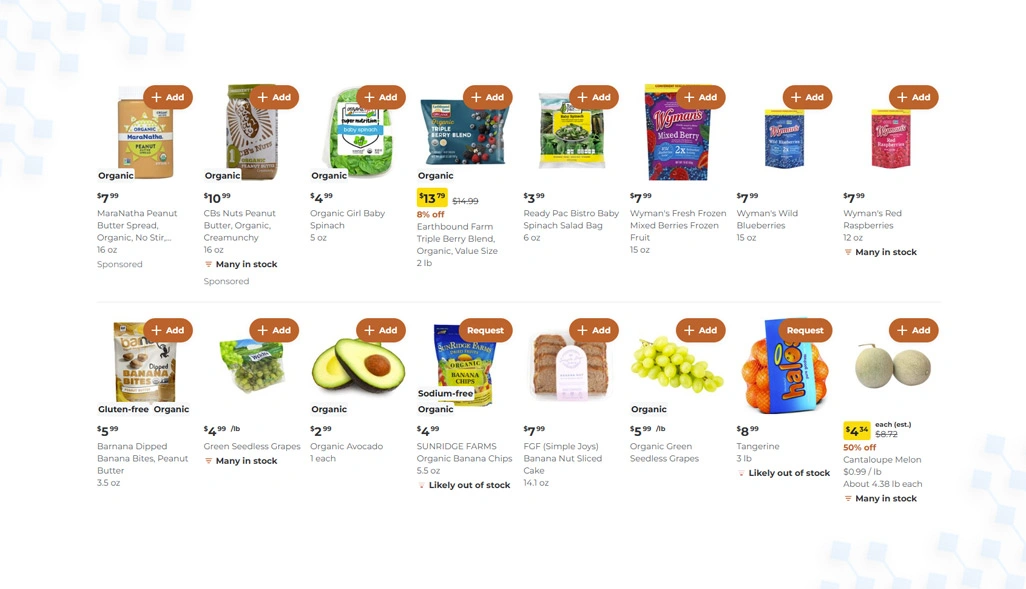
Retail teams need organized product information to evaluate changing grocery markets effectively. Product-level records can include identifiers, names, brands, pack sizes, categories, prices, promotions, and availability. Gelson's SKU Data Extraction for Insights helps organize these elements into structured datasets, allowing analysts to compare products consistently and maintain useful records for recurring research and reporting.
Automated collection also improves the scale of product monitoring activities. Instead of manually checking individual listings, teams can process larger catalogs through scheduled workflows. This creates a more consistent information flow and reduces repetitive research tasks, particularly when product ranges change frequently or retailers update their online catalogs throughout the day.
| Data Element | Monitoring Purpose |
|---|---|
| SKU | Product identification |
| Product Name | Catalog comparison |
| Brand | Brand analysis |
| Price | Pricing evaluation |
| Category | Assortment research |
| Promotion | Offer assessment |
Businesses can combine these structured records with Quick Commerce Datasets to broaden product intelligence across rapidly changing retail channels. This approach can help teams compare assortment patterns, identify frequently changing categories, and maintain historical observations that support pricing and merchandising analysis over longer monitoring periods.
- Consistent product identification across collected records
- Improved catalog organization and classification
- Reduced dependence on manual product research
- Better support for recurring monitoring workflows
- Easier preparation of historical product records
Converting Retail Price Movements Into Useful Signals
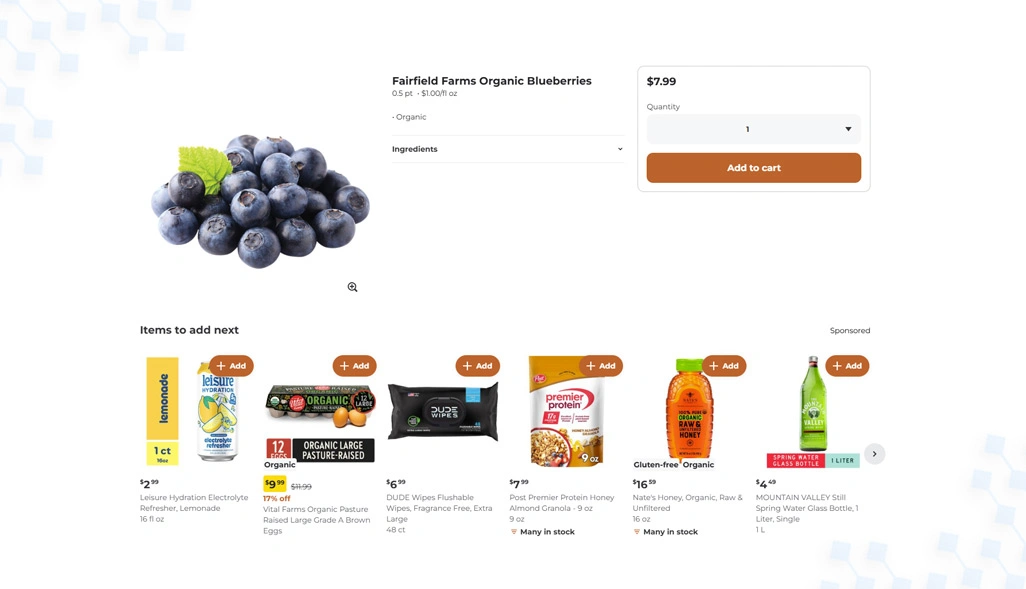
Price monitoring becomes more valuable when retailers can evaluate current observations alongside historical information. Gelson's Competitor Price Monitoring for Analytics supports structured comparison of product prices, discounts, and promotional movements. For example, tracking 10,000 products daily could generate approximately 300,000 product observations over a 30-day monitoring period.
Regular collection allows analysts to identify pricing differences that may otherwise remain difficult to track manually. Historical records can reveal recurring promotional patterns, unusual price changes, and category-level movements. These insights can help pricing teams evaluate market conditions and make more informed decisions around product positioning and competitive benchmarking.
| Monitoring Metric | Example Volume |
|---|---|
| Products tracked | 10,000 |
| Daily observations | 10,000 |
| 30-day observations | 300,000 |
| Product prices | 10,000/day |
| Promotional records | Variable |
With Web Scraping Services, organizations can establish recurring collection schedules and standardize incoming product information before analysis. Clean and structured outputs make it easier to feed pricing dashboards, analytical databases, and reporting systems while reducing the operational burden associated with maintaining large manual spreadsheets.
- Comparing product-level pricing movements
- Identifying promotional pricing patterns
- Monitoring category-level price changes
- Supporting competitive benchmarking activities
- Maintaining historical pricing observations
Scaling Continuous Monitoring Across Expanding Product Catalogs
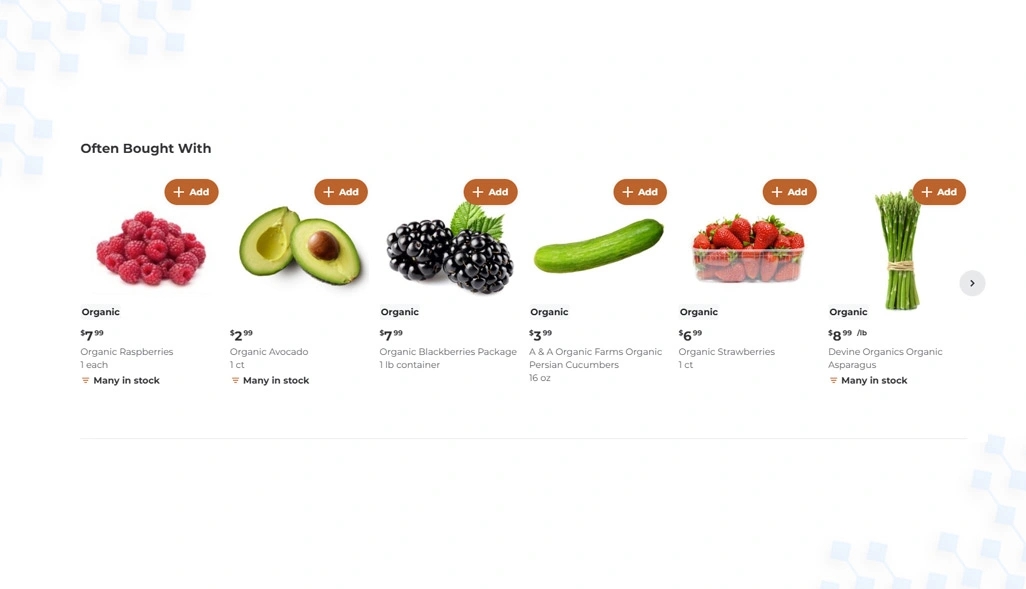
Large grocery operations require scalable collection processes because product catalogs can expand while availability and pricing change frequently. Gelson's Product Availability Data Using Web Scraping helps organizations monitor stock status, product visibility, and assortment changes through recurring collection workflows, providing teams with structured information for broader retail intelligence and operational analysis.
Automated monitoring can process numerous product pages within scheduled cycles while organizing collected information into consistent formats. This reduces repetitive checking and creates a dependable flow of product observations. Historical availability records can also help teams identify recurring stock changes, discontinued items, newly listed products, and assortment fluctuations across monitored categories.
| Capability | Operational Benefit |
|---|---|
| Scheduled Crawling | Recurring collection |
| Product Tracking | Catalog visibility |
| Availability Checks | Stock monitoring |
| Structured Output | Easier integration |
| Historical Records | Trend analysis |
Such workflows are particularly useful when businesses need to expand monitoring coverage without creating equivalent increases in manual research effort or operational complexity across their data infrastructure. Enterprise Web Crawling can support larger monitoring environments by coordinating multiple sources, collection schedules, and processing stages.
- Recurring collection across expanding product catalogs
- Automated availability and assortment observation
- Structured processing for downstream analytics
- Historical tracking of product changes
- Scalable workflows for larger monitoring requirements
How Web Data Crawler Can Help You?
Retail teams need more than raw information; they require structured, dependable data that can fit directly into existing analytical workflows. Gelson's Grocery Data API for Price & Product Monitoring can support recurring collection of product, pricing, availability, and promotional information while reducing the effort involved in maintaining large monitoring operations.
We can help businesses organize collection and processing through:
- Automated product and pricing data collection across defined sources.
- Scheduled extraction workflows designed for recurring monitoring requirements.
- Structured datasets prepared for analytics, reporting, and business applications.
- Data cleaning processes that improve consistency across collected records.
- Scalable workflows capable of supporting expanding product catalogs.
- Flexible delivery formats suited to dashboards, databases, and analytical systems.
With centralized processing and structured outputs, retail teams can work with cleaner information and reduce repetitive research activities. Grocery Price Monitoring API solutions can further simplify how refreshed grocery information moves into downstream systems.
Conclusion
Consistent grocery intelligence helps retailers evaluate pricing, assortment, promotions, and availability with greater efficiency. Gelson's Grocery Data API for Price & Product Monitoring provides a structured approach to collecting frequently changing product information and preparing it for analysis, reporting, and retail decision-making.
When organizations need scalable collection and reliable product intelligence, Gelson's SKU Data Extraction for Insights can complement broader monitoring workflows by organizing essential product-level information. Start building a more efficient grocery data strategy with Web Data Crawler and turn recurring retail information into structured business intelligence.