


What Can Flipkart & Nykaa Data API for E Commerce Data Scraping Reveal About Competitor Prices?
Aug 26, 2026
Introduction
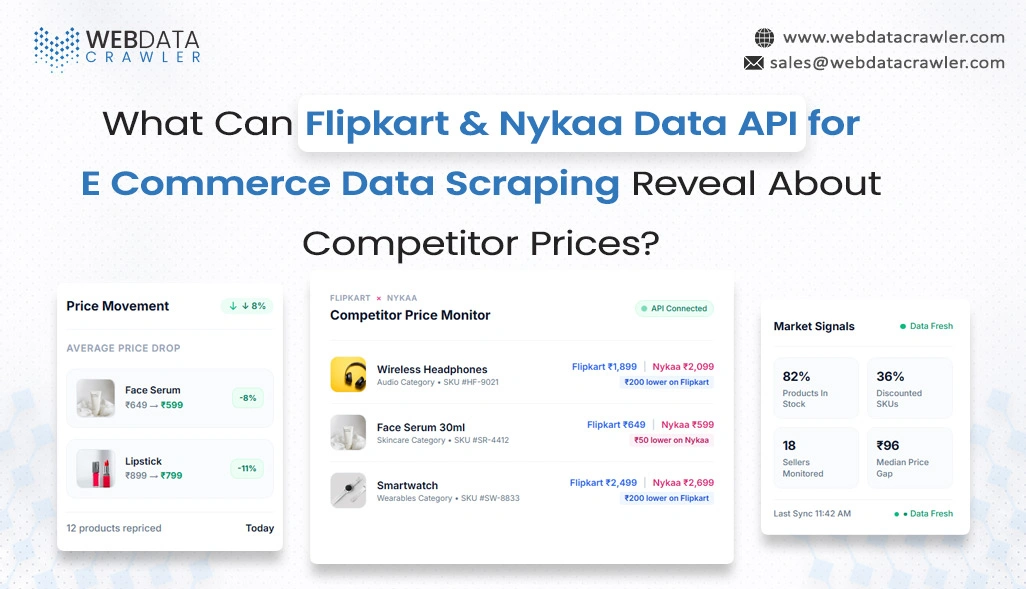
Competitive pricing has become a critical factor in ecommerce, where frequent price changes, discounts, and product launches can quickly influence purchasing decisions. Flipkart & Nykaa Data API for E Commerce Data Scraping helps businesses collect structured pricing, product, availability, and promotional information for continuous market comparison.
Retailers can combine this information with a Flipkart E-Commerce Data API to analyze competitor movements across categories, brands, and product segments. Monitoring both marketplaces provides broader visibility into pricing patterns, discount strategies, assortment changes, and customer-facing offers without relying on occasional manual research.
With automated collection, businesses can identify pricing gaps, measure promotional intensity, and understand changing market conditions. This supports faster decisions around pricing, product positioning, inventory planning, and campaign timing while reducing repetitive data collection efforts. The resulting datasets can also support dashboards, alerts, and competitive intelligence workflows.
Comparing Marketplace Prices Reveals Competitive Pricing Patterns
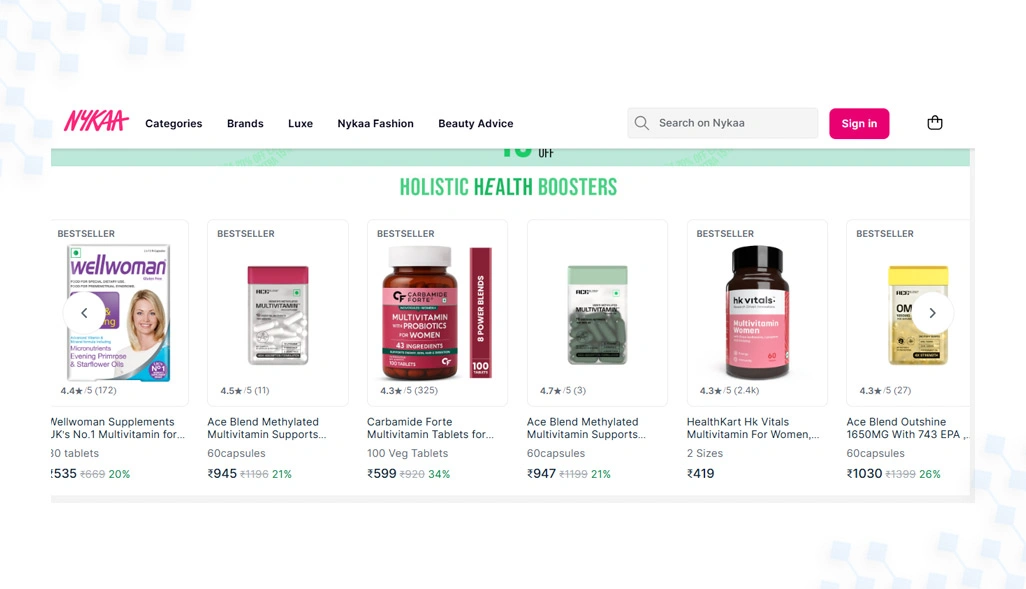
Marketplace pricing becomes easier to understand when businesses consistently compare products, discounts, and availability across competing platforms. Flipkart Product Data Scraping for Analysis can organize product-level information into structured datasets, allowing teams to examine pricing differences, promotional changes, and assortment movements over time. This creates a stronger foundation for evaluating competitor positioning.
When businesses Scrape Nykaa Product Data for E-Commerce Business, they can examine product names, brands, listed prices, discount percentages, ratings, reviews, and availability. Comparing these attributes with equivalent listings helps identify pricing gaps and promotional differences that may influence customer purchase decisions across beauty, fashion, and lifestyle categories.
Key areas businesses can monitor include:
- Listed and discounted prices
- Product availability changes
- Brand-level assortment movements
- Promotional frequency and depth
- Ratings and review activity
Regular monitoring can also reveal recurring patterns rather than isolated price changes. For example, businesses may observe whether discounts increase during weekends, seasonal campaigns, product launches, or major shopping events. Such historical comparisons help pricing teams understand when competitors become more aggressive and where adjustments may be necessary.
| Monitoring Area | Business Relevance |
|---|---|
| Pricing | Competitive benchmarking |
| Promotions | Campaign evaluation |
| Availability | Stock assessment |
| Assortment | Category comparison |
Product-Level Comparisons Clarify Rival Offers And Positioning
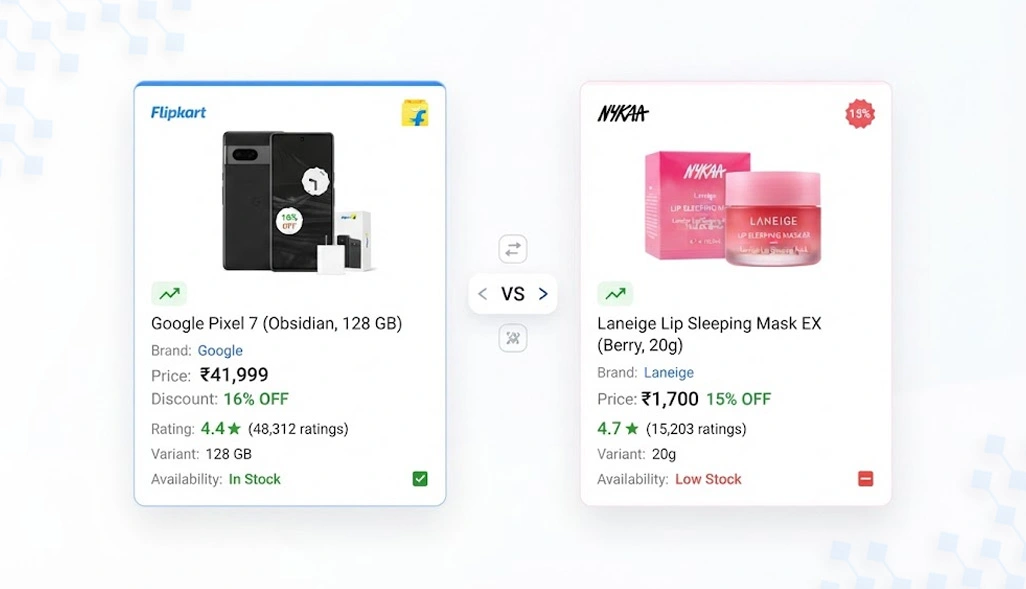
Product-level monitoring provides valuable context beyond simple price comparisons. Businesses can Scrape Flipkart Product Data to examine product specifications, brands, ratings, reviews, discounts, and availability. Combining these attributes allows analysts to determine whether a lower price is connected to a different product configuration, promotional campaign, or competitive positioning strategy.
Nykaa Competitor Price Monitoring can further support comparisons across beauty and personal-care categories where product variants, brands, sizes, and promotional bundles frequently differ. Evaluating these details together helps businesses distinguish genuine price differences from variations caused by pack sizes, product versions, or temporary offers.
Useful product-level signals include:
- Product specifications
- Brand information
- Variant details
- Customer ratings
- Review volumes
- Discount information
A structured dataset can also make large-scale comparisons more practical. Tracking 1,000 products across multiple daily checkpoints can generate tens of thousands of observations every month. These records help category managers identify products experiencing frequent price movements, unusual discounts, declining availability, or increased promotional activity.
| Product Signal | Evaluation Purpose |
|---|---|
| Specifications | Product matching |
| Variants | Offer comparison |
| Ratings | Customer perception |
| Reviews | Market response |
Automated Market Tracking Improves Pricing Intelligence Decisions
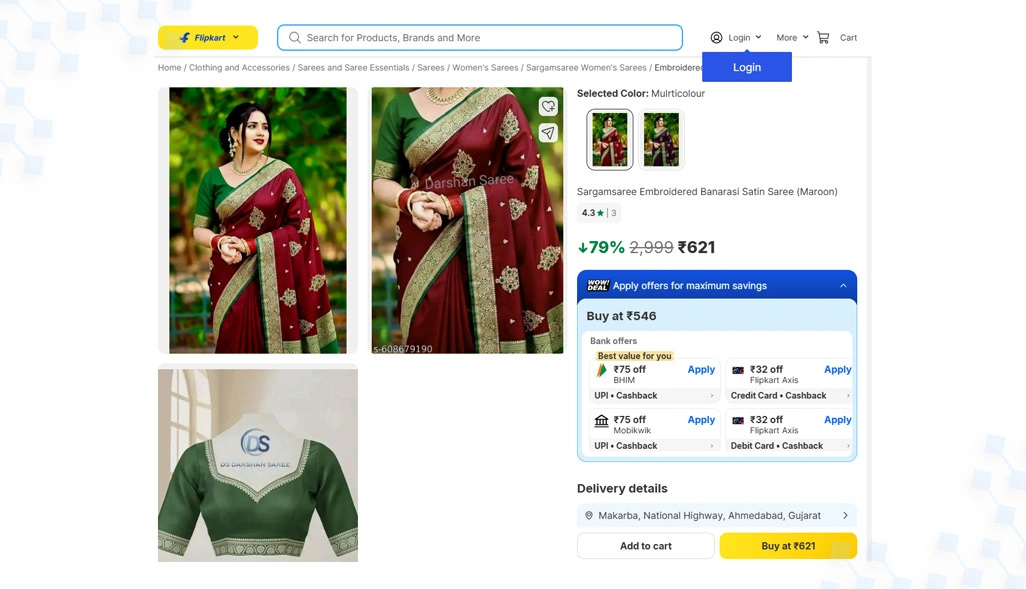
Automated monitoring makes competitive research more consistent when marketplace information changes frequently. Flipkart Competitor Price Monitoring Using We Scraping can help businesses collect recurring observations and organize them into historical datasets. This allows teams to examine price movements, discounts, availability, and assortment changes without depending entirely on manual research.
Businesses can also use Ecommerce Competitor Price Monitoring via Scraper to create recurring collection schedules across selected products and categories. For instance, four monitoring cycles each day could produce approximately 120 checkpoints for an individual product over a 30-day period, providing richer historical visibility for identifying repeated pricing behavior.
Automated tracking can support:
- Scheduled marketplace observations
- Historical price comparisons
- Product availability tracking
- Discount movement analysis
- Competitive reporting workflows
- Pricing alert creation
A Web Crawler can support the structured collection of publicly available marketplace information according to defined fields and schedules. Once organized, these records can feed dashboards, alerts, analytical models, and reporting systems. Historical datasets can also help teams compare current movements with earlier promotional or pricing cycles.
| Tracking Activity | Potential Outcome |
|---|---|
| Price checks | Faster benchmarking |
| Discount tracking | Promotion analysis |
| Stock monitoring | Availability insights |
| Historical records | Trend identification |
How Web Data Crawler Can Help You?
For businesses managing large ecommerce catalogs, the Flipkart & Nykaa Data API for E Commerce Data Scraping can simplify the collection and organization of marketplace information. We can help convert frequently changing public product information into structured datasets that teams can analyze consistently. The approach can support scheduled collection, standardized fields, historical storage, and integration with internal analytics environments.
Key capabilities include:
- Automated collection across selected marketplace pages
- Structured extraction of product and pricing attributes
- Scheduled monitoring for recurring market updates
- Data normalization for easier cross-platform comparison
- Historical storage for trend and movement analysis
- Delivery formats suited to analytics and business workflows
With these capabilities, teams can reduce repetitive manual research and create more consistent competitive datasets. The resulting information can support Flipkart Product Data Scraping for Analysis, helping analysts evaluate product positioning, price changes, discounts, assortment shifts, and marketplace activity through organized historical records.
Conclusion
Ecommerce competition changes continuously as retailers modify prices, promotions, product assortments, and availability. Flipkart & Nykaa Data API for E Commerce Data Scraping gives businesses a structured way to collect marketplace signals and compare competitor activity. These insights can strengthen pricing reviews, assortment planning, promotional evaluation, and broader market intelligence.
Combining automated collection with Ecommerce Competitor Price Monitoring via Scraper can make recurring research more systematic and scalable. Historical datasets also help teams identify recurring patterns instead of relying only on isolated observations. Start collecting structured ecommerce data today with Web Data Crawler and turn competitor pricing signals into actionable business intelligence.