
Why Is Fare Scraping for Set Dynamic Prices Becoming Key to Smarter Airline Pricing Strategies?
Sep 16
Introduction
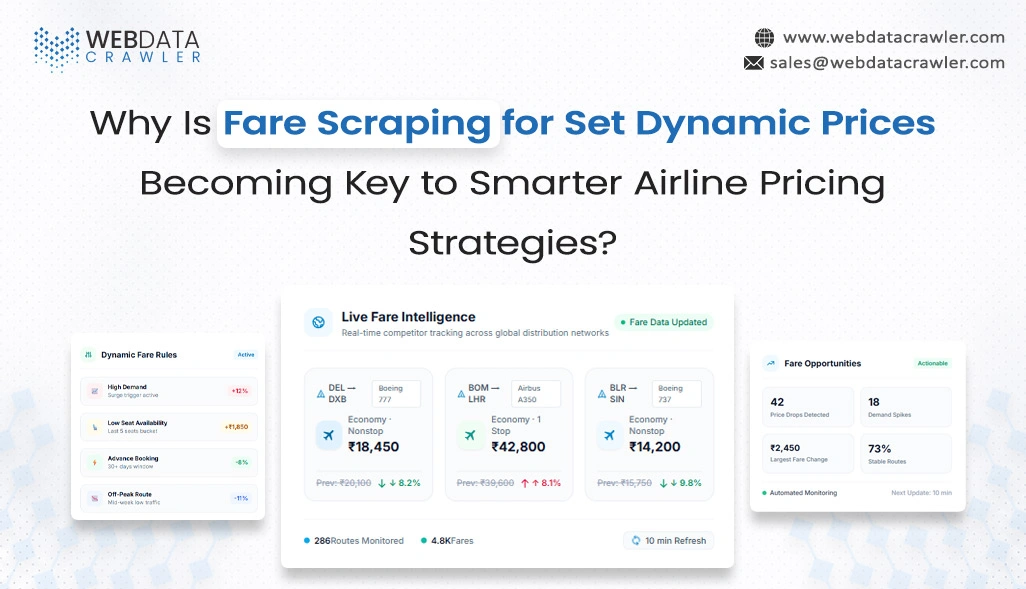
Airline ticket prices change frequently because of demand, competition, seasonality, route popularity, and booking patterns. Traditional pricing methods often struggle to reflect these rapid shifts. Fare Scraping for Set Dynamic Prices helps airlines monitor market movements, compare competing fares, and make pricing decisions based on current market conditions.
Modern pricing teams increasingly rely on Web Scraping Travel Data to collect information from airline websites, OTAs, and travel platforms. This information can reveal fare fluctuations, seat availability, route-level differences, promotional changes, and booking patterns. With structured data, airlines can evaluate market conditions more consistently and respond to pricing changes with greater accuracy.
According to industry research, dynamic pricing can help airlines improve revenue performance by aligning fares with changing customer demand. Automated collection also reduces the need for repetitive manual monitoring. By combining competitor intelligence, historical information, and real-time market signals, airlines can create more responsive pricing strategies while maintaining better visibility across routes and booking channels.
Monitoring Competitor Fares Across Changing Airline Markets
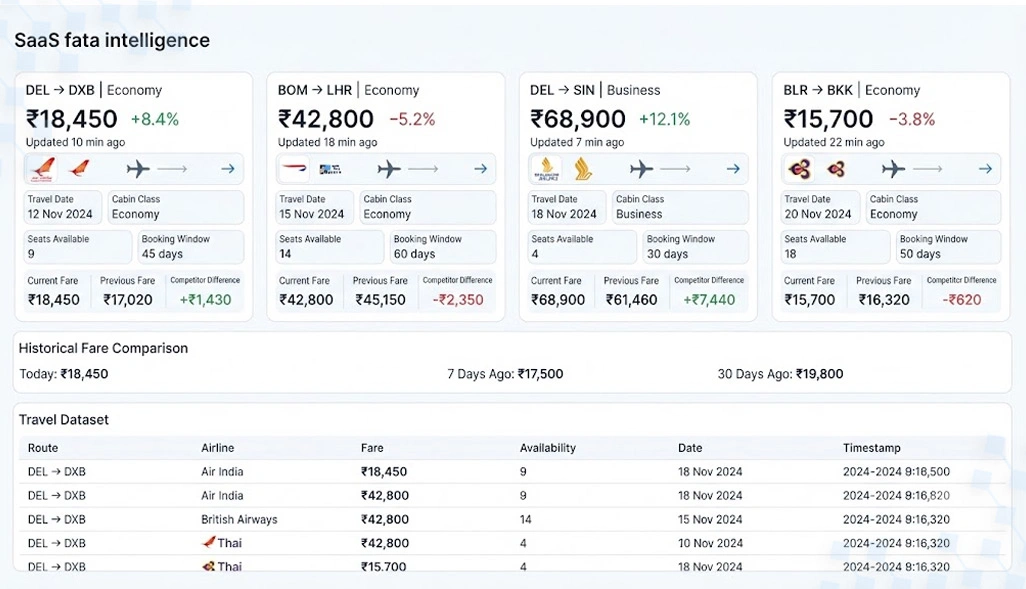
Airline pricing teams operate in markets where competitor rates can change several times within a day. Real-Time Flight Price Scraping enables businesses to monitor fare variations across airlines, routes, travel dates, cabin classes, and booking periods. Instead of depending on occasional manual checks, teams can receive structured observations that make current market conditions easier to evaluate. This continuous visibility is particularly useful when demand rises suddenly or competitors introduce temporary fare adjustments.
Historical comparisons add another layer of value because current rates become more meaningful when viewed against previous market behavior. Travel Datasets can bring together fare records, route information, availability indicators, and seasonal observations for deeper evaluation. Revenue teams can then identify recurring patterns around holidays, weekends, peak seasons, and advance booking periods while determining where pricing differences appear most frequently across competing carriers.
Several factors can influence the way competitor pricing should be evaluated:
- Route-level fare comparisons across multiple carriers
- Changes in ticket rates during high-demand periods
- Differences between economy, premium, and business cabins
- Seat availability alongside listed ticket prices
- Promotional pricing and temporary market adjustments
A structured monitoring approach also helps teams identify pricing gaps before they become significant. Flight Price Data Intelligence via Web Scraping can organize collected observations into usable intelligence for revenue managers and analysts. With consistent monitoring, airlines can assess competitor positioning, identify unusual fare movements, and refine pricing decisions according to current market conditions rather than relying solely on outdated snapshots.
| Monitoring area | Information evaluated | Pricing application |
|---|---|---|
| Competitor rates | Listed ticket prices | Market comparison |
| Route activity | Route-level changes | Fare positioning |
| Availability | Inventory indicators | Capacity assessment |
| Travel period | Seasonal movements | Demand planning |
Using Market Signals to Improve Dynamic Pricing Decisions
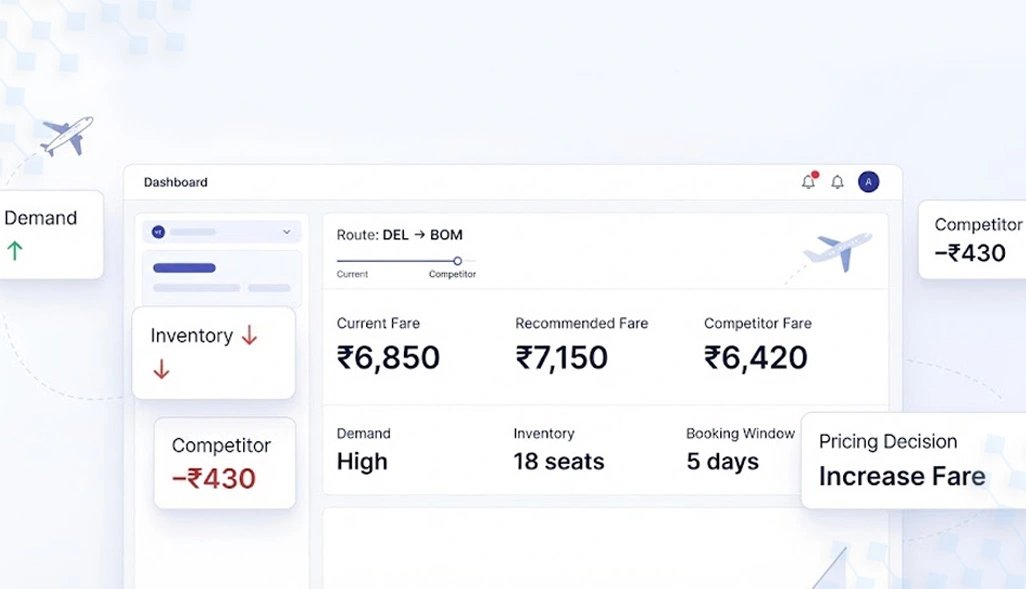
Airline pricing decisions depend on more than the ticket price displayed on a booking platform. Demand levels, inventory, travel dates, competitor activity, and booking windows can all influence the appropriate fare. How Airlines Use Fare Scraping for Dynamic Pricing demonstrates how continuously collected market information can support revenue teams when evaluating these interconnected pricing signals. The objective is to create a broader market view before changing ticket rates.
Large-scale monitoring becomes particularly valuable for airlines operating across numerous destinations. Pricing teams may need to review thousands of observations covering domestic and international routes. Automated collection can organize these records according to route, carrier, cabin, travel date, and fare category, making it easier to compare market conditions without manually reviewing individual sources throughout the day.
Important market signals can include:
- Competitor fare changes across selected routes
- Remaining seat or inventory levels
- Booking-window variations and travel periods
- Seasonal demand and route popularity
- Differences between direct and connecting flights
The quality of pricing decisions also improves when current observations are compared with previous records. Enterprise Web Crawling can support large-scale collection requirements by bringing information from multiple sources into a consistent workflow. Analysts can evaluate whether a fare movement is temporary or part of a broader market pattern. This makes pricing reviews more structured and gives revenue teams better context before implementing changes.
| Market signal | Evaluation purpose | Business relevance |
|---|---|---|
| Demand activity | Identify market pressure | Pricing adjustment |
| Competitor movement | Compare positioning | Competitive planning |
| Inventory status | Assess capacity | Revenue optimization |
| Booking window | Understand timing | Fare planning |
Analyzing Historical Fare Patterns for Better Revenue Planning
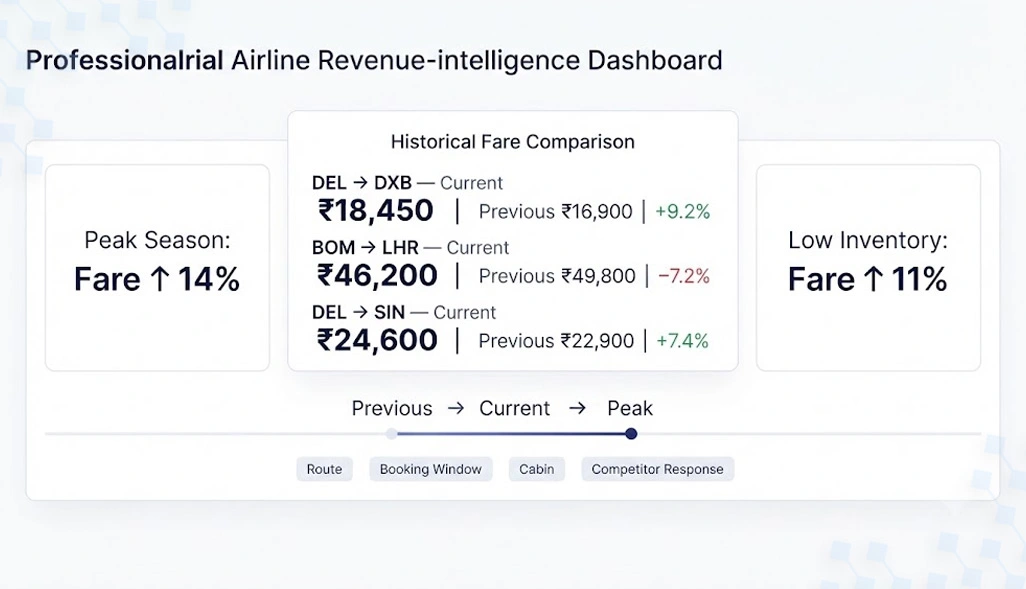
Historical pricing information gives airlines an important reference point for understanding how fares behave under different market conditions. Flight Price Data Scraping for Analysis allows teams to compare current ticket rates with earlier observations across routes, booking windows, seasons, and cabin categories. These comparisons can reveal recurring price movements that may otherwise remain difficult to identify through isolated checks.
Historical data also reveals how competitors react to rising demand or limited inventory. Pricing teams can track fare changes, promotional patterns, and timing across carriers. With Web Scraping Services integrated into this process, airlines can better understand competitive behavior and refine future pricing decisions.
Useful historical analysis areas include:
- Fare movements across different travel periods
- Competitor responses to demand fluctuations
- Pricing differences between booking windows
- Seasonal changes across important routes
- Availability patterns linked to fare changes
Another valuable source of insight comes from online travel agencies, where customers can compare multiple airline options within the same search environment. Extract OTA Data for Pricing Trends can help pricing teams evaluate how fares are presented across booking channels and identify differences in market positioning. Combining this information with internal records can provide a more complete picture of competitive pricing behavior and demand patterns.
| Historical area | Data compared | Planning benefit |
|---|---|---|
| Seasonal fares | Peak versus low periods | Better preparation |
| Booking windows | Early versus late rates | Timing decisions |
| Competitor behavior | Carrier-level changes | Market positioning |
| Route history | Repeated fare movements | Trend identification |
When historical observations are consistently maintained, pricing teams can build stronger benchmarks and make future fare adjustments with greater confidence. This approach supports revenue planning while reducing dependence on fragmented market checks and one-time competitor observations.
How Web Data Crawler Can Help You?
Airlines need consistent data collection to understand rapidly changing fares and competitor activity. Fare Scraping for Set Dynamic Prices can support automated monitoring across multiple sources while organizing information into usable datasets. We can collect relevant fare signals and reduce repetitive manual checks.
Key capabilities include:
- Automated Fare Monitoring: Collects changing ticket prices from selected travel sources at defined intervals.
- Competitor Price Tracking: Monitors comparable fares across airlines, routes, and travel dates.
- Route-Level Data Collection: Organizes pricing information according to specific routes and markets.
- Availability Monitoring: Captures seat and inventory indicators alongside listed fares.
- Structured Data Delivery: Converts collected information into consistent formats for analytics teams.
- Scalable Data Collection: Supports larger monitoring requirements across multiple destinations and sources.
For pricing teams, structured information can simplify market comparisons and improve the speed of internal analysis. Extract OTA Data for Pricing Trends can further help teams evaluate how fares appear across different booking channels. This broader view supports more informed pricing decisions, competitive benchmarking, and revenue planning.
Conclusion
Airlines require timely market information to respond to fluctuating demand, competitor movements, and changing inventory. Fare Scraping for Set Dynamic Prices provides a structured approach to monitoring these changes and supporting more responsive pricing decisions. When combined with historical comparisons and route-level analysis, collected fare information can strengthen revenue planning.
Effective pricing also depends on understanding market behavior across multiple channels. How Airlines Use Fare Scraping for Dynamic Pricing highlights the value of continuously evaluating competitor fares, availability, and demand signals before adjusting ticket rates. Contact Web Data Crawler today to discuss how we can support your airline pricing and fare intelligence requirements.