
How to Extract Trivago Hotel Listings and Rates to Boost 30% Revenue Insights in Travel Analytics?
Feb 09
Introduction
In today's competitive travel ecosystem, pricing shifts happen faster than traditional market research can track. Hotel brands, OTAs, travel agencies, and analytics firms are now focusing on real-time intelligence to understand how rates move across locations, seasons, and demand cycles. One of the most effective ways to capture these insights is by collecting structured hotel listing information and rate data directly from metasearch platforms like Trivago.
When companies monitor listing availability, property rankings, competitor pricing, and discount patterns, they can make stronger business decisions backed by accurate data. This is where the ability to Extract Trivago Hotel Listings and Rates becomes valuable for travel analytics, helping teams identify which cities show the strongest booking demand and which properties are losing visibility.
With Trivago Travel Data Scraping Services, travel organizations can build reliable data pipelines that deliver market-wide pricing insights at scale. This allows better forecasting, smarter campaign planning, and improved revenue optimization strategies.
City-Wise Pricing Patterns for Stronger Demand Forecasting
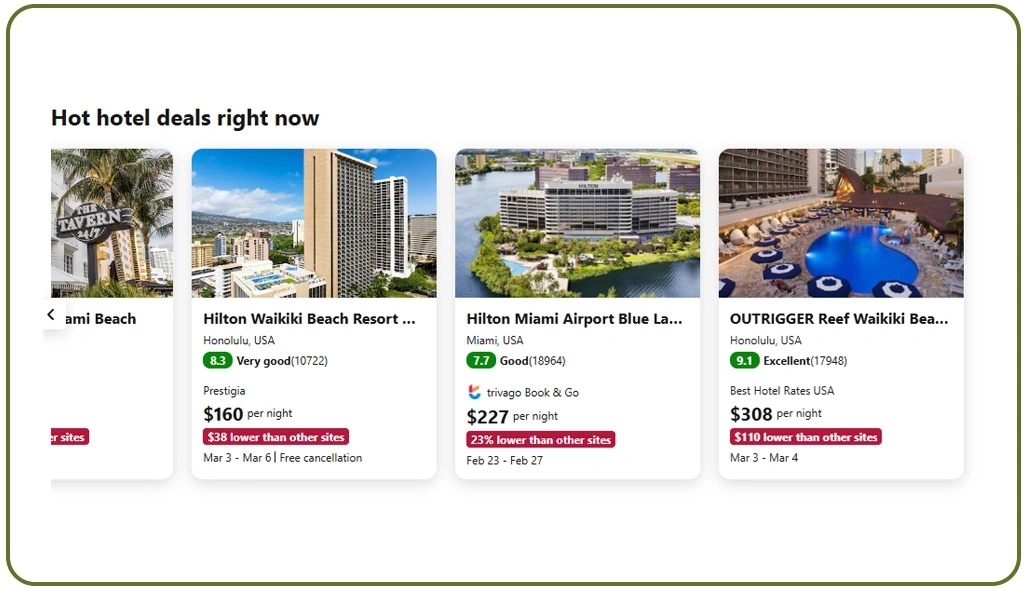
Hotel pricing is highly dynamic and changes based on seasonality, local festivals, weekend demand, flight inflow, and competitor activity. Industry reports suggest that data-driven hotel forecasting can improve revenue outcomes by nearly 15%–20% when supported with automated monitoring and pricing comparison models.
When businesses plan to Scrape Hotel Pricing Data From Trivago, they gain visibility into nightly rate changes, availability patterns, and promotional pricing across different destinations. Such insights become more accurate when combined with Travel Datasets, where pricing information can be mapped with seasonality trends, traveler traffic behavior, and booking intent analysis.
A dedicated Trivago Hotel Data Scraper supports consistent hotel listing extraction, enabling companies to track pricing behavior daily instead of relying on manual research. By monitoring city-level patterns, businesses can plan promotional calendars, forecast high-value demand periods, and adjust pricing strategies before competitors react.
| Forecasting Insight Area | Value Delivered Through Pricing Intelligence |
|---|---|
| Seasonal demand tracking | Helps predict peak travel months earlier |
| City-level price comparison | Identifies rising and declining destinations |
| Rate volatility monitoring | Detects sudden pricing changes in real time |
| Campaign planning support | Improves timing of promotions and offers |
| Competitor benchmarking | Strengthens market positioning decisions |
Overall, structured Trivago-based hotel intelligence strengthens forecasting models, reduces market uncertainty, and creates better alignment between pricing, demand cycles, and revenue growth planning.
Competitor Rate Benchmarking for Better Strategy
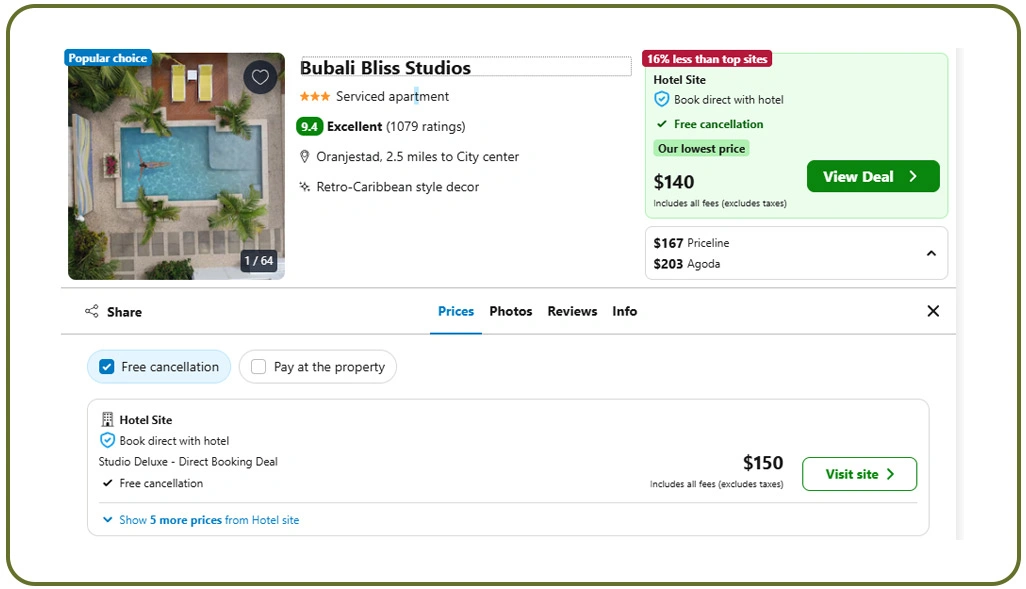
Competitive pricing analysis is one of the most important factors influencing hotel booking performance. Research indicates that hotels using competitor benchmarking and automated pricing intelligence can improve booking conversion rates by nearly 12%–18% through better alignment with market expectations.
Using a Trivago Hotel Booking Data Extractor, travel brands and analytics teams can capture competitor rates, promotional pricing, provider visibility, and listing-level comparisons. This enables revenue managers to identify which properties are discounting aggressively and which hotels maintain premium positioning.
A major advantage comes from tracking Web Scraping Trivago Hotel Price Fluctuations by City, which highlights where pricing increases are tied to events, seasonal travel spikes, or sudden demand surges. This helps businesses respond faster by optimizing offers, adjusting discount strategies, and strengthening visibility across high-performing markets.
| Competitive Benchmark Factor | What It Helps Businesses Measure |
|---|---|
| Average competitor rate | Defines market baseline pricing |
| Discount intensity tracking | Detects aggressive promotional markets |
| Provider visibility analysis | Identifies which channels dominate listings |
| Weekday vs weekend trends | Measures demand-driven price shifts |
| City-level comparison | Supports destination-based strategy planning |
When combined with Popular Travel Data Scraping, competitor benchmarking becomes even more effective because pricing trends can be compared with travel behavior signals such as flight demand and tourism growth patterns.
Turning Rate Monitoring into Actionable Dashboards
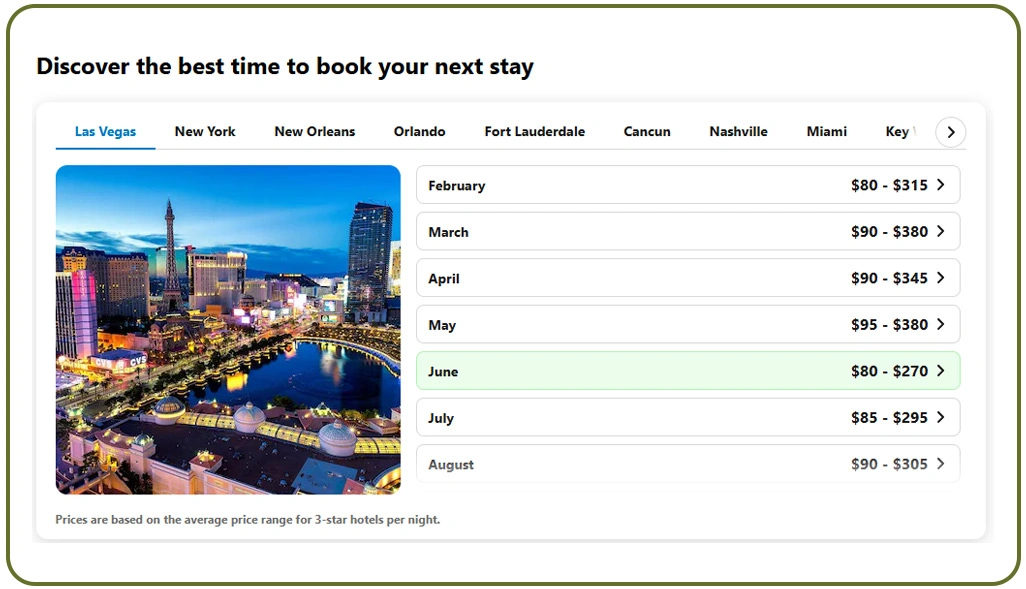
Manual hotel price tracking is often unreliable because it cannot scale across thousands of listings and multiple destinations. Industry findings show that automated intelligence dashboards can reduce reporting workload by up to 50% and improve decision-making speed by nearly 35% due to structured real-time data availability.
With scalable extraction systems, companies can build dashboards that track minimum and maximum nightly rates, average price movement trends, promotional cycles, listing rank changes, and availability signals. This makes it easier for revenue teams to detect early market indicators such as sudden rate drops that may signal weak demand or rapid price increases that indicate rising occupancy.
A strong Trivago travel data pipeline supports reliable data flow for structured hotel intelligence, ensuring consistent output formats such as JSON or CSV. Additionally, automated extraction supports broader Travel Data Scraping requirements by allowing organizations to connect hotel pricing insights with competitor performance evaluation.
| Dashboard Intelligence Metric | Business Benefit for Travel Analytics |
|---|---|
| Average nightly price trend | Supports long-term forecasting models |
| Discount cycle monitoring | Improves promotion timing decisions |
| City-level rate variance | Identifies profitable destination clusters |
| Listing visibility patterns | Measures competitive placement shifts |
| Data refresh automation | Enables faster decision-making outcomes |
To ensure accuracy at scale, a dedicated Trivago Hotel Booking Data Extractor workflow can also validate listing consistency, detect missing rate updates, and maintain clean structured reporting.
How Web Data Crawler Can Help You?
Using advanced scraping frameworks to Extract Trivago Hotel Listings and Rates, we help businesses create accurate datasets that support revenue planning, competitor monitoring, and reliable city-level forecasting.
What We Deliver for Travel Analytics:
- Automated listing collection across multiple locations.
- Daily and hourly pricing refresh for accurate tracking.
- Multi-provider comparison for stronger competitor insights.
- Clean structured datasets ready for dashboards.
- Scalable extraction for large destination coverage.
- Quality validation to ensure reliable business reporting.
For advanced automation and structured extraction support, our Trivago Hotel Booking Data Extractor services ensure your pricing pipeline remains stable and consistent.
Conclusion
Hotel pricing is no longer stable enough for manual research methods, especially when competitors change rates daily across multiple booking providers. The ability to Extract Trivago Hotel Listings and Rates helps transform scattered price updates into clear market intelligence that supports stronger revenue planning.
Using a powerful Trivago Hotel Data Scraper, we help businesses convert hotel listings into structured datasets that improve reporting and profitability. Contact Web Data Crawler today to build your customized Trivago data extraction workflow and accelerate travel analytics performance.