
How to Extract Property Demand Trends Using Mubawab Data to Spot 28% Rising Property Hotspots?
Feb 24
Introduction
The real estate sector across North Africa and the Middle East has witnessed dynamic shifts in buyer preferences, rental demand, and pricing fluctuations. Platforms like Mubawab provide a continuous stream of property listings, pricing updates, and regional supply-demand indicators. Investors and developers increasingly rely on structured data analysis rather than assumptions to identify areas showing 28% or more growth in listing activity and buyer engagement.
With advanced Mubawab Property Data Scraping Services, stakeholders can monitor listing frequency, price adjustments, property types, and geographic concentration in real time. This allows analysts to evaluate emerging hotspots before price corrections occur.
By integrating automated extraction frameworks, companies can systematically Extract Property Demand Trends Using Mubawab Data and translate raw listings into actionable intelligence. Instead of relying solely on quarterly reports, investors can analyze live market movements and identify rising districts where demand is accelerating faster than supply.
Detecting High-Growth Neighborhood Clusters Through Structured Market Analysis
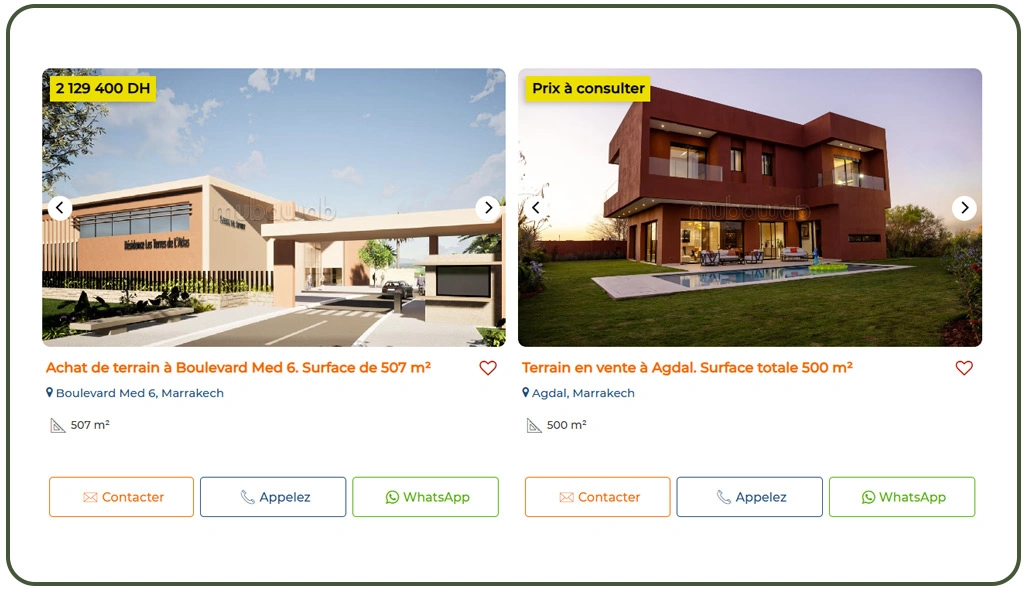
Understanding which districts are accelerating in demand requires consistent monitoring of listing activity, buyer inquiries, and pricing momentum. By building structured Real Estate Datasets, analysts can track how micro-markets evolve month over month and isolate regions showing double-digit growth patterns.
Through Mubawab Property Listings Data Extraction, businesses can organize raw listing data into standardized fields such as property type, listing date, location granularity, and price revisions. This structured approach allows deeper comparisons across neighborhoods rather than relying solely on city-level averages.
Below is a sample growth comparison model:
| Metric | Month 1 | Month 3 | Growth % |
|---|---|---|---|
| Active Listings | 3,200 | 4,050 | 26.5% |
| Avg. Price per Sq. Meter | $1,250 | $1,420 | 13.6% |
| Inquiry Volume | 1,100 | 1,410 | 28.1% |
| Avg. Listing Duration (Days) | 42 | 31 | -26% |
A 28% rise in inquiry volume alongside reduced listing duration signals intensifying competition. When these trends align with consistent price appreciation, it indicates a potential hotspot forming. Analysts can further segment data by property type—apartments, villas, or commercial units—to determine whether growth is driven by residential expansion or investment-grade assets.
Structured clustering also highlights seasonal demand cycles and inventory shortages. This allows investors to identify districts transitioning from stable markets to high-demand zones. With clean datasets and historical comparisons, decision-makers move beyond assumptions and rely on measurable signals that validate entry timing and long-term appreciation potential.
Monitoring Price Movements and Buyer Activity With Automated Tracking

In rapidly shifting markets, price volatility often reveals more than headline growth numbers. Continuous Real Estate Data Scraping enables stakeholders to track price edits, relisting frequency, and buyer interaction metrics in real time.
Using a Mubawab Housing Market Data Intelligence Scraper, analysts can capture structured indicators including daily price changes, rental-to-sale ratios, and inventory refresh rates. This systematic approach helps businesses to Scrape Real Estate Market Trends via Mubawab Data and translate fluctuations into actionable insights.
Quarterly performance comparison example:
| Indicator | Q1 | Q2 | Change |
|---|---|---|---|
| Avg. Rental Price | $750 | $880 | +17.3% |
| New Listings | 5,200 | 6,500 | +25% |
| Luxury Segment Share | 12% | 19% | +7% |
| Buyer Contact Rate | 18% | 23% | +5% |
A 17% rental increase paired with a 25% rise in new listings may indicate expanding demand rather than oversupply. Monitoring how quickly listings receive inquiries also provides early signals of competitive buyer behavior. Additionally, price revision analysis reveals negotiation trends.
Conversely, repeated downward edits may highlight speculative overpricing. Automated monitoring ensures consistent market visibility across property categories and locations. Instead of relying on periodic reports, investors gain dynamic insight into how pricing and engagement evolve, enabling more strategic allocation decisions and risk management planning.
Scaling Regional Intelligence With Multi-City Data Infrastructure

As property platforms expand across multiple metropolitan regions, scalable infrastructure becomes essential. Advanced Enterprise Web Crawling systems enable automated data collection across thousands of listings daily while maintaining dataset accuracy.
Through Web Scraping Mubawab Property Dataset, organizations can consolidate information across major Moroccan cities such as Casablanca, Rabat, and Marrakech. Cross-city comparisons allow stakeholders to evaluate where demand is accelerating most rapidly.
Regional growth comparison model:
| City | Listing Growth | Avg. Price Growth | Demand Index |
|---|---|---|---|
| Casablanca | 22% | 14% | High |
| Rabat | 18% | 11% | Moderate |
| Marrakech | 28% | 16% | Very High |
A 28% listing growth rate combined with sustained price appreciation signals strong buyer activity and potential future scarcity. Comparing such metrics across cities helps investors diversify portfolios based on risk tolerance and capital allocation strategy. Scalable crawling frameworks also eliminate duplicates, validate listing updates, and archive historical changes for time-series analysis.
This ensures long-term data continuity and reliable forecasting models. By integrating structured regional intelligence into decision-making systems, stakeholders can anticipate emerging property booms before they become widely recognized, enabling more confident expansion into high-growth districts backed by measurable demand indicators.
How Web Data Crawler Can Help You?
Data-driven decision-making requires more than raw listings; it demands structured, actionable intelligence. When businesses aim to Extract Property Demand Trends Using Mubawab Data, they need reliable automation pipelines, clean datasets, and advanced analytics frameworks.
We deliver:
- Multi-location listing aggregation.
- Historical price tracking models.
- Automated demand growth dashboards.
- Neighborhood-level hotspot identification.
- Price revision monitoring systems.
- Customized data delivery formats.
Our team builds scalable extraction systems that integrate seamlessly with investment analytics tools and BI platforms. With robust infrastructure and the power of Mubawab Property Listings Data Extraction, we transform fragmented listing information into measurable investment intelligence.
Conclusion
Accurate real estate forecasting depends on structured analysis rather than intuition. By systematically applying frameworks to Extract Property Demand Trends Using Mubawab Data, investors can identify 28% rising property hotspots before price corrections stabilize the market.
Scalable analytics powered by Web Scraping Mubawab Property Dataset ensures comprehensive regional visibility, helping stakeholders refine acquisition timing and maximize ROI. Connect with Web Data Crawler today to transform live property listings into powerful growth insights.