
How to Extract Builder and Developer Information From RERA Portals to Strengthen Property Analytics?
June 10
Introduction
India’s real estate sector is rapidly evolving into a data-driven marketplace, where access to verified information is essential for informed decision-making. Developers, investors, consultants, analysts, and market research firms depend on accurate project data to assess opportunities, track market trends, and minimize risks. Businesses can now Extract Builder and Developer Information From RERA Portals to gain reliable insights into project registrations, developer credentials, compliance records, and market performance, enabling smarter and more confident investment decisions.
These portals contain valuable details about registered projects, developer credentials, project status, approvals, timelines, locations, and compliance records. Accessing this information at scale allows businesses to build reliable property intelligence systems and generate actionable insights. Instead of depending on fragmented sources, organizations can use RERA databases to validate builder performance and monitor project developments across multiple markets.
Additionally, analyzing RERA Property Listings for Demand Analysis helps organizations understand buyer preferences and investment patterns across different geographies. When collected systematically, RERA information becomes a powerful foundation for property analytics, helping stakeholders improve forecasting, investment planning, competitive benchmarking, and long-term business strategies.
Building Trustworthy Intelligence Through Verified Regulatory Records

Reliable property analytics begins with access to authenticated information about developers, projects, and regulatory compliance. Real estate stakeholders often struggle with fragmented data sources that create inconsistencies in research and decision-making. Regulatory databases help overcome this challenge by providing structured and verified records that can be transformed into meaningful business intelligence.
As the property sector becomes increasingly data-centric, organizations require dependable information to assess developer performance, project credibility, and investment opportunities. Verified records help analysts compare historical project outcomes, evaluate compliance status, and identify organizations with strong delivery track records.
Businesses that implement RERA Registration Data Scraping for Market Research can monitor registration activity across multiple regions and identify emerging development clusters. Access to such information enables organizations to understand evolving industry patterns and investment behavior. Similarly, effective Market Research becomes more data-driven when supported by authenticated records instead of assumptions or manually collected information.
| Intelligence Area | Business Benefit |
|---|---|
| Developer Verification | Improved credibility assessment |
| Historical Project Review | Better performance evaluation |
| Registration Monitoring | Early trend identification |
| Compliance Tracking | Reduced investment risk |
| Regional Comparison | Enhanced strategic planning |
Accurate developer information allows organizations to identify reliable market participants and benchmark performance across geographies. The result is a more transparent and trustworthy foundation for property intelligence, helping stakeholders make informed decisions with greater confidence and long-term strategic value.
Enhancing Visibility Into Projects Through Structured Data Collection
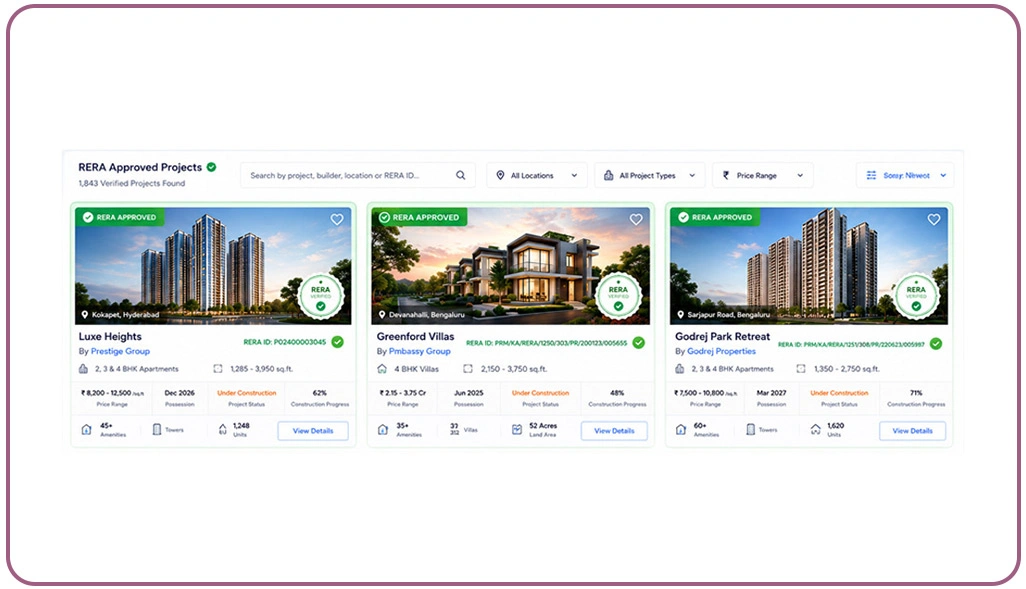
Comprehensive project visibility is essential for organizations seeking to understand real estate trends, evaluate opportunities, and monitor competitive activity. Regulatory portals contain extensive project information, including registration details, completion timelines, approvals, location data, and developer disclosures. When collected systematically, these records provide a clear view of market activity and development patterns.
Investors and analysts increasingly depend on transparent information to assess project viability and reduce uncertainty. Organizations that Scrape RERA Property Details for Competitive Analysis gain a clearer understanding of competitor activities, project launches, and market positioning strategies. Such intelligence supports benchmarking efforts and helps businesses identify opportunities for expansion.
The practice of Unlocking Project Transparency Using RERA Data Scraping enables businesses to transform publicly available regulatory information into actionable intelligence. By organizing project records into searchable databases, organizations can improve monitoring capabilities and support evidence-based decision-making processes.
| Project Information | Analytical Purpose |
|---|---|
| Registration Details | Compliance evaluation |
| Project Status | Progress monitoring |
| Timeline Information | Delivery assessment |
| Location Records | Geographic analysis |
| Builder Data | Performance comparison |
In addition, Real Estate Analytics Using RERA Project Information enables analysts to examine construction trends, project completion patterns, and supply-side developments across different markets. With improved project visibility, businesses can enhance operational efficiency, strengthen research capabilities, and generate meaningful intelligence that supports sustainable growth within a competitive real estate environment.
Creating Scalable Frameworks For Long-Term Property Intelligence
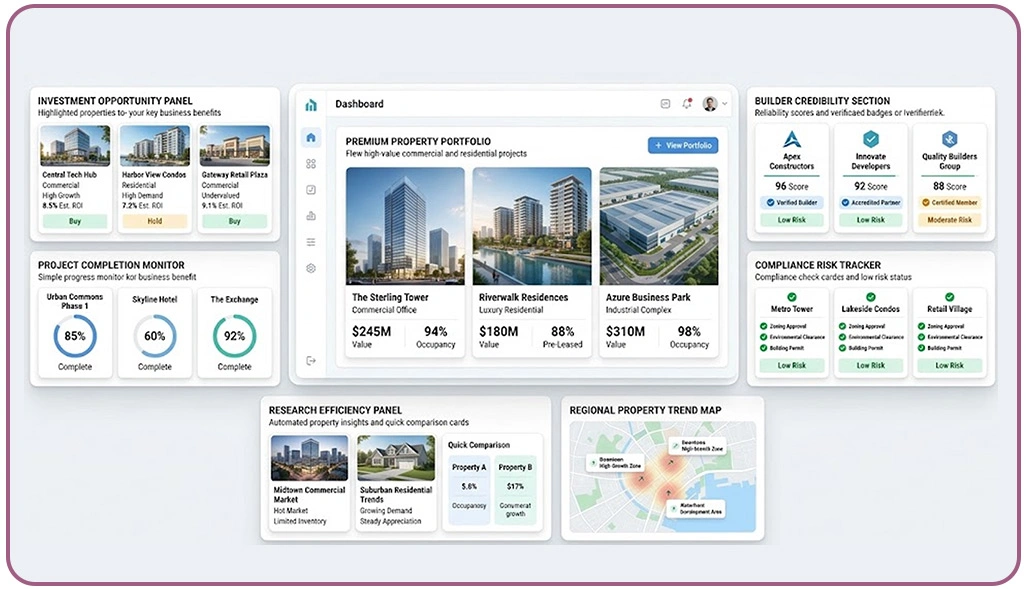
As real estate markets expand across cities and regions, organizations require scalable methods for collecting and managing large volumes of regulatory information. Manual research processes often become inefficient when monitoring thousands of projects and developers simultaneously. Automated data acquisition provides a practical solution by ensuring continuous access to structured and updated information.
Scalable intelligence frameworks enable businesses to track market movements, monitor project activity, and evaluate development trends without extensive manual effort. Another valuable application involves Property Listing Data Extraction From RERA Portals, which helps businesses track inventory movements, project availability, and development activity across different markets. Such information supports demand forecasting and market evaluation efforts.
Many organizations are adopting Enterprise Web Crawling technologies to streamline information collection and maintain comprehensive databases. Automated workflows help standardize records, reduce processing time, and improve analytical accuracy across large datasets.
| Scalability Function | Strategic Advantage |
|---|---|
| Automated Monitoring | Continuous data availability |
| Multi-Region Coverage | Wider market visibility |
| Standardized Records | Improved consistency |
| Trend Detection | Faster opportunity analysis |
| Portfolio Intelligence | Better planning outcomes |
Organizations also benefit from RERA Data Scraping for Real Estate Investment Analysis, which provides structured datasets that strengthen portfolio assessments and investment planning. Access to reliable information enables decision-makers to identify high-potential opportunities while minimizing research inefficiencies.
How Web Data Crawler Can Help You?
Modern real estate analytics requires continuous access to verified and structured information from multiple regulatory sources. When businesses Extract Builder and Developer Information From RERA Portals, they can build comprehensive databases that support investment decisions, project tracking, and market evaluation.
A robust web data crawling solution can help organizations:
- Collect verified project records automatically
- Track builder registrations across multiple states
- Monitor project status updates in real time
- Standardize data for analytics platforms
- Reduce manual research efforts significantly
- Improve reporting accuracy and operational efficiency
These capabilities enable businesses to generate actionable insights while maintaining data consistency across large datasets. In addition, organizations implementing RERA Data Scraping for Real Estate Investment Analysis can strengthen portfolio evaluation processes and identify high-potential opportunities with greater confidence.
Conclusion
Reliable property intelligence depends on accurate, verified, and continuously updated information. Organizations that systematically Extract Builder and Developer Information From RERA Portals can improve investment evaluations, assess developer credibility, and generate stronger analytical insights from regulatory datasets.
Similarly, businesses using Real Estate Analytics Using RERA Project Information can transform raw project records into valuable market intelligence that supports forecasting, competitive analysis, and long-term growth strategies. Contact our team today to build a scalable property data solution that powers smarter real estate decisions.