
How Does End-To-End Analytics Workflow Using Web Scraping Data Transform Raw Data Into Powerful Insights?
May 14
Introduction
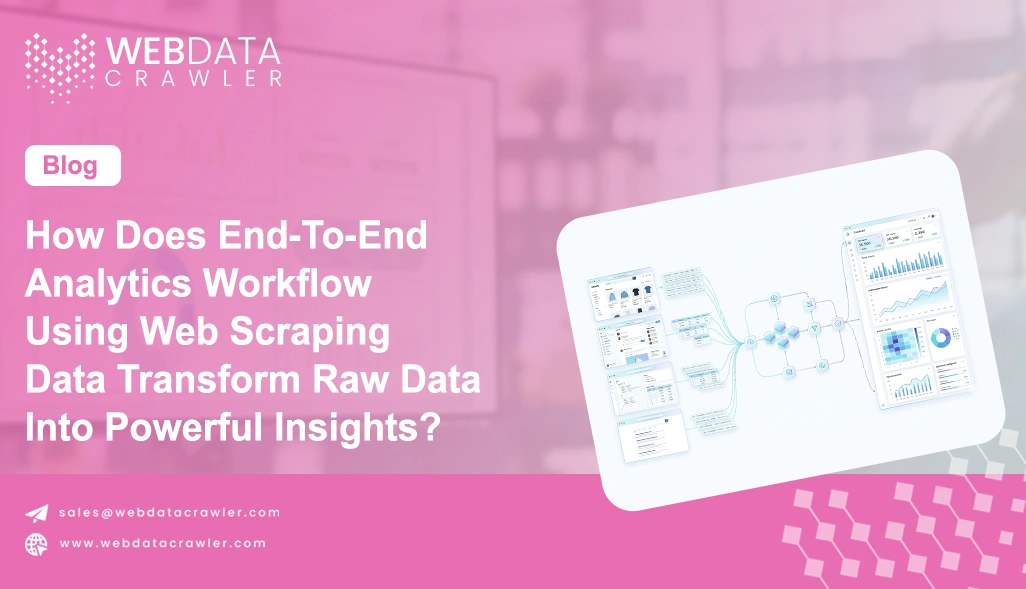
Modern enterprises increasingly rely on data-driven decision-making, but raw web data alone offers limited value unless it is properly structured and analyzed. This is where the End-To-End Analytics Workflow Using Web Scraping Data becomes essential for transforming unstructured information into meaningful business intelligence. Organizations today collect massive datasets from multiple digital sources, but without a unified pipeline, this information remains fragmented and underutilized.
A well-designed workflow ensures that every stage—from extraction to visualization—is seamlessly connected. By integrating a Web Scraping API, businesses can automate large-scale data collection while reducing manual effort and inconsistencies. This allows analysts to focus more on insights rather than data gathering challenges. It bridges the gap between raw scraping outputs and actionable dashboards, ensuring better accuracy and consistency across analytics platforms.
As organizations scale, this structured approach becomes a foundation for intelligent reporting systems and predictive modeling capabilities. Ultimately, this workflow empowers businesses to convert scattered online data into structured, decision-ready intelligence that enhances operational efficiency and strategic planning across departments.
Managing Data Complexity Through Unified Processing Systems
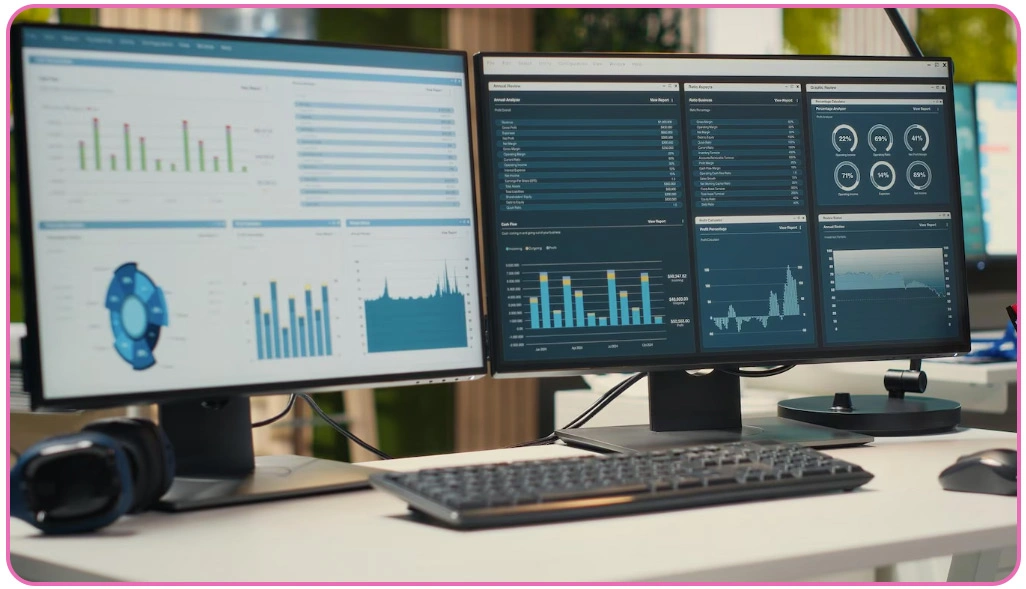
Modern enterprises face significant challenges in handling diverse and unstructured online datasets that arrive from multiple digital touchpoints. To address this, organizations rely on integrated systems that bring consistency and structure into fragmented data flows. The introduction of Structured Web Data Extraction for Visualization Platforms ensures that raw inputs are standardized before analysis, enabling smoother transformation into actionable intelligence.
This allows faster ingestion of large-scale datasets while maintaining accuracy across different sources. Alongside this, organizations also implement Enterprise Data Scraping and Analytics Pipeline to unify ingestion, transformation, and processing into a single streamlined system.
Another critical aspect is interpreting user behavior patterns through Sentiment Analysis, which helps decode emotional and contextual meaning from textual data. This provides deeper insight into customer perception and market response. Ultimately, businesses achieve stronger decision-making capabilities by consolidating fragmented data streams into unified intelligence systems that support scalable growth and operational efficiency.
| Data Challenge | Impact on Business | Resolution Approach |
|---|---|---|
| Unstructured inputs | Delayed insights | Standard normalization rules |
| Redundant records | Misleading trends | Deduplication frameworks |
| Incomplete datasets | Reduced accuracy | Intelligent imputation systems |
| Mixed formats | Processing delays | Schema unification methods |
These structured improvements ensure that organizations can efficiently manage complexity while maintaining high data reliability standards. The Complete Workflow for Web Scraping and Visualization further enhances this process by aligning data preparation with visualization-ready formats, enabling smoother transitions from raw inputs to analytical outputs.
Strengthening Market Intelligence Through Comparative Evaluation Models
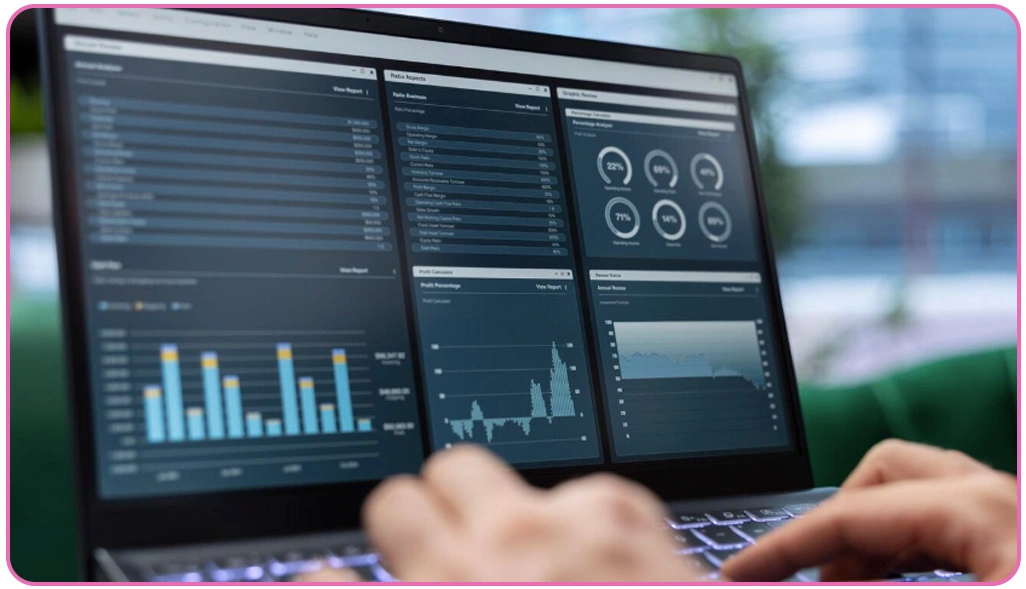
Competitive business environments require continuous monitoring of market movements, pricing strategies, and customer engagement patterns. To achieve this, organizations depend on structured analytical systems that convert external data into meaningful comparative insights. The implementation of Structured Web Data Extraction for Visualization Platforms plays a vital role in transforming competitor data into structured dashboards that support strategic evaluation.
A key method used in this process is Competitive Benchmarking, which allows businesses to compare performance metrics such as pricing, features, and engagement levels across industry players. This enables organizations to identify gaps in their offerings and refine their positioning strategies accordingly.
Through these structured comparisons, companies gain a clearer understanding of their competitive landscape. Visualization tools further enhance interpretation by converting complex datasets into simplified dashboards that highlight key insights in real time. As a result, businesses can build stronger intelligence frameworks that support long-term strategic planning and improve adaptability in rapidly changing market conditions.
| Evaluation Area | Analytical Purpose | Strategic Outcome |
|---|---|---|
| Pricing structure | Market alignment | Revenue optimization |
| Product attributes | Differentiation mapping | Innovation planning |
| Engagement trends | Customer behavior study | Marketing refinement |
| Availability metrics | Supply evaluation | Demand forecasting |
The integration of Data Integration Workflow From Scraping to Analytics ensures seamless movement of data across systems, reducing delays and improving accuracy in reporting. This allows organizations to react more effectively to market changes while maintaining consistency in analytical outputs.
Enhancing Real-Time Processing With Scalable Extraction Technologies

In today's fast-paced digital environment, real-time data processing has become essential for maintaining accurate and up-to-date insights. Organizations increasingly depend on automated systems that continuously collect and process online information to support agile decision-making.
The use of Web Scraping Data Cleaning and Visualization Process ensures that collected datasets are refined, structured, and prepared for analytical use. Automation reduces operational burden while ensuring consistency across all data pipelines. These capabilities allow enterprises to build highly responsive analytics ecosystems that adapt quickly to dynamic market conditions.
A significant advancement in this domain is the adoption of Live Crawler Services, which enable continuous and automated extraction of real-time web data. These services ensure that businesses always operate with the most current information available, improving responsiveness and accuracy in decision-making.
| System Feature | Operational Benefit |
|---|---|
| Continuous data flow | Real-time insights availability |
| Automated refinement | Reduced manual intervention |
| Scalable infrastructure | High-volume data handling |
| Structured output generation | Faster visualization readiness |
Additionally, scalable crawling technologies help organizations manage increasing data volumes without performance degradation, ensuring long-term sustainability of analytics operations. By combining real-time extraction with structured processing systems, enterprises achieve faster insights, improved accuracy, and enhanced decision-making capabilities across all business functions.
How Web Data Crawler Can Help You?
The End-To-End Analytics Workflow Using Web Scraping Data becomes more effective when supported by intelligent crawling systems that automate extraction and preprocessing. We ensure continuous data flow from multiple sources, enabling faster transformation into structured insights.
Key advantages include:
- Automates extraction from multiple online sources
- Reduces manual effort in data collection cycles
- Improves accuracy by minimizing human errors
- Supports scalable ingestion for large datasets
- Enhances data readiness for visualization tools
- Enables faster integration into analytics pipelines
By combining these capabilities with Data Integration Workflow From Scraping to Analytics, organizations can build a seamless bridge between raw data collection and advanced analytical processing, ensuring efficiency and consistency across all stages.
Conclusion
The modern analytics ecosystem depends heavily on structured workflows that transform raw online data into meaningful insights. The End-To-End Analytics Workflow Using Web Scraping Data provides a unified framework that ensures data is accurately collected, processed, and visualized for strategic decision-making.
When organizations adopt a robust Complete Workflow for Web Scraping and Visualization, they can streamline their entire analytics lifecycle, from extraction to dashboard generation. Contact Web Data Crawler today to build a smarter, scalable data workflow that turns raw web data into powerful business intelligence.