


How Does DoorDash vs Uber Eats Pricing Data Scraping Compare Restaurant Prices Across Markets?
Sep 17
Introduction
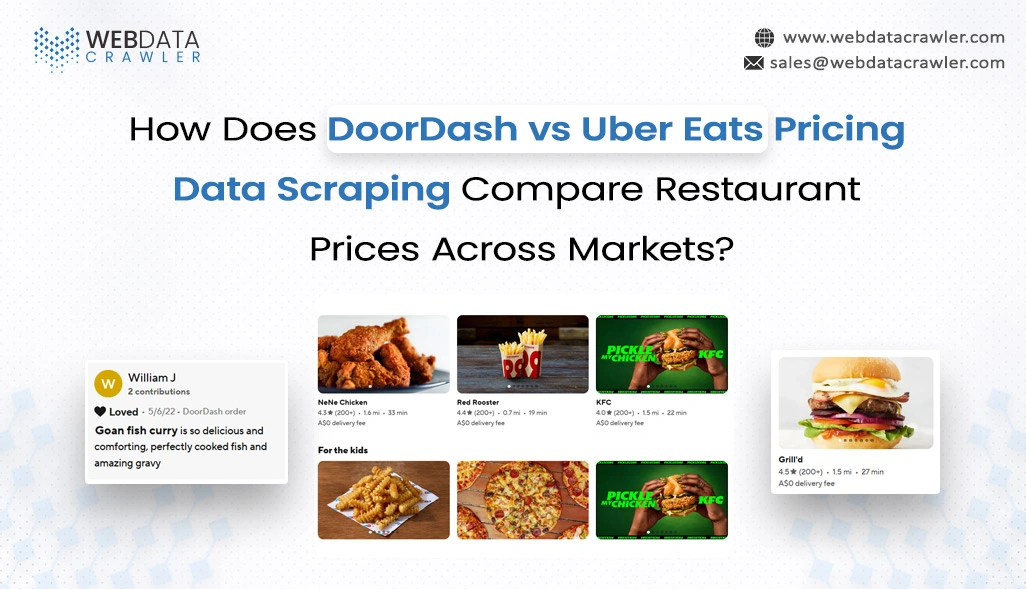
Restaurant delivery platforms can display different menu prices, delivery charges, service fees, promotions, and availability for the same establishment. DoorDash vs Uber Eats Pricing Data Scraping helps businesses collect comparable restaurant information across locations and identify how pricing structures vary between platforms.
Using Web Scraping DoorDash Restaurant Data, analysts can capture restaurant names, menus, item prices, ratings, delivery information, and promotional details at scale. Combining this information with competitor platform records creates a structured view of market-level pricing differences without depending on manual comparisons.
The U.S. delivery landscape is highly concentrated. Bloomberg Second Measure reported that DoorDash and Caviar represented 67% of observed U.S. meal-delivery consumer sales in March 2024, while Uber's total observed share was 25%. These differences make cross-platform restaurant pricing analysis valuable for market research and competitive benchmarking.
Comparing Restaurant Prices Across Diverse U.S. Markets
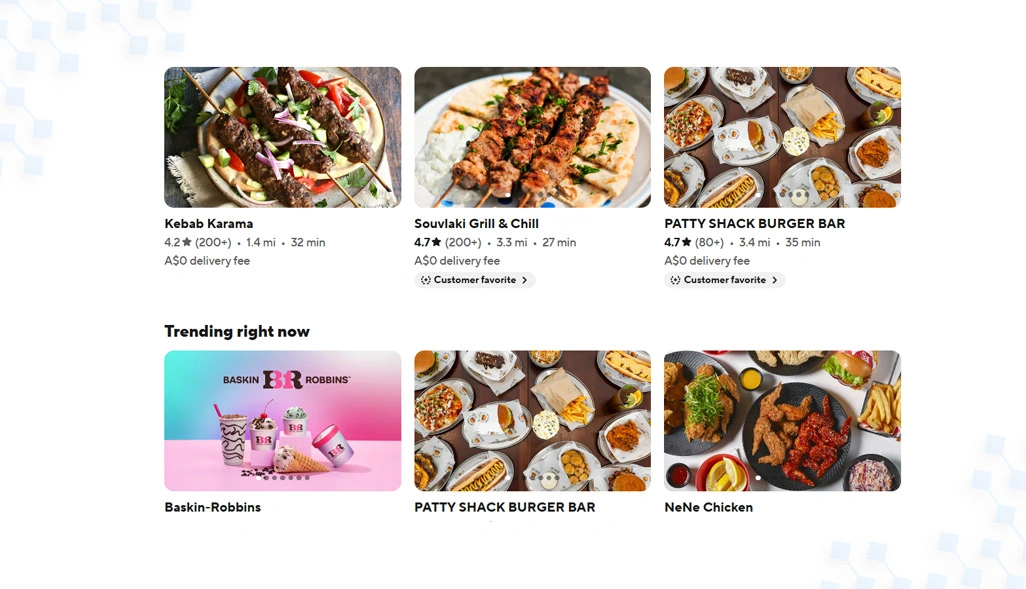
Restaurant pricing comparisons become more meaningful when identical restaurants and menu items are evaluated across multiple U.S. markets. Factors such as neighborhood, delivery distance, restaurant location, promotions, and platform charges can influence the final amount customers see. A structured collection process therefore needs to capture both restaurant-level and item-level attributes consistently across locations.
Businesses can Scrape DoorDash Restaurant Data to organize menu names, categories, listed prices, ratings, availability, and promotional information into standardized records. This makes it easier to match comparable restaurants and products across different markets. Instead of manually checking individual listings, analysts can evaluate larger datasets and identify recurring pricing differences across selected cities.
Delivery charges also need consideration because the amount paid by customers may extend beyond the listed menu price. Web Scraping Uber Eats Delivery Data can capture relevant delivery information alongside restaurant and menu attributes, supporting comparisons that account for broader order-level costs. Such data can help separate menu price differences from delivery-related variations.
Key comparison elements include:
- Restaurant and location identification
- Menu category and item matching
- Listed price comparison
- Delivery charge monitoring
- Promotional offer tracking
- Restaurant availability measurement
Data Element and Comparison Purpose:
| Data Element | Comparison Purpose |
|---|---|
| Restaurant Location | Market segmentation |
| Menu Category | Product classification |
| Item Price | Price comparison |
| Delivery Details | Order-cost analysis |
| Promotions | Offer evaluation |
Historical collection can further reveal whether observed differences remain consistent or change according to market conditions, promotional cycles, or restaurant-level adjustments.
Evaluating Menu Variations Through Structured Market Records
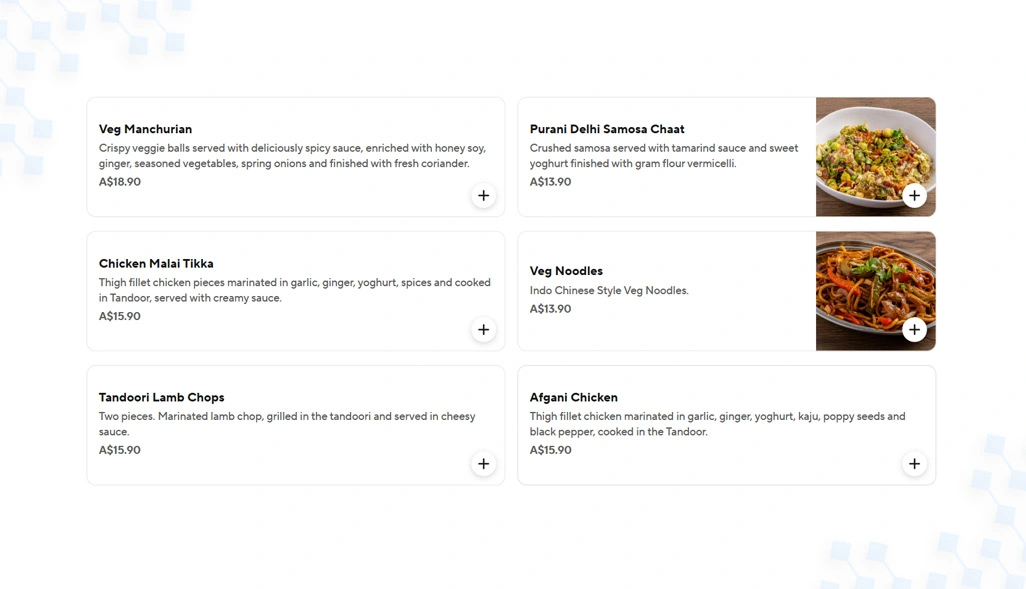
Menu comparison requires more than collecting individual prices because restaurants may organize similar products under different categories, names, sizes, or descriptions. Standardizing these attributes allows analysts to compare equivalent products more accurately and distinguish genuine price differences from variations caused by menu structure.
A DoorDash Restaurant Dataset can bring restaurant identifiers, menu categories, item descriptions, prices, ratings, and locations into a unified structure. This organization makes cross-market analysis easier because analysts can group comparable restaurants and examine how specific menu items vary by geography, platform presence, or pricing strategy.
Businesses can also examine competitive positioning by combining restaurant-level information with recurring price observations. Restaurant Competitor Pricing Data provides a broader view of how nearby establishments position similar products and price points. This can support research into average menu prices, premium positioning, promotional frequency, and differences between comparable restaurant categories.
Useful analytical dimensions include:
- Restaurant-level price benchmarking
- Category-based menu comparisons
- Similar-item identification
- Geographic price segmentation
- Promotion frequency monitoring
- Historical price movement tracking
Analytical Dimension and Business Application:
| Analytical Dimension | Business Application |
|---|---|
| Menu Category | Segmenting comparable offerings |
| Product Type | Matching similar items |
| Location | Comparing geographic differences |
| Price Range | Identifying positioning patterns |
| Historical Records | Tracking changes |
When collected periodically, structured records can help analysts identify whether pricing changes are temporary promotional movements or part of longer-term restaurant and marketplace pricing patterns.
Measuring Delivery Costs and Geographic Pricing Patterns
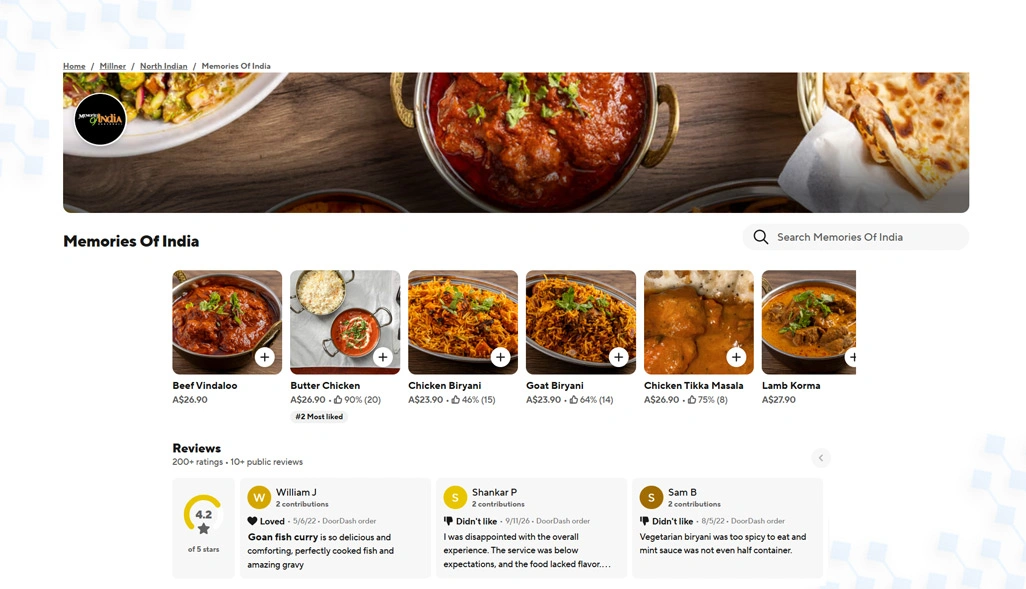
A complete restaurant marketplace comparison should examine the relationship between menu prices and additional order-related costs. Customers may encounter different delivery charges, service fees, discounts, and minimum-order conditions depending on restaurant location, order characteristics, membership status, and marketplace conditions.
An Uber Eats Restaurant Dataset can organize restaurant details, menus, item prices, categories, ratings, and location information for structured analysis. When these records are collected across several markets, businesses can compare equivalent restaurants and identify geographic differences in listed prices, menu structures, and availability.
Another important consideration is how restaurant pricing interacts with delivery economics. Businesses that Scrape Uber Eats Restaurant Data can combine menu observations with relevant delivery information to evaluate total pricing conditions more systematically. This approach can help separate restaurant-controlled menu prices from platform-related charges and promotional adjustments.
Market-level analysis can focus on:
- Average menu prices by city
- Delivery cost variations
- Restaurant availability patterns
- Discount and promotion frequency
- Similar-item price differences
- Changes across collection periods
Market Factor and Measurement Focus:
| Market Factor | Measurement Focus |
|---|---|
| City | Geographic comparison |
| Restaurant | Business-level analysis |
| Menu Item | Product-level pricing |
| Delivery | Additional order costs |
| Promotion | Discount activity |
Repeated data collection provides a historical reference that can show how restaurant prices and delivery conditions change across markets. This supports more detailed research into geographic pricing patterns and platform-level differences without relying on isolated observations.
How Web Data Crawler Can Help You?
Restaurant pricing research becomes more efficient when information from multiple marketplaces is collected in a consistent structure. With DoorDash vs Uber Eats Pricing Data Scraping, we can support automated collection of restaurant menus, prices, delivery information, ratings, promotions, availability, and location-based attributes across selected U.S. markets.
The solution can support businesses through:
- Automated collection across multiple restaurant markets
- Structured extraction of menu and pricing information
- Location-based restaurant monitoring
- Periodic tracking of pricing changes
- Standardized data preparation for analysis
- Scalable collection for large restaurant inventories
After collection, Scrape Uber Eats Restaurant Data outputs can be organized into business-ready datasets for dashboards, market research, competitive benchmarking, and pricing analysis. Automated workflows can reduce repetitive manual comparisons while maintaining a consistent structure for recurring restaurant marketplace studies.
Conclusion
Cross-platform restaurant pricing analysis can provide a clearer view of menu prices, delivery costs, promotions, and geographic variations. DoorDash vs Uber Eats Pricing Data Scraping supports structured comparison by bringing restaurant and marketplace information into a consistent analytical framework for businesses researching competitive pricing patterns.
Combining these records with Restaurant Competitor Pricing Data can help teams examine restaurant positioning, item-level differences, delivery conditions, and market movements more systematically. Contact Web Data Crawler to discuss a scalable restaurant pricing data collection solution tailored to your target U.S. markets.