
How Does DoorDash & Uber Eats Food Delivery Data Scraping Compare for Better Restaurant Data Collection?
Sep 03, 2026
Introduction
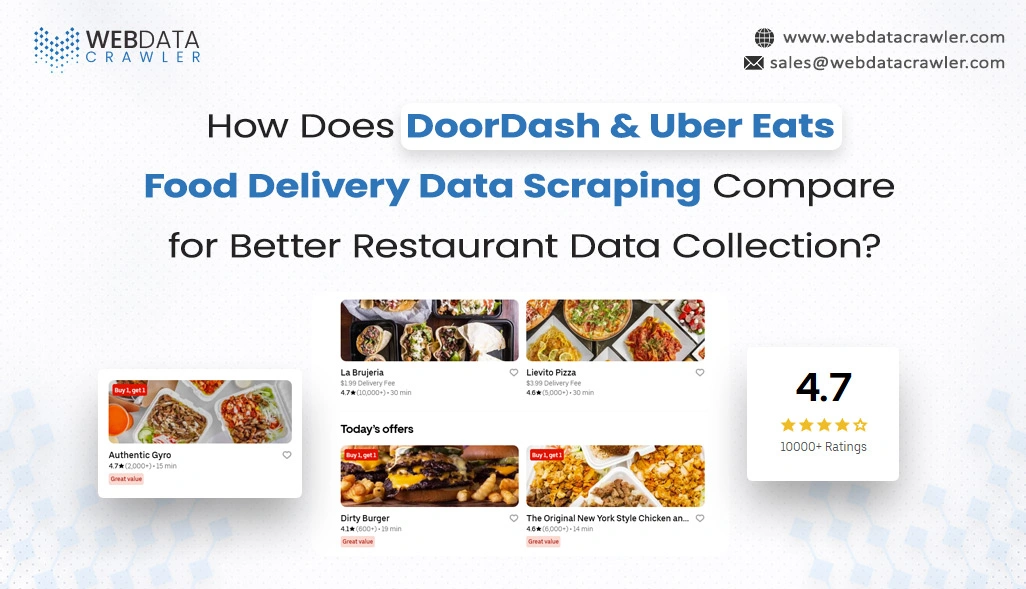
Restaurant delivery platforms generate extensive information covering menus, prices, ratings, restaurant profiles, delivery charges, availability, and promotional offers. DoorDash & Uber Eats Food Delivery Data Scraping helps businesses organize these constantly changing details into structured information for competitor monitoring, pricing research, restaurant intelligence, and marketplace comparison across different locations and service areas.
Comparing both platforms requires a consistent collection approach because restaurant availability, menu structures, delivery estimates, and promotional pricing can vary based on location and time. Web Scraping DoorDash Restaurant Data provides access to valuable restaurant-level information, while comparable extraction from Uber Eats can help businesses evaluate differences in coverage, pricing, menus, ratings, and delivery conditions.
A well-planned workflow combines automated extraction, data validation, normalization, storage, and scheduled updates. Businesses can use Food Delivery Data Collection for Analysis to evaluate restaurant coverage, menu changes, pricing movements, customer ratings, and delivery patterns without depending entirely on repetitive manual research. This creates a stronger foundation for competitive intelligence and marketplace analysis.
Platform Coverage Creates Distinct Restaurant Data Comparisons
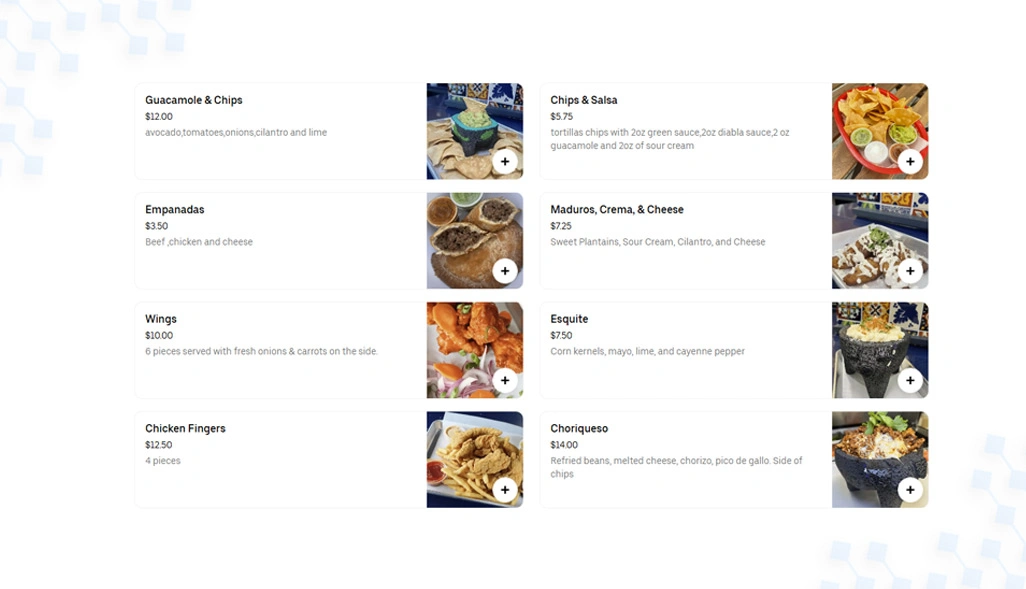
DoorDash and Uber Eats provide extensive restaurant information, but their displayed records can differ according to geography, restaurant participation, cuisine category, and current availability. A structured collection process helps businesses compare these differences using consistent fields. Restaurant names, addresses, cuisine types, menu categories, item descriptions, prices, ratings, and delivery information can be organized into comparable records for deeper evaluation.
When businesses evaluate both platforms, Uber Eats Food Delivery Data Scraping for Insights can help capture detailed information about restaurant listings, menu items, prices, customer ratings, delivery estimates, and availability. Combining these records with information collected from another marketplace makes it easier to identify differences in restaurant coverage and customer-facing information.
The comparison becomes more useful when the collected information is standardized before analysis. Fields such as currency, restaurant names, locations, menu categories, rating formats, and delivery charges can follow a common structure. Businesses can then identify missing records, duplicate restaurants, pricing differences, and marketplace-specific variations with greater consistency.
Important collection areas can include:
- Restaurant names and locations
- Cuisine and category information
- Menu items and descriptions
- Item-level pricing
- Customer ratings and review counts
- Delivery charges and estimated times
For broader evaluation, API vs Web Scraping Comparison can help businesses select an appropriate collection approach based on coverage, update requirements, scalability, and integration needs.
Comparison Area and Key Information Collected:
| Comparison Area | Key Information Collected |
|---|---|
| Restaurant Profile | Name, address, cuisine |
| Menu Information | Categories, items, descriptions |
| Pricing | Item-level prices and fees |
| Customer Signals | Ratings and review counts |
| Delivery | Estimated time and charges |
Pricing Signals Reveal Marketplace Differences Over Time
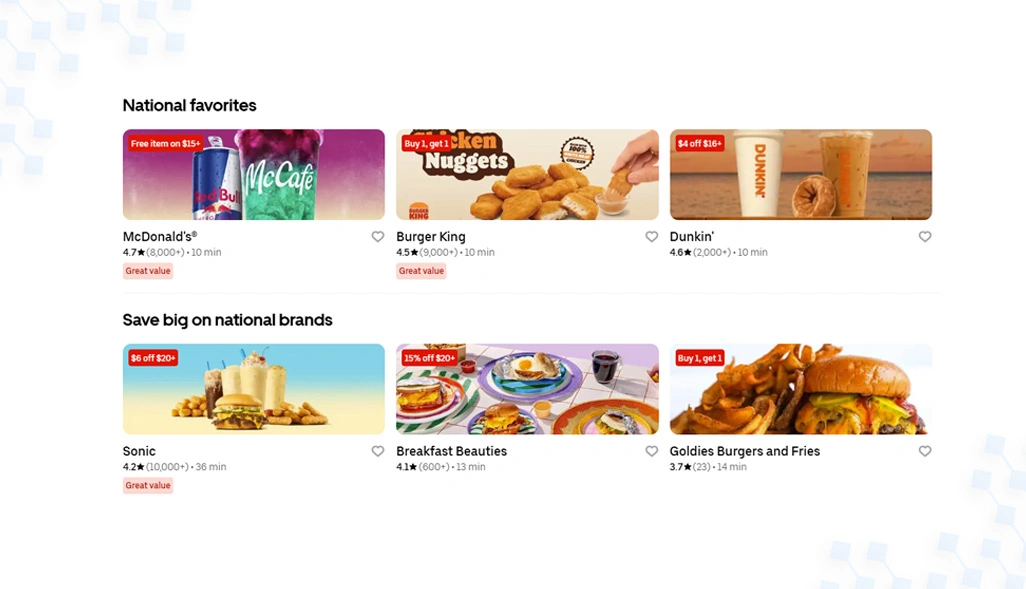
Food delivery marketplaces frequently change menu prices, delivery charges, discounts, promotional offers, and item availability. These variations can make manual comparison difficult, particularly when businesses monitor hundreds of restaurants across several locations. Automated collection can organize repeated observations and provide a clearer view of how restaurant information changes between platforms.
Using Web Scraping Uber Eats Delivery Data within a structured monitoring workflow can help businesses collect restaurant menus, item prices, ratings, delivery details, and promotional information. These records can then be compared against equivalent information from another platform to identify pricing differences, missing items, changing delivery conditions, and promotional variations.
Pricing analysis becomes more meaningful when records are captured at regular intervals. A single observation may only show the marketplace at one specific moment, whereas repeated collection can reveal patterns across days, weeks, or different periods of demand. This approach can also help analysts identify frequently changing menu items and recurring promotional activity.
Businesses can focus on several practical monitoring areas:
- Menu price changes
- Discount and promotion tracking
- Delivery fee variations
- Restaurant availability
- Rating movements
- Menu additions and removals
Applying Food Data Scraping across selected restaurant categories can create a recurring stream of structured observations. These records can support competitive pricing research, marketplace benchmarking, restaurant performance analysis, and location-specific comparisons while reducing the effort required for repetitive manual checks.
Monitoring Metric and Business Value:
| Monitoring Metric | Business Value |
|---|---|
| Menu Prices | Supports price comparison |
| Promotions | Tracks promotional activity |
| Delivery Fees | Highlights customer cost differences |
| Availability | Shows marketplace coverage |
| Ratings | Indicates customer response |
Structured Records Strengthen Cross Platform Restaurant Analysis
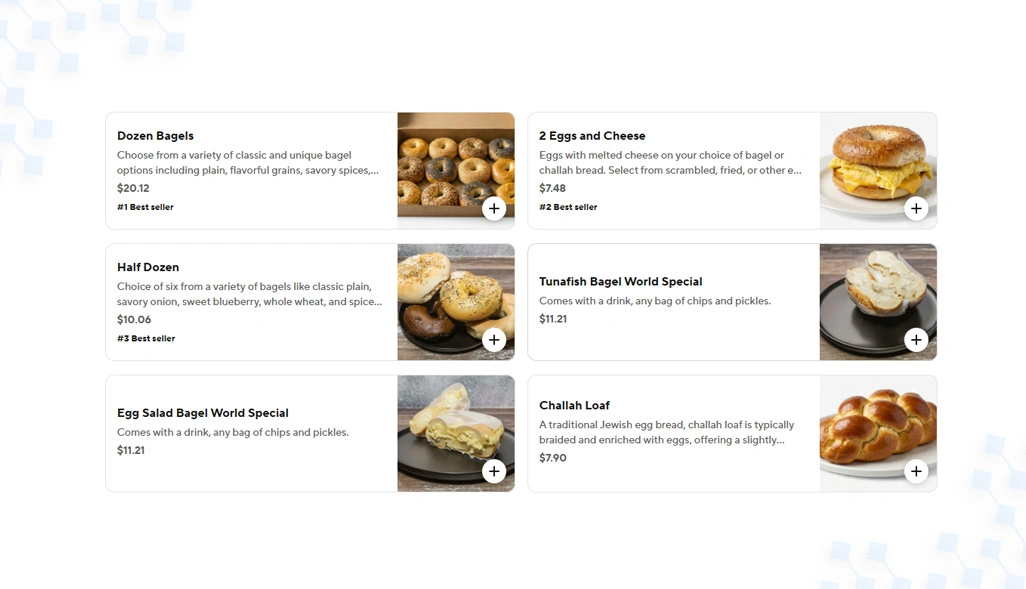
Restaurant information becomes more valuable when records from different platforms are cleaned, standardized, and organized according to common data fields. Without normalization, differences in restaurant names, menu structures, pricing formats, locations, and rating systems can make direct comparison difficult. A structured workflow helps transform scattered marketplace information into usable analytical records.
For businesses working with large volumes of restaurant information, Food and Restaurant Datasets can bring together profiles, cuisine categories, menu items, prices, ratings, review counts, delivery information, and promotional attributes. Such datasets provide a consistent foundation for market research and make it easier to compare restaurant-level information across multiple sources.
Data quality also depends on validation and duplicate handling. The same restaurant may appear with slightly different names or formatting across marketplaces, while menu items may use different descriptions or category structures. Standardizing these variations helps analysts match records more accurately and reduce inconsistencies before the information reaches reporting or analytics systems.
A structured restaurant dataset can support:
- Restaurant profile comparison
- Menu catalog analysis
- Pricing benchmarking
- Rating and review monitoring
- Delivery performance research
- Location-based marketplace analysis
Businesses can further improve recurring collection by connecting structured outputs with analytical systems and internal databases. Web Scraping API for Restaurant Data can support automated delivery of collected information into dashboards, applications, databases, or reporting workflows, helping teams work with updated restaurant records without repeatedly handling raw marketplace pages manually.
Dataset Category and Example Information:
| Dataset Category | Example Information |
|---|---|
| Restaurant | Name, location, cuisine |
| Menu | Item, category, description |
| Pricing | Item price, promotional price |
| Customer Data | Rating, review count |
| Delivery | ETA, delivery charge |
How Web Data Crawler Can Help You?
Restaurant marketplace information changes frequently, making consistent collection important for businesses that monitor menus, prices, ratings, delivery conditions, and availability. DoorDash & Uber Eats Food Delivery Data Scraping can be incorporated into an automated workflow that collects selected restaurant information and organizes it according to predefined business requirements.
We can support the complete data workflow, from source selection and extraction to cleaning, validation, structuring, and delivery. The process can be configured around specific locations, restaurant categories, data fields, and update schedules, helping businesses create datasets that match their analytical requirements.
Key capabilities include:
- Automated restaurant information collection
- Location-specific marketplace monitoring
- Menu and pricing field extraction
- Restaurant rating and review tracking
- Data cleaning and structured formatting
- Scheduled dataset delivery and updates
The collected information can be prepared for databases, spreadsheets, analytics platforms, dashboards, or customized business applications. Depending on the required scale and workflow, businesses can also select suitable delivery mechanisms for recurring access to restaurant information. This approach reduces repetitive manual research while creating a more consistent process for handling changing marketplace records.
Conclusion
Restaurant marketplaces continuously introduce changes to menus, prices, delivery conditions, ratings, and availability, making structured collection increasingly important for meaningful comparison. DoorDash & Uber Eats Food Delivery Data Scraping can help businesses organize these changes into usable records and evaluate restaurant information across platforms, locations, categories, and time periods.
A structured Food Delivery Data Collection for Analysis workflow can provide cleaner information for competitive research, pricing monitoring, restaurant benchmarking, and marketplace intelligence while reducing repetitive manual effort. Contact Web Data Crawler to build a customized restaurant data collection solution tailored to your business requirements.