
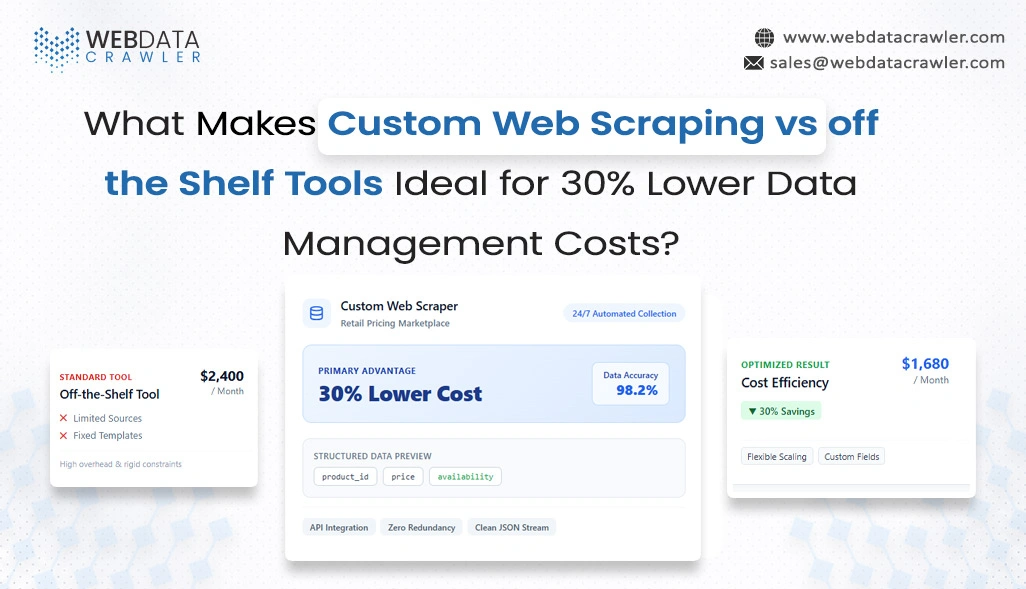
What Makes Custom Web Scraping vs off the Shelf Tools Ideal for 30% Lower Data Management Costs?
Aug 25, 2026
Introduction
Businesses handling large volumes of online information often compare Custom Web Scraping vs off the Shelf Tools based on cost, flexibility, accuracy, and long-term maintenance. While ready-made platforms provide faster deployment, organizations with complex requirements may need tailored extraction workflows that fit specific sources, structures, and operational goals.
The choice becomes more important as data volumes increase. Web Scraping Services can support automated collection, but the underlying approach determines how efficiently information is processed and maintained. A tailored system can remove unnecessary features, reduce repetitive processing, and improve resource allocation across large-scale projects.
Cost optimization also depends on how frequently websites change, how many sources require monitoring, and how much post-processing is necessary. Comparing implementation effort, infrastructure requirements, maintenance workload, and data quality helps businesses identify whether a ready-made platform or a purpose-built architecture offers better long-term value.
Building Flexible Data Workflows That Reduce Expenses
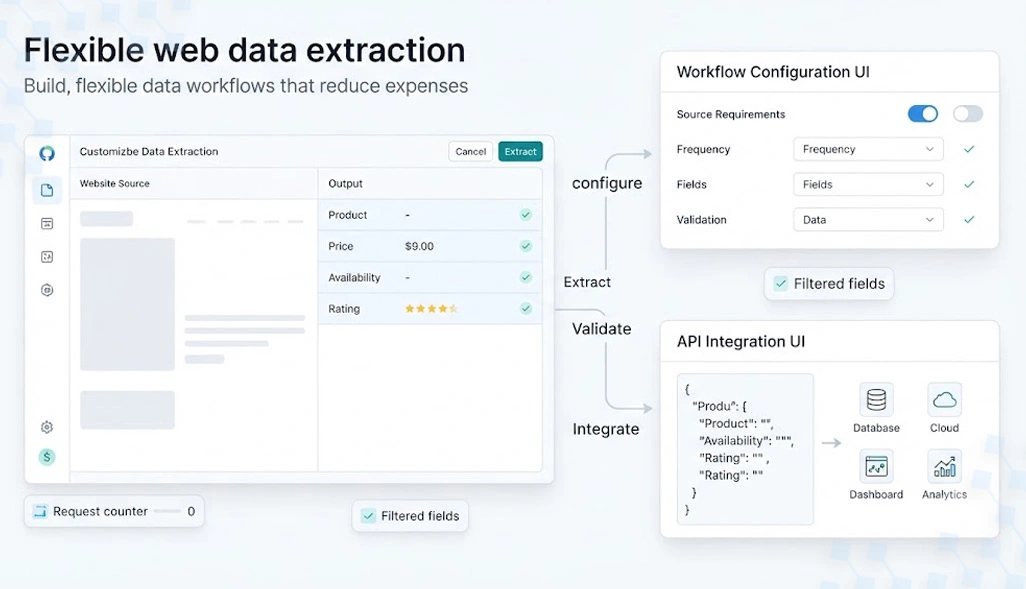
Flexibility directly influences how efficiently businesses manage extraction workflows. Ready-made platforms generally provide predefined configurations that support common sources and standard requirements. However, organizations dealing with complex layouts, customized fields, authentication, or changing website structures may require greater control. A Off the Shelf Scraping Tools approach can be practical for basic projects, but unnecessary features or fixed workflows may increase processing requirements when operations become more specialized.
A tailored architecture allows businesses to define exactly what information should be collected, how frequently it should be retrieved, and how the resulting records should be transformed. This reduces unnecessary requests and limits processing to business-relevant information. For organizations integrating extracted records into analytics platforms or internal applications, a Custom Data Extraction Service can also support specific schemas, validation rules, and delivery structures without forcing teams to adapt their processes to rigid platform capabilities.
Integration flexibility further affects operating efficiency. Businesses can establish extraction pipelines around their existing databases, cloud environments, dashboards, and analytical systems. A Web Scraping API can provide structured access to collected information while reducing repetitive manual transfers between systems. This becomes particularly valuable when multiple departments depend on consistent data for pricing, market research, catalog management, or competitive analysis.
Key flexibility benefits include:
- Configure extraction according to source requirements
- Remove unnecessary fields and processing steps
- Connect output with existing business systems
- Apply source-specific validation and transformation rules
Cost Factor and Approach Comparison:
| Cost Factor | Standard Approach | Tailored Approach |
|---|---|---|
| Initial Configuration | Faster | Moderate |
| Workflow Flexibility | Limited | High |
| Processing Control | Standardized | Specific |
| Integration Options | Predefined | Adaptable |
Scaling Collection Operations Across Growing Data Volumes
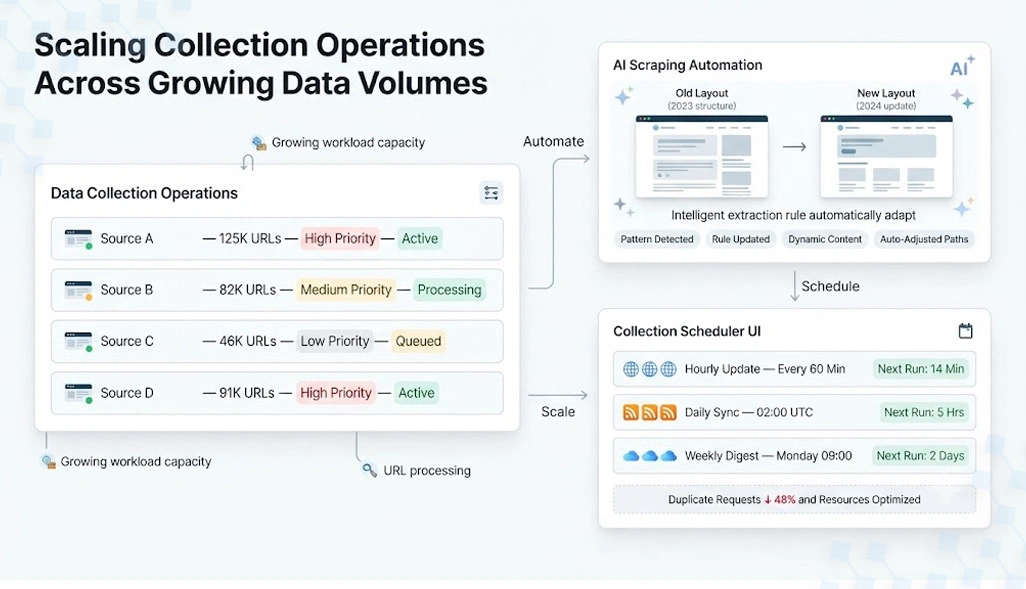
Growing data requirements can quickly expose weaknesses in generalized collection platforms. As organizations add websites, product pages, locations, or recurring schedules, processing requirements increase substantially. A scalable architecture allows resources to be assigned according to source priority and workload complexity instead of applying identical processing rules everywhere. This helps businesses maintain efficiency as collection volumes expand.
Automation can further improve how large workloads are managed. AI Web Scraping Services can support intelligent handling of changing page structures, repeated patterns, and dynamic content where appropriate. When combined with carefully designed extraction rules, automation can reduce repetitive intervention and improve consistency across large datasets. The objective is not simply to collect more pages, but to process relevant information efficiently.
Businesses also need to consider how frequently information changes. Static content may require occasional collection, while prices, inventory, availability, or rankings may require recurring updates. Designing schedules according to data freshness requirements prevents unnecessary requests and reduces infrastructure consumption. This can become particularly important when processing hundreds of thousands or millions of URLs across multiple sources.
Key scaling activities include:
- Prioritize sources according to business importance
- Assign resources based on workload requirements
- Schedule collection according to update frequency
- Reduce duplicate requests and unnecessary processing
Scaling Area and Architecture Comparison:
| Scaling Area | Generalized Platform | Customized Architecture |
|---|---|---|
| URL Expansion | Platform-dependent | Configurable |
| Resource Allocation | Generalized | Workload-specific |
| Update Scheduling | Preset options | Flexible |
| Large-Volume Processing | Moderate | Optimized |
Improving Long-Term Maintenance And Data Reliability
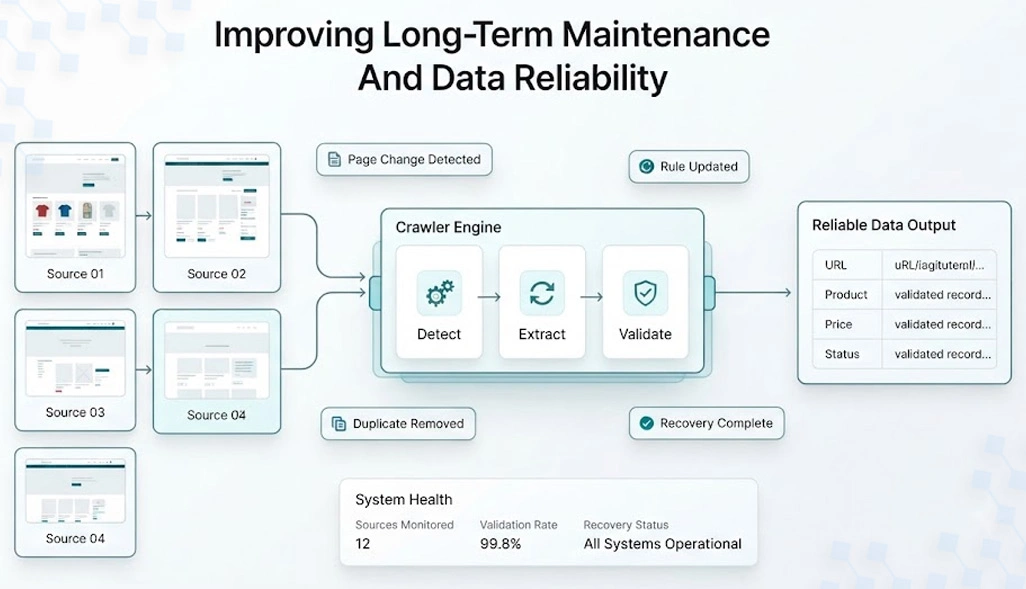
Maintenance represents a significant part of long-term data management costs. Websites frequently change page structures, URLs, content formats, and technical behaviors, requiring extraction systems to adapt. Scraping Tool Limitations for Enterprise environments may become visible when businesses need source-specific corrections, advanced monitoring, customized recovery processes, or greater control over extraction logic.
A purpose-built workflow can separate extraction rules according to individual sources, making troubleshooting more manageable. When one website changes its structure, teams can modify the relevant component without disrupting unrelated collection processes. This approach can also support automated validation, allowing incorrect, incomplete, or duplicate records to be identified before they enter downstream systems.
Reliable monitoring also helps control operational costs. Automated alerts can flag failed requests, page changes, unusual record counts, or delayed updates. With Live Crawler Services, teams can set clear thresholds and recovery procedures, reducing manual troubleshooting and ensuring consistent data availability.
Key maintenance activities include:
- Monitor source changes and extraction failures
- Apply automated validation before final delivery
- Separate source-specific rules for easier maintenance
- Establish recovery procedures for recurring issues
Maintenance Area and Approach Comparison:
| Maintenance Area | Standard Platform | Customized Workflow |
|---|---|---|
| Error Handling | Built-in | Configurable |
| Source-Specific Fixes | Restricted | Flexible |
| Validation | Standard | Customized |
| Monitoring | Platform-dependent | Controlled |
| Recovery Processes | Limited options | Adaptable |
How Web Data Crawler Can Help You?
Choosing between Custom Web Scraping vs off the Shelf Tools requires more than comparing subscription prices. We can help businesses evaluate extraction requirements, source complexity, data frequency, infrastructure needs, and integration objectives before selecting an appropriate architecture. This approach helps align technical decisions with measurable operational requirements.
Its support can include:
- Designing source-specific extraction workflows
- Structuring data for downstream applications
- Managing recurring collection schedules
- Applying validation and duplicate checks
- Supporting scalable infrastructure planning
- Integrating extracted information with existing systems
The objective is to reduce avoidable processing, improve consistency, and create workflows that can adapt as requirements change. Organizations seeking Scalable Custom Scraping Solutions can structure collection pipelines around their actual workloads instead of paying for unnecessary platform capabilities.
Conclusion
The right choice depends on complexity, scale, source diversity, and the level of control required. For organizations with straightforward requirements, ready-made platforms can provide rapid implementation. For complex, high-volume environments, Custom Web Scraping vs off the Shelf Tools should be evaluated through total operating costs, data accuracy, maintenance effort, and integration flexibility.
A Custom Data Extraction Service can provide greater control when standard capabilities no longer match business requirements. A purpose-built approach can also reduce unnecessary processing and support more efficient resource allocation over time. Talk to Web Data Crawler today to build a cost-efficient data extraction solution tailored to your business needs.