


How Cruise & Ferries Data Intelligence Scraping for Insights Maps Pricing Trends Across Routes?
Sep 16
Introduction
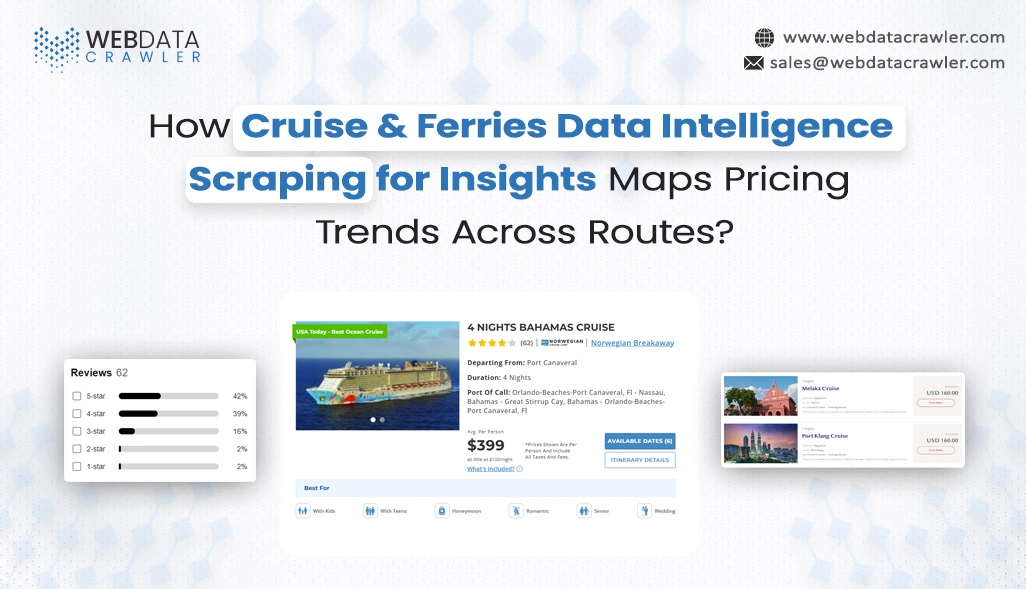
Cruise and ferry operators manage constantly changing fares influenced by routes, seasons, cabin categories, sailing schedules, availability, and passenger demand. Cruise & Ferries Data Intelligence Scraping for Insights helps businesses collect structured pricing and booking information from multiple digital sources, creating a clearer view of market movements and competitive changes.
Pricing intelligence becomes more valuable when operators can compare routes and sailing options across multiple platforms. Using Web Scraping Travel Data enables businesses to organize information such as ticket prices, departure times, destinations, availability, vessel details, and promotional offers for broader commercial analysis and planning.
With timely datasets, travel companies can identify price fluctuations, compare competitors, monitor booking patterns, and evaluate route-level opportunities. This approach supports better planning because decision-makers can examine historical and current information together rather than relying on isolated observations or manually collected records.
Mapping Route Pricing Patterns Across Diverse Sailing Markets
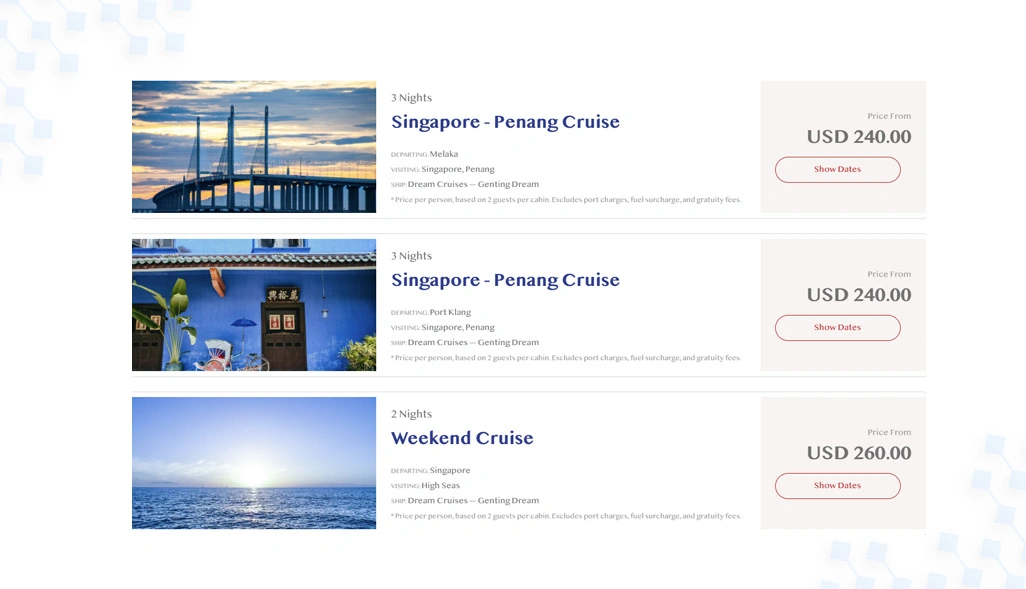
Cruise pricing can vary considerably according to season, destination, sailing duration, cabin category, departure timing, and passenger demand. Businesses monitoring these factors can identify recurring fare movements and compare pricing behavior across different routes. Popular Travel Data Scraping can support this process by collecting structured information from relevant travel platforms and booking sources.
A consistent collection process makes it easier to observe how prices change as sailing dates approach. For example, premium cabins may experience sharper fluctuations during peak periods, while standard categories can follow different pricing patterns. Analysts can compare these movements with availability levels to understand broader commercial conditions.
Pricing Factor and Market Observation:
| Pricing Factor | Market Observation |
|---|---|
| Seasonality | Fare movement |
| Cabin Category | Product segmentation |
| Route Demand | Pricing variation |
| Sailing Duration | Comparative analysis |
| Availability | Inventory monitoring |
Businesses can also examine destination-specific pricing behavior and identify periods where fares move rapidly. This can help teams organize route comparisons and identify unusual changes that may require closer review. Historical records provide additional context when evaluating whether a current price movement is seasonal or exceptional.
Key observations can include:
- Seasonal fare fluctuations across major sailing routes
- Differences between cabin and ticket categories
- Changes in availability before departure
- Variations between competing destinations
Combining these signals gives analysts a more structured understanding of route-level pricing. Rather than examining individual fares in isolation, businesses can compare several factors together and build a clearer picture of how cruise markets respond to demand, inventory, and travel timing.
Evaluating Booking Signals Across Structured Travel Routes
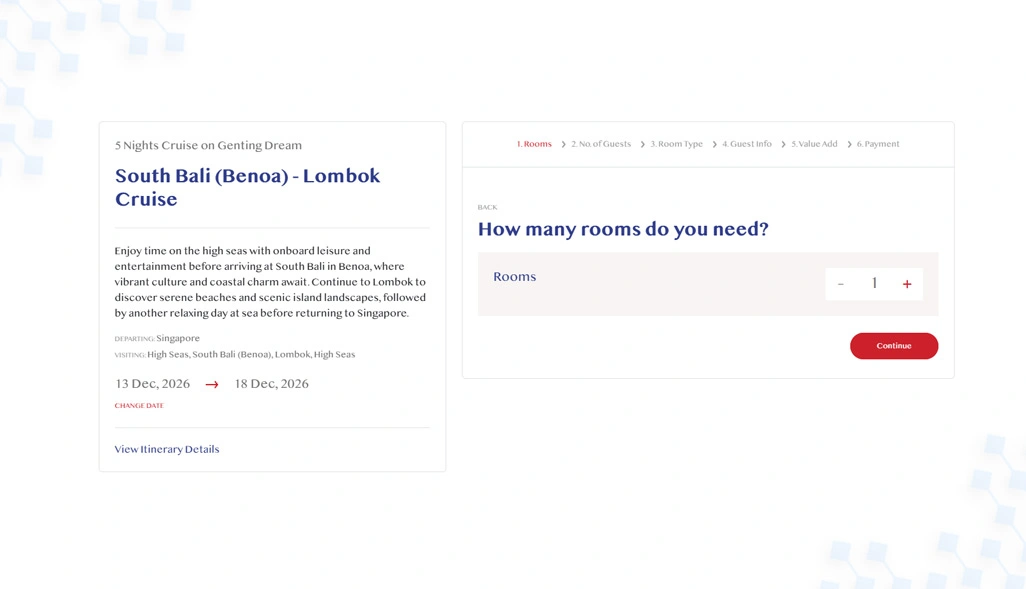
Booking information provides important context behind visible fare changes. Travel Datasets can bring together route details, sailing schedules, ticket categories, availability, cancellation conditions, and historical pricing within structured records. This allows analysts to compare multiple routes and booking periods without depending entirely on individual observations from separate platforms.
A route with limited availability may experience faster price increases, while another with greater inventory can maintain comparatively stable fares. Examining these relationships helps businesses determine whether a pricing change may be associated with demand, capacity, departure timing, or competitive activity. Historical records can further strengthen this analysis.
Data Signal and Analytical Purpose:
| Data Signal | Analytical Purpose |
|---|---|
| Fare History | Price comparison |
| Availability | Supply monitoring |
| Departure Date | Booking-window analysis |
| Route | Geographic comparison |
| Ticket Type | Product segmentation |
Businesses can also connect schedule information with fare changes to understand how different sailing periods behave. Cruise & Ferry Pricing Trends Overview via API can support systematic access to pricing signals, making it easier to compare route-level movements and organize information for recurring analytical workflows.
Useful booking signals may include:
- Current and historical ticket prices
- Departure and arrival information
- Sailing availability
- Ticket and cabin categories
- Booking and cancellation conditions
When these records are collected consistently, teams can identify recurring pricing windows and compare performance between routes. This creates a stronger foundation for monitoring market changes while reducing fragmented manual research across multiple booking environments.
Transforming Competitive Fare Signals Into Strategic Decisions
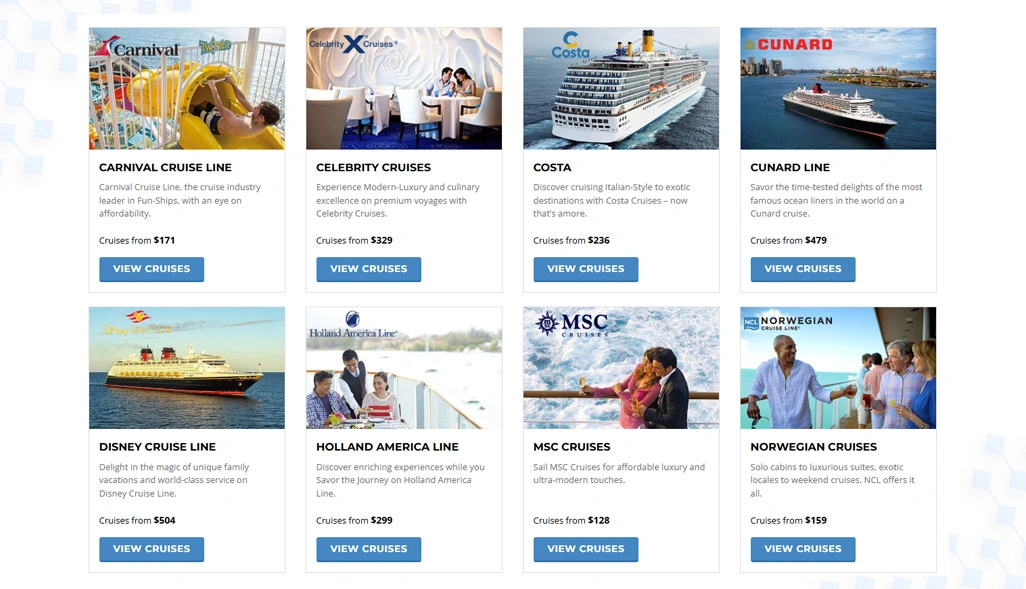
Effective commercial analysis depends on timely and comparable information from multiple market sources. Businesses can evaluate competitor fares, route availability, sailing schedules, passenger options, and promotional changes to understand broader market conditions. Market Research becomes more useful when these variables are assessed together rather than when ticket prices are reviewed independently.
For example, a sudden fare reduction may reflect additional inventory instead of weaker demand. Similarly, rising prices combined with reduced availability could indicate stronger booking activity. Comparing these signals across routes allows analysts to identify patterns and investigate the circumstances surrounding major pricing movements.
Commercial Signal and Business Application:
| Commercial Signal | Business Application |
|---|---|
| Competitor Pricing | Positioning analysis |
| Fare Changes | Pricing review |
| Availability | Capacity assessment |
| Promotions | Campaign monitoring |
| Route Activity | Demand evaluation |
Businesses can also use booking information to evaluate how competitors position similar routes and sailing periods. Scrape Ferry Booking Data for Better Strategy can provide structured booking signals that help teams compare available options, fare movements, departure schedules, and other route-level attributes within a consistent analytical framework.
Important commercial indicators may include:
- Competitor fare movements
- Promotional pricing changes
- Route-level availability
- Sailing schedule differences
- Ticket category variations
Continuous collection can therefore support pricing reviews, competitor monitoring, route comparisons, and operational planning. Cruise & Ferries Data Scraping Services can further assist organizations that require scalable workflows for collecting and structuring travel information across multiple sources and sailing markets.
How Web Data Crawler Can Help You?
Modern travel businesses need structured information that can be collected consistently from numerous digital sources. Cruise & Ferries Data Intelligence Scraping for Insights can support this process by organizing pricing, route, availability, schedule, and booking information into usable datasets for analysis and reporting.
We can assist businesses with automated collection workflows designed around specific cruise and ferry data requirements. Its capabilities can help teams process large volumes of information while maintaining structured records for ongoing comparison, monitoring, and analytical use.
Key capabilities include:
- Automated collection from selected travel and booking sources
- Structured organization of cruise and ferry information
- Scheduled extraction for recurring market monitoring
- Route-level data segmentation for easier comparison
- Data cleaning and formatting for analytical workflows
- Support for scalable information collection across multiple sources
These capabilities can reduce repetitive research and help businesses maintain more consistent information across their analytical processes. Cruise Pricing Data Intelligence for Analysis can then support the examination of fare movements, route differences, competitive changes, and pricing patterns through a centralized workflow.
Conclusion
Cruise and ferry businesses increasingly depend on reliable market information to understand changing fares, availability, and route-level demand. Cruise & Ferries Data Intelligence Scraping for Insights provides a structured approach for collecting relevant information and turning scattered booking signals into useful analytical records for pricing and competitive evaluation.
Consistent data collection can also support planning across destinations, sailing periods, and ticket categories. Cruise & Ferries Data Scraping Services can help businesses build scalable collection workflows suited to their specific requirements. Contact Web Data Crawler today to discuss your requirements and build a reliable data collection solution tailored to your cruise and ferry intelligence needs.